
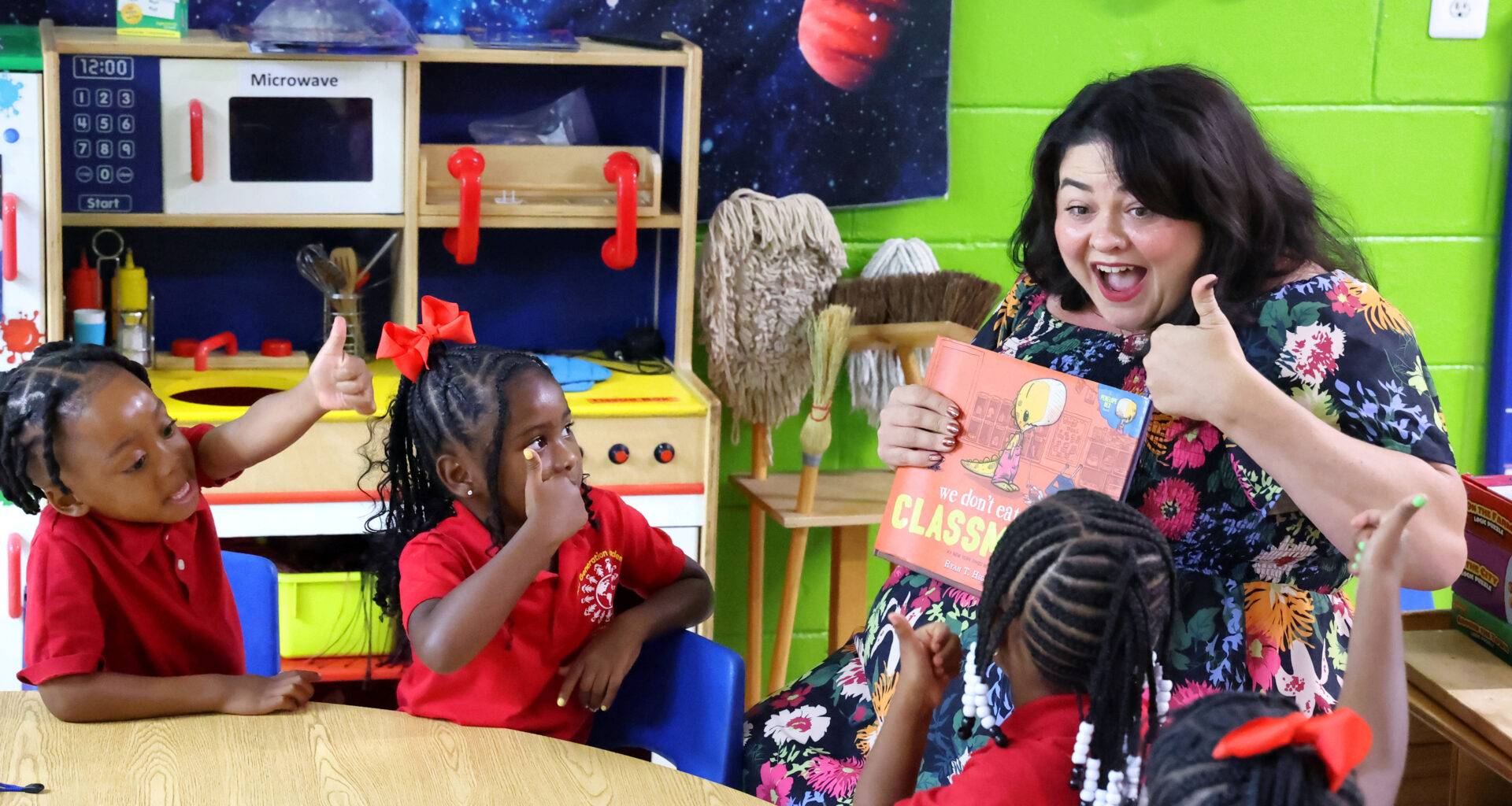
REED Charitable Foundation Founder Jennifer Knopf comes from a law background.
“And as a lawyer,” she notes, “I’m a researcher.”
So when her son, Reed, now 15, was diagnosed with dyslexia 10 years ago, Knopf went down a rabbit hole of literacy education.
Dyslexia is a learning disability that affects the brain’s ability to process written language, but it has no connection to intelligence. People who have it are highly capable learners, but need to be taught in a direct, explicit way.
And in the process of learning about literacy, Knopf made a shocking discovery.
“One in five children — one in five people — is dyslexic,” she says. “But at that time, there were only two people in Central Florida certified at any level to work with a student with dyslexia.”
Magical Dining’s nonprofit focus: ‘It has allowed us to serve more of the community’
What she also discovered is that the way dyslexic students need to learn is actually the best practice for all students.
It blew her mind.
Why aren’t we doing this everywhere? she wondered.
And steadily, since 2019, REED Charitable Foundation has been making that happen.
REED Charitable Foundation was last year’s primary beneficiary of Visit Orlando’s Magical Dining, which raised $380,307 to help its dedicated team bring the skills to teach dyslexic children in the region in far greater numbers. This year’s main beneficiary is OCA (Opportunity, Community, Ability), an organization that empowers individuals with autism and other developmental differences. Magical Dining begins Friday and goes through Sept. 30.
REED Charitable Foundation’s inception enjoyed a groundswell of support. Even the COVID-19 pandemic couldn’t swat down the enthusiasm for REED’s first-ever gala. Though entirely virtual, the event raised a staggering $260,000.
“It was the first glimmer I had that so many people understood the problem and were struggling and needed help,” Knopf says.
With that money, the foundation offered to train 82 Orange County public school teachers for free. Feedback was the only ask.
Knopf knew it stood to impact the cause even beyond the thousands of children these educators would teach, because she’d done the training alongside 23 other educators. Each had a master’s degree. And every one of them cried during the process.
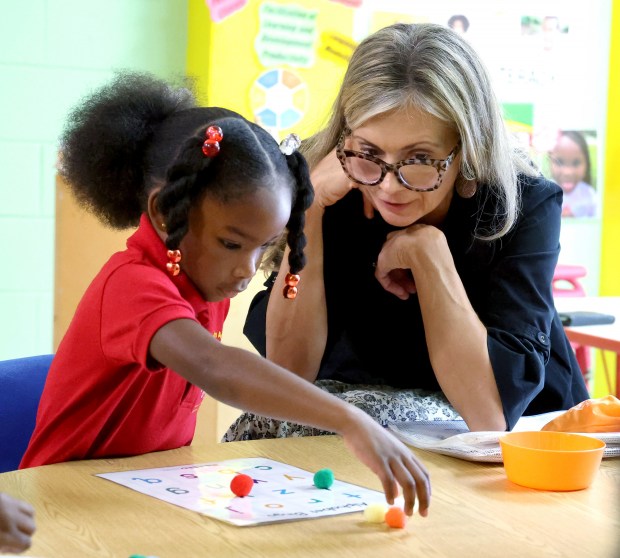 Alexis Rapp with the REED Charitable Foundation works with pre-schooler Ameri Wright on an alphabet exercise at Nu Generation Academy in Orlando. REED Charitable, a literacy and education training non-profit, was a primary beneficiary of Visit Orlando’s Magical Dining event in 2025. (Joe Burbank/Orlando Sentinel)
In hearing their stories, Knopf came to realize that none had ever really learned how to teach children to read.
Sight words were the primary vehicle at the time.
“And if the kids couldn’t pick them up, the teachers didn’t really know what else to do,” she explains.
This new training — a sequential, multisensory, phonics-based approach — was a game-changer. Its power moved them emotionally.
“They were so heartbroken,” Knopf recalls, “realizing that there was a way to teach all the students. They’d think about the ones they’d meet every year, kids they knew were really smart but just couldn’t break through. They wondered what happened to them. They remembered all their names.”
Knopf knew that when REED Charitable’s first wave of 82 gave their districts that same feedback, the tipping point would come.
“There would be no way to deny that this was something really important, something that had been missing from what they’d received. Both as undergraduates and in whatever professional development they’d been receiving.”
It didn’t even take as long as the five-day course.
“John Wright, who was at the time the associate superintendent for the innovation office for Orange County Public Schools, told me that by Day Three, he was getting unsolicited emails from the teachers. ‘We should all be doing this.’”
REED Charitable has since been able to offer this training — which at for-profit schools can cost as much as $1,750 each — at greatly reduced fees, and in some cases completely free.
Jamie Dozier, REED Charitable chief operating officer and director of structured literacy, was among the first 82. At the time, she was an instructional coach for Orange County Public Schools with more than 21 years in public education.
The training with REED, she says, was life-changing.
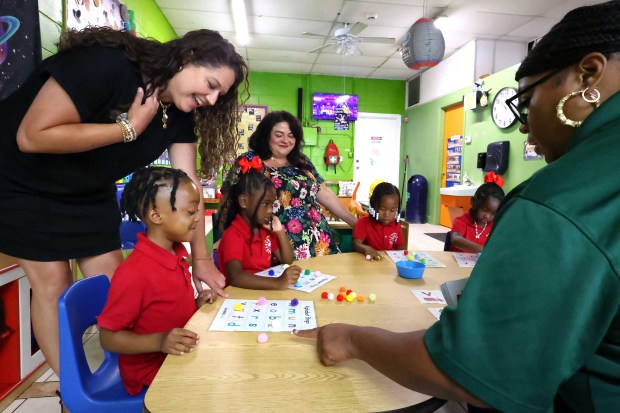 Jamie Dozier, left, with the REED Charitable Foundation, and teacher Latina Woodson, right, help pre-schooler Alexander Sweetland with an alphabet exercise at Nu Generation Academy in Orlando. (Joe Burbank/Orlando Sentinel)
“I experienced that same feeling of heartbreak that [Knopf] describes, because all I could see in my mind were the faces of those kids I had to hold back at the end of the year when they didn’t pass their reading tests, the phone calls I had to make to those parents.”
As an instructional coach, Dozier saw to it that the rest of the teachers at her school got the structured literacy training, as well.
And last year, with the Magical Dining funds headed their way, there was more crying. This time, they were tears of joy.
“We’re investing in children, but also in teachers and school leaders and parents and community organizations that surround the children who live here,” Dozier says. “We want this gift to create change that continues far after these dollars have been used and invested.”
Magical Dining raises record amount for Orange County charities
This has meant working with early learning centers “because we know how critical kindergarten readiness is,” she explains. “It’s one of the earliest milestones that impacts a child’s future. Right now, only 44 percent of Florida children are kindergarten ready. And 75 percent of the kids who enter kindergarten behind never catch up to their peers.”
Investment into centers like these, she says, is critical.
“Many preschool teachers hold the CDA credentials they need for a background in child development to create a supportive environment, but they typically don’t include preparation in learning how children learn to read, or how to prevent reading difficulties.”
With their Magical Dining dollars, REED is bridging the gap, training those who reach the children first.
“It’s incredible to watch how empowered they become and to see it in action,” Dozier says.
And there are many more plans, Knopf says.
This includes a minimum of $100,000 for OCPS to make up for budget deficits.
And the recent launch of their self-paced class, which allows educators to learn asynchronously, has seen the county commit 190 of its teachers to the training.
“Morphology really unlocks the secondary level of literacy for students … your upper-level textbooks, your college textbooks. It’s also really significant for high-stakes testing, like SAT and ACT.”
Dozier is proud of what they do, for reasons that go beyond the training, including implementation support and modeling lessons, ensuring that what they learn in training translates directly to the classroom.
In underperforming neighborhoods, it’s not teacher training that sees children slipping, Knopf says.
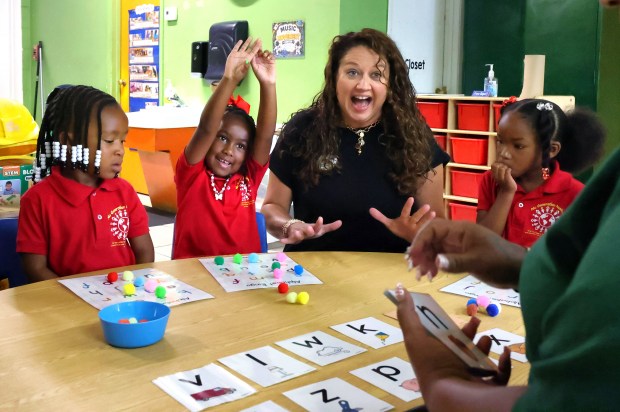 Jamie Dozier, with the REED Charitable Foundation, cheers pre-schooler McKenzie Wood, second from left, during an alphabet exercise at Nu Generation Academy in Orlando. (Joe Burbank/Orlando Sentinel)
“Nine times out of 10 the teachers come from the same university backgrounds,” she explains. “The reason a Winter Park student typically performs better on average is because their parents have the resources to get support outside of school.”
With structured literacy-trained teachers, she says, more children will be learning what they need to learn during the school day.
“Then there’s no need for a tutor. And if their love is cello or baseball or whatever it is, every child will have the opportunity to … pursue those passions outside of the school day.”
Knopf humbly acknowledges Visit Orlando and Orlando Health’s role in lifting our community’s boats with a veritable tidal wave of funding, as well as the diners who participate.
“They are helping to raise money that’s life-changing for organizations and the work we do,” she says, noting her hope that this year’s recipient, OCA, enjoys a record-breaking season, as well.
OCA (Opportunity, Community, Ability) empowers individuals with autism and other developmental differences — from as early as 18 months through adulthood — while also supporting their families, many of whom face financial barriers to care and long-term services. OCA partners with organizations like Special Olympics, United States Tennis Association, A Gift for Teaching, Orlando Family Stage and Central Florida Vocal Arts.
“They are literally impacting individuals in our community that are the most vulnerable. It’s an amazing thing.”
Find me on Facebook, TikTok, Twitter or Instagram @amydroo or on the OSFoodie Instagram account @orlando.foodie. Email: amthompson@orlandosentinel.com, For more foodie fun, join the Let’s Eat, Orlando Facebook group.
Benefiting charities
Visit Orlando’s Magical Dining begins Aug. 14 and goes through Sept. 30. View the 180+ participating restaurants and menus here: magicaldining.com/restaurants
2025 recipient: REED Charitable Foundation makes literacy training, implementation support and educational events financially and geographically accessible. More info: reedcharitablefoundation.org
2026 recipient: OCA (Opportunity, Community, Ability) empowers individuals with autism and other developmental differences — from as early as 18 months through adulthood. More info: gooca.org