
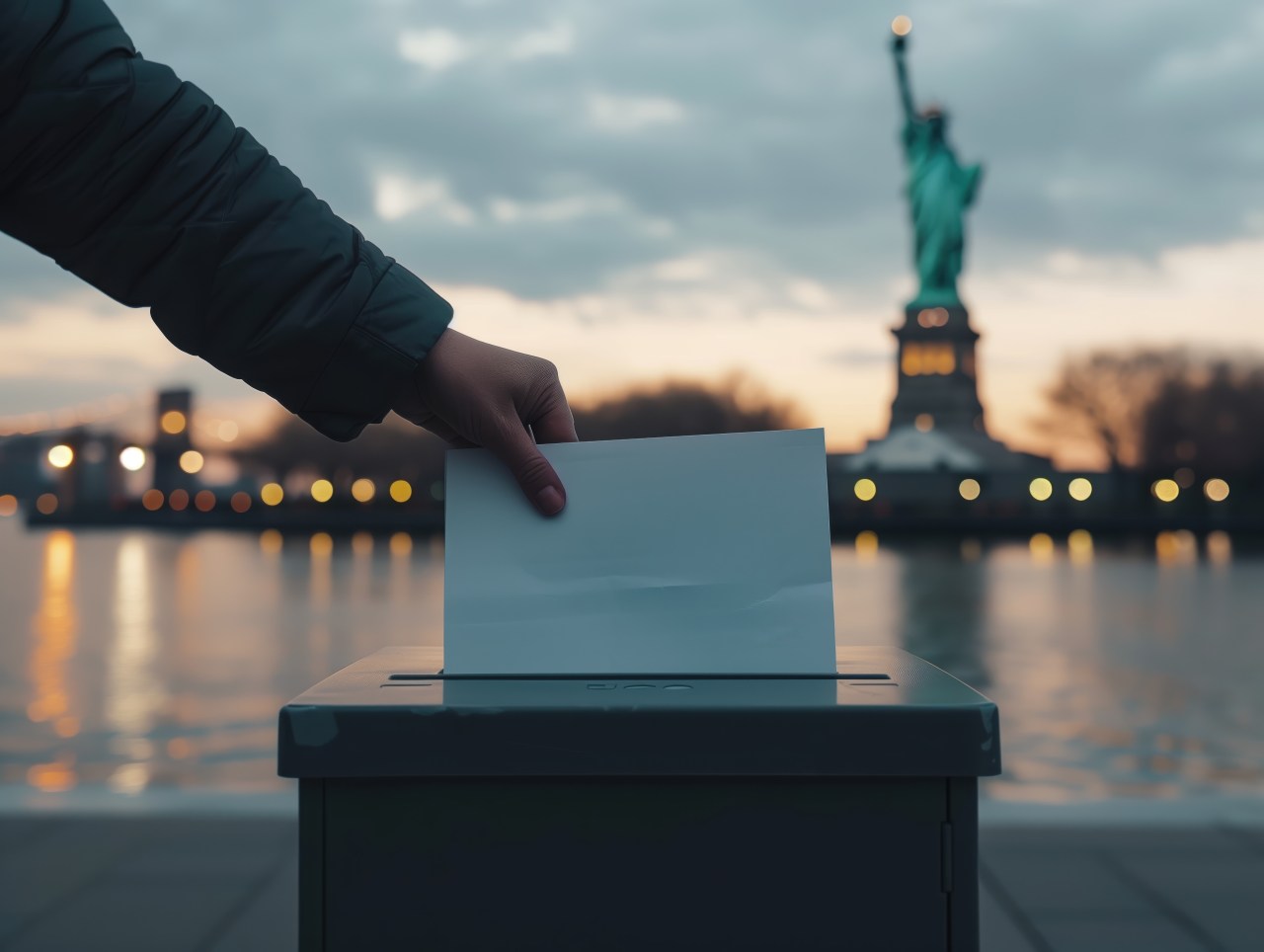
New faces emerge in New York state elections
In New York, several candidates to represent the state and federal legislatures have already secured their seats as they are running unopposed by a major-party rival in the general election. This is due to the fact that in several cases, they are the only candidate from their party who qualified for the ballot, and therefore, the party’s primary was cancelled. The new faces running for uncontested seats include those in the Assembly, State Senate, and Congress. The demographics of the electorate are also changing, with the 65 and over population increasing, while the 18 to 29 demographic decreasing.
ALBANY, N.Y. (NEXSTAR) — After Tuesday’s primary, some candidates to represent New Yorkers in the state and federal legislatures have already locked up their seats, more or less. That’s because, in several cases, they’re running unopposed by a major-party rival in the general election.
Lawsuits filed over New York’s mask ban for federal agents
In the video above from Wednesday morning, Democratic New York State Governor Kathy Hochul talked about welcoming new blood and how the establishment plans to adapt to insurgent primary victories in her party. But according Republican Nassau County Executive Bruce Blakeman, who’s trying to take the governor’s place in November, “I’m asking common sense Democrats to join our cause to save New York from the socialist, anti-American Communists and restore normalcy to our state.”
Either way, in New York, when only one candidate from a party qualifies for the ballot, that party’s primary is canceled, and the candidate goes directly to the general election. Though anything can change in politics, read on for a breakdown of new faces running for uncontested seats, effectively clinching a win come November.
New York explores 2042 Olympic bid
District 23: Pesach Osina won the Democratic primary to replace outgoing Assemblymember Stacey Pheffer Amato.
District 30: Patrick Martinez won the Democratic primary to replace Assemblymember Steven Raga, who just lost his State Senate bid.
District 32: Nathaniel Hezekiah III won the Democratic primary to replace Assemblymember Vivian Cook.
District 34: Brian Romero won the Democratic primary to replace Assemblymember Jessica González-Rojas, who’s headed to the State Senate.
District 37: Samantha Kattan won the Democratic primary to replace Assemblymember Claire Valdez, who’s running for Congress.
District 38: David Orkin unseated incumbent Democratic Assemblymember Jenifer Rajkumar.
District 54: Christian Celeste Tate unseated incumbent Democratic Assemblymember Erik Dilan.
District 56: Eon Huntley unseated incumbent Democratic Assemblymember Stefani Zinerman.
District 65: Illapa Sairitupac won the Democratic primary to replace Assemblymember Grace Lee, who’s headed to the State Senate.
District 66: Jeannine Kiely has a narrow lead in the Democratic primary to replace outgoing Assemblymember Deborah Glick.
District 68: Diana Ayala unseated incumbent Democratic Assemblymember Edward Gibbs.
District 69: Eli Northrup won the Democratic primary to replace Assemblymember Micah Lasher, who’s running for Congress.
District 90: Frank Jereis won the Democratic primary to replace outgoing Assemblymember Nader Sayegh.
District 118: Heather Scribner won the Republican primary to replace Assemblymember Robert Smullen, who lost his Congressional primary bid.
District 123: Dan Norton won the Democratic primary to replace outgoing Assemblymember Donna Lupardo.
District 129: Maurice Mo Brown unseated incumbent Democratic Assemblymember William Magnarelli.
District 149: Adam Bojak won the Democratic primary to replace outgoing Assemblymember Jonathan Rivera, who’s headed to the State Senate.
District 12: Aber Kawas won the Democratic primary for the seat held by outgoing State Senator Michael Gianaris.
District 13: Democratic Assemblymember Jessica Gonzalez-Rojas defeated incumbent Democratic State Senator Jessica Ramos.
District 27: Assemblymember Grace Lee won the Democratic primary to replace outgoing State Senator Brian Kavanagh.
District 51: Assemblymember Chris Tague won the Republican primary to replace State Senator Peter Oberacker, who’s running for Congress.
District 61: Democratic Assemblymember Jonathan Rivera defeated incumbent Democratic State Senator Jeremy Zellner.
New York confirms formerly incarcerated SCOC commissioner, makes judges tour prisons
For the U.S. House of Representatives, Republicans and Democrats are fielding candidates in all 26 congressional districts, so no new faces are running uncontested. Still, several races will definitely bring new blood to the chamber after the general election, with incumbent congressmembers either retiring or defeated in their primaries:
District 7: Democratic Assemblymember Claire Valdez vs. Republican Melvin Rivera
District 10: Democratic Former New York City Comptroller Brad Lander vs. Republican Jennifer Moore
District 12: Democratic Assemblymember Micah Lasher vs. Republican Caroline Shinkle
District 13: Democrat Darializa Avila Chevalier vs. Republican Manual Williams
District 21: Republican Anthony Constantino vs. Democrat Blake Gendebien
New York overhauls high school graduations, expands free tuition for adult students
And keeping the focus on November, raw turnout from four districts where both major parties held primaries showed gaps in enthusiasm along geographic boundaries. While primary turnout doesn’t perfectly foretell general election turnout, it could provide rough estimates.
Downstate, Democrats had a major turnout advantage in the 3rd Congressional District, casting 26,661 votes in the primary won by incumbent Democratic U.S. Congressmember Tom Suozzi. Meanwhile, 13,561 Republicans voted in the primary won by former Republican Assemblymember Michael LiPetri, Jr.
But Republican primary turnout eclipsed Democratic turnout across the three contested races upstate. In the 21st Congressional District, 45,215 Republicans turned out for the primary won by Anthony Constantino, compared to 24,300 Democrats who voted for Blake Gendebien to fill outgoing Republican U.S. Congressmember Elise Stefanik’s seat.
That apparent upstate GOP edge extended to the state legislature, though the margins are much more narrow. Among Republicans, 3,924 voted in the Assembly District 119 primary won by Michael Gentile, while 3,227 Democrats voted for Jonathan Lipe. In Assembly District 130, 5,384 Republicans voted in the primary won by George Dobbins, and 4,297 Democrats voted for Carl Fitzsimmons.
New York homeowners to receive $2 billion in STAR school property tax relief
According to the New York State Board of Elections, over 275,000 New Yorkers voted during the early voting period that ended on Sunday. While awaiting county numbers, they won’t have final counts until Friday, but their data on Tuesday’s primaries is available online. So far, they tallied at least 770,563 voters in total across the state’s congressional primaries, representing a minimum voter turnout of 5.4%.
According to the Associated Press, New York’s overall voting-age population grew by 380,000 people over the last five years, total over 14 million potential voters.
New York establishes Harriet Tubman Underground Railroad Byway
The white share of the population dropped by 2.3 percentage points to 60.6% since 2019, and the Black population dropped by 0.2 percentage points to 14.2%. The share of Hispanic or Latino New Yorkers grew by 1 percentage point to 15.6%, and the share of Asians rose by 0.8 percentage points to 7.4%.
Based on U.S. Census Bureau data, the electorate is getting older, too. The 65 and over population had the biggest increase in representation, rising by 2.1 percentage points to represent 23.8% of the voting age public. Meanwhile, the 45 to 64 demographic saw a decrease of 1.9 percentage points—down to 32%—and voters aged 18 to 29 dropped by 1.4 percentage points to 20.1%.