
Photo-Illustration: by The Cut; Photos: Everett Collection, Peacock
In the opening act of The Roses, a British update on The War of the Roses, a very 2025 archetype emerges. This reimagining of the 1980s marital-takedown drama introduces us to somewhat involuntary stay-at-home dad Theo Rose (Benedict Cumberbatch), who delivers a monologue on toxic masculinity and productivity culture while his two young charges jog behind him. He exclaims that he does not want to be part of the “testosterone-filled ambition cum-jizzing in the face of humanity.” Instead, he tells himself, his children, and the aspirational view of the Northern California coast behind him, “I want to be part of the change!”
What ensues is both incredibly ordinary and quietly subversive. Cumberbatch plays a modern dad — he does not have the unfamiliarity with his kids’ bodily rituals that Michael Keaton’s Mr. Mom character did 40 years ago (although we do see some familiar “dad as drill sergeant” motifs in The Roses). Instead, Theo Rose seems to enjoy primary caregiving as much as anyone can. He is exhausted and underappreciated and pines for intellectualism, but he is a more-than-capable parent. As a mom of two who talks about gender and parenthood all day every day, I was pumped to see the story play out this way. What a good dad, I thought. But in the dark corners of my cynical, feminist brain, I also wondered if I was giving him — and the other white, middle-class dads we’ve seen onscreen this year — too much credit.
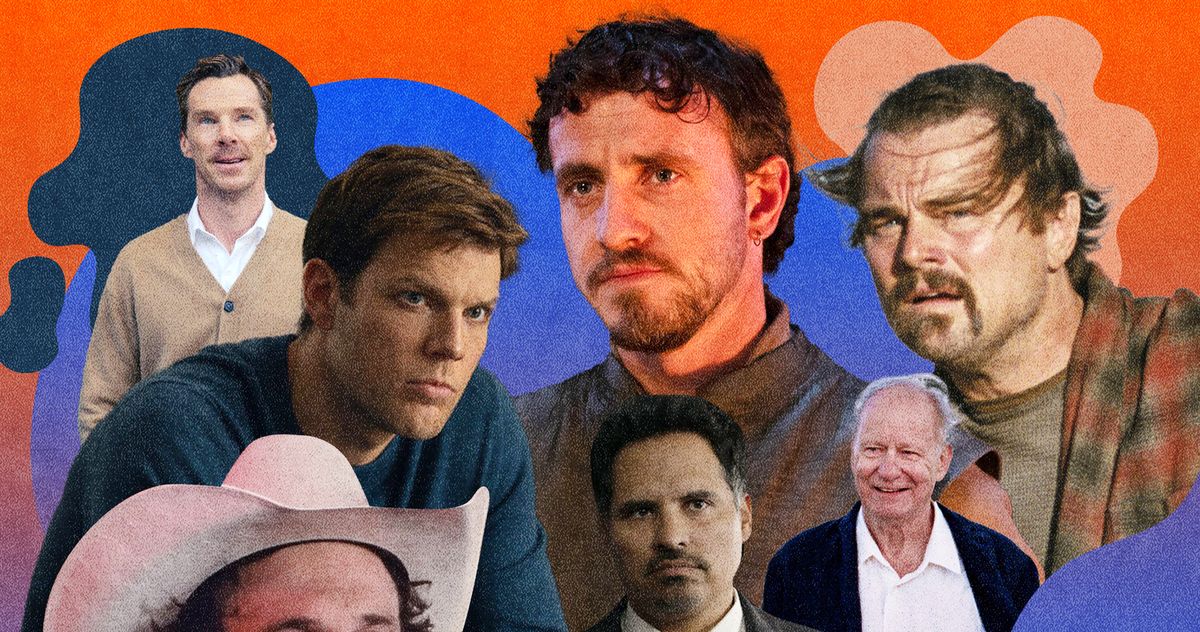
2025 was the year of the screen dad. If you don’t believe me, check out this year’s two most Golden Globe–nominated films, One Battle After Another and Sentimental Value. Or perhaps you’re more of a Hamnet (sad dad), Fairyland (gay dad), Springsteen: Deliver Me From Nowhere (mad dad), The Secret Agent (undercover dad), or Jay Kelly (famous, absent dad) type. If you don’t have time for a full movie, watch an episode of Adolescence or the daddle royale that is All Her Fault, a show that ostensibly is about moms but turns out to also be very much about dads. This year’s crop of film- and TV-dad portrayals has plenty to say about the demands of modern fatherhood, but are these good dads or bad dads?
Phillip Maciak, TV critic for The New Republic, father of two, and author of the forthcoming Dad: A Pop History, thinks we may be projecting good intentions. For many millennial dads, he explains, staying at home isn’t really a matter of wanting to be with their kids or supporting their wives’ agency but a response to current economic realities. “It’s not necessarily about dealing with ‘who I am as a man who’s doing this?’ It’s more unemployment,” Maciak says. “It’s not ‘my wife works.’ It’s ‘I don’t work.’”
The movie dads of the 1980s, Maciak explains, showed us how fathers were responding to an earlier stage of feminism. In Mr. Mom, Michael Keaton has no choice but to be a stay-at-home dad because he loses his job, and then his wife, as women had recently begun to do, lands a good full-time job — a novel idea in the ’80s, but not so sensational anymore. Today’s screen dads may have evolved (watching Theo Rose fold laundry will likely feel erotic to many moms, not just for those ropy forearms but for the relative novelty of seeing a man doing that chore onscreen), yet how much that reflects the evolution of real-life dads is hard to say.
Then there’s what Maciak calls “dad grade inflation,” where men, on- and offscreen, get a “gold star” for doing the same things their partners would do without fanfare: pack lunches, do school drop-offs, raise their children when their spouse abandons them. Watching the single-dad heroes this year, as seen in OBAA and Fairyland, a memoir of a girl’s life in San Francisco with her gay father after her mother’s death, I admittedly fawned over these men. In OBAA, Leonardo DiCaprio’s Bob is sweet and hapless. He is trying — to both protect his child (old cliché dad stuff) and recognize her growing independence (somewhat more sophisticated). In Fairyland, the always wonderful Scoot McNairy makes you forgive his character’s bad-dad ways (sex, drugs, neglect) because he is so damn real. When McNairy’s Steve asks his grown-up daughter if she thinks he was a good parent, it doesn’t feel like the stiff, two-dimensional dad talk of yore. Watching in the theater, tears streaming down my face, I truly did not know how she would answer, but I knew that I cared very, very much. “I didn’t really know how to be a single parent,” Steve explains. “There wasn’t many examples of that when I was growing up.” If remembering the fact that more than 80 percent of single parents are women puts a bit of a damper on the heroic paternity of One Battle, portrayals like the one in Fairyland give you empathy for the dads who leave, too.
There were so many dads to watch this year that sometimes we got complex portrayals of several fathers at the same time. In Jay Kelly, Adam Sandler plays the downstairs version of George Clooney’s upstairs dad. They are both never home, but the former — who, as a wealthy L.A. talent manager, is positioned to live a much more normal life than the A-list Jay Kelly — knows how to be a parent, while the latter does not. If “dad” is a verb, Sandler does it all over the film, guiding his teenager through an anxiety attack and playing daddy-daughter tennis and reading his toddler a good-night story from a European train. OBAA’s Bob is contrasted with Sean Penn’s Colonel Lockjaw, a not-so-fatherly dad who is very, very bad but also performing his own twisted take on fatherhood. And watching a dad like Sentimental Value’s Gustav Borg (Stellan Skarsgård) attempt to make belated amends with his biological daughter while literally playing Daddy to someone who’s nothing more than a colleague is both cutting and cathartic.
But the award for depicting the most dad narratives at once, with a dizzying range, goes to Peacock’s thriller series All Her Fault. Sarah Snook plays a woman whose modern motherhood takes on a macabre edge when her child is kidnapped after school. When my kid was a toddler, I was horrified when our accountant calculated whether it was “worth it” for me to work. This show expands that horror to the idea that your child’s life could be in danger because you work a nine-to-five. But the real intrigue lies not in what the moms of All Her Fault do or don’t do (we see Dakota Fanning as another professionally ambitious mom who just wants her husband to do his fair share, as well as a PTA president from hell and a tragic mother-daughter narrative between two working-class women), but in the choices made by the series’ dads. There is the dad who shirks his responsibilities, the dad who loves his child so fiercely (and picks him up from school, notably) that he makes questionable decisions to secure his child’s happiness, and, of course, the dad who twists the responsibility of caring for his child, wife, and family into a sick, lie-fueled dependence that only ends badly.
When I spoke to Maciak about All Her Fault, he wondered if there were even more layers to Jake Lacy’s Peter: “It’s a story about a dad whose stereotypical modern-liberal dadhood is a mask for being a very bad person. You’re actually a red-blooded conservative traditional man putting on a BabyBjörn and pretending you’re okay with this.” After all, when things get dire — spoilers ahead — it’s revealed that Peter, doting dad, does not even refill his own EpiPen prescription, and it is this paternal negligence, this failure to carry the mental load in a dual-income household, that literally kills him. If Peter is practicing performative fatherhood at its most nefarious, this show does not let him get away with it.
By the end of the show, and certainly by the end of this dad-filled year, my gauge for measuring gender equity on screen was all over the place. When it comes to seeing real fathers on camera, in all their beauty and deficiency, and even just seeing more of them, we may take a few steps forward and a few back – we idolize and then ridicule and then humanize once again. Like Theo Rose, maybe anything other than “jizzing in the face of humanity” is interesting material on men. And yet, one dad in All Her Fault feels so genuine he gives me hope. He also gets to have it all. Unsurprisingly, he is the dad who pulls his weight, who calls multiple times a day just like good old Sandler in Jay Kelly, who provides the final twist of the series and keeps it to himself because he understands something fundamental: he knows what it is like to be a mom.
Stay in touch.
Get the Cut newsletter delivered daily
Vox Media, LLC Terms and Privacy Notice
Related