
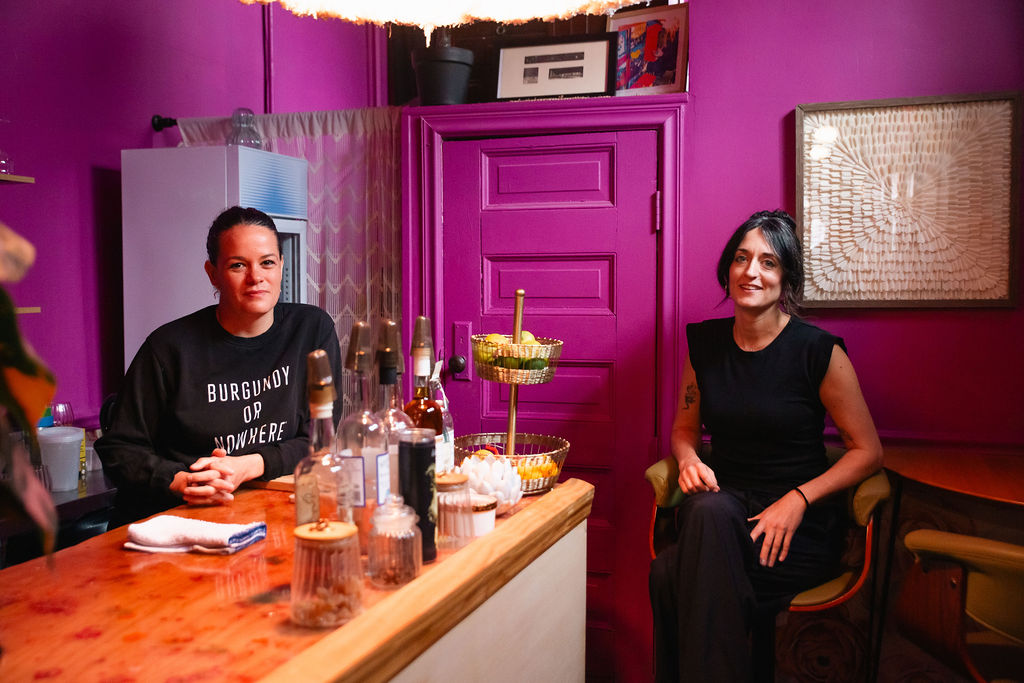
On an amber spring evening, the city outside glows with the last light of day. Inside Lilith, it feels as though the season has spilled indoors. The small dining room is lush with plants, floral wallpaper and upholstery, and a scattering of retro chintz-patterned tableware.
The emerald green room sits just a few streets parallel to South Highland Avenue, one of Shadyside’s busiest dining and shopping streets. On this quieter block, the restaurant feels like a bit of a hidden find.
It isn’t, exactly.
Since opening in 2023, the 36-seat restaurant from chefs Jamilka Borges and Dianne DeStefano has quickly become one of Pittsburgh’s most coveted reservations. Earlier this year, chef Borges was named a 2026 James Beard Award semifinalist for Best Chef: Mid-Atlantic for her work at the restaurant.
The partnership behind Lilith has been in the making for more than a decade: Borges and DeStefano have worked side by side in kitchens testing breads and building trust.
The two chefs first worked together at Bar Marco, the Strip District restaurant known for its ambitious cooking and equally ambitious workplace model. DeStefano had been brought on as pastry chef in 2014 without the knowledge of Borges, who was leading the kitchen at the time.
The arrangement made for an awkward introduction. Borges had already been running the pastry program herself.
“It was her kitchen,” DeStefano said. “She hadn’t had any say in it. I felt like I was walking on eggshells.”
 Dianne DeStefano. Photo by Vania Evangelique
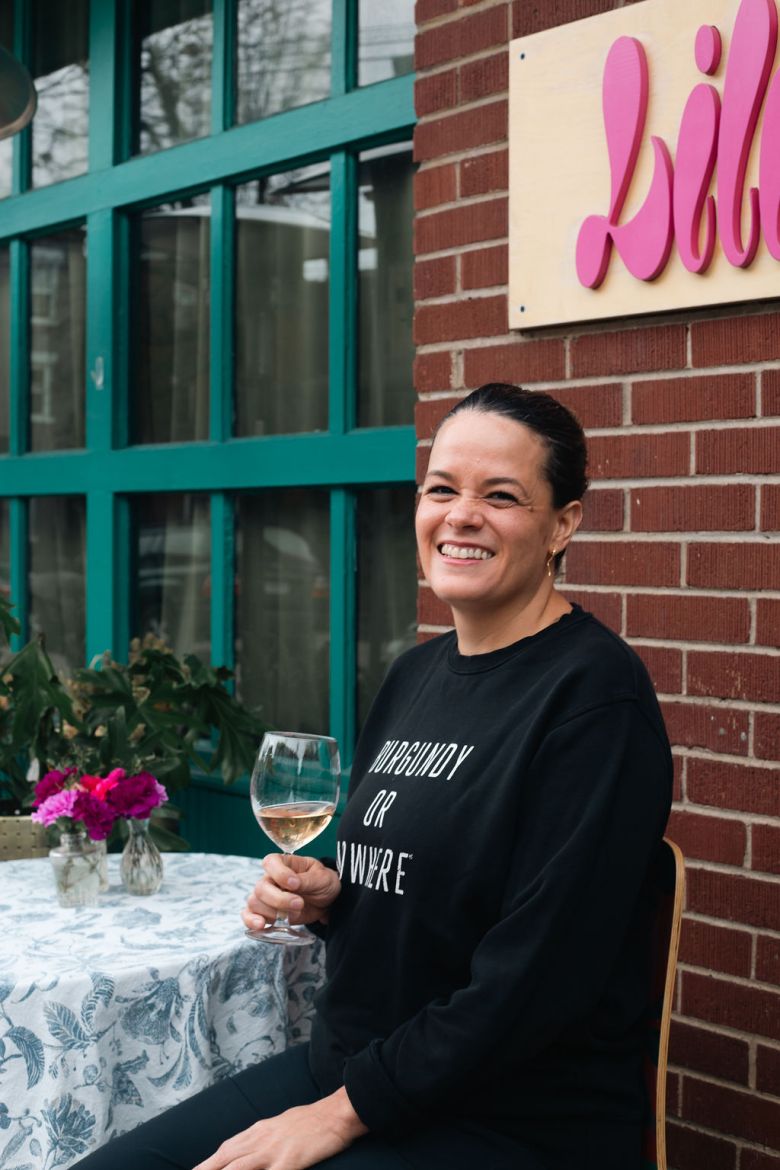 Jamilka Borges. Vania Evangelique
The turning point came when Borges asked DeStefano to make bread. Specifically two Puerto Rican bakery staples Borges missed from childhood: pan sobao and Mallorca bread. Pittsburgh, unsurprisingly, did not have many versions.
DeStefano had never tasted either of them before. She researched them and started work.
The process became a careful back and forth between the two chefs. Each batch was met with detailed critique.
“She would be like, ‘Okay, this is close, but it needs to be more oily,’ or ‘It needs more baking,’” DeStefano said.
DeStefano found herself chasing the elusive combination of oil, heat and timing that would make the bread finally work. After several rounds of testing, DeStefano landed on Borges’ childhood memory of pan sobao — the soft Puerto Rican bread whose name loosely translates to “kneaded” or “massaged.”
“One day I jumped out of excitement after tasting it,” Borges said. “I respect people who are proud of their craft and she showed me that.”
The bread remains a staple on the menu at Lilith today. The impossibly soft pan sobao forms the base of the restaurant’s lobster roll, brushed with olive oil and toasted until crisp at the edges. Lemony achiote dressing soaks through the fluffy bread.
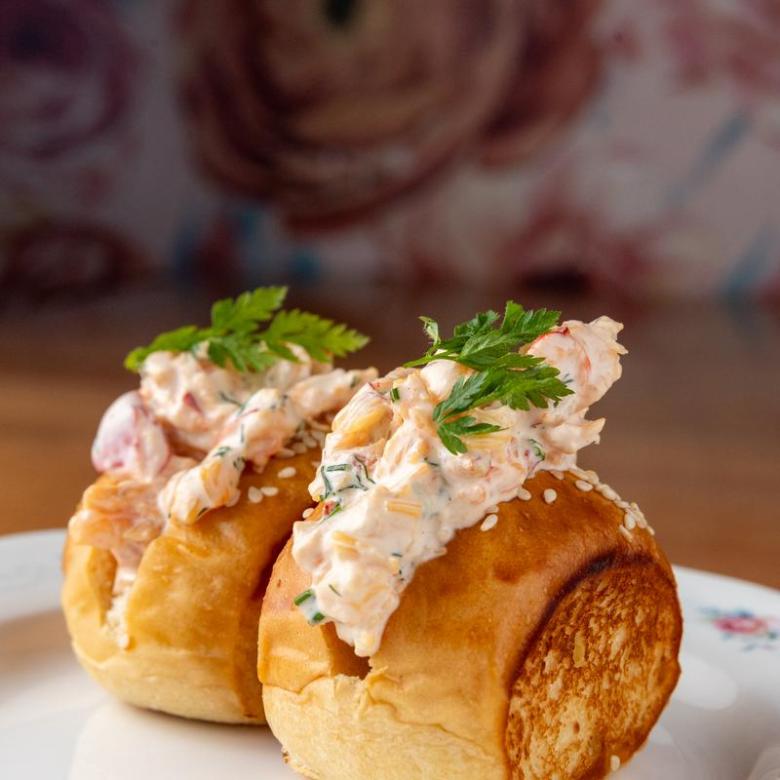
Fancy Lobster Rolls at Lilith include lobster salad, achiote aioli and herbs on pan sobao. Photo courtesy of Lilith.
The bread also appears as crostini served with tuna crudo, sliced thin, brushed with olive oil and sea salt, then baked slowly until crisp.
Over the next decade, Borges and DeStefano kept circling back to each other’s kitchens, working together at places like Independent Brewing Co., Hidden Harbor and Lorelei. Those years of collaboration gradually shaped the cooking that would define Lilith.
By the time they began planning the restaurant, the menu almost wrote itself.
“We clearly come from different backgrounds,” Borges said. “Our style merges when we incorporate a bread or pastry component.”
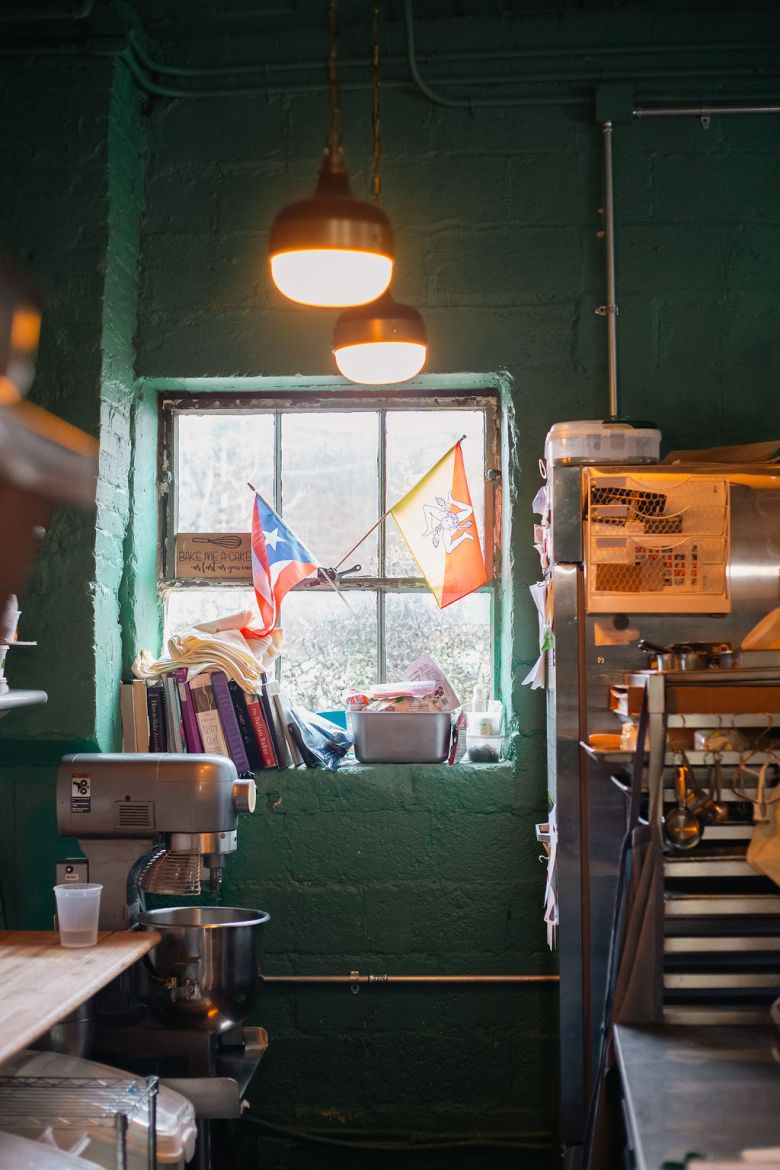 Puerto Rican and Sicilian flags in the kitchen window of Lilith. Photo by Vania Evangelique
Borges grew up in San Juan, Puerto Rico. DeStefano comes from an Italian American family whose cooking leaned heavily toward seafood. Lilith’s food reflects both influences without strictly belonging to either tradition. “I wouldn’t call the food at Lilith traditional Puerto Rican food,” DeStefano said. “But there’s evidence of Puerto Ricanness.”
Both chefs also came of age during the height of the farm-to-table movement.
“That certainly influences the way I cook and she bakes,” Borges said.
The dishes at Lilith often pull from shared memories built over years of cooking together. The lobster roll, now one of the restaurant’s most popular dishes, began as a one-off creation for a fundraiser in Lexington before Lilith even opened.
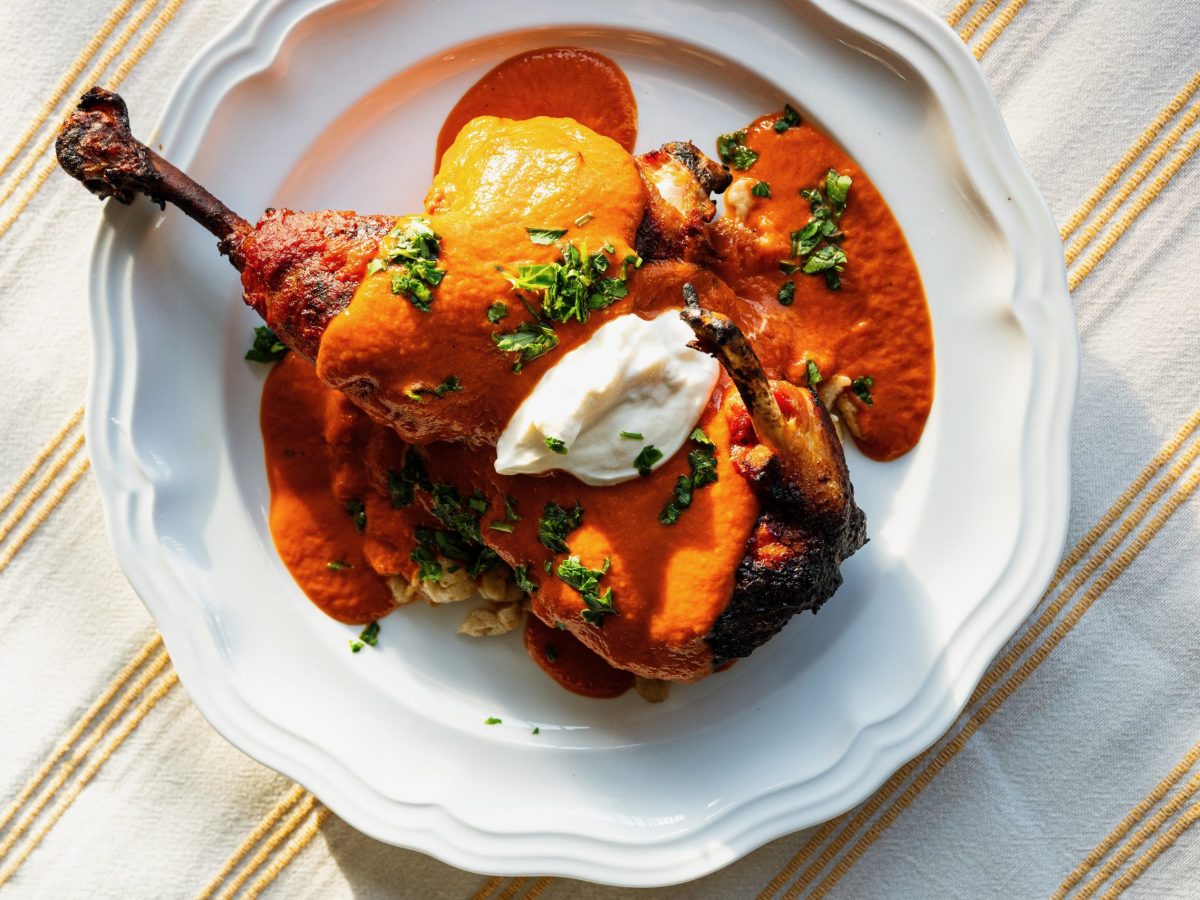
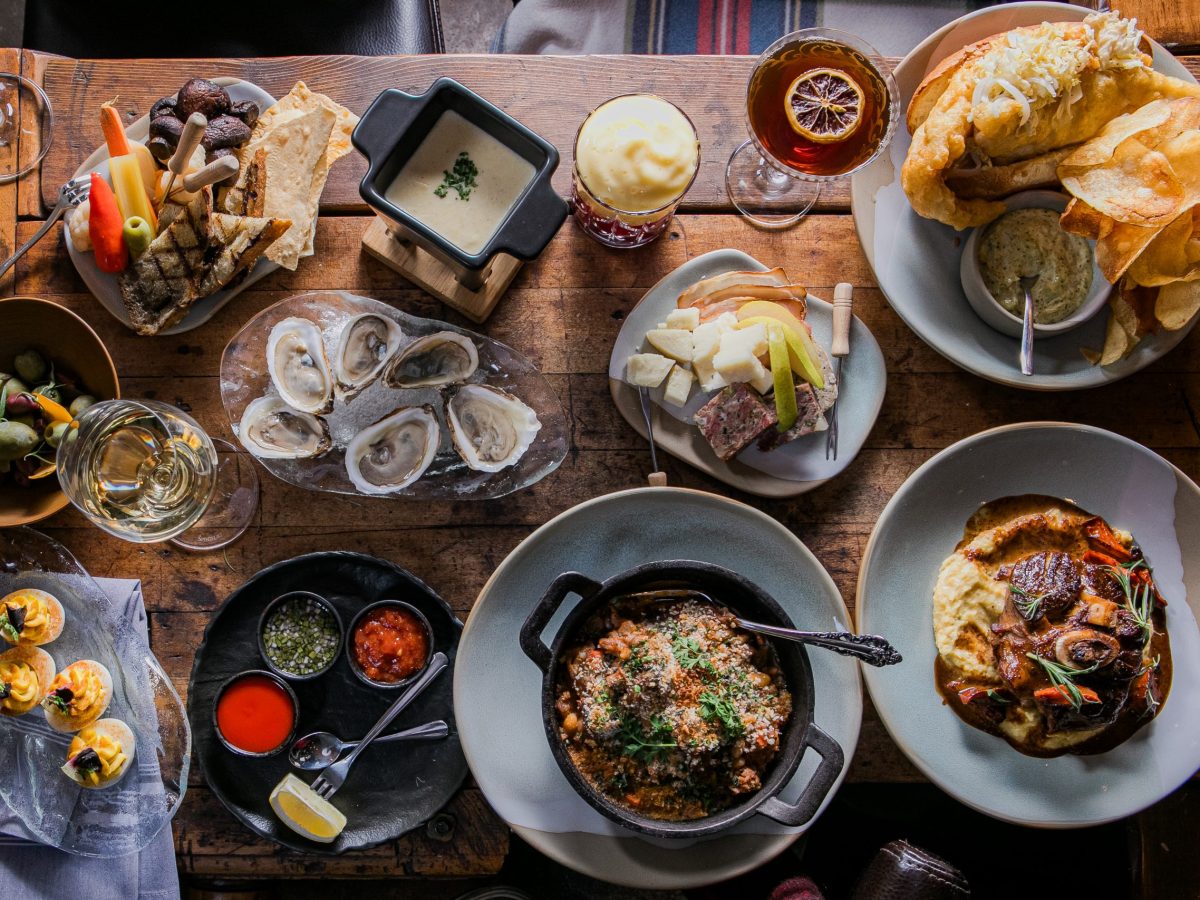
A plate of yuca pierogi, one of the restaurant’s most talked-about dishes, nods to Pittsburgh’s Eastern European food heritage but swaps the traditional potato filling for the Caribbean root vegetable and serves it with romesco instead of sour cream. Seafood leads much of the menu, with dishes like swordfish in ginger-lemongrass broth with clams and taro root or tagliatelle layered with lobster broth, scallops and shrimp. Pastas weave Caribbean ingredients into Italian technique.
Desserts follow a similar pattern of overlap. A passion fruit cheesecake topped with sesame brittle references a traditional Puerto Rican candy.
A different kind of kitchen
Restaurant kitchens have long been associated with yelling, hierarchy and the occasional flying sauté pan. Lilith runs on a different model.“There’s no yelling,” DeStefano said. “Everyone gets along. Everyone works hard. There really isn’t any drama.”
Both chefs say that shift comes partly from time in the industry. After years in professional kitchens, the two say they are less interested in the ego and volatility that can dominate restaurant culture. For DeStefano, the atmosphere is also shaped by her experiences earlier in her career, when intense dedication to restaurants was often expected but not always recognized. Owning a restaurant meant building a kitchen where that dynamic would not repeat.“I never wanted anyone to feel that way.”
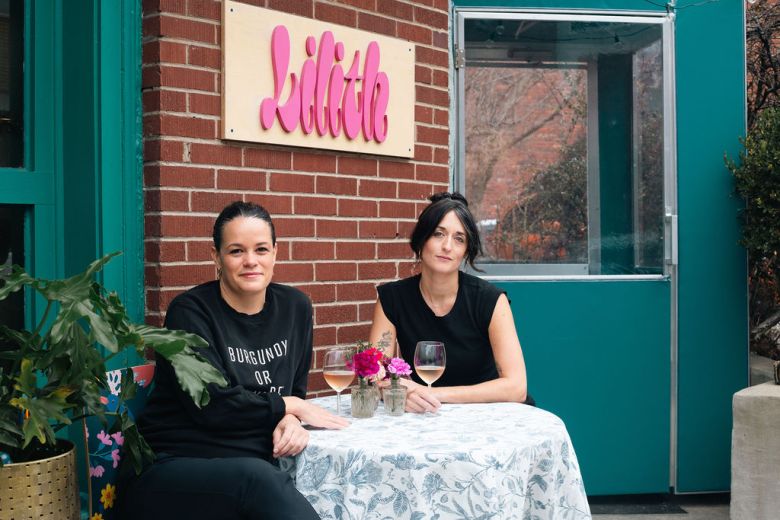 Photo by Vania Evangelique
Borges says the partnership works because both chefs share a similar willingness to take on ambitious projects.
“Dianne is game for all my crazy ideas,” Borges said. “She says yes to events in different states, for 900 people, for 10 people.”
The two chefs also share a broader vision for hospitality that extends beyond the dining room.
“We care about not only cooking but the world,” Borges said. “We want to raise money for nonprofits. We want to be involved in our community.”
The restaurant’s name offers another clue to the chefs’ outlook.
Lilith, in Jewish folklore, was Adam’s first wife, created equal to him, according to some interpretations, and later cast out of Eden after refusing to submit. Over time, the story twisted. Lilith became something darker in later traditions, recast as a demon — a warning about what happens when women refuse to behave.
“Women who are strong and misunderstood get demonized,” DeStefano said.

Spirits at the bar sit behind a candle for the restaurant’s namesake, Lilith. Photo by Vania Evangelique.
For Borges and DeStefano, the name felt fitting. Both chefs have spent decades navigating an industry still largely defined by male owners, male chefs and male-led restaurant groups. At Lilith, management and front-of-house staff are all women.
“I think women should be opening more restaurants,” DeStefano said. “If you have the experience and you know what it takes to run a restaurant, you can do it.”
The bigger vision
Lilith may be small, but the chefs are already thinking bigger.
Where Lilith feels intimate and jewel-like, their next project, Giulia, is envisioned as a larger, more energetic space with a more traditional dining room layout in Bloomfield. The menu will lean toward lighter and playful coastal Italian cooking, shaped by Borges’ “pescatarian passions” and DeStefano’s Sicilian roots.
There is plenty of room to explore Italy’s regional traditions. “It is a coastal approach, and there’s a lot of coast in Italy, ” Borges said.
Pasta will play a central role, with DeStefano planning to install two pasta extruders that will turn out fresh shapes throughout the night. The restaurant will still serve meat — “it’s Pittsburgh, after all,” DeStefano said — but seafood will guide much of the menu. If construction and permits stay on track, Giulia could open by late summer at 4744 Liberty Ave.
Behind both restaurants is a larger plan. Borges and DeStefano hope to build a restaurant group, something still rare for women in Pittsburgh’s restaurant industry. One future project may even be a bakery supplying bread across the group.
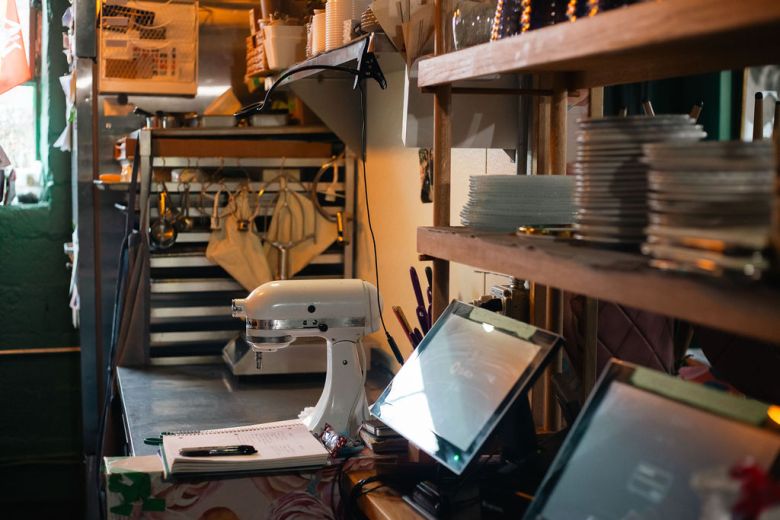 A stand mixer and its attachments, including a dough hook, inside the kitchen at Lilith. Photo by Vania Evangelique
Early in her career, Borges says it was not always easy to find mentors who shared similar experiences. Over time, though, a small group of women in Pittsburgh’s restaurant scene became trusted guides, including Sonja Finn of Dinette, Sherree Goldstein from Square Cafe and Kate Romane of Black Radish Kitchen, chefs she now considers both friends and informal mentors.
For now, though, DeStefano and Borges are still running Lilith every night. And when things go wrong, as they inevitably do in restaurants, they steady each other.
Once, a plumbing disaster threatened to shut the restaurant down for weeks. “I called Jamilka in hysterics,” DeStefano said. “I was sobbing ceaselessly.”
Borges stayed calm.
“She said, ‘Okay, okay. Let’s regroup. Let’s calm down.’”
As it turns out, balance may be the real recipe behind Lilith. “The smaller things are where I get worked up, and Jamilka doesn’t,” DeStefano said. “The bigger picture is when she worries, and I stay levelheaded. It just works out really perfectly.”
February 26, 2026February 26, 2026

February 23, 2026February 23, 2026