
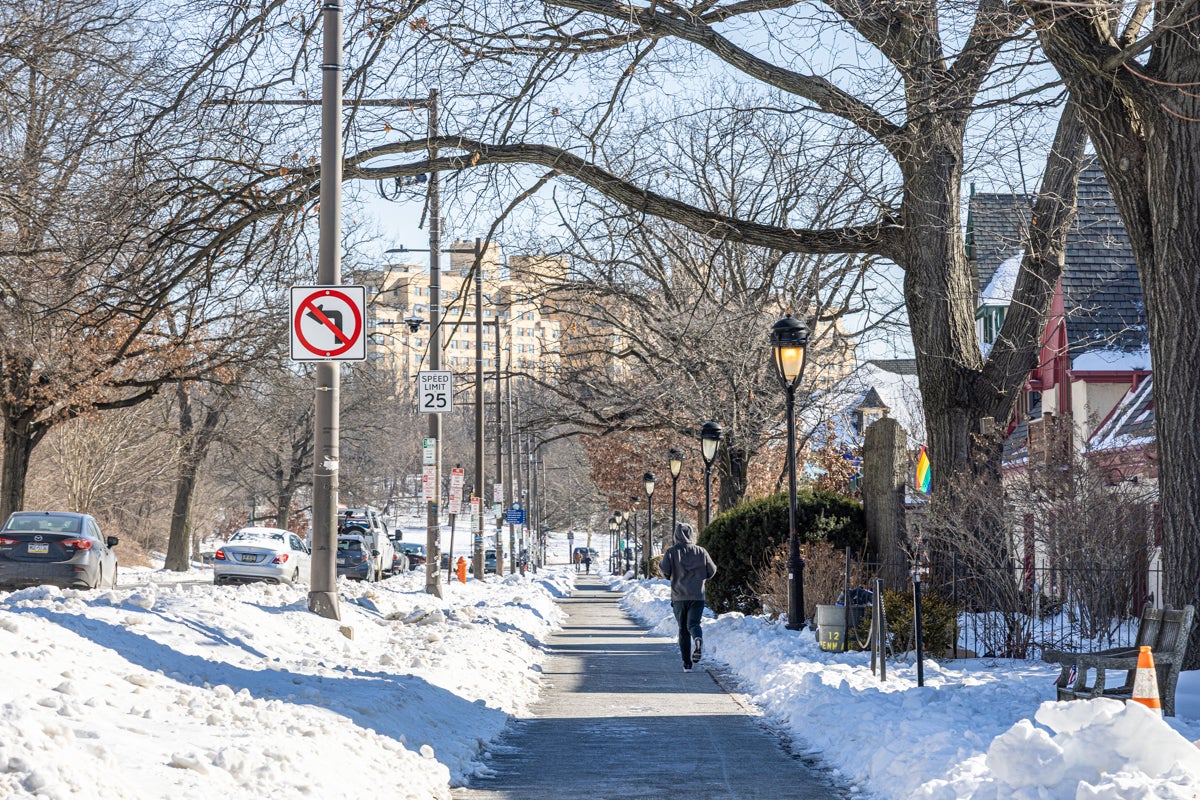
Winter hiking and cross-country skiing: Safety in numbers
Members of the Appalachian Mountain Club’s Delaware Valley chapter are no strangers to frigid conditions, frozen ground and wind chills. They host day and overnight hiking and backpacking trips year-round, as well as biking, cross-country skiing excursions and more, all throughout the Northeast and in urban areas like Philadelphia.
Leading hikes in the winter is “exhilarating,” said Lisa Kleiman, who lives in Bucks County. But she said there are mistakes people can easily avoid.
“If you’re not familiar with hiking in the cold, you may not know that you might not be able to go as far, it might be a little more strenuous, you might be exerting more effort,” she said.
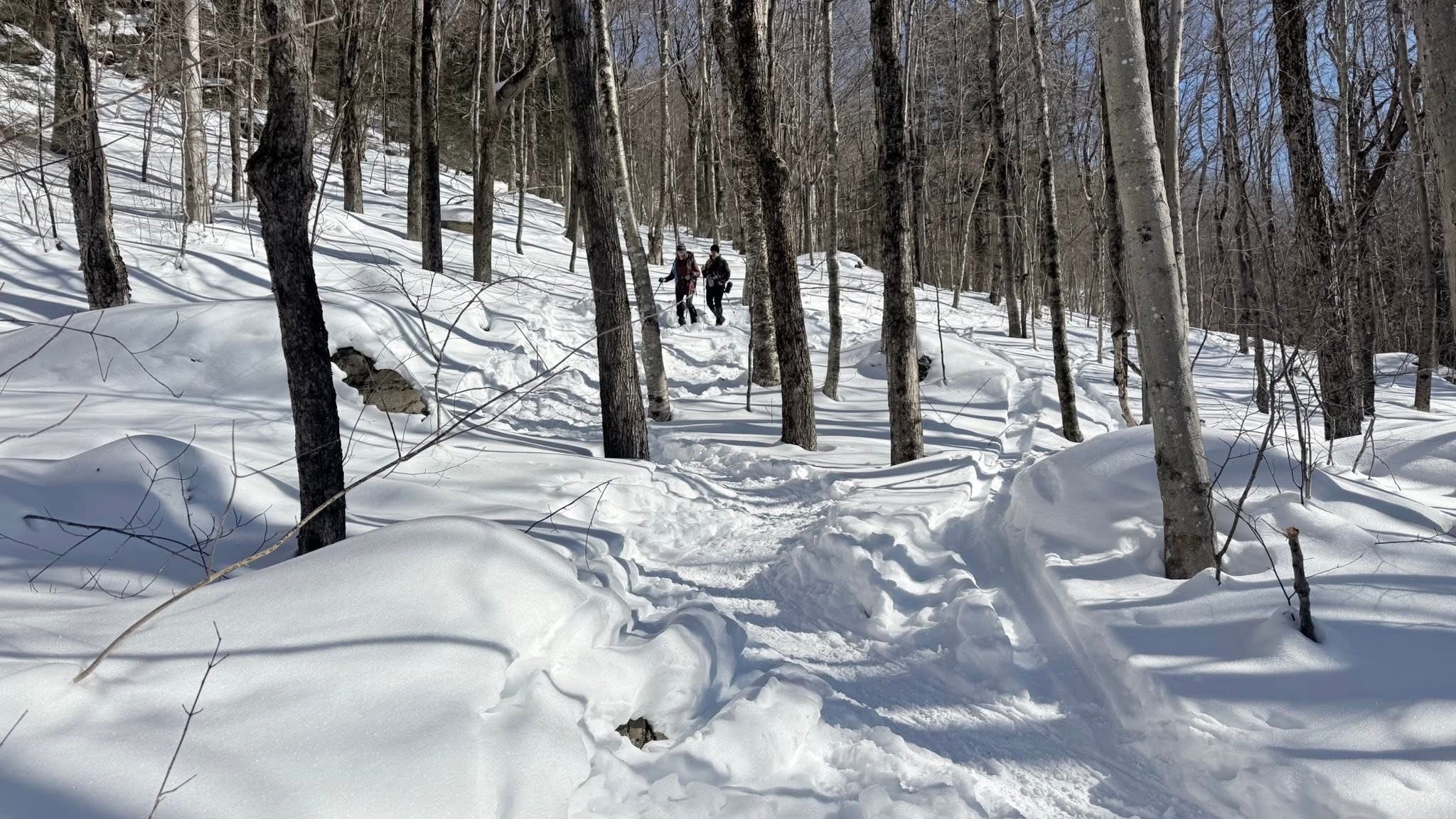 Members of the Appalachian Mountain Club’s Delaware Valley chapter are outside all year, including in the coldest months of the year. The chapter holds day and overnight trips for hiking, backpacking, biking, cross-country skiing and more all throughout the Northeast and in urban areas like Philadelphia. (Provided by Lisa Kleiman)
The best way to get started is by going out in a group, said Joe Nanfara, another member. “Safety in numbers,” he added.
Trained volunteer hikers can guide groups through easy, short trips of just a couple miles with no elevation as well as longer, more strenuous trips of 12 to 14 miles with 3,000 feet of elevation.
If you’re headed out into the back country in winter, Nagara said it’s crucial for hikers, backpackers or skiers to share their itinerary with others and let someone know exactly where they’re going and when.
For those longer trips, hydration and calorie intake is key, said Steven Campanelli, who serves as backpacking chair for the organization.
“Even though you think, ‘I’m not hot, I feel fine,’ every time you exhale, that is moisture that’s exiting your body,” he said. “So, you want to make sure you’re conscious of that and you would drink fluids and replace that.”
Bringing extra food and water is necessary, Campanelli said, because some people tend to burn more energy in the cold. Participants might want to consider eating up to 3,000 calories while outside in the winter and as much as 7,000 calories for extremely cold, extended excursions.
“That’s a lot of calories and your body would definitely use it,” he said.
Other things to pack include essentials like light sources, first aid, a navigation tool, a fire starter and extra layers of different weighted clothing to adapt to temperature and weather conditions, Kleiman said, including additional gloves and socks in case others get wet, which can be dangerous to wear.
Also, be ready to pivot and change plans.
“If you’re not feeling it or if something doesn’t feel right, it’s a little more strenuous than you anticipated or it’s if it seems like it’s taking much longer than you anticipated, it’s a good idea to be cognizant of that and be willing to backtrack,” she said. “The priority should be safety as opposed to achieving ‘X’ number of miles or whatever your goal was. You just want to make sure you’re safe doing it.”
The winter Olympic Games take place through Feb. 22.