
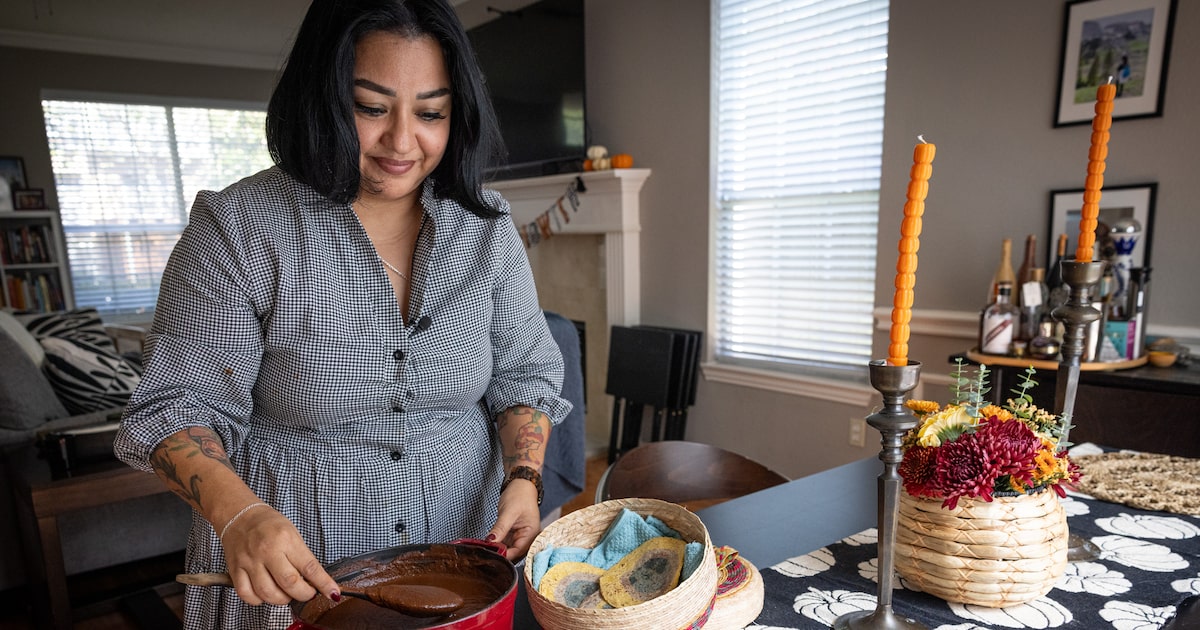
Mole is not only one of the most recognizable dishes in Mexican cuisine, but it’s also one of the oldest, most complex and varied.
Its name comes from the word “mulli,” which in Náhuatl — the language spoken by the Aztecs — simply means “sauce.” Indigenous peoples made thick sauces with chilies, tomatoes, pumpkin seeds, and a plant called “holy herb,” and served it with turkey or duck meat. It was eaten at ceremonies dedicated to the gods. With the arrival of the Spanish conquistadors, other spices were added, enriching its flavor.
The number of ingredients in a mole varies by tradition, with some calling for dozens. The Diccionario Enciclopédico de la Gastronomía Mexicana –or the Encyclopedic Dictionary of Mexican Gastronomy, a definitive text on the country’s cuisine and history – identifies more than 70 different types of mole, depending on the ingredients used and the region where it is prepared.
While there are dozens of moles varietals, hundreds of thousands recipes have been developed by families, passed down generation to generation. There are sweet moles, spicy moles, dark and light moles; moles with vegetables or just meat; moles garnished with sesame seeds or served with rice; and they come in many colors: black, green, red, yellow or orange.
Eat Drink D-FW
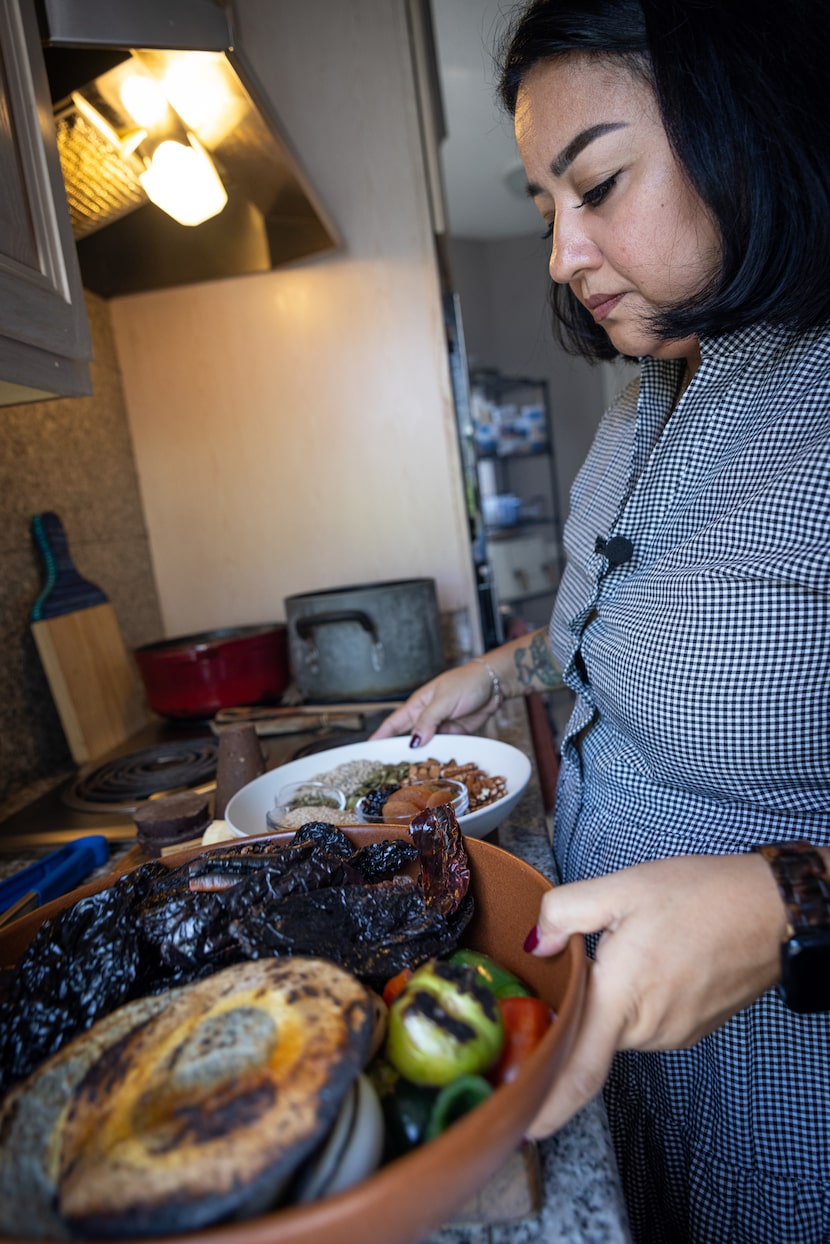
Chef Anastacia Quiñones-Pittman prepares many ingredients including nuts, fruits and vegetables while making mole.
Angela Piazza / Staff Photographer
Anastacia Quiñones-Pittman, one of Texas’ most renowned Hispanic chefs, created her own mole, inspired by her mother’s.
“She made it to show my dad her love and affection,” Quiñones-Pittman told The Dallas Morning News.
The chef said mole is “something that comes naturally to you,” and her own version did.
“My mole is a little bit like me: salty, spicy, but more than anything, it’s made with a lot of love,” Quiñones-Pittman said.
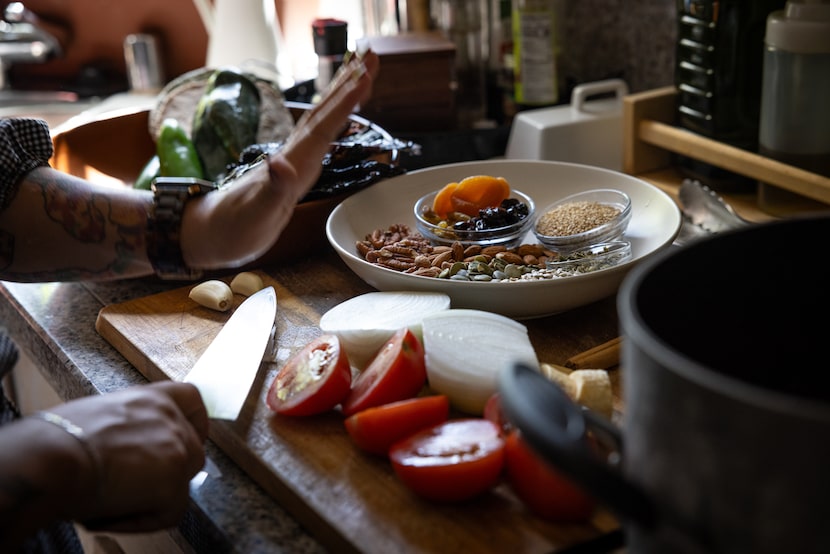
Chef Anastacia Quiñones-Pittman crushes garlic with the flat side of a kitchen knife before searing it on a griddle while making mole at her home.
Angela Piazza / Staff Photographer
Quiñones-Pittman was born in Dallas, and her Mexican roots come from her parents (her mother was born in Nuevo León, and her father, from Durango).
Her love of cooking was born from watching her mother cook not only for her family but also in her catering business.
“I told my mom that I wanted to pursue a career in cooking, and she always said, ‘No, don’t go into this because it’s too much work,’” the chef shared.
Quiñones-Pittman studied at the Culinary Institute of America in New York and after a several-year career, was nominated as a semifinalist in the James Beard Awards in 2022, 2023, and 2024.
She is now the director of Oh Hi! Hospitality and plans to open a restaurant, Eledi, in D-FW.
Related

In her home kitchen, where she hosted The News for a mole-cooking session, a pot of chicken has been simmering for several hours. Other ingredients sit in a bubbling pot. Quiñones-Pittman approaches to stir the pots with a wooden spoon that belonged to her mother.
The chef’s mole contains more than 20 ingredients, including dried chilies, tortillas, tomatoes, seeds, dried fruit, piloncillo, and cinnamon.
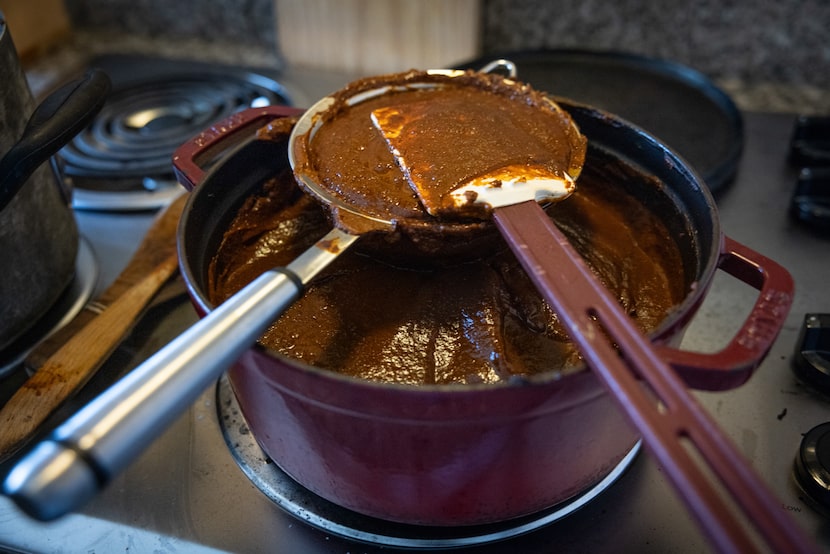
Chef Anastacia Quiñones-Pittman strains mole into a cast-iron.
Angela Piazza / Staff Photographer
The dried chilies, green and red tomatoes, and onions are roasted in a pan and then boiled for two to three hours. The seeds are seasoned, and the tortillas must be charred.
Then everything is added to a blender, to which chicken broth is added, and the result is passed through a strainer, resulting in a thick, flavorful sauce.
“Mole is very different for each person; sometimes it can have up to 30 ingredients or more, depending on what you have in the kitchen,” said the chef. “I, for example, sometimes add cherries or raisins. It depends on what I have at home.”
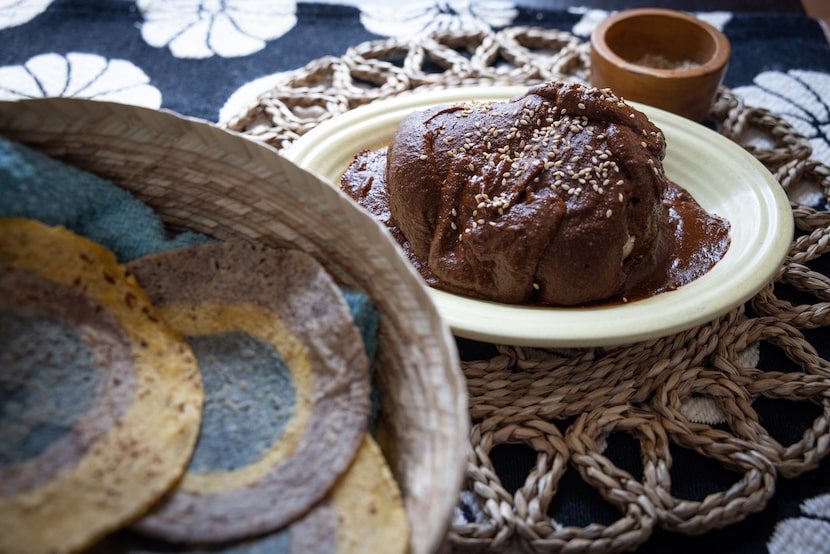
Mole is one of the most representative dishes of Mexican cuisine.
Angela Piazza / Staff Photographer
The Dallas Morning News
This story is part of D-FW Sabores, a series dedicated to finding authentic Mexican cuisine across North Texas, dish by dish, region by region.