
Digital subscribers can listen to this article.
Subscribe today for unlimited access to Texas Monthly. Already a subscriber? Log in.
The black plastic tub of Frozen Bombsicle Ultimate Shred was taunting me again. I am not, by disposition, a gym-powder guy. I have spent most of my adult life mixing nothing more exotic into my water bottle than the water itself. But at my age, it’s harder to get the same results from the kind of exercise I got twenty years ago. The idea of a preworkout boost sounded great.
I was hoping to benefit from ingredients such as CaloriBurn, an extract from a pungent West African spice known as grains of paradise, and Oligonol, an antioxidant blend made from lychee extract—both of which have been shown to help the body burn off stubborn belly fat. I was curious about the “AI-powered peptides” mentioned on the label, a trademarked blend known as PeptiPump that promotes blood flow to keep you feeling, well, pumped.
Alas, I’d already had my standard two cups of coffee, and throwing down another three hundred milligrams of caffeine, the equivalent of three to four more cups of joe, felt like it would stress my 52-year-old heart a little too much right before a sustained period of strenuous exercise. I also felt a little intimidated. The powder’s branding performs the labeling equivalent of a bouncer’s job, ushering in the hardcore muscle crowd and scaring off normies like me.
Fortunately, the same company sells gentler stuff, and I loaded up on that instead—an electrolyte mix, a scoop of creatine, a daily greens powder I stirred in for good measure. The maker: an Austin-based outfit called Nutrabolt.
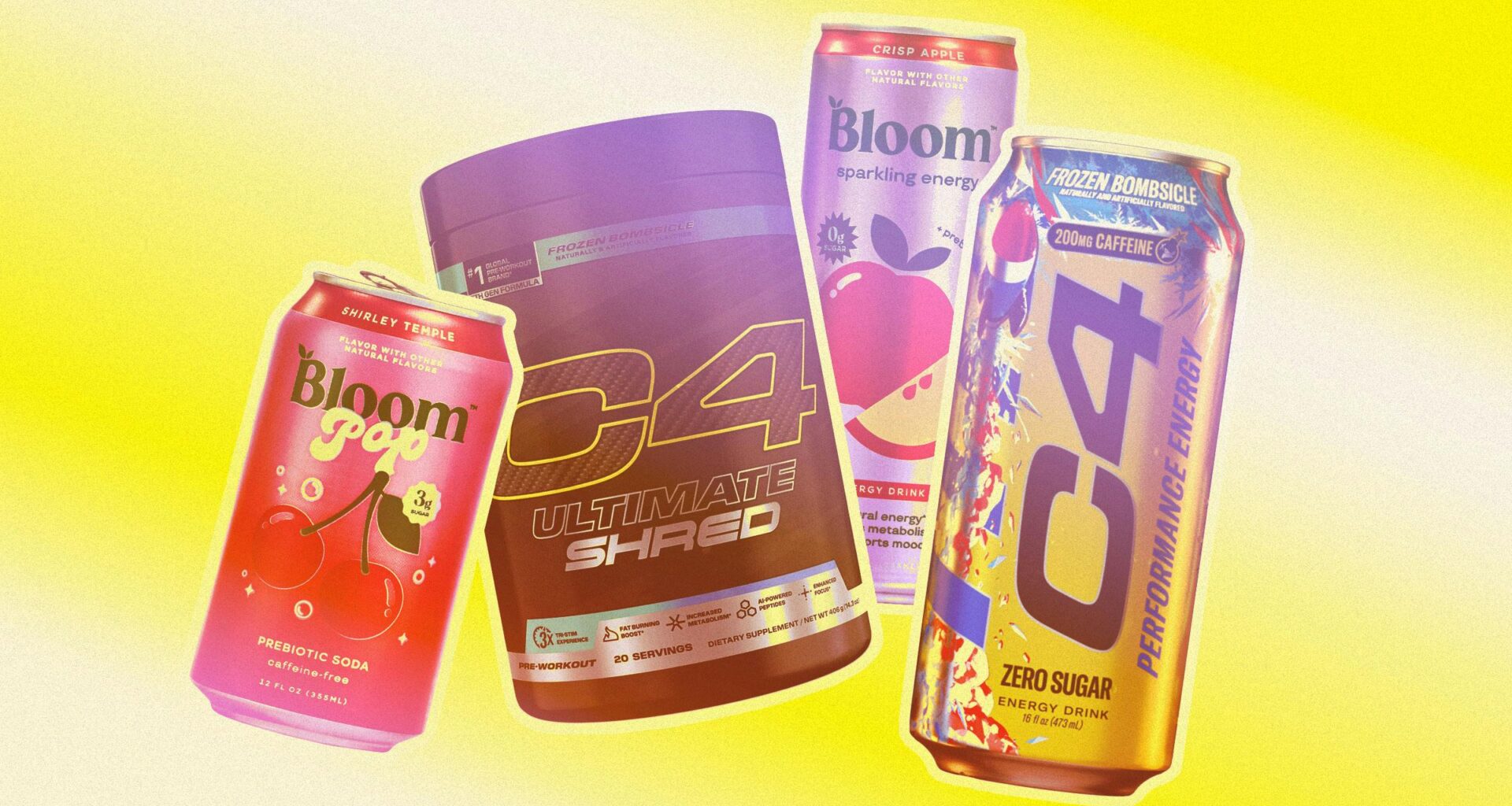
If the name doesn’t ring a bell, that’s because it’s a parent company better known for the brands underneath it: C4, which produces a line of energy sodas that compete with Red Bull and Monster and muscle-building powders like Ultimate Shred; Cellucor, which sells other performance supplements, including creatine and testosterone boosters; and XTEND, which offers still more tubs of powder, these with an emphasis on recovery.
Still not ringing a bell? Do you even lift? As of last year, Nutrabolt is also the majority owner of Bloom Nutrition, a pastel-branded sodas-and-supplements brand aimed at young women, whose products have been impossible to miss during the past couple of years at Target or on Instagram and TikTok. Teen girls are obsessed.
All told, Nutrabolt hauled in more than a billion dollars in revenue last year. To put that in perspective, consider that two of the biggest headline-grabbing triumphs of Austin’s booming food-and-beverage industry—the Mexican-food brand Siete and the trendy soda company Poppi—each had about half the sales of Nutrabolt when PepsiCo spent billions acquiring them both last year.
Behind Nutrabolt’s rise is a clean-cut 43-year-old Texas A&M grad named Doss Cunningham, who pitched in at a struggling start-up while he was still in college, took the thing over, and spent the next twenty years building it up. Today, with wellness a national religion and energy drinks crowding out everything else in the gas station beverage cooler, Nutrabolt faces an opportunity to vault from a niche player to a supermarket juggernaut.
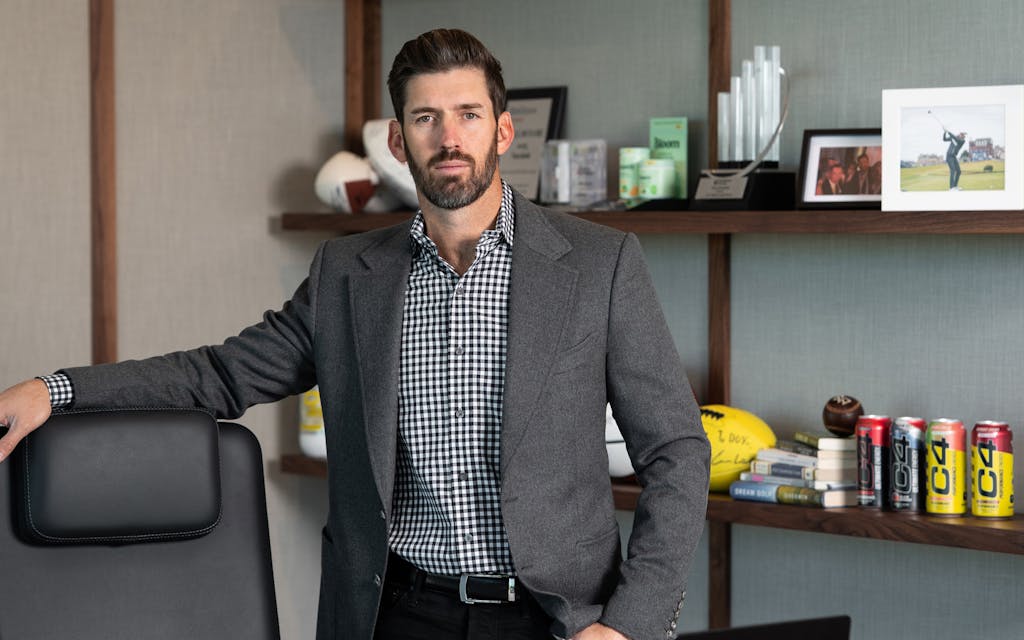 Nutrabolt CEO Doss Cunningham.Courtesy of Nutrabolt
The company almost failed before it ever really got started. A native of Austin, Cunningham went to A&M to be an engineer, switched to finance, and by 2003 was nearing the end of the five-year accounting program that funnels Aggies into the Big Four accounting firms. He’d interned at one of them, Deloitte, and had an offer in hand. Then, as he puts it, “life changed” when he met Poul Bodholt, the cofounder of a supplement retailer in the College Station area called Nutritec. Cunningham’s roommate had taken a job working for Bodholt and invited the boss over for a barbecue.
About a decade older and deep into bodybuilding culture, Bodholt had watched his business get crushed even as the supplement industry was taking off. Walmart and various online discounters were undercutting everyone else on price. To counter that, Bodholt had launched a new company that made a supplement brand, Cellucor, that tried to justify higher prices by using premium ingredients. He was, in Cunningham’s words, “a big dreamer” who wanted to “take over the world,” but he lacked financial discipline. After Cunningham agreed to do a little freelance bookkeeping, he discovered the company would be insolvent in a matter of months—and he got obsessed with trying to solve the problem.
Fifteen hours a week working for Bodholt became forty, then eighty. He stopped going to class, kept his degree alive on the goodwill of professors, and set about making some basic changes. Chief among them: Salespeople would earn commissions not when sales were booked but when the customers actually paid. That addressed much of the cash flow issue because it incentivized the sales team to extract money from clients rather than just sign contracts.
Cunningham rose from weekend fixer to the guy running the company, and in 2007 he bought out Bodholt. About a decade later, he turned Cellucor’s powders into a carbonated energy drink called C4, which vaulted the company from the shelves of GNC to grocery and gas station coolers nationwide.
Energy drinks had long offered blasts of sugar and caffeine. They were basically soda on steroids. But C4 was at the forefront of a new wave of zero-sugar options—alongside fast-growing rivals like Celsius—that pitched active health benefits instead of just a jittery buzz. It was a shift that mirrored Austin’s rapid emergence as a capital of wellness culture and better-for-you grocery products. Keurig Dr Pepper, based in Burlington, Massachusetts, and Frisco, wrote an $863 million check for a 30 percent stake in Nutrabolt at the end of 2022 and plugged C4 into its sprawling delivery network, completing Cunningham’s transformation of the company from a dying specialty brand into a supermarket staple.
As the market expanded, a stark realization set in. Energy drink consumption had been an overwhelmingly male pastime for most of its history, but the industry was changing. Celsius, with its gender-neutral, everyday-lifestyle branding, was picking up female consumers. Then came a wave of pastel-hued, explicitly female-coded upstarts like Alani Nu that proved women wanted energy drinks too—they just didn’t want the aggressive, bouncer-at-the-door branding. Nutrabolt was leaving half the market on the table. “The female consumer had been woefully underrepresented,” Cunningham says. “It wasn’t because she didn’t consume caffeine or didn’t have the same energy needs as men. It’s because the brands didn’t identify that way.”
If Cunningham wanted more women as customers without diluting C4’s appeal to men seeking high-octane gym performance, he couldn’t just launch a line of pink cans. He needed a partner—a brand that already possessed undeniable cred among women.
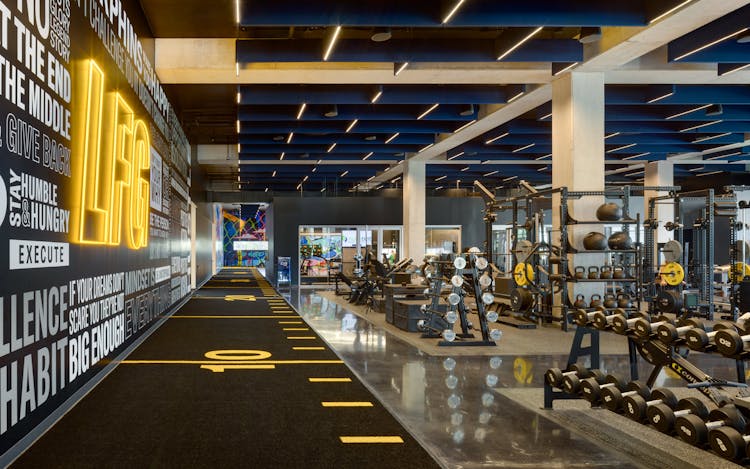 A gym at Nutrabolt’s headquarters. Courtesy of Nutrabolt
  An aerial view of Nutrabolt’s office building, in the Westlake area of Austin. Courtesy of Nutrabolt
LFG,” it says in big yellow letters in the center of a wall of quotes exhorting effort and ambition at Nutrabolt headquarters. That’s shorthand for “Let’s F—ing Go,” in case you don’t spend a lot of time in locker rooms. “Rise & Grind.” “Execute.” “Hustle.” The quotes sprawl across a long wall like a start-up-culture word cloud. “If your dreams don’t scare you, they’re not big enough.”
Nutrabolt’s custom-built 75,000-square-foot office building, perched atop a hill in the Westlake area of Austin, presents like a temple of hustle culture, with black glass and matte-black siding, a cluster of black SUVs in the parking lot, and a forty-yard football field just beyond that. Inside, a few offseason professional athletes grind through their workouts in a cavernous black weight room opposite the quote wall. There’s a boxing ring, a basketball court surrounded by graffiti murals, a complex of wellness and recovery rooms offering cold plunges, red-light therapy, saunas, and a hyperbaric chamber. Oh, and upstairs: the corporate cubicle farm and executive suite where actual business happens.
For all of Nutrabolt’s thundering swagger, the man who built the company keeps a low profile. He’s all-American handsome and almost soft-spoken as he explains his ambition in measured terms. Cunningham has never once posted on Instagram and fiercely protects the privacy of his wife and young kids. “No one knows who I am,” he says. “I try to stay out of the headlines.” When Nutrabolt crossed a billion dollars in annual sales, the company didn’t throw a party. “We held a town hall, acknowledged the milestone, then just kind of got back to work. It wasn’t a reason to stop moving forward. So now we’re moving the business to two billion.”
As recently as early 2024, when Nutrabolt made its first investment in Bloom, it wasn’t clear that billions would be on the horizon quite so suddenly. Bloom founders Greg LaVecchia and Mari Llewellyn, a married couple, had spent five years cultivating exactly the audience Cunningham needed. Llewellyn had built a following as a social media influencer documenting her weight-loss and health journey, and LaVecchia helped turn that crowd into customers for a line of powders and supplements. But they had struggled to line up funding to expand into beverages. Cunningham offered to buy into the business and partner on drinks.
A quick side note here: As documented extensively on his Instagram feed, LaVecchia has almost comically sculpted six-pack abs, the kind of triangular neck-to-shoulders transition that can damage a T-shirt collar, and an easy smile. The combination makes it seem as if he was specifically engineered by the algorithm to sell wellness, like a photoshopped embodiment of the lifestyle—and a stark contrast to Cunningham, who says Nutrabolt has been sharpening its social media game thanks to Bloom’s example.
Nutrabolt bought 20 percent of Bloom for $50 million. Six months after the deal, Bloom energy drinks had landed on Target shelves nationwide, lightning fast for a national launch of an entirely new product line. Where C4 promised sports performance, Bloom leaned into everyday wellness, pairing caffeine with prebiotic fiber and apple cider vinegar to create something that felt as indebted to another Austin fizzy-drink company, Poppi, as to the traditional energy drink aisle. (Bloom later introduced a second line, Bloom Pop, without caffeine that competes more directly with Poppi in the so-called better-for-you soda category.) Almost immediately, it was clear the brand had struck a vein. Within roughly two years, Bloom has produced some 500 million cans of its energy drink, at an average sales price of roughly $2 per can. The success prompted Nutrabolt to buy a controlling share of Bloom.
As of early 2026, sales of energy drinks have catapulted past bottled-water sales to take over the number two spot among sales of nonalcoholic packaged beverages, with nearly $25 billion in the preceding year. Only traditional sodas sell more than energy drinks, about $30 billion over the same period, but sales of those have flatlined. Wall Street has noticed the growth in energy, and the larger players have been consolidating. Celsius spent $1.8 billion acquiring rival Alani Nu last year, not long after Keurig Dr Pepper bought a majority stake in Ghost. Monster owns a whole suite of niche brands with names like Bang, Burn, Full Throttle, and Predator.
Cunningham is thinking bigger than that. He talks not of building the next big energy drink group but rather of a loftier vision: what he calls “the P&G of health and wellness,” a reference to Procter & Gamble, the consumer goods giant that owns dozens of separate, category-leading brands, from Tide to Pampers to Gillette. Cunningham sees room for Nutrabolt products centered on cognition, hydration, relaxation, coffee, and other corners of the wellness economy.
In May, the company announced it had hired a veteran consumer goods executive with experience at the Hershey Company and Keurig Dr Pepper as president and COO. In late June, news leaked to Reuters that Nutrabolt had hired JPMorgan, Goldman Sachs, and Bank of America to prepare a possible initial public offering that could raise as much as $1 billion. “Nutrabolt does not comment on the accuracy of reports regarding potential IPO plans or other market speculation,” a spokesperson told me when I asked about the report.
But just a few days before the news, Cunningham had been less ambiguous when I asked whether the company’s future lay in an IPO. He explained that in a perfect world, he’d keep the company privately held forever, but going public would give him more resources for acquiring more businesses. “I could see us being a public company,” he said. “We’re ready to be a public company.”
Okay, okay, they’re printing money. But supplements are a notoriously snake oil–y industry, and no company demonstrates better than Nutrabolt how the supplements industry and beverages are colliding. Which raises the question, Does any of the stuff work?
A couple of floors down from Cunningham’s office is the lab run by Nutrabolt’s vice president of scientific affairs, the former editor in chief of Muscle & Fitness magazine with a doctorate in exercise physiology, Chris Lockwood. Inside is a wireless EMG system that reads how hard a person’s muscles are firing, a DEXA scanner paired with a body-composition device that maps how much of you is water versus muscle, and a dynamometer bolted to the floor to measure force. Lockwood, who has a spiky buzz cut and wears a black polo with the word “Boom” on the breast, compares that last machine to one used by Sylvester Stallone’s Russian opponent in the training sequence from Rocky IV. “Remember when Ivan Drago is doing the high-tech stuff and Rocky’s out there in the snow? That’s what this is.”
All of this equipment exists to test how Nutrabolt’s products affect people’s exercise and results. The company also funds research at several universities, including Auburn, Iowa, Nebraska, and Tarleton State—often to back up efficacy claims based on Lockwood’s internal research. Lockwood is careful to note the studies go through each school’s own institutional review board and that anything headed for publication gets cowritten by an outside coauthor. “I get so much conflict of interest criticism,” he says.
Nutrabolt makes countless variations of its products, with varying strengths and combinations of ingredients, and they’re frequently updated—and Lockwood admits not every one of them gets a full study. “It’s kind of a dance with me and product development and the brand teams,” he says. Usually a full review happens only if a product contains a new ingredient or involves a marketing claim the brand wants to push.
C4 Alpha Bomb, a powder that comes in a bomb-shaped canister, got a study before it was released last May. Marketed as “the highest-stim pre-workout in C4 history,” the product is built around an ingredient called Deura9 caffeine, which claims to provide longer-lasting energy. The powder’s caffeine load totals 336 milligrams per serving—a bit shy of the FDA’s 400-milligram safe daily caffeine intake recommendation. Lockwood ran a three-week study using eighteen personal trainers and military veterans to measure Alpha Bomb’s effect. My tub of Ultimate Shred got no such treatment.
The company likes to point out that a few of its products, including a couple of canned sodas and some powders, carry a third-party validation called NSF Certified for Sport—which sounds like a way to say they’re effective but really just means they’re free of substances banned from competition and adhere to certain manufacturing standards. (A can of Coke Zero could theoretically be NSF Certified for Sport if Coca-Cola wanted to go through the administrative hassle involved.) Alas, my Ultimate Shred lacks this qualification, thanks to several stimulants it contains, such as a root-bark extract called Rauwolfia vomitoria (the FDA has concerns about it causing irregular heartbeat and seizures).
The independent science on such heavy stimulant formulations is more cautious than corporate marketing departments like to admit. Experts generally agree that caffeine is an effective performance booster—but slamming massive doses of it right before a workout introduces genuine cardiac risk. Dr. John Higgins, a sports cardiologist at UTHealth’s McGovern Medical School, in Houston, who also works with the Houston Rockets and Rice University Athletics, has spent years researching energy drinks. When it comes to the cocktail of secondary ingredients floating alongside the caffeine, he is skeptical. “Evidence to substantiate claims that ingredients other than caffeine contribute to performance enhancement is minimal,” notes a study Higgins led for the American College of Sports Medicine. Isolating the impacts of those extra stimulants is a source of frustration for independent labs, largely because the products combine so many different ingredients in different ways and, especially in the case of canned drinks, provide little to no dosing information on their labels.
At Nutrabolt, the formulations themselves are the work of Frank DiLorenzo, the VP of product development, a nutritionist and former high school power lifter whose lab, just upstairs from Lockwood’s, is a clutter of jars of ingredients ranging from peptide solutions to flavorings. On this day, he’s been busy ensuring that a new batch of rose-hued Bloom gummies comes out a more consistent color. Much of his work centers on “sensory” elements, the most obvious being taste. And one thing to know about the taste of most of these products: They’re extremely sweet. Caffeine alone is bitter, and amino acids can carry a sour or salty edge, so a big sweet flavor is largely there to cover what’s underneath it, DiLorenzo explains. Also, sweet stuff sells.
Appealing to mass-market tastes is, of course, a constant balancing act with maximizing shred for the muscle crowd. Canned C4 was reformulated this year, for instance, after the company concluded that too many first-time users were freaked out by its signature side effect: a pins and needles tingle across the skin and scalp caused by the amino acid beta-alanine. The tingle, known as paresthesia, is harmless, but Cunningham told me that the people who try C4 and don’t come back because of the tingle outnumber those who value the beta-alanine, which is meant to reduce the muscle-burn feeling after a workout. The amount of beta-alanine per can, widely reported to be 1.6 grams, is being dropped by more than half—enough of a cut that the new dose is likely too small to do much of anything. C4 powders, meanwhile, still carry several grams of the stuff. Those products are more geared to the hardcore users anyway.
The new drink formulation is more consistent with how the product is actually being used, it turns out. Cunningham told me roughly 70 percent of canned C4 sales happen at convenience stores, clustered around two times of day: early morning and around four or five in the afternoon, when tradespeople are grabbing a can on the way to or from a shift. It’s less a gym product than a commuter one—a replacement for coffee or a Big Gulp.
From Cunningham’s desk, he can see the mansion-studded hills of Westlake, Italianate villas and white modern boxes that keep the best views for the few and fortunate. It’s not the Austin he grew up in. Nor is the crowd at the C4 Performance Center gym, where the non–staff members are an invite-only crew of elite athletes and friends of the owner.
One of the regulars who works out here runs a political marketing and fundraising agency whose clients include Ted Cruz, JD Vance, and Ron DeSantis. The venture capital billionaire and conservative firebrand Joe Lonsdale likes to drop by as well. Cunningham says he found himself at a dinner recently with Michael Dell, Elon Musk, Airbnb cofounder Joe Gebbia, Lonsdale, and a few other business titans who’ve settled in Austin. “I was like, ‘Who am I? Where am I?’ ” he says. But he belongs at their table now—or, if not quite yet, he will be after the likely IPO.
That elite status is the direct result of the endless gas station–register rings, of course. The candy-sweet soda funds the high performance social club and allows Cunningham to cut sponsorship checks to global sports icons like Philadelphia Eagles superstar Saquon Barkley and newly minted NBA champion Josh Hart of the New York Knicks.
On this day a trainer named Zach Urbanus, who has helped develop multiple NBA players, is working with some highschool standouts on the basketball court, across from a mural that reads “Be the One.” Former Spurs and Longhorn power forward LaMarcus Aldridge was working out here just yesterday. Another of the dozen trainers who use the space, Tim Riley, is famous in the fitness world for prepping college football stars here for the NFL Combine, including six current Longhorns.
Their purpose in the building has more to do with creating a vibe, curating a community, like having an ongoing concert series in the lobby of a record company. It works. I’m more of a YMCA type, but I came away inspired by all the athleticism and determined to stare down that tub of C4 Frozen Bombsicle Ultimate Shred and see what it could do for me.
A few mornings later, I skimped on my coffee and mixed a scoop of the off-white stuff into a water bottle. I put creatine and electrolyte powder in a second bottle to drink at the gym and mixed a third with XTEND Original BCAA recovery powder, which aims to ease postworkout soreness.
The instructions say to drink the Shred twenty to thirty minutes before working out, so I downed it in the car as I ran a couple of errands on the way to the gym. It tastes remarkably of cough syrup, that superconcentrated artificial taste that has nothing to do with whatever flavor the label announces, though in this case, what even is a bombsicle? And the beta-alanine tingle is real. The preworkout powders contain 3.2 grams of it, the bottom end of the range of what bodybuilders tend to use daily. Within about ten minutes, my forearms, hands, and lower legs were alive with pins and needles—a not entirely unpleasant but also somewhat unsettling feeling. If I hadn’t read about it and talked with the people who make the product, I would have been alarmed.
The caffeine also kicked in—at three hundred milligrams, of course it did—but not in a way that gave me the jittery feeling of too many cups of coffee. Were the other ingredients—PeptiPump, CaloriBurn, and Oligonol—doing their work, silently instructing my body to burn more fat or opening the vascular floodgates to engorge my muscles with blood? What about the MitoBurn, whose key compound, L-BAIBA, has been shown in limited studies to be an effective fat melter in mice? Who can say? As another Austin gym owner and supplement CEO I spoke with told me the day before: “The power of a placebo is greater than almost anything else you can access.”
I ended up having a decent workout. Definitely higher-energy than the day before—thanks, caffeine? And I didn’t cramp up at any point—thanks, electrolytes? I’ve been taking creatine on and off for the past year or so, and I have no reason not to trust the countless studies that support its efficacy at helping squeeze out a few extra reps per exercise.
But when I got home later, I couldn’t shake the feeling that the workout had existed on a slightly different plane of experience. I’d ingested a potent cocktail of psychoactive, neurological, and cardiovascular drugs. Ultimate Shred contains tyrosine and huperzine A, so-called nootropics designed to boost dopamine production and lock in a kind of chemical tunnel vision. Other stimulants in the mix include Dynamine and TeaCrine, both of which act like caffeine but delay the crash. There’s citrulline too, a vasodilator that drastically increases blood flow while dropping blood pressure, leading to a detached, floaty sensation. I was high.
As I cracked open the bottle of XTEND I’d prepared, I was left with the feeling that getting fitter/stronger/healthier and choking down another fourteen ounces of synthetic powder juice, this one in a shade of aqua to reflect its Blue Raspberry Ice flavor, don’t feel like goals that coexisted in the same realm. And this was before I even considered a dose of Bloom Strawberry Kiwi daily greens powder, let alone cracking a fizzy can of energy for a pick-me-up later. The instructions on all of the powders tell me I’ll get more benefit if I take them daily. But, in that moment, I was craving a bowl of actual cooked greens, maybe a piece of fish. Some herbal tea, or better yet, water, even if it meant I’d end up less shredded.
I thought that was where this story would end, a tidy victory for whole foods and normie skepticism. But when I woke up the next morning—having followed an unusually strenuous workout with four entirely unnecessary drinks with an old friend—my limbs didn’t ache. My head didn’t throb. At an age at which that combination should have left me bedridden well into the day, I felt entirely unscathed. The energy powders and potions had worked their dark magic. I nodded my cautious respect to the menacing black tub and mixed another round that afternoon.
Read Next