
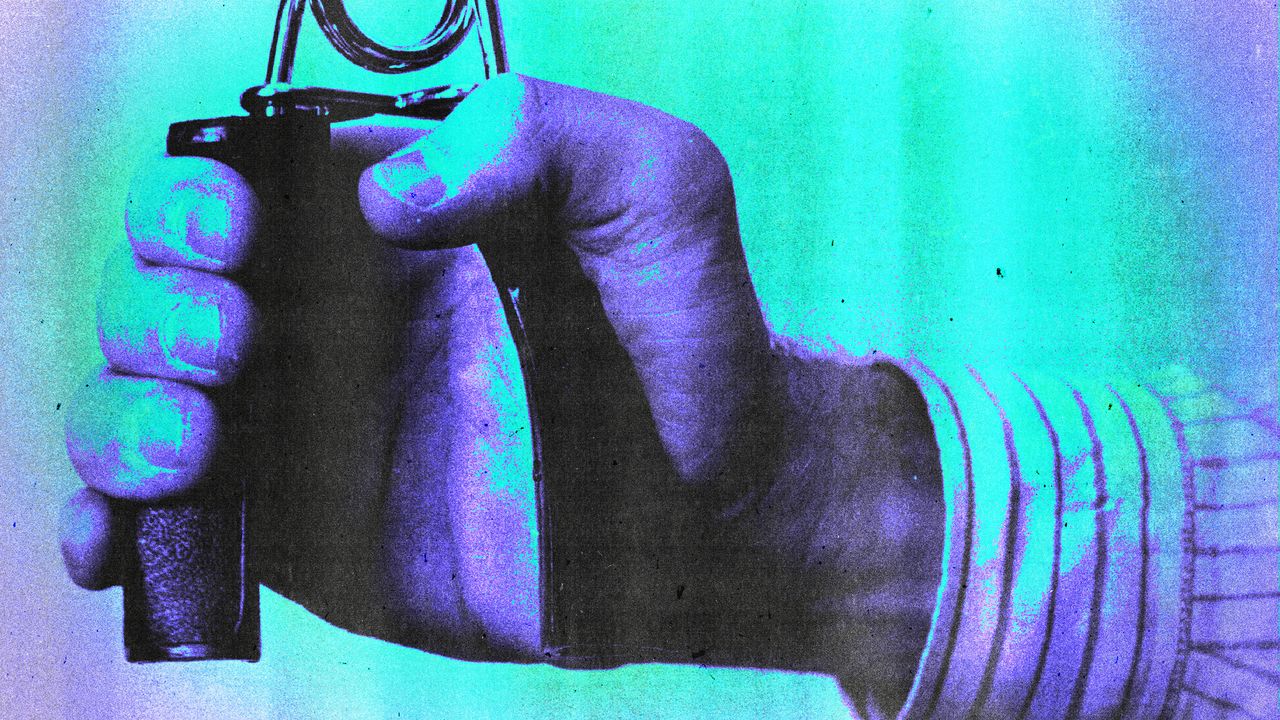
Unless you’re deep into the world of optimization, you might not know how to improve your grip strength, or why that’s even important. Sure, toting around your grocery bags can be testing if you’re struggling to remember where you parked, but otherwise, you’re probably not picking things up and thinking ‘Wow, I wish I gripped that a bit harder.’
Yet, as UK-based physical trainer Ben Dillon (founder of the Myo Room and an expert at Exercise With Style) explains, there’s more to grip strength than you’d think.
What does ‘grip strength’ really mean?
“Grip strength is defined as the force exerted by the muscles in the hand and forearm to hold onto an object,” explains Dillon. Those muscles include the biceps brachii and brachioradialis; triceps brachii, the flexor carpi radialis and flexor carpi ulnaris; extensor carpi radialis and extensor carpi ulnaris muscles. But what does this motley collection of muscle fibers actually do?
“These muscles work together to control the hand’s ability to grip and hold objects of different shapes and sizes, from small objects such as coins to large objects such as a basketball,” says Dillon.
Why is grip strength important in the gym?
In short, grip strength is important during your workout so that you don’t injure yourself. Deadlifts, pull-ups and kettlebell swings (for example) might not go so well if you’re not able to hold them tight. But good grip strength is also crucial for improving performance and increasing overall strength for exercises like deadlifts, pull-ups, chin-ups, and rows.
“Stronger grip strength allows for better control and stability when performing exercises that place stress on the hands, wrists, and forearms, reducing the risk of overuse injuries or strains,” he says.
How can good grip strength help with your daily routine?
“Having good grip strength can have a positive impact on day-to-day activities, as it allows for better control and stability in many everyday tasks, including carrying objects, opening jars and bottles, DIY tasks, typing, and general outdoor activities such as gardening,” says Dillon.
Dillon goes on to point out that a strong grip allows for better control when carrying objects. reducing the risk of dropping or spilling items and can reduce the risk of hand and wrist strain from extended computer use (you know who you are). “Using hand tools, painting, or hanging pictures, with good grip strength will help reduce the risk of hand fatigue and injury,” he adds.