
It being January, you might be forgiven for rolling your eyes when a book comes along offering a programme that will transform your health. And this one suggests that you can lower your risk of dementia, heart failure, diabetes, depression and anxiety, reduce your stress levels, increase your tolerance of pain and make yourself 50 per cent less likely to die prematurely, according to a study that tracked 300,000 people over about seven years.
You might perk up, though, on discovering that the treatment does not involve plunging into iced water or laying off the gin. All you have to do, according to the American neuroscientist Ben Rein, is spend more time with your friends.
Strangely, we are not always good at this. We consistently underestimate how much we will enjoy socialising, wrongly expect rejection (if asked to chat with a stranger) and doubt our conversational skills. A 2023 study found that people rate themselves as “better than average” at almost everything they do, from reading to good hygiene. However, the only skill for which they give themselves a below-average rating is conversation.
As a result, we are prone to letting things slide. Even while we obsess over enjoying a balanced diet, we rarely think consciously about creating the right “social diet” for our brains. This might be the result of a lack of instant feedback. Rein observes that “we don’t gag or fart when we interact with people we don’t like”.
Socialising is essential to our physical and mental health. Real-world social interactions make the brain release neurochemicals — oxytocin, serotonin — that reward us with pleasant sensations. One neurotransmitter, dopamine, is specifically linked to extroversion, in that extroverts seem to release more of it when they socialise. But even introverts get a mood lift from meeting people, if it’s not for too long. Think of socialising as a medicine, Rein suggests: a single dose benefits everyone, but introverts can suffer side-effects from longer-term use.
Rein is on a mission. He fears the world is sliding into distrust, division and isolation, and offers some depressing statistics, mostly from the US, to back up his belief. More than half of Americans say they are lonely. In 30 years the number of Americans with fewer than four close friends rose from 27 per cent to 49 per cent. By their seventies, people are spending an average of seven hours a day alone. Grim.
All this is bad for our physical and mental health. Those same neurotransmitters released in social interactions protect us from chronic inflammation. More stats: prisoners who endured any period of solitary confinement during their sentence were 24 per cent more likely to die in the year after release than prisoners who did not spend time in solitary. And patients discharged from hospital after a heart attack are twice as likely to die in the next three years if they live alone. And we all know what the lockdowns did to us.
• Friendship, not fitness, linked to sharp memory in later life
Meanwhile, technology is amplifying the problem. People who engage in what Rein calls “less lifelike interactions” such as virtual meetings, phone calls and messaging feel “lonelier, sadder, less affectionate, less supported and less happy” than those who meet face to face.
As for social media, it should not even be called “social”, Rein says. It strips away most of what the word normally implies, robbing us of many of the benefits of socialising and even causing us to suspend our normal empathetic abilities.
Anonymity is part of the problem, but it is also that we typically experience social media in a “replayed” form rather than live. This expands any sense of physical distance we already feel while also ensuring that online trolls never see the impact of their cruelty.
Technology-based interactions remove or diminish the many social cues we otherwise receive from facial expressions, eye movements, touches, tone of voice, smells and so on. Rein likens the brain on social media to “a horse-drawn carriage on the autobahn”, meaning that it is poorly adapted to the new environment. I’d say, though, it is more a case of a Ferrari on a cart-track. Only a small proportion of our brain’s social capacities are engaged.
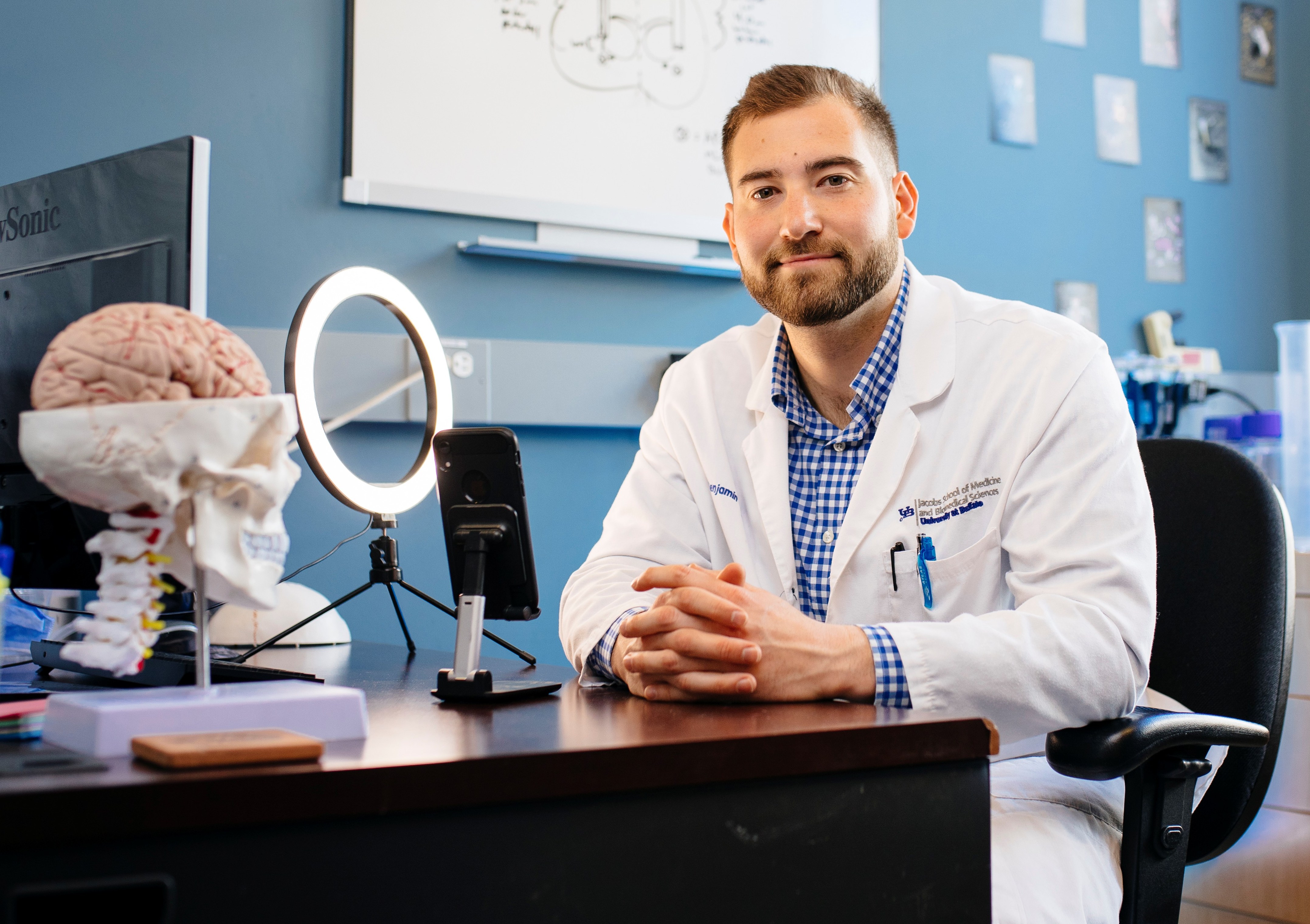
The American neuroscientist and author Ben Rein
If you must use social media, Rein suggests deploying emojis more often. But you don’t have to be a neuroscientist to appreciate the gulf in complexity that lies between a microscopic cartoon smiley and a smiling human face.
He does not offer a view on governments regulating to protect children from social media, as Australia has recently done. He does note, however, that social interactions are crucial in shaping well-rounded human brains. Society is like a potter shaping a vase on a wheel, he says. “A piece of clay that spins in solitude will take no such shape.”
Chapters on the benefits of marriage and pet ownership do not add much. We know all that. Better value is the material on drugs. Rein frowns on alcohol. Yes, it is a “social lubricant” but it works in part because it blunts our ability to recognise and respond to social cues. If we are less socially anxious it is only because we are more socially insensitive. And long-term alcohol use, it seems, can result in long-term lowered empathy.
• Midlife loss of confidence may be a sign of dementia risk
Shockingly, painkillers can have the same effect. It is now fairly well known that paracetamol can soften social pain, easing your heartache as well as your headache, but it seems it can also take the edge off empathy. When we see someone being bullied, or in a broken-down car, we react in part to ease our own empathetic pain. If you are on painkillers, or anxiety-reducing drugs like benzodiazepines, you may feel less of it.
MDMA and psilocybin (from magic mushrooms) can have the opposite effect. The former makes serotonin surge in the very part of the brain where we experience the feeling of social reward, Rein says, and amplifies empathetic feelings.
He has tested this, cleverly, on mice. But you can see the effects on humans. He tells an amazing story about an American white nationalist who took part in a scientific study on MDMA, then suddenly stopped being racist. He told researchers that he had changed his mind and that “love is the most important thing”. Perhaps it should have been called Empathy rather than Ecstasy.
We might not be ready to dose racists and xenophobes with MDMA, but Rein is very worried by the dangers of social conflict caused by divisions over identity, politics and ethnicity. We have “outdated empathy software” in our brains, he warns.
• Read more book reviews and interviews — and see what’s top of the Sunday Times Bestsellers List
Evolution has adapted us to react with stronger empathy to people we perceive as being in some way like ourselves — the “self-other overlap”, in the jargon. This habit might benefit a tribal unit defending a small territory but in a culturally integrated society it is a problem. Rein suggests trying to consciously update your software. Look for what you share, he suggests. Parenthood, perhaps, or dog ownership. Or, I don’t know, humanity.
This is a chatty and kindly book. It is also intelligent. That single idea of a “social diet” alone could be transformative. Out with the couch to 5k. In with the friends and family.
Why Brains Need Friends: The Neuroscience of Social Connection — and Why We All Need More by Ben Rein (Quercus £25 pp234). To order a copy go to timesbookshop.co.uk. Free UK standard P&P on orders over £25. Special discount available for Times+ members
3 tips for socialising your brain
• Reveal more about yourself in conversations. It’s good for your own mood and (side benefit) increases your likeability. Most people guess that they should speak for about 40 per cent of the time in any one-to-one, but if you want to be liked aim for 50 to 70 per cent.
• When you’re tempted to bail on an evening out or let a call go to voicemail, think about the longer-term effects on your wellbeing. You might feel lazy now but you are likely to feel better about yourself later. Think of social interactions as “little workouts for the brain”.
• As with physical exercise, a longer-term regimen of socialising can build up a “cognitive reserve” in the brain that can help to protect your mental health into later life. But it is never too late to start.