
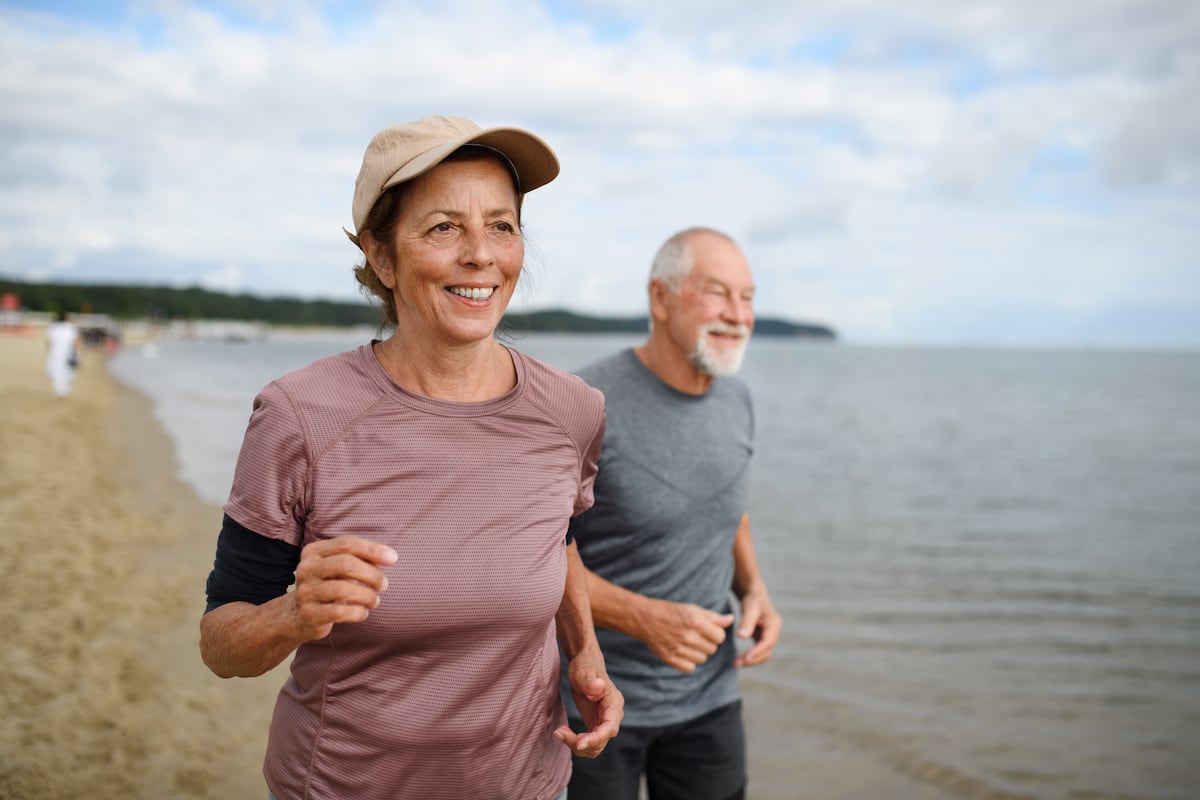
Exercise is the best tool for delaying illness and death, even in small doses, and especially for the least active people. This is the main conclusion of a data analysis of more than 135,000 people with an average age of 64, published January 14 in the journal The Lancet. The study, led by Ulf Ekelund of the Norwegian School of Sport Science, estimates that if the least active 20% of people added five minutes of moderate-to-vigorous exercise per day, equivalent to a brisk walk, 6% of premature deaths in this high-risk group could be prevented. If this small increase in daily physical activity were adopted by the entire population (without needing to include the most active 20%), the reduction in premature mortality would reach 10%.
The same study points to another easy measure that can improve the health of millions of people: reducing sitting time by 30 minutes a day, with short walks of a couple of minutes every hour, for example, could prevent between 3% and 7% of premature deaths.
The results suggest that the most sedentary people benefit more from increased vigorous exercise. For a very inactive person, increasing daily activity from one to six minutes reduces the risk of mortality by 30%, and for those already exercising for nine minutes daily who add another five, the reduction is 18%. Once 24 minutes of daily activity are reached, the risk reduction is no longer as pronounced.
A second study, published in eClinicalMedicine, a journal in The Lancet group, presents results that expand upon the previous study’s findings on how small lifestyle changes can have a significant impact on longevity. The work, led by Emmanuel Stamatakis of the University of Sydney (Australia), used data from 60,000 participants in the UK Biobank to analyze how the combination of sleep, physical activity, and nutrition affects life expectancy and years lived without major illnesses such as cancer, diabetes, or dementia.
The results demonstrate how health is a matter of synergy. While achieving results with a single tool requires significant effort, small, simultaneous changes in these three pillars of health produce far greater benefits. To gain a year of life, it’s only necessary to sleep five more minutes a day, exercise two more minutes, and add half a serving of vegetables to your daily diet. To achieve the same by changing only sleep habits, you would need to sleep 25 more minutes a day.
The researchers also calculated what it would take to extend life expectancy without serious illness by four years. While the effort required is somewhat greater, it is still achievable for most people. It would involve sleeping 24 minutes more per day, exercising for four minutes more, and adding about 100 grams of vegetables, a daily serving of whole grains, and two servings of fish per week to one’s diet.
The study also calculated the effects of the optimal combination of these lifestyle habits. For those who sleep between seven and eight hours a day, exercise for more than 42 minutes daily, and maintain a high-quality diet, the gain is almost 10 years of life expectancy in good health compared to those with the worst habits.
The data indicates that good habits reinforce each other. For example, while exercise is the main driver of added years of life, its effectiveness increases when combined with good sleep and nutrition. To gain eight years of health, a person who only exercises would need 30 minutes a day, but if they combine it with an extra hour of sleep each night and a healthy diet, they would only need 10 minutes of intense exercise to achieve the same result.
One of the interesting contributions of these studies is the use of devices to obtain objective, precise, and continuous measurements of the activity of volunteers. The results of studies evaluating the effects of physical inactivity attribute between 7% and 9% of mortality to it, but these are usually based on information provided by the participants. This method tends to underestimate the true effect of physical activity in reducing premature deaths, something that differs from the analysis published in The Lancet. In this study, movement was recorded with accelerometers worn by the subjects, eliminating the risk of forgetfulness or of the volunteer responding according to what they would have liked to have done rather than what they actually did.
Several independent experts, consulted by the Science Media Center, value the results, although they caution that the study is observational and cannot establish a cause-and-effect relationship between exercise or a healthy diet and reduced mortality. Aiden Doherty, from the University of Oxford, appreciates the results and the recommendations that can be drawn from them, as well as their potential benefits for making healthcare systems — which are stretched to their limits — more sustainable. However, for now, he still encourages “adults to follow the World Health Organization’s physical activity guidelines and aim for at least 150 minutes of moderate-intensity physical activity per week or 75 minutes of vigorous-intensity activity.”
“In addition, adults need at least two days of muscle-strengthening activity each week,” adds the Oxford professor. While he believes it’s important to strive for the WHO’s targets, Doherty concludes that “the results of this new study demonstrate that every movement counts.”
Sign up for our weekly newsletter to get more English-language news coverage from EL PAÍS USA Edition