

Staying on top of all the appointments it takes to stay healthy can be challenging. Annual checkups with your primary health provider, skin checks with a dermatologist, teeth cleanings with your dentist, getting vaccinated for COVID and flu…It’s a lot.
Between busy work schedules, family responsibilities and everyday life, preventive care often falls to the bottom of the to-do list. Many people don’t skip appointments intentionally—they simply run out of time or assume they’ll get to it “later.” Unfortunately, later has a way of turning into years.
One easy way to stay on top of it: Make January the month you get all your crucial health appointments on the books. Even if the actual appointments are spread out throughout the year, you’ll at least have a plan and know they’ll get done.
Scheduling ahead can also help you be more strategic about your care. When appointments are on the calendar, you’re more likely to follow through, track trends over time and notice changes that might otherwise slip by unnoticed. It can also make it easier to coordinate visits and lab work, rather than scrambling when something feels off.
If you’re in good health, it can be tempting to skip seeing your doctor for a yearly checkup. But according to a cardiologist, there’s one important heart-related blood test it’s crucial to get, especially if you’re 50 or older. Otherwise, you could miss out on knowing some important information about your heart health.
🩺SIGN UP for tips to stay healthy & fit with the top moves, clean eats, health trends & more delivered right to your inbox twice a week💊
The Heart-Related Blood Test Everyone 50 and Older Should Get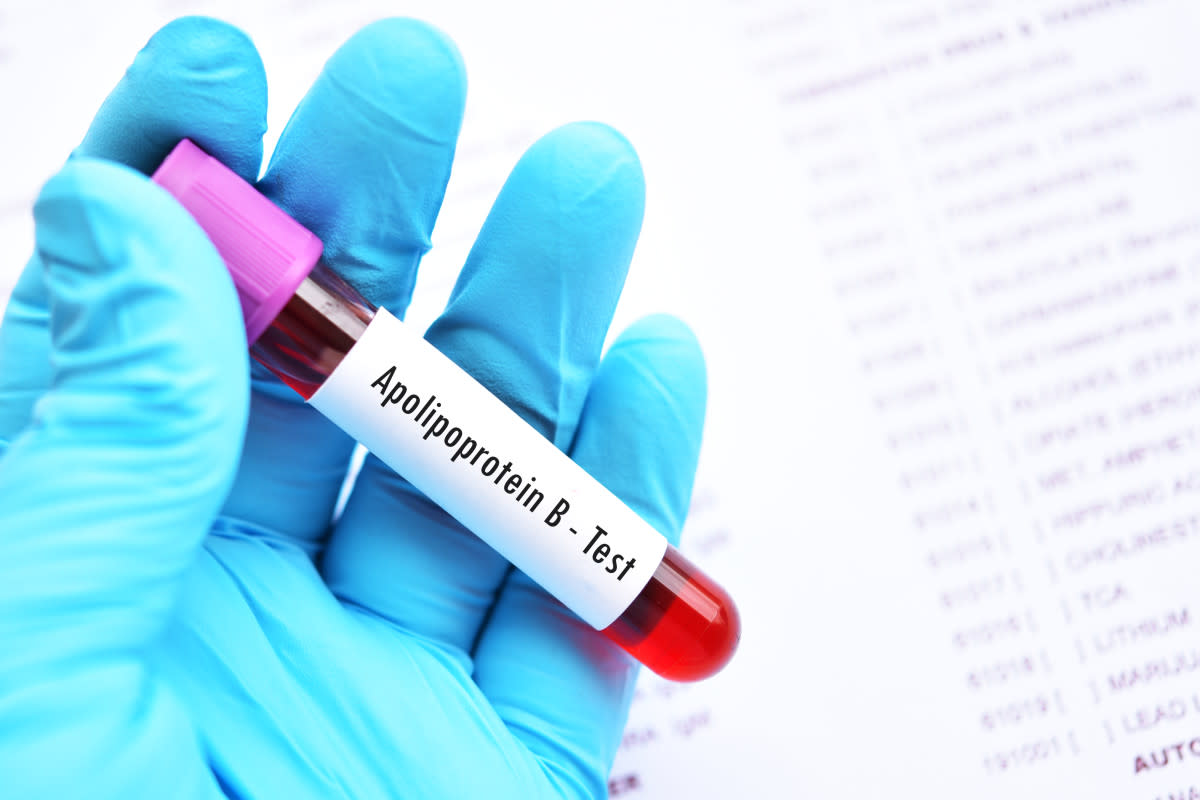
Blood sample tube for apolipoprotein B test/Getty Image
(Blood sample tube for apolipoprotein B test/Getty Image)
How’s your cholesterol? Whether you think you know or you have no idea, you can likely benefit from getting an ApoB test. “An ApoB test is a type of cholesterol test that your health care provider can order. It is not part of the traditional cholesterol or lipid panel test and is ordered separately,” explains Dr. Alex A. Gyftopoulos, MD, a cardiologist at the University of Maryland Medical Center and an assistant professor of medicine at the University of Maryland Medical Center Midtown Campus.
Related: What’s More Important for Heart Health: Lowering Dietary Cholesterol or Saturated Fat?
Dr. Gyftopoulos explains that a traditional cholesterol test checks levels of HDL “good” cholesterol and LDL “bad” cholesterol. But, he says, cholesterol is more complex than what checking these two levels shows. “ApoB, or apolipoprotein B, is a part of every different type of cholesterol in the body that has been associated with the development of plaque in the arteries that can result in heart attacks and strokes. ApoB can give individuals a more accurate depiction of their heart disease risk,” Dr. Gyftopoulos says. But since it’s not included with the typical cholesterol test, you have to ask for it.
If you’re between the ages of 45 and 65, it’s recommended to get a traditional cholesterol test every one to two years, depending on your risk factors. If you’re 65 or older, it’s recommended to get your cholesterol checked every year. While there aren’t set recommendations on how often to get an ApoB test, getting one every couple of years can help give you and your doctor a better picture of your heart health, especially if cardiovascular disease, stroke or heart attack runs in your family.
Related: ‘I’m a Cardiologist—This Is the One Thing I Always Do as Soon as I Wake Up in the Morning’
“Cholesterol testing is individualized based on a person’s medical history, family history and other risk factors. All adults should have their cholesterol tested and including ApoB with that testing can give a more accurate picture of someone’s overall risk for heart disease and stroke,” Dr. Gyftopoulos says.
What Happens if You Never Get an ApoB Test?
Not getting an ApoB test can mean missing out on some potentially life-saving information. “For many people, the traditional lipid panel will provide enough information to make lifestyle and treatment decisions. But for some, ApoB can uncover an increased risk for heart disease and stroke that may otherwise be missed. Now that ApoB testing is well validated and available, there is little reason not to include it when evaluating the risk for cardiovascular disease,” Dr. Gyftopoulos says.
What happens after you get the results of your ApoB test? Now, you and your doctor can assess if any changes to your diet or lifestyle need to be made to support your heart health, or if you could benefit from cholesterol-lowering medication.
Related: Exactly How Many Minutes of Walking You Need To Do Per Day To Boost Heart Health
“Knowing your risk for heart disease and stroke can help you and your health care provider decide on lifestyle changes and medications that can be used to reduce your risk,” Dr. Gyftopoulos says.
ApoB test results can range from 20 and 400 milligrams per deciliter (mg/dL). Apo B higher than 130 mg/dL is considered to be higher than optimal and indicates a higher risk for heart disease.
If your ApoB test results are higher than 130 mg/dL, Dr. Gyftopoulos says that the first step is to consider your diet and lifestyle habits. If you use tobacco, it’s a major sign to stop. If you’re not getting regular cardiovascular exercise or aren’t eating a nutrient-rich diet, your ApoB test results are a red flag indicating that you need to make some changes. For some, Dr. Gyftopoulos says that cholesterol-lowering medication may be recommended.
Knowledge is power, especially when it comes to your health. The more you know about your body, the more you know how you can best support it. An ApoB test is one powerful way to clue you in on how your heart is doing. Take advantage of it!
A quick note: Parade is partnering with Cleveland Clinic for an “Ask a Cardiologist” advice column in the month of February, which will be found in our newsletter What burning questions do you have about heart health, particularly as it relates to the aging heart? Let us know in the comments!
Up Next:
Related: This Is the #1 Best High-Protein Snack for Heart Health, According to Cardiologists
Sources
Dr. Alex A. Gyftopoulos, MD, cardiologist at the University of Maryland Medical Center and an assistant professor of medicine at the University of Maryland Medical Center Midtown Campus
This story was originally published by Parade on Jan 19, 2026, where it first appeared in the Health & Wellness section. Add Parade as a Preferred Source by clicking here.