
Published February 20, 2026 03:00AM
Standing under a starry sky, gazing up at the wonder of the cosmos, is a foundational human experience and one that has shaped our storytelling and cultures for millennia. Looking at the night sky is a mindful activity, one that’s good for the nervous system and produces feelings of awe. It requires us to disconnect from our screens and overstimulated lives. But starry skies are also rapidly becoming difficult to find, as light pollution is increasing by 10 percent every year. That’s why “astrotourism,” or traveling to view the night sky, is a growing travel trend.
I’ve spent the last eight years chasing darkness across deserts, mountains, and jungles, researching why the night sky matters and what happens when it disappears. Those journeys became my book, Nightfaring: In Search of the Disappearing Darkness, and they also reshaped how I travel. I’ve found that planning trips around places where the stars are still visible usually points me to destinations with unique landscapes, wildlife, and communities invested in protecting the environment.
Dark sky tourism is about everything from simple naked-eye stargazing to night hikes, nocturnal wildlife safaris, wine tastings, and even nighttime train rides. I’ve picked eight of my favorite astrotourism experiences around the world that offer the best of the world after dark.
Under Canvas, Utah
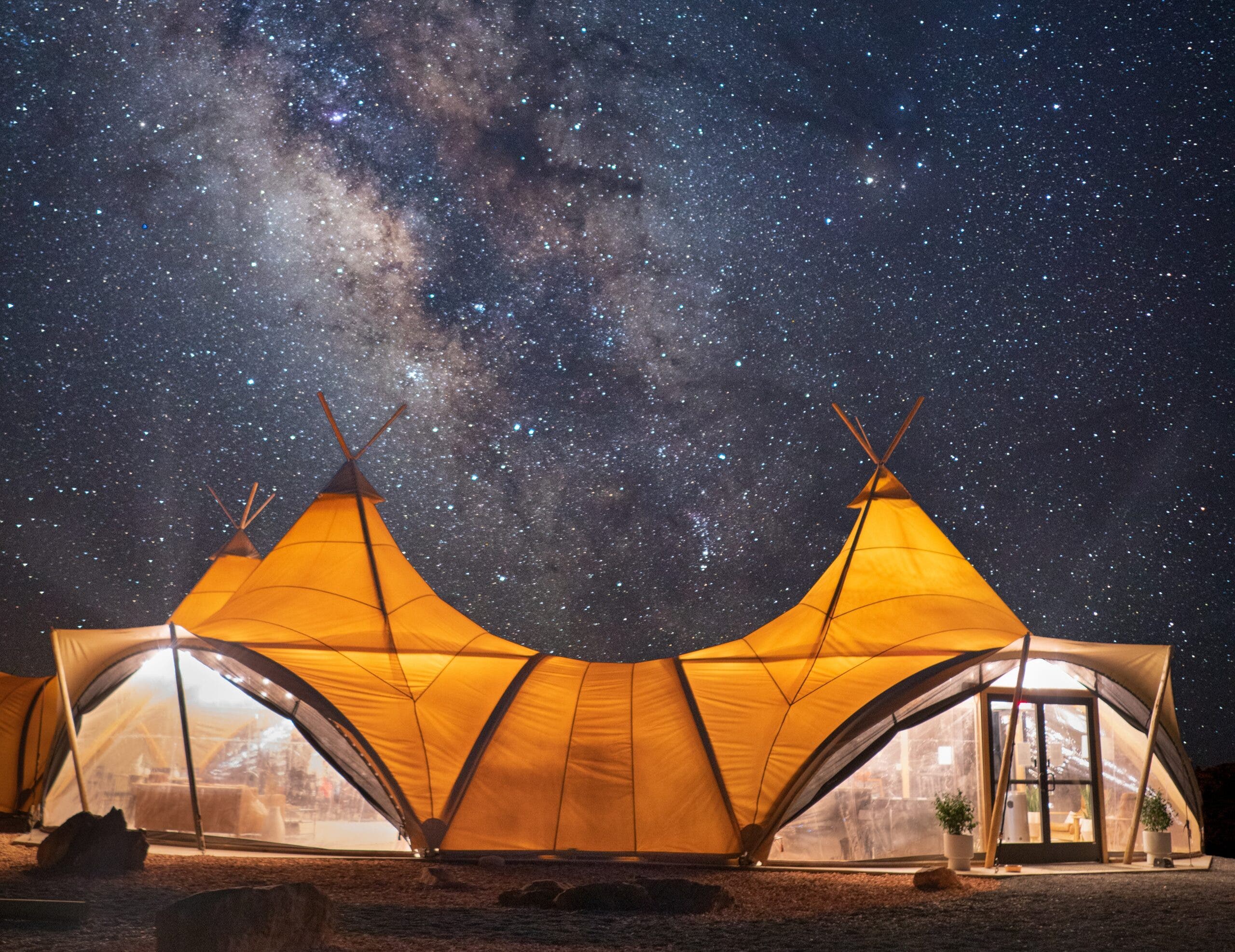 Under Canvas’s Lake Powell – Grand Staircase camp in southern Utah became the first-ever certified DarkSky Lodging in 2023. (Photo: Travis Burke)
Inspired by the traditional tented safari experience, Under Canvas’ glamping camps offer stargazing by night and outdoorsy pursuits by day. The Lake Powell – Grand Staircase camp in southern Utah became the first-ever certified DarkSky Lodging in 2023, thanks to its responsible lighting practices and stargazing program. The site sits under some of the darkest skies in the U.S. and was the pilot property used to develop DarkSky’s lodging certification criteria.
The camp’s 50 safari-style tents are spread across 220 acres of desert overlooking Lake Powell. Opting for one of the “Stargazer” tents means you’ll have a clear ceiling panel above your bed for stargazing while under the covers. On select evenings, astronomy guides offer telescope and naked-eye sessions away from the main lodge to minimize light. Lighting throughout the camp is deliberately subdued, with warm-temperature luminaires and dim solar path lights that create minimal pollution and allow for maximum Milky Way views.
Cosmic Campground, New Mexico
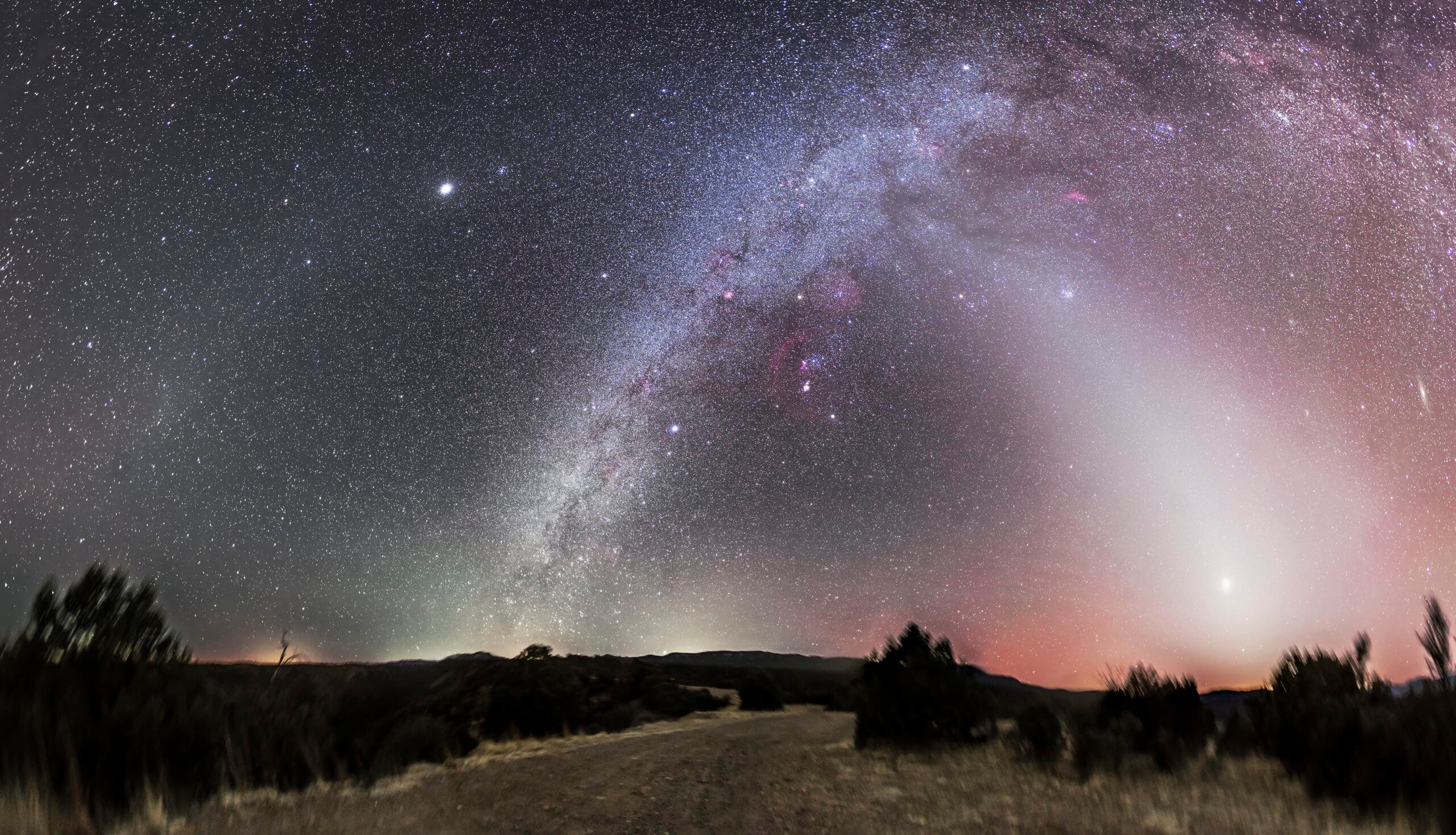 Milky Way and other celestial objects as seen from Gila National Wilderness, New Mexico. (Photo: Getty)
The Cosmic Campground is located within the Gila National Forest in western New Mexico and was designated an International Dark Sky Sanctuary — a certification reserved for only the darkest and most remote locations. The campground is a free, first-come, first-served primitive campsite with open tent camping, four RV pull-ins (no hookups), and four concrete pads designed for setting up telescopes, binoculars, or astrophotography gear. The campground operates strict lighting rules, including being a no-headlights zone, to keep artificial light to an absolute minimum and the stars bright overhead.
During the day, the Gila Wilderness holds 872 square miles of high-desert wilderness for hiking, wildlife watching, and backpacking. You can also visit the cliff dwellings of the Indigenous Tularosa Mogollon people and walk the Catwalk Trail, a raised walkway built through the narrow Whitewater Canyon by miners in the 1890s. The Gila is true backcountry with few facilities and spotty cell service, so you’ll need to pack in your own food, water, and first-aid supplies.
Keweenaw Mountain Lodge, Michigan
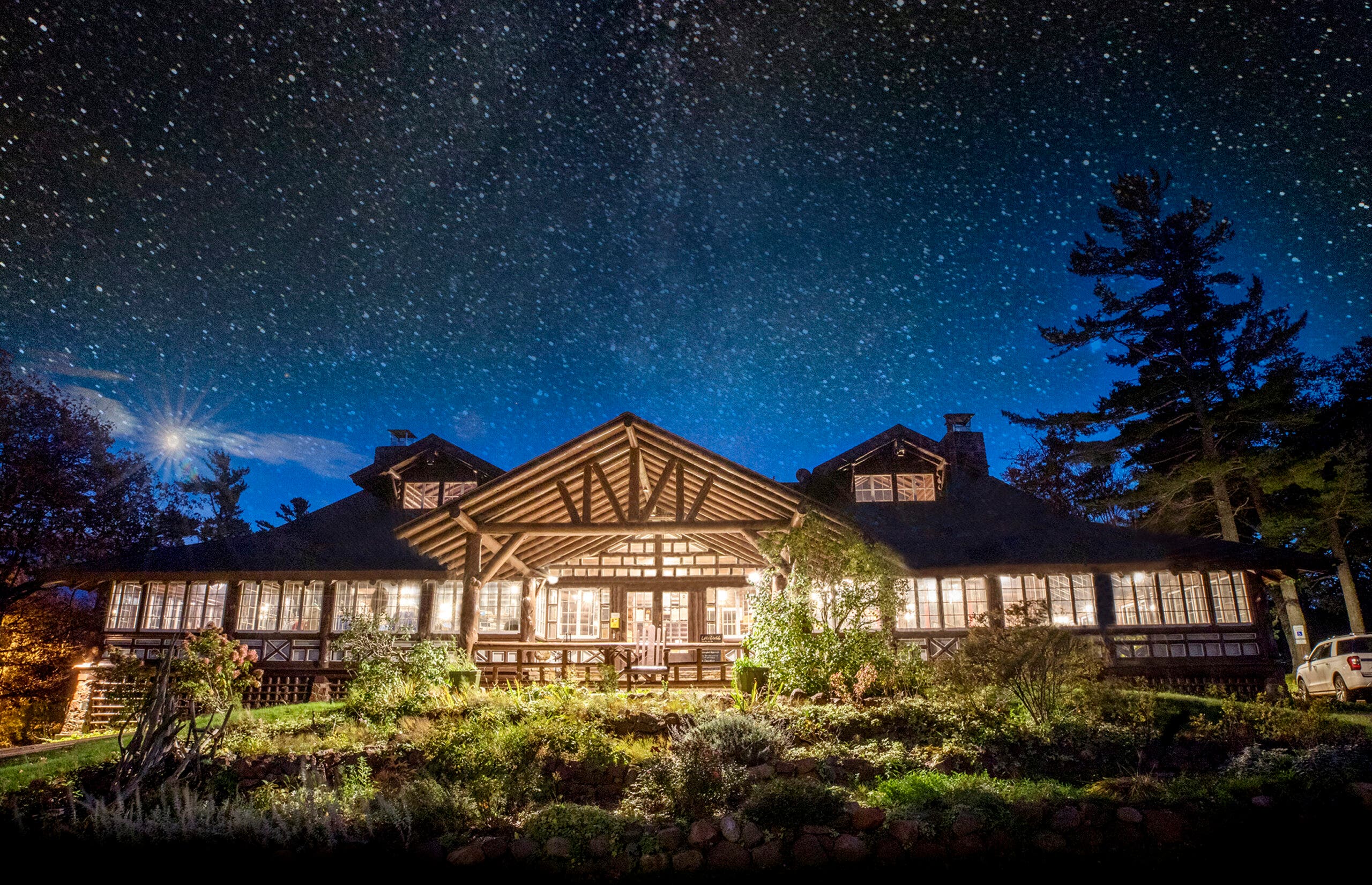 During strong solar storms, guests at Keweenaw Mountain Lodge regularly see aurora without even leaving the property. (Photo: Keweenaw Mountain Lodge | Chris Guibert)
Keweenaw Mountain Lodge is at a remote spot near the tip of Michigan’s Keweenaw Peninsula— one of the best locations in the continental U.S. for viewing auroras when solar activity spikes. In 2022, Keweenaw was designated an International Dark Sky Park headquartered at the lodge. The whole property was outfitted with dark sky-friendly lighting, which ensures that views of the Milky Way and northern lights are protected. The heritage cabins you sleep in are also protected — they were constructed in the 1930s as part of the Works Progress Administration (WPA) program.
The area around the park is great for getting outdoors during the day, with mountain biking and trail running, kayaking along Lake Superior’s shoreline, and cross-country skiing and snowshoeing in the winter.
The lodge hosts a year-round program of dark sky and astronomy-focused events, such as full moon viewing, astrophotography workshops, and “lights out” evenings, during which all of the lights on the property are switched off for maximum dark skies. They’ll also lend you a free telescope and an astronomy-friendly red flashlight for your stay. During strong solar storms, guests regularly see aurora without leaving the property.
Flagstaff and Lowell Observatory, Arizona
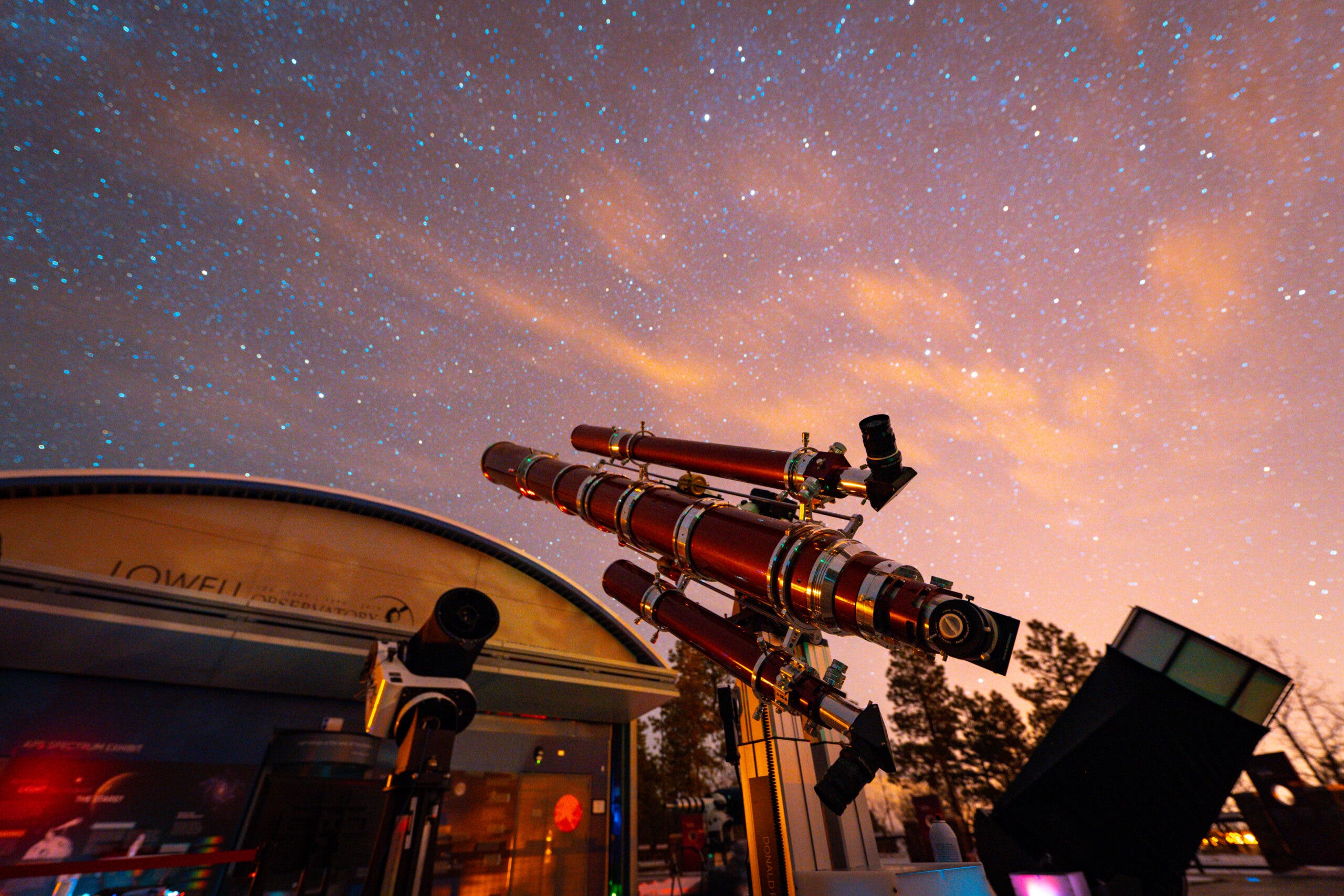 In 2024, Lowell Observatory opened a new visitors center with guided tours led by astronomers. (Photo: Courtesy of Lowell Observatory)
Flagstaff holds a unique place in astrotourism: it became the world’s first International Dark Sky Community in 2001 to protect the historic Lowell Observatory, where Pluto was first observed, which sits on a hill above town. The city has maintained strict lighting codes ever since, with streetlights and public lighting designed to protect night-sky visibility. It’s one of the few cities where you can still see the Milky Way from right in the center of town.
In late 2024, Lowell opened a new visitor center that includes interactive displays on how light pollution affects ecosystems and guided tours that link the history of astrophysics with hands-on sky observation, including from a new rooftop stargazing deck. A highlight is getting to see celestial objects through various telescopes during programs led by astronomers.
Less than an hour east of Flagstaff, you can also visit Meteor Crater, a 50,000-year-old meteorite impact site where you learn about the geology of the area, with options to walk part of the rim or take the full descent hike. In the evening, hit up Dark Sky Brewing Co. for cosmic-themed beers and outdoor seating with a view of the sky. In the fall, the city hosts its annual Flagstaff Star Party and Celebration of the Night — events usually include art openings, stargazing events, wildlife watching, music, and more.
Verde Canyon Railroad, Arizona
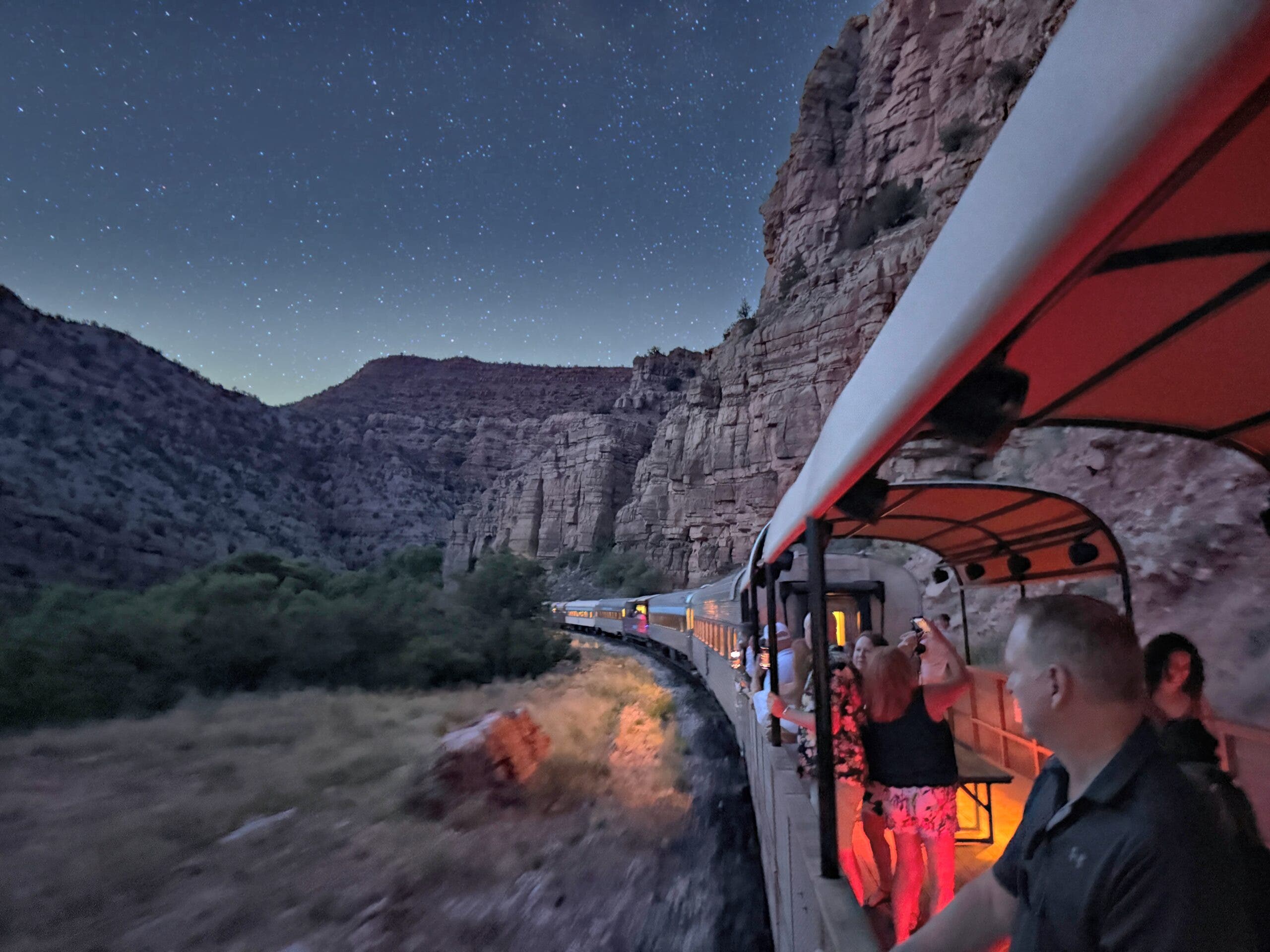 Hop on the Verde Canyon Railroad train for its Saturday Starlight Tours. (Photo: Courtesy of Verde Canyon Railroad )
Astrotourism doesn’t always require hiking boots; sometimes it runs on rails. On scheduled Saturday nights, the Verde Canyon Railroad runs its Saturday Starlight Tours through Arizona’s Verde Valley, departing from the small town of Clarkdale, near the Cottonwood International Dark Sky Community. Pairing rail travel with views of the night sky, the train chugs out of the depot before sunset and traverses slowly through red-rock canyon country, while you watch the sky darken and the stars come out.
The train itself dates back to the early 1900s and travels through Verde Canyon on tracks originally built as part of a copper mining operation. There are climate-controlled vintage coaches with indoor seating, open-air cars that allow for maximum stargazing time, and a bar service. The whole journey lasts around four hours and runs from May to October.
Terra Firma Dark Sky Safari, Ireland
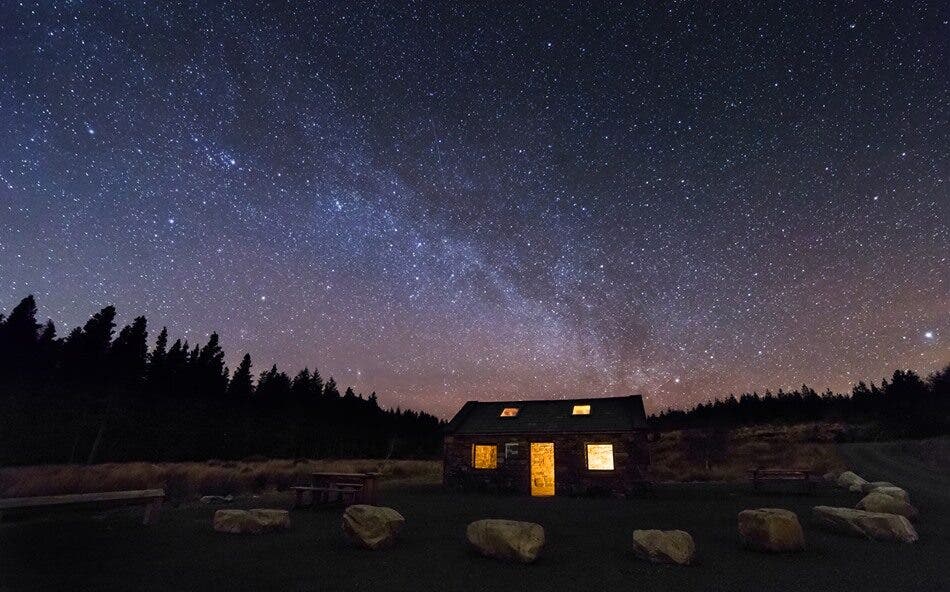 Experience the awe-inspiring beauty of Mayo’s Gold Tier International Dark Sky Park on an exclusive Terra Firma Dark Sky Safari. (Photo: Brian Wilson Bothy)
A great way to get a deeper look at the night sky’s connection to human culture is on a dark sky safari with Terra Firma, which runs night hikes and traditional storytelling sessions in Mayo International Dark Sky Park along Ireland’s west coast. Their “Dark Sky Safari” departs from the town of Newport and takes you into a secluded part of the park for a night hike that mixes stargazing and stories of the sky with opportunities to listen for and spot local nocturnal wildlife, such as nightjars and elusive pine martens.
You can also opt for a slightly different tour—the “Magic, Myth, and Moonlight” evening, which starts at historic Burrishoole Abbey with the story of how pirates once used the stars to navigate this coastline. You then move to a secluded stone cabin, where a traditional Irish seanchaí (storyteller) brings alive the myths and legends of the area by candlelight.
Basecamp Samburu, Kenya
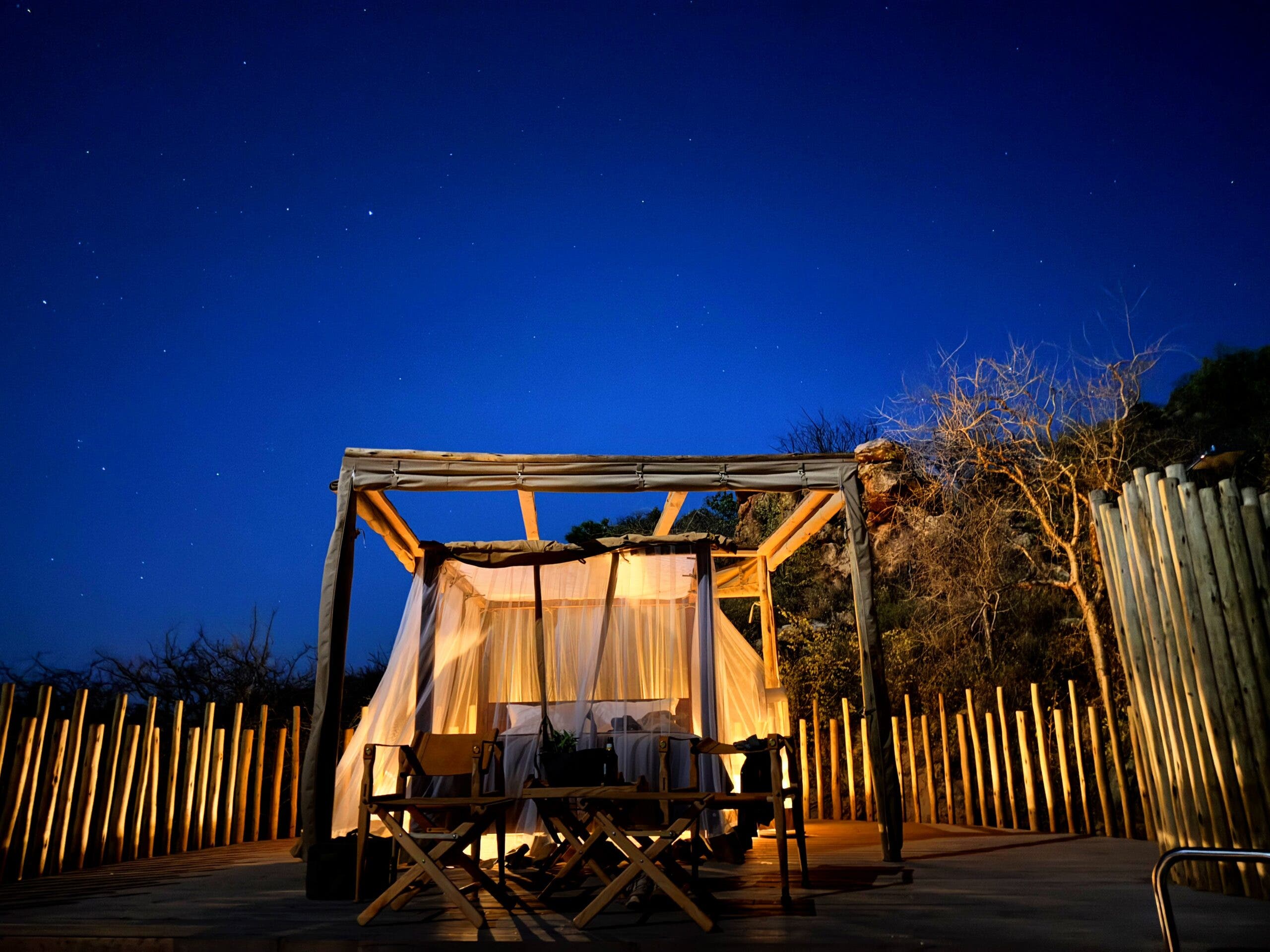 Sleep under the night sky at Basecamp Samburu on their signature starbed. (Photo: Megan Eaves)
Set within the community-owned Kalama Wildlife Conservancy in northern Kenya, Basecamp Samburu combines incredible Kenyan wildlife watching with the Indigenous astronomy of the Samburu people. During daytime game drives around the conservancy, you spot lions, cheetahs, reticulated giraffes, and rare Grevy’s zebras. After sunset, you have the chance to witness a traditional ceremony by Samburu warriors or go on a star safari, during which a stargazing guide brings to life the traditional constellations of Samburu cosmology and how they use seasonal knowledge of the sky for navigation and herding. You can also take a scorpion safari on foot, where you’ll spot scorpions using a blacklight and learn about the unique species that live in this part of Kenya.
The highlight of the stay, though, is a night in the camp’s outdoor starbed, which sits on a raised wooden platform overlooking the Samburus’ sacred mountain, Ololokwe. The bed itself is luxurious, with comfy sheets and mosquito netting, and offers the chance to sleep under the open sky, close to nocturnal sounds of the bush, like whooping hyenas and roaring leopards.
Basecamp Samburu pays directly into the conservancy’s conservation and education initiatives, which fund schools, health centers, and infrastructure for the local Samburu communities.
Dark Sky Project, New Zealand
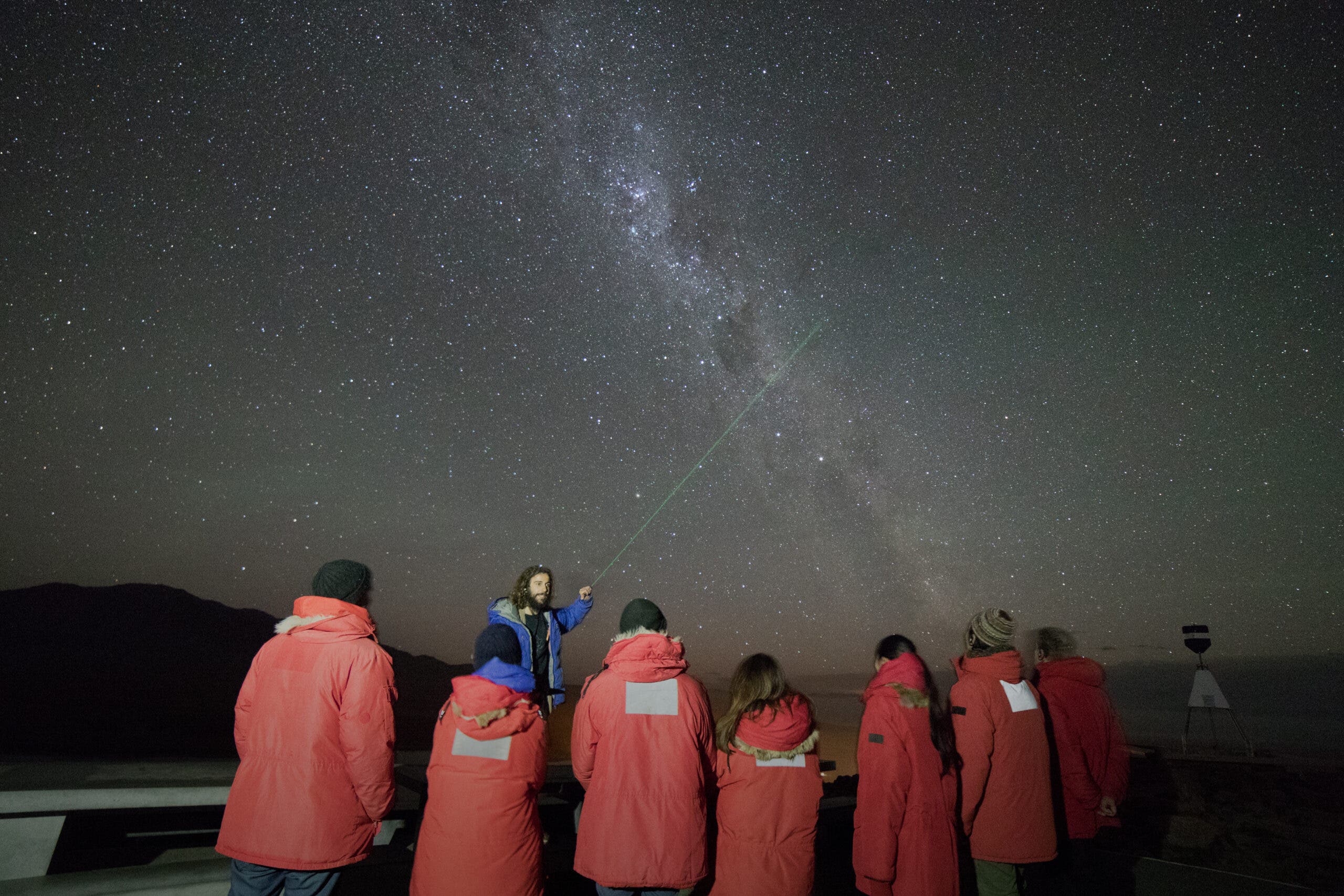 Dark Sky Project combines Indigenous Māori storytelling and western astronomy. (Photo: Maki Yanagimachi)
In the massive Aoraki Mackenzie International Dark Sky Reserve on New Zealand’s South Island, Dark Sky Project is an astrotourism experience that introduces both western astronomy and Indigenous Māori science. At the visitor center beside Lake Tekapo, there’s an outdoor scale model of the solar system, and indoors, you can get up close with the vintage Brashear Telescope, a restored refractor made in Pennsylvania in 1894. An indoor theater hosts astronomy shows, and there’s a dark-sky-themed cafe where you can grab dinner or a drink before heading out for the evening stargazing programs.
The “Summit Experience” is Dark Sky Project’s flagship program at Mount John Observatory, which is also the professional research observatory of the University of Canterbury. The 360-degree views of the lake and mountains from the summit are vast, with the Milky Way on full display overhead and the chance to see constellations only visible in the Southern Hemisphere, such as Crux and the Magellanic Clouds—two faraway galaxies visible with the naked eye. The Summit Experience includes an introduction to Māori astronomy and history, and then you get a chance to go into one of the domes and look through a 16-inch research telescope.
Splash out on a stay at Mt Cook Lakeside Retreat to take advantage of stargazing and wine-tasting sessions in their private, purpose-built wine cellar that doubles as an astronomical observatory with a retractable roof.
Megan Eaves is a travel writer and advocate for dark skies based in London. She is the editor of DarkSky International’s quarterly magazine and her writing appears in National Geographic, Afar, The Times, The Telegraph, the BBC, and Lonely Planet, where she was also a staff editor for many years. Her new book, Nightfaring: In Search of the Disappearing Darkness (Grand Central Publishing, March 31, 2026) recounts her journeys to experience darkness and the night sky around the world.
Where is the best spot to see the total solar eclipse in 2026? Find out the place Megan recommends—in the comments.