
We don’t want to bury the lead, so let’s start with a fact: there’s no official NHS leaflet telling you how many pull-ups a 46-year-old man should be able to do.
Unlike VO₂ Max or grip strength, there isn’t a universally agreed, peer-reviewed chart laying out gold-standard pull-up targets by decade of life. What we do have, however, are large-scale fitness surveys, military testing data, strength standards and normative charts compiled from recreationally active men.
They’re not perfect. But they give us a useful north star.
Before we get into numbers, a few caveats…
Pull-ups are brutally bodyweight-dependent. A 68kg man and a 108kg man are playing very different games. Arm length, training history, body fat percentage and simple familiarity with the movement all play a part here. Most of the data we have available comes from recreationally active populations – not elite athletes, and not completely sedentary adults either.
If I were a betting man, I would say that on a population level, if you can do any pull-ups at all, you’re probably in the top 20%. At least.
Point is: you shouldn’t look at any of these stats as verdicts, they’re just reference points.
And for me, personally, the answer to this question is always: ‘as many as possible’.
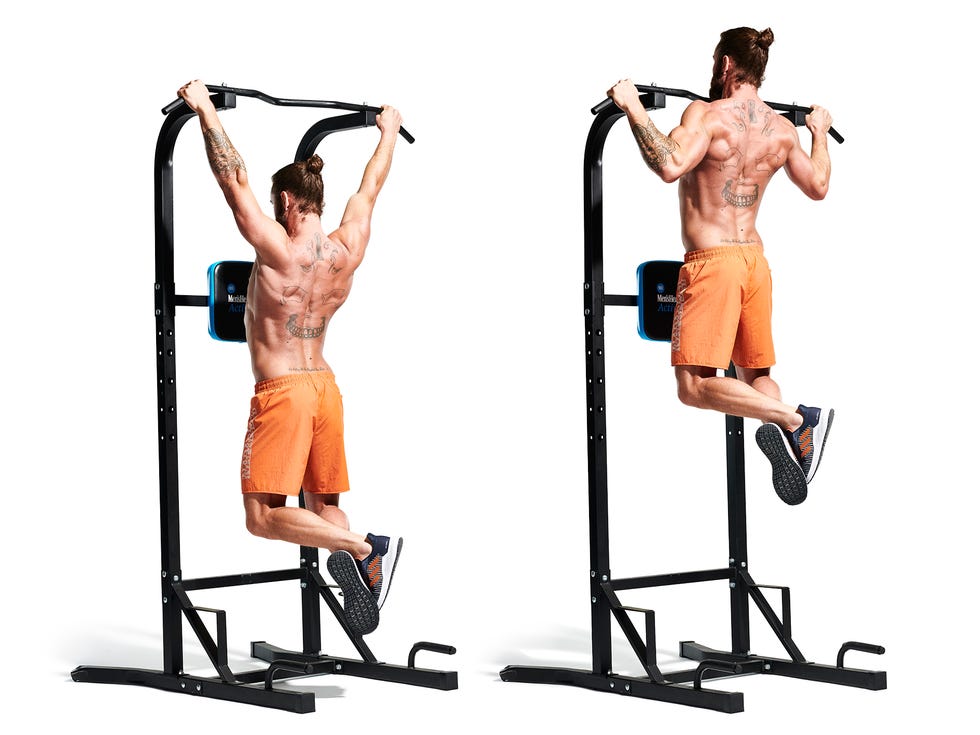 Pull-Up Benchmarks for Men at Every Age
Across multiple fitness testing resources and population surveys, here’s how things tend to shape up for strict, dead-hang pull-ups:
Men aged 18–30
Average: 7-12 reps
Intermediate: 10-15 reps
Excellent: 15+
Men aged 30–45
Average: 6-10 reps
Intermediate: 9-14 reps
Excellent: 14+
Men aged 45–60
Average: 4-8 reps
Intermediate: 7-12 reps
Excellent: 12+
Men aged 60+
Average: 2-6 reps
Intermediate: 5-10 reps
Excellent: 10+
These figures reflect compiled norms from fitness testing databases, military-style assessments and recreational strength surveys – not a single definitive lab study. Peak performance tends to occur in the late 20s to early 30s, with gradual decline thereafter unless strength training is maintained.
And whatever you’re age, if you currently can’t do a single pull-up, you shouldn’t see this as a failing, but as a starting line.
Most adult men in the general population can’t do many strict pull-ups at all. Upper-body pulling strength is one of the first qualities to slide when training becomes inconsistent.
But the good news? It’s trainable at any age.
Pull-ups are a great test of relative strength, that is: strength in relation to your bodyweight. I’m fond of saying that they ‘keep you honest’. Improve your body composition, train your lats, biceps and mid-back intelligently, and your numbers will climb.
A Better Way to Think About It
Instead of obsessing over whether you’re ‘below average’, aim to be:
In double digits before 40Around 8-10 into your 50sStill comfortably managing 5+ into your 60s
This is a great (albeit limited) heuristic for maintaining muscle mass, shoulder health and functional strength as you age.
How to Improve Your Pull-Ups
Let’s forget body-composition for a minute, or at least just say: being lighter definitely makes pull-ups easier. If you’re looking to upskill your pull-ups, repetition is the mother of learning.
Sub-maximal sets of pull-ups – ie, sets where you only work to around 50% of the total of number of reps you could do – performed often will quickly yield gains in reps. Throwing these sub-max sets in, in-between other movements in the gym, is a quick and effective way of peppering in extra, high-frequency work, which can lead to massive improvements. Think: a quick 3 reps between all your sets of bench press and squats.
Once a week, retest a few sets to failure to gauge your progress.
Once you can comfortably nail 10+ reps, consider adding weight for a few working sets to up your strength – and make bodyweight reps feel easy by contrast.
If you’re still struggling to get that elusive first rep, follow this guide.
Related Stories