

Protein brands love talking about quality – how many grams per scoop, how fast it helps build muscle, and how it fuels performance. What they rarely talk about is what happens after we drink it.
Digestive discomfort – bloating, heaviness and the awkward aftermath of protein shakes – is a familiar experience for many consumers, yet one the category has largely avoided addressing.
Wellbeing Nutrition is taking a different route. Its latest campaign flips the performance-obsessed narrative of whey protein by putting digestive comfort, not muscle gain, at the centre of the story.
Moving beyond grams of protein
According to Varun Kandhari, chief marketing and growth officer, Wellbeing Nutrition, the idea emerged from conversations with protein-aware consumers who were interested in supplements but hesitant to adopt them regularly.
“Protein consumption in India is no longer limited to gym-goers or strength trainers. It’s becoming much more broad-based,” Kandhari says. “But when we spoke to consumers, one barrier that repeatedly came up was bloating or feeling heavy after consuming protein.”
The campaign addresses the awkward yet familiar experience through humour – an approach Kandhari believes helps make a sensitive topic easier to discuss. Digestibility concerns extend beyond non-fitness consumers, despite varying protein requirements based on age and lifestyle.
The brand positions its whey protein around digestibility, arguing that consumers – whether they work out regularly or not – should not experience bloating or digestive discomfort unless they have a specific gut sensitivity.
The opportunity for protein brands is also expanding. According to estimates by the IMARC Group, India’s protein supplements market is valued at $912.9 million in 2025 and is projected to grow to $1.57 billion by 2034, as protein consumption moves beyond gyms into mainstream wellness.
A broader target audience
India’s protein landscape is also undergoing a broader shift. As awareness around nutrition grows, protein is gradually moving from a performance-focused supplement to an everyday dietary component.
Kandhari says the company increasingly sees consumers purchasing protein not just for muscle building but as part of their daily nutrition.
“Many of our consumers buy protein not necessarily for high-performance fitness but to incorporate it into their daily diet,” he says.
The brand primarily targets protein-aware consumers it describes as “informed explorers.” This includes fitness enthusiasts, individuals looking to add more protein to their diets, and health-conscious consumers seeking to improve their overall nutrition.
Rather than focusing only on gym-goers, the company aims to reach a broader audience that views protein as part of everyday wellness. Within its product portfolio, the 1 kg pack has emerged as the hero SKU (stock keeping unit), with both isolate (pure protein) and blend (a mix of different protein sources) variants seeing strong demand.
This shift has also influenced the campaign’s creative direction. Instead of high-intensity gym scenes, the ad focuses on everyday situations, reinforcing the idea that protein consumption is becoming more mainstream.
Bringing protein into everyday diets
Kandhari says whey protein can be incorporated into daily diets in multiple ways, making it easier for consumers to increase their protein intake without significantly changing their eating habits.
It can be blended into shakes and smoothies, mixed with milk or water, or even added to traditional options such as chaas and yoghurt bowls. These flexible usage options allow consumers to experiment with recipes while maintaining their protein intake.
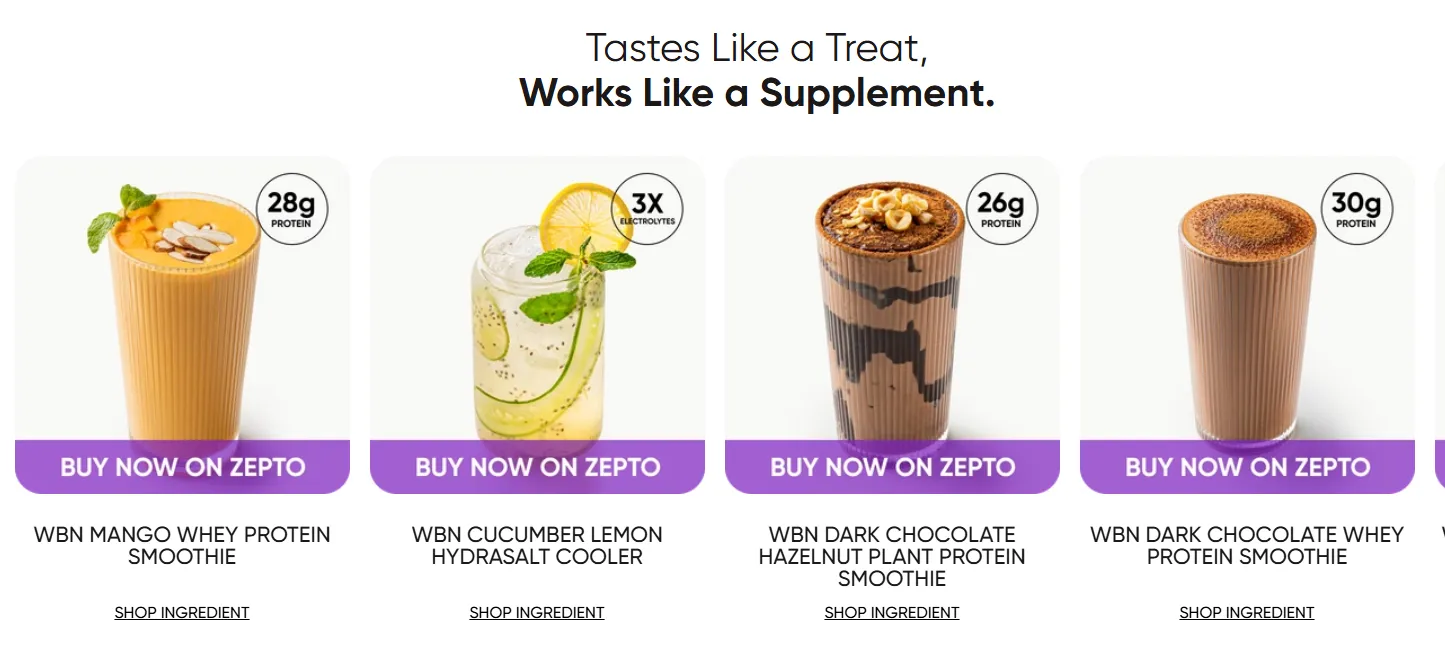
To encourage this behaviour, the brand has also introduced a “Wellbeing Café” initiative in partnership with food and beverage outlets. Through the programme, protein-infused beverages and recipes are offered at cafés such as Zepto Cafe, making healthier choices more accessible for consumers looking for nutritious options on the go.
Protein marketing gets more experimental
Across the category, protein marketing is becoming increasingly experimental. Earlier this year, The Whole Truth sparked discussion with its campaign “Protein Ke Peeche Kya Hai?”, a playful twist on the popular song from the film Khalnayak.
The campaign used humour to encourage consumers to examine ingredient lists more closely and understand what actually goes “behind the label” of protein bars and supplements.
 Varun Kandhari, chief marketing and growth officer, Wellbeing Nutrition
As newer wellness brands compete for attention, companies such as Oziva, The Whole Truth, and MuscleBlaze are increasingly relying on bold creative concepts and digital-first storytelling to differentiate themselves in India’s growing protein supplements market.
A full-funnel marketing approach
To reach a wider consumer base, Wellbeing Nutrition is deploying a mix of digital and on-ground marketing.
The campaign runs across YouTube, OTT platforms and social media, while influencers—including nutritionists and fitness experts—help explain the product’s formulation and benefits.
Recently, the brand also roped in Biswa Kalyan Rath for a humorous film built around the same insight. In the ad, Rath dives into the “science” of why humans fart—going so far as to propose a quirky device that could supposedly control it—before arriving at the simpler alternative: switching to Wellbeing Nutrition’s whey protein.
Offline activations are also part of the strategy, including sampling at gyms, recreational sports venues and community fitness events such as marathons.
Since the campaign launched, Kandhari says the brand has seen a strong response.
“We’ve seen about a 35–40% increase in sales and around a 20–25% increase in engagement across our social media platforms,” he says.
Online channels currently account for around 70–75% of the company’s sales, with the remainder coming from offline retail.
Wellbeing Nutrition has also attracted strategic interest from larger healthcare players. Recently, USV signed a definitive agreement to acquire a 79% equity stake in Nutritionalab which operates under the brand Wellbeing Nutrition. The deal values the company at Rs 1,583 crore.
USV, which has a six-decade presence in the Indian pharmaceutical market, is known for its leadership in oral anti-diabetic and cardiovascular therapies with brands such as Glycomet GP, Ecosprin, and Roseday.
Looking ahead, Kandhari believes protein marketing in India will evolve beyond the current focus on quantity.
“In the next few years, consumers will increasingly look at the quality of protein—whether it contains all essential amino acids and whether it is easily digestible and absorbable,” he concludes.