
Most gym-goers treat core training as an afterthought — a few sets of crunches bolted onto the end of a session, ticked off more out of habit (or guilt) than genuine intent. China’s national weightlifting team, however – which has dominated the sport for decades – treats it very differently: as a foundation without which nothing else works.
It’s a topic that’s often discussed in lifting circles, with the team racking up millions of views for their distinctive approach to core work. Exploring this further in a recent video, YouTuber, former Olympian and national coach Jianping Ma (of Ma Weightlifting) unpacked what this methodology actually looks like – and, crucially, how it transfers to the rest of us trying to lift better, move better and stay injury-free for longer.
Steal these, and you don’t need to be an Olympic athlete to reap the rewards.
Core Focus
‘I see so many people wasting their energy on endless crunches and sit-ups – they burn like hell, but the return on investment for actual strength, especially for weightlifting, is almost zero,’ says Ma. ‘You’re hitting your upper abs in isolation while completely ignoring the muscles that stop you folding under a heavy load.’
‘If you’re going to suffer through a workout,’ he adds, ‘you may as well get the most out of it.’
Each move below, Ma explains, is ‘geared to performance, not aesthetics’. Here, he breaks down eight highly effective exercises that build transferable strength from day one – and how to approach them.
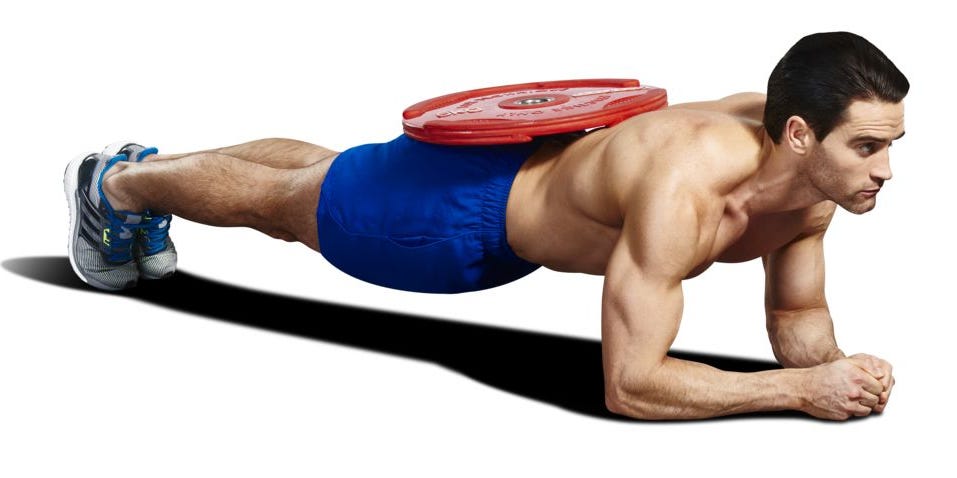
The Core Moves Chinese Weightlifters Swear ByWeighted Plank
3-4 sets of 30-60 seconds
How:
Place a weight plate across your upper backGet into a forearm plank, elbows directly beneath your shouldersSqueeze your glutes, quads and core, keeping your body in a straight line from head to heelsHold for the prescribed time, rest, and increase the load once you can complete all sets without your hips sagging
Why:
‘The reason Chinese weightlifters prefer weighted planks is that they’re far more time-efficient than bodyweight holds,’ says Ma. ‘The added intensity also translates better to strength output.’
The load, he adds, helps you engage your core faster and more completely. Start with a 15-20kg plate, adjusting up or down based on your strength.
Reverse Plank
60 seconds
How:
Position two benches parallel and lie face up, with your upper back on one and your heels on the otherLift your hips until your body forms a straight line from shoulders to heelsBrace your core and squeeze your glutes to hold the positionKeep your hips from dropping throughout the set
Why:
The dreaded ‘butt wink’ – that posterior pelvic tilt at the bottom of a squat – often comes down to weak glutes and poor posterior chain tension. This move targets both directly.
Be sure to ‘maintain that arch, pushing through your glutes, hamstrings and lower back,’ says Ma.
12-15 reps
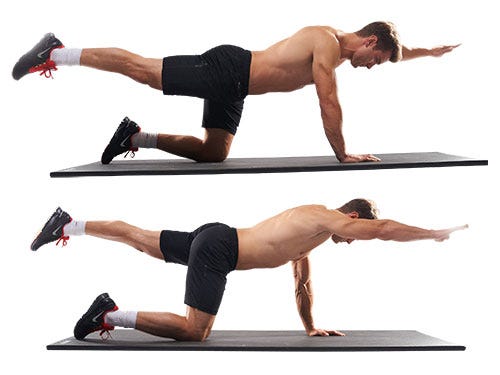
Bird Dog:
Start on all fours, hands under shoulders, knees under hipsExtend your right arm and left leg simultaneously, keeping hips levelPause briefly at full extension, then return to startRepeat on the opposite side
Dead Bug:
Lie face up, arms extended towards the ceiling, knees bent at 90 degreesLower your right arm overhead as you extend your left leg, keeping your lower back pressed into the floorReturn to start, then repeat on the opposite side
Why:
‘You can add load to these exercises,’ says Ma, ‘but the goal is core bracing while your limbs are moving – so you can feel that engagement through motion.’
10-12 reps per side
How:
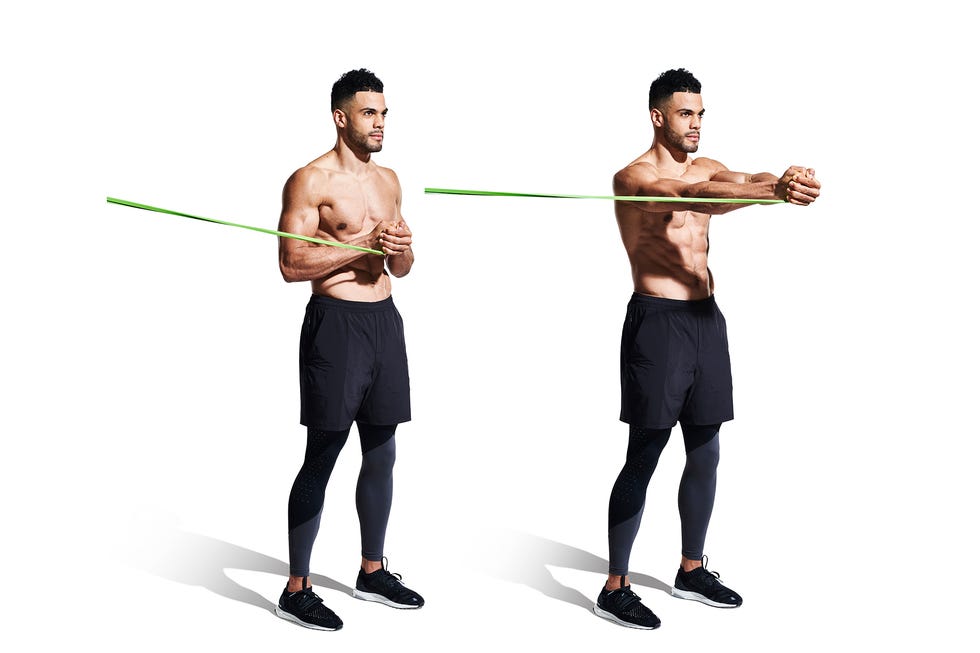
Anchor a resistance band or cable at chest heightStand side-on, feet shoulder-width apart, holding the handle at your sternumPress your hands straight out in front of you, resisting the rotational pullPause briefly, then return under controlComplete all reps before switching sides
Why:
The Pallof press is a simple way to build anti-rotational strength – key for staying stable, mobile and injury-free.
‘This is the gold standard for anti-rotational core work,’ says Ma. To make it more weightlifting-specific, perform it in a partial squat to mimic positions in the snatch or clean. Keep your hips square and use your core to resist rotation throughout.
Dumbbell Side Bend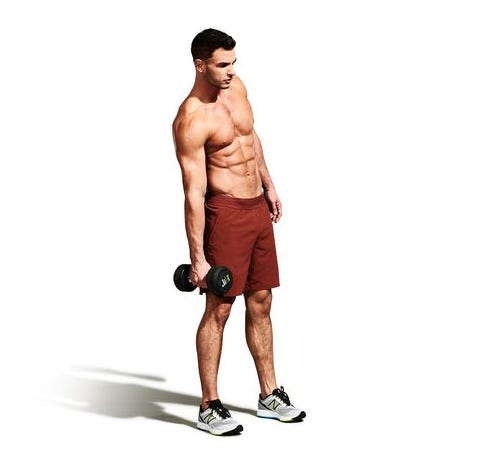
12-15 reps
How:
Hold a dumbbell in one hand, feet shoulder-width apartLower the weight towards the floor by bending at the waistReturn to upright, then repeatSwitch sides after completing your reps
Why:
‘These are a staple in Chinese weightlifting – you’ll see them in almost every session,’ says Ma.
Side bends target the obliques and the quadratus lumborum (QL), a deep lower-back muscle that stabilises the spine. It plays a key role in lateral flexion, extension and even breathing mechanics.
Toes to Bar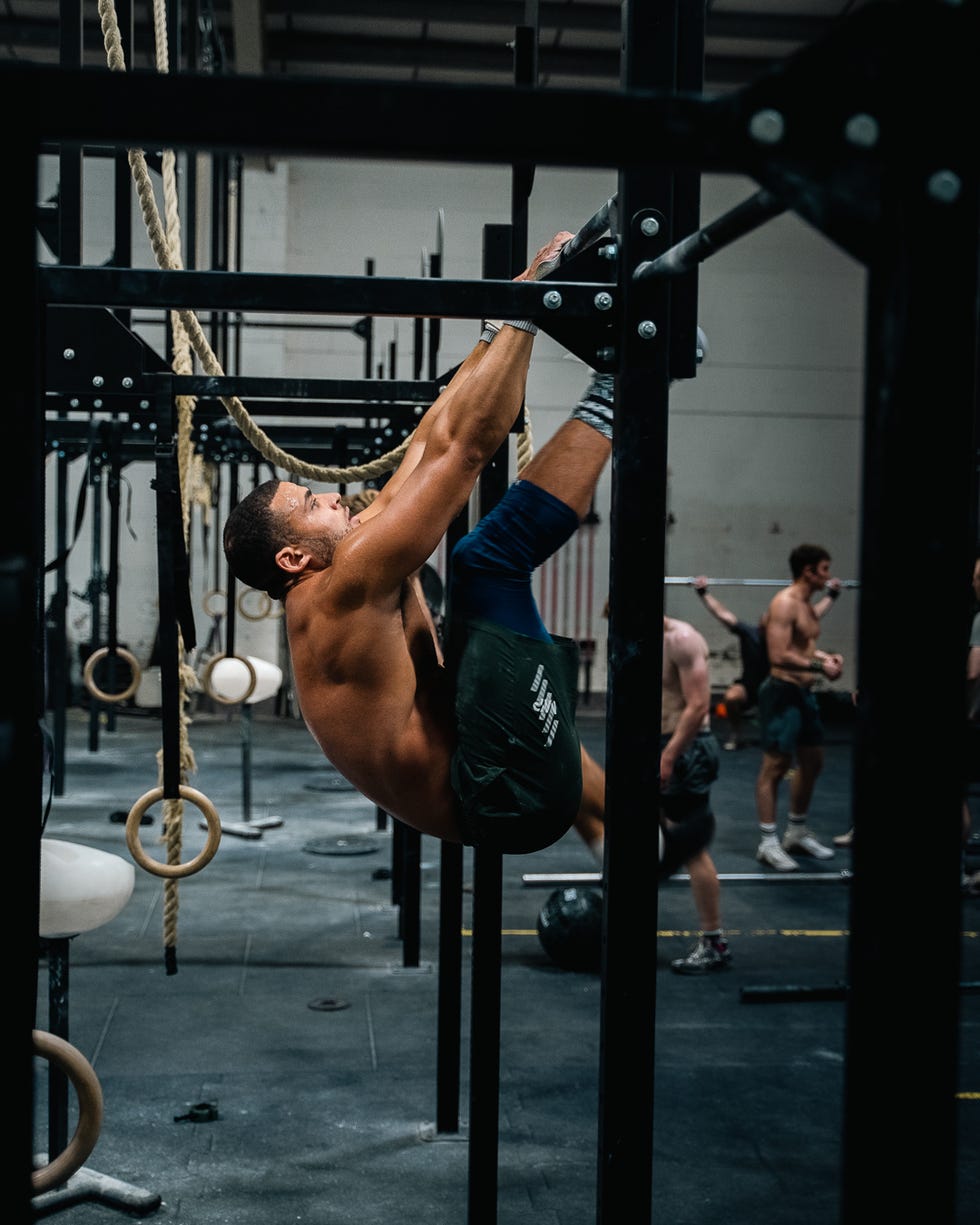
10-15 reps
How:
Hang from a pull-up bar with a firm overhand gripBrace your core and initiate the movement from your abs – not by swingingRaise both legs, keeping them straight, until your toes touch the barLower under full control before the next rep
Why:
The strict version – no kip, no swing – forces the entire anterior chain to work together. Abs, hip flexors and serratus all fire to control the movement.
To eliminate momentum, Ma suggests using wrist wraps for grip and placing a box behind your heels to discourage kipping. It’s also ‘great for your shoulders’, improving mobility through each phase.
Use as a warm-up
Why:
‘The zombie squat is the ultimate test of core stability,’ says Ma. It teaches you to maintain upper-body position under load – a key factor in front squats and Olympic lifts.
It’s also a useful diagnostic tool, highlighting weaknesses in core or mid-back strength.
How:
Stand with feet shoulder-width apart, toes slightly outRest the bar across your front delts (not your neck), lifting your chest to create a stable shelfExtend both arms straight ahead, parallel to the floorLower by bending at the knees, keeping your torso upright – think ‘sit down’, not backIf the bar rolls forward, you’ve lost thoracic extension or core tensionDrive through your mid-foot to stand, maintaining alignment from pelvis to ribcageRelated Stories