
Your support helps us to tell the story
From reproductive rights to climate change to Big Tech, The Independent is on the ground when the story is developing. Whether it’s investigating the financials of Elon Musk’s pro-Trump PAC or producing our latest documentary, ‘The A Word’, which shines a light on the American women fighting for reproductive rights, we know how important it is to parse out the facts from the messaging.
At such a critical moment in US history, we need reporters on the ground. Your donation allows us to keep sending journalists to speak to both sides of the story.
The Independent is trusted by Americans across the entire political spectrum. And unlike many other quality news outlets, we choose not to lock Americans out of our reporting and analysis with paywalls. We believe quality journalism should be available to everyone, paid for by those who can afford it.
Your support makes all the difference.Read more
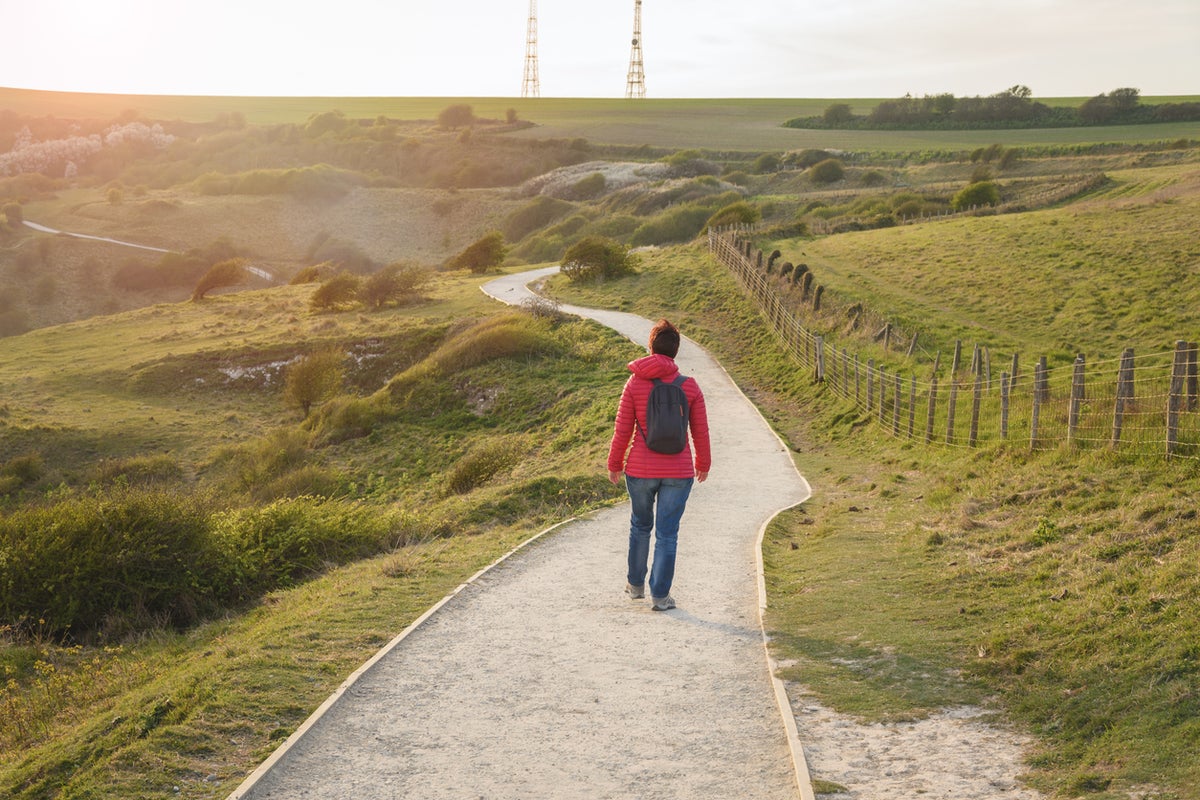
Walking is good for you, there’s no doubt about it. It has been linked to health benefits for your heart, lungs, muscles, mind and beyond – and it’s free.
For most people, the only thing you need to invest is time. The problem is, many of us don’t have a huge amount of that. And it is for this reason that leading physical activity researcher Professor Emmanuel Stamatakis of the University of Sydney has made it his mission to uncover efficient ways of lowering the barrier to entry for exercise for time-poor people.
In the last 12 months, he and his colleagues have unearthed two ways to increase the health benefits of a simple stroll. Firstly, inject a bit of pace, and secondly, rack up more steps in a single bout.
His first study looked at the health benefits of vigorous intermittent lifestyle physical activity, or VILPA for short. This is any daily activity that leaves you out of breath, such as climbing the stairs or hauling heavy shopping bags between the shop, your car and your house.
It found that, in people who didn’t exercise otherwise, “between five to 10 episodes of vigorous-intensity activity, lasting up to one minute, done on a daily basis, seems to be associated with between 30 and 50 per cent lower risk of cardiovascular conditions, cancer and mortality”.
To integrate this into your day, you could switch from a slow walk to a brisk or fast one, or purposefully pick a hilly route. Other options include swapping the escalator for the stairs, picking a parking spot that’s further from the supermarket door or playing an active game with your children. The phrase “vigorous gardening” was also used during my chat with Professor Stamatakis – if you raise your breathing rate to the point you can’t speak in complete sentences, you’ve hit the nail on the head.
Professor Stamatakis’ second study discovered that, in those currently walking 8,000 steps a day or below, steady walks lasting 10 or 15 minutes reduced risk of cardiovascular disease by two-thirds when compared to accumulating a similar number of steps through shorter walks.
“The main takeaway is a very empowering one: there are options other than dramatically increasing the amount of physical activity you do to improve health,” Professor Stamatakis tells me.
“Our study suggests that even one or two comfortable, steady 10 to 15-minute walks a day may meaningfully reduce cardiovascular risk. For many older or less active adults, this is a far more achievable goal than trying to accumulate thousands more steps or beginning structured exercise.”
Read more: Think you’re too old to start exercising at 50, 60 or 70? Think again