
Reviewed by Dietitian Kelly Plowe, M.S., RD
Credit: Getty Images. EatingWell design.
Key Points
Store-bought guacamole is rich in heart-healthy monounsaturated fats and fiber for satiety and digestion.
Check labels for simple ingredients and low sodium to ensure dips fit into a balanced eating routine.
Guacamole enhances nutrient absorption and pairs well with veggies, tacos, eggs or grain bowls.
Not every dip needs to be homemade to be nourishing. Store-bought dips can have a place in a balanced routine, especially when you’re running low on time or energy. The trick is knowing what to look for—a quick glance at the ingredient list and nutrition label can tell you a lot about sodium content, added sugars and the types of fat used. With that knowledge in hand, you can turn a convenient snack into something genuinely balanced and nourishing. We asked dietitians to name their favorite store-bought dip—guacamole came out on top.
Why Dietitians Love GuacamoleIt’s Packed With Healthy Fats
Avocado does the heavy lifting in guacamole, delivering a rich dose of heart-healthy fat. “The main type of fat in avocados is monounsaturated fat (specifically oleic acid), which is known to lower LDL cholesterol, also known as the ‘bad’ cholesterol,” says Emilie Procario, M.S., RDN, CPT.
Healthy fats can also help you feel full and satisfied. Make guacamole into a balanced meal by adding it to tacos that contain protein and a whole-grain carbohydrate, like a corn tortilla.
It’s a Great Source of Fiber
“Guacamole checks so many boxes for me,” says Lauren Manaker, M.S., RDN, LD. “It’s also a source of fiber, which is great for digestion and can help maintain steady energy levels.” Fiber also helps you feel full and satisfied and provides additional benefits for your gut health, including promoting regular bowel movements.
It Typically Contains Whole-Food Ingredients
Store-bought guacamole is typically made with simple, whole-food ingredients like avocados, tomatoes, jalapeños, cilantro, garlic and salt. The ingredient list is short and recognizable—like something you could make at home. Since it’s made with fresh ingredients and doesn’t rely on preservatives, it’s best enjoyed sooner rather than later.
It Helps Your Body Absorb More Nutrients
Guacamole does more than add flavor and creaminess. The monounsaturated fats in avocados enhance the absorption of fat-soluble compounds like carotenoids when paired with vegetables like tomatoes or leafy greens. Since vitamins A, D, E and K also require fat for optimal absorption, adding guacamole to a salad, grain bowl or even eggs can help your body better utilize these nutrients.
How to Enjoy Guacamole Dip
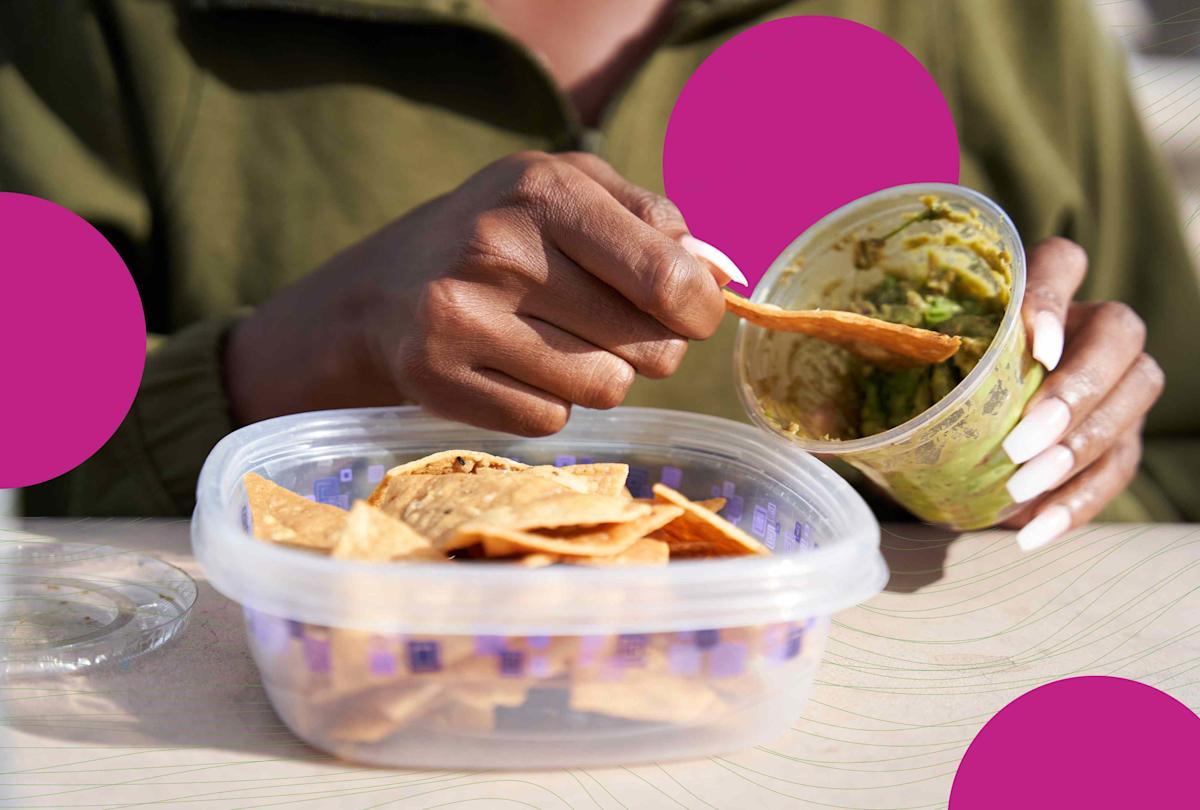
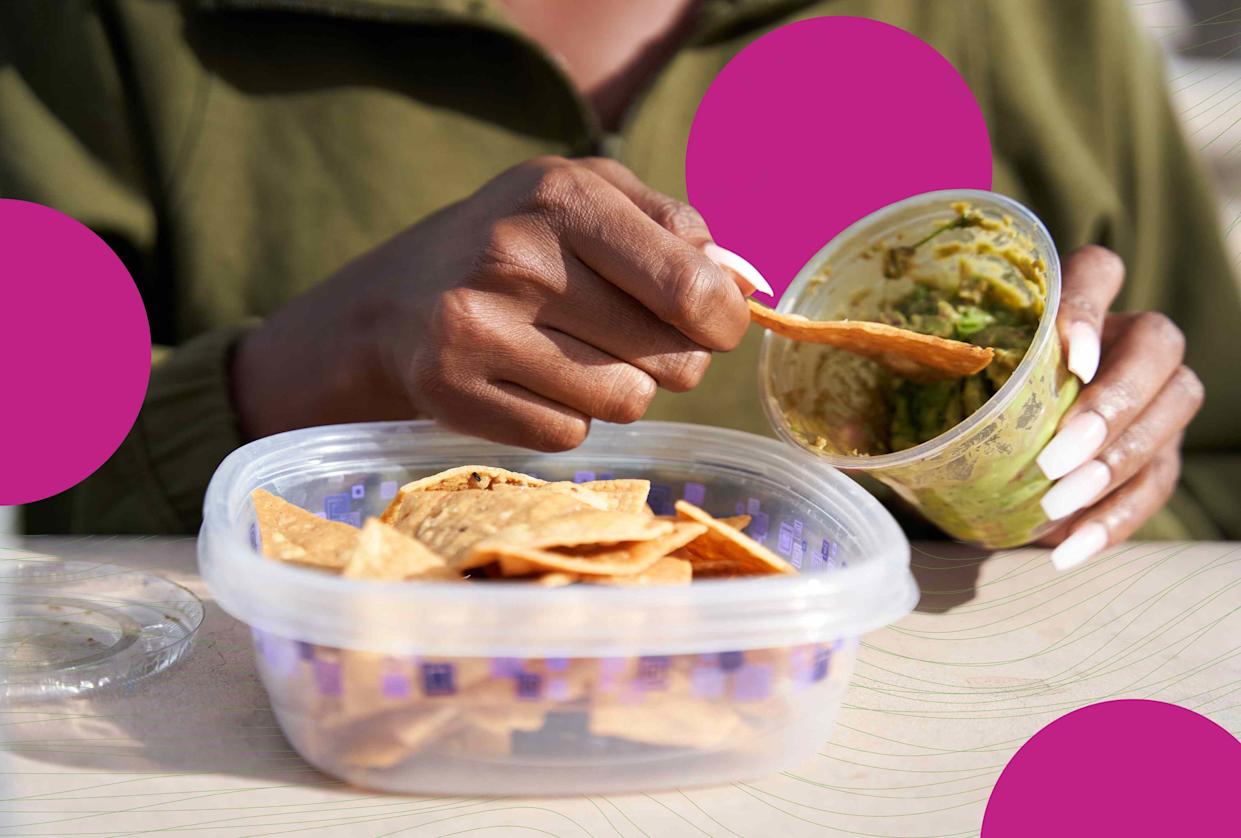
Guacamole is so versatile; there are many ways to enjoy it. “It’s classic with tortilla chips or crunchy veggies like bell peppers and carrots. But I love spreading it on toast, adding it to sandwiches or dolloping it on top of eggs or grain bowls,” notes Manaker.
Procario enjoys guacamole with plantain chips, or as an accoutrement to baby carrots. Other ways to enjoy include using guacamole as a “topping” on certain meals, like chicken burrito bowls or fish tacos.
How to Choose a Healthy Dip
If guacamole isn’t your thing, don’t fret; there are so many delicious and nutritious dip options out there. Some store-bought varieties can fit into a balanced eating pattern; it just comes down to knowing what to look for on the label.
Read food labels and ingredient lists. Prioritize nutrient-dense ingredients and minimize excess sodium, saturated fats and added sugars. “When looking at the Nutrition Facts label, the percent Daily Value gives you reference amounts of nutrients to consume or not to exceed each day,” says Adriana Roges Wilson, M.S., RD, CDN. The Food and Drug Administration recommends using % Daily Value as a quick guide: 5% DV or less per serving is low, while 20% DV or more is high. This can help you compare dips at a glance—especially for nutrients like sodium and saturated fat.
Be mindful of sodium content. “When choosing a store-bought dip, as with most prepackaged items, you want to be mindful of sodium content,” says Procario. The daily recommendation for sodium is 2,300 milligrams or less, and most Americans exceed this by more than 1,000 mg daily. When it comes to dips and salsa, we recommend limiting sodium to 140 mg per serving or less.
Opt for simple ingredients. Ellen Coghlan, M.S., RD, recommends looking for dips made with simple ingredients you recognize. “These options tend to provide protein, fiber or healthy fats that help keep you full. I also like to remind clients that a dip doesn’t have to be light or low-fat to be a good choice—it’s about how it fits into the overall meal.”
Coghlan’s store-bought dip favorite is tzatziki. “It instantly elevates the flavor of a meal while also adding real nutritional value. Since it’s typically made with Greek yogurt, cucumber, garlic and olive oil, you’re getting protein, probiotics and healthy fats,” shares Coghlan.
Our Expert Take
All in all, store-bought dips can absolutely fit into a balanced lifestyle; it just takes a little intention and label reading. By choosing options made with simple, whole-food ingredients and keeping an eye on sodium, saturated fat and added sugars, you can turn a convenient snack into something nourishing and satisfying.
Dietitians especially favor guacamole for its heart-healthy monounsaturated fats, fiber and ability to help your body absorb key nutrients, all while being incredibly versatile. And if guacamole isn’t your favorite, there are plenty of other wholesome choices. The key is to focus on quality ingredients and how the dip complements your overall meals.
Read the original article on EatingWell