
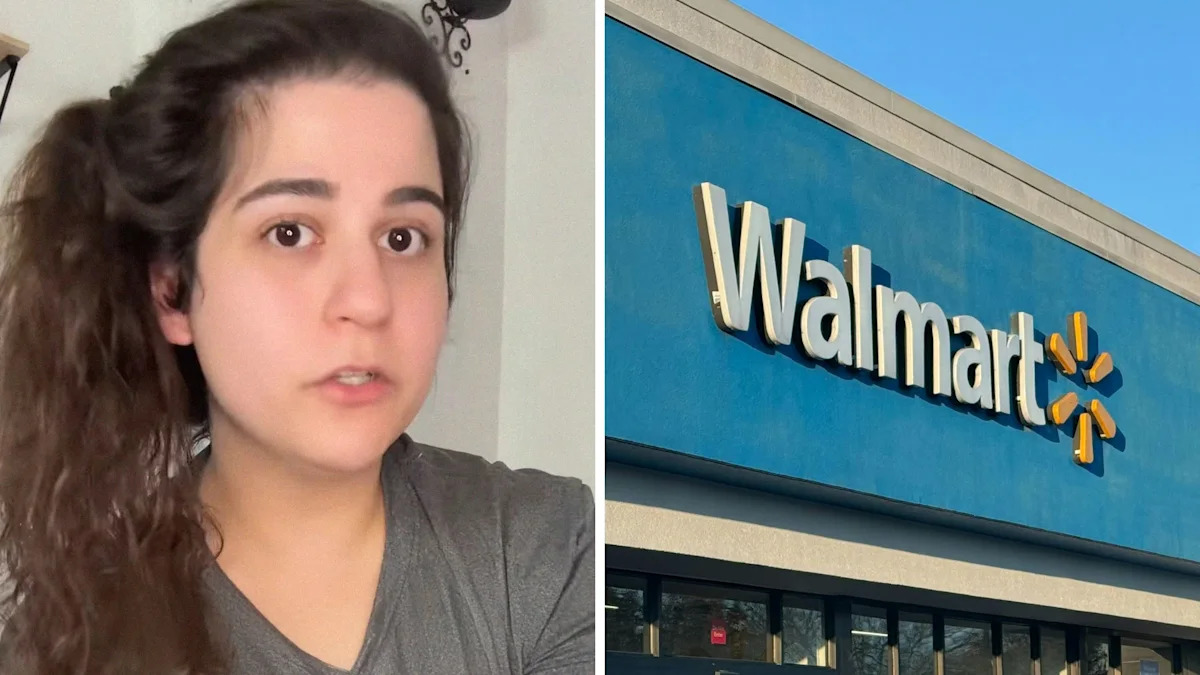
Nikki Kellett (@nikki_kellett) is sounding the alarm about Walmart’s customer service line. She discovers that the retail giant discloses far more than the standard “this call may be recorded” boilerplate. And the company’s own privacy policy appears to back up her suspicions.
“I like how they put that at the end to kinda make your brain feel like it’s a safe thing,” Kellett, a political activist and content creator, said. “It’s not.”
What’s the deal with Walmart’s customer service system?
This is a microphone, indicating the story you’re reading is about a Radio Man.
Kellett, who bills herself as “using her voice for those who can’t,” played the Walmart recording in her TikTok. It says, “This call and your voice may be recorded for quality or other business purposes, including fraud prevention.”
Advertisement
Advertisement
Two words stuck out for her—”other business purposes.” Kellett dug into what those purposes might actually include. “It is not limited to AI training, voice cloning, datasets, emotion tracking, behavioral analysis, customer profiling, speech recognition systems,” she says. “What ethically could you use that for?”
Her speculation carries weight. Walmart’s customer privacy notice, updated on March 31, explicitly lists “voice prints” under the biometric information it collects. The notice also confirms the company collects personal information “using call recording technology” when customers speak to its service line. Walmart’s current AI-powered customer care agent notes that calls “may be monitored and recorded by us and our service providers”. That last phrase essentially means Walmart can share your “voice,” with anyone it works with.
None of this requires your opt-in. You either accept the terms by staying on the line, or you hang up.
The voice data market
Kellett isn’t the first to bump up against the gap between what callers are told and what companies actually do with voice data. In 2025, a California woman sued AI vendor ConverseNow Technologies after discovering her Domino’s Pizza phone order had been intercepted. She found that it was routed through the company’s servers without her knowledge.
Advertisement
Advertisement
She “believed she was speaking with a Domino’s employee when she provided her order along with her personal and payment information,” according to Wilson Sonsini Goodrich & Rosati’s analysis of the case.
The court pointed to ConverseNow’s own materials, which stated that “by processing millions of live conversations each month, our self-learning system evolves even faster every day to improve the guest experience,” and that caller data was used to improve “our ordering platform, advertisements, products, and services.” The court allowed the wiretapping claims to proceed.
ConverseNow agreed to settle that case, MLex reports.
That same year, a separate lawsuit targeted Cresta Intelligence for purportedly recording and analyzing a United Airlines customer service call. According to Fisher Phillips, Cresta’s “platform is designed to learn from live calls and help train future models, generate business analytics, and improve product performance.” The plaintiff to the class action admitted “she was told that her call may be ‘monitored or recorded for quality purposes.'” But she claimed, “there was no disclosure that her call would also be shared with a third-party AI system for purposes unrelated to quality assurance.”
Advertisement
Advertisement
The suit alleged this violated California’s Invasion of Privacy Act, which requires all-party consent, and the plaintiff sought “$5,000 per call under two separate provisions.”
The case is ongoing.
Can you beat the AI machine?
Draft King
Some commenters who saw Kellett’s post had ideas for how to defeat AI that records and analyzes your voice.
“Have Disney music playing in the background,” said one person, echoing a few others. (Disney is well known for its zealousness about protecting its intellectual property.)
But someone replied to say this tactic would be useless.
“I run a small AI program locally on my PC to auto AI voice clone translate anime, it does great job at separating voices from loud music and background noise,” the person wrote. “Companies own way bigger models & voice separation for them can be near flawless. Loud music won’t save you, you’d need multiple voices talking all at [the] same time, but even real people on [the] other end of call wouldn’t be able to hear you anymore.”
The Big Lead reached out to Kellett via TikTok message and comment, and to Walmart via email.