
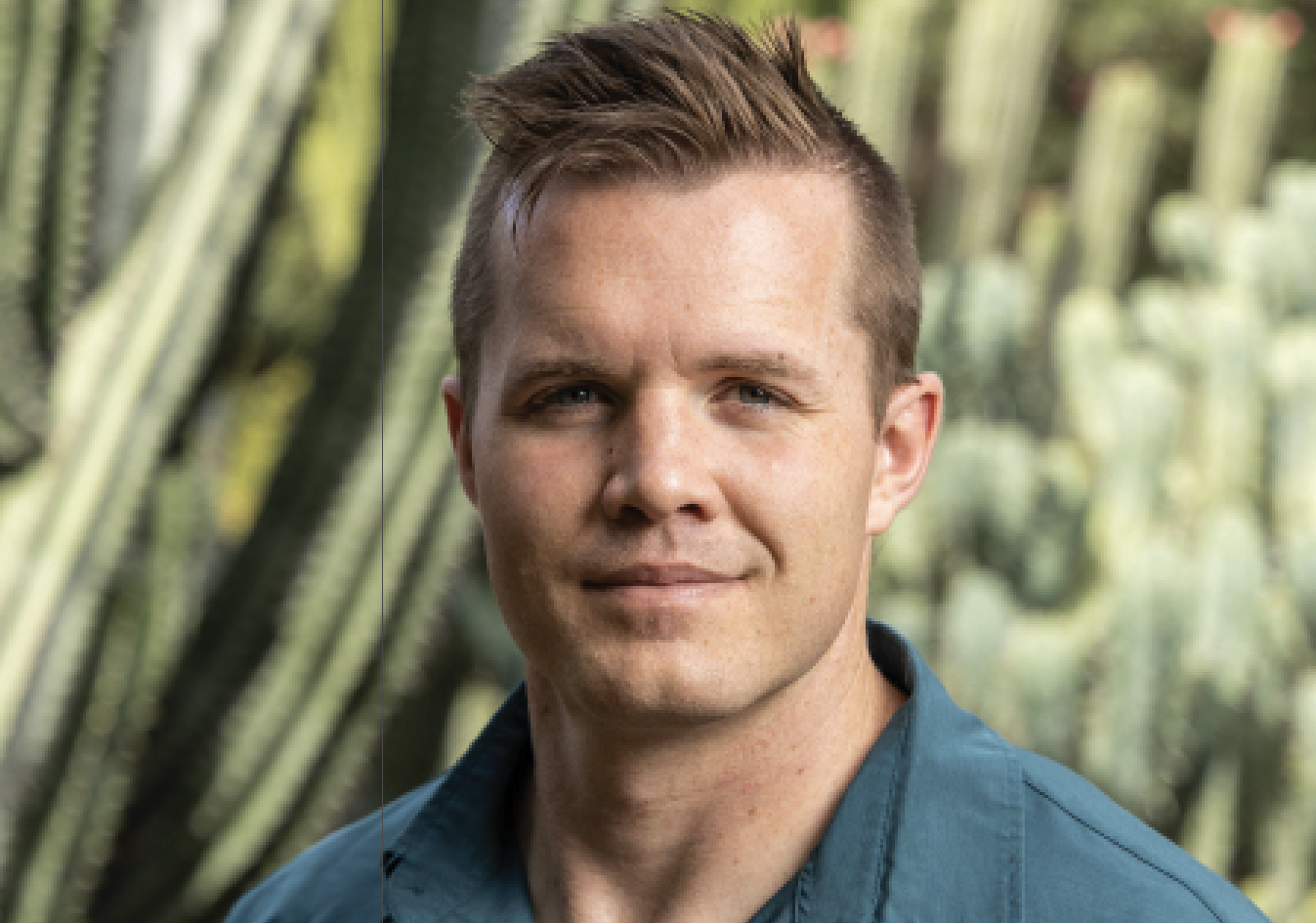
Dustin Moore has a creative way of describing an individual’s turn toward health.
“Everybody has a gateway topic that gets them interested in nutrition and health,” says Moore, who has a Ph.D. in public health from UC Irvine and is brand manager of nutrition sciences at Swanson Vitamins. “It varies according to the person. Sometimes it’s a lifestyle hit — you find yourself with less energy, or more tired or fatigued, or you just learn about a particular topic. And all of a sudden, this rabbit holes you into this area where you’re just learning all about it, and you’re just digging it.”
Such an approach to health and nutrition, Moore explains, exemplifies a profound shift in how dietitians like himself approach their field.
“In the past, I think it’s fair to say that we took an overly simplistic approach about ‘just reduce your calories, just pick this diet and stick to it, and this could help you lose weight,’” Moore says. “It wasn’t as common for us to assess other social determinants, or to look at other personal factors or environmental circumstances that could have influenced it. We’d silo the treatment — some people would go to a dietitian, others would just talk to their physician, others would just bite their lips and go talk to a physical trainer.”
Today, Moore distinguishes, health professionals follow a “holistic approach,” one that incorporates numerous health experts to craft an “ongoing lifestyle modification” to help people improve their health.
“We’ve seen a lot more success with that,” Moore says. “Rather than telling people you’re not trying hard enough to lose weight, we’re trying to address what are the factors that make it difficult for someone to achieve and maintain a healthy body weight? I really dig how that type of therapy and treatment has improved in nutrition sciences over the last decade or so.”
In a wide-ranging conversation, Moore further detailed the diet, nutrition and health insights that can further benefit a processor’s business.
Meatingplace: What do you think is behind the renewed consumer focus on protein?
MOORE: Honestly, it’s been a long time coming, and there’s a few things that I would point to to suggest why we’re seeing this huge phase of all these things that have protein in them that have never had protein before. We have protein water, protein alcohol, protein chips, protein-fortified cereal. Every single food item is somehow finding a way to get an extra serving of protein into it.
The major precursor that led up to this is, [from] 2010 to 2020, there was a big digital-era information age. You found all these new platforms and technologies that were making it easier for people to track their intake and calories and set their goals for dietary intake; that generated a lot of buzz and interest with it.
Another thing that made it a big deal was the introduction of GLP-1 medications. As the United States has long dealt with higher rates of obesity, the development and the approval of GLP-1 medications has been huge. Those have been major disruptors within the health industry for helping people to achieve a more healthy body weight.
Then honestly, I think the last major thing was the COVID-19 pandemic, because that shook up a lot of the American psyche about human health and well-being. It made people take a more prominent look at things that would influence their health in the long term.
Protein has always been the most popular macronutrient. And in how nutrition scientists approach their field, carbs and fats are important, but they’ve always traded places with each other for one being more vilified over the other in terms of what people try to cut out or modify. Protein has always been sacrosanct. It’s always been at the top of the list for it. Once all those conditions came together, protein just basically took its natural place as top of the crop.
Meatingplace: Politics impacts how matters of nutrition are framed. What are the agnostic/apolitical matters of nutrition you’d like to stress for our readers?
MOORE: The first thing that immediately jumps out to my mind is leave farmers the hell alone. I’ve been a dietitian for a little over 13 years now, and dietitians do not receive much formal training about agriculture and food production. I have been very fortunate to make a lot of connections and learn about what farmers do — learn about modern technology, modern growing practices, all the trade-offs that go in between decisions farmers have to make with everything — and gotten a bit of a sense of the complication and the very challenging nature it is to make a robust food system work.

[So] my first and only mantra — one that I will die on this hill forever on — is you got to leave farmers to the agriculture. It doesn’t matter who it is. Anytime you have a politician sniffing around or saying, ‘We need to get involved in this,’ or ‘We need to regulate this,’ or ‘We need to put something on there,’ I think immediately, absolutely no way. No freaking way. There’s a reason farmers work and operate the way they do. For me, that is completely apolitical. Keep your hands off of it.
[Additionally], because of the abundance of food — because of all the different ways there are that people can eat — you’ve seen, over the last 15 or 20 years, the rise of the food identitarianism. That means, if I was to ask you, ‘What do you think are the major components of your identity?’ you might sit there for a second and think about the work you do, think about your family relationships, your friends, the community that you work in, etc. I have never thought to say I identify by a certain diet, but we see that a lot more commonly now from individuals where they’ll state, ‘I’m a low-carb, high-fat enthusiast,’ or identifying by their dietary pattern. I find that odd. Most of the time, for people who do that, for people who make their dietary lifestyle a big component of their identity, it’s very weird. It closes them off to evidence, to information, to sometimes even relationships with people. Diet really shouldn’t be that way.
Meatingplace: HHS Secretary Robert F. Kennedy Jr. oversaw a radical shift to the nation’s food pyramid this year, one that flipped the respective prominence of bread/grains and animal protein. As a nutritionist, what was your reaction to the new food pyramid?
MOORE: I do like how they increased the protein requirements. The regular RDA used to be 0.8 grams per kilogram of body weight, and they upped this one to 1.2 to 1.6. I think that’s good, and it’s in line with data that we see, given the fact that that original 0.8-gram recommendation was based on the minimum amount of protein required to maintain mass. In order for individuals to keep and maintain mass as they get older or to build muscle and improve lean body mass tissue, those requirements of 1.2 to 1.6 hit a lot better.
The second thing is, I absolutely dug how they were promoting fresh produce. I thought that was a very important thing to emphasize, because historically, Americans don’t get very much of it. We tend to be pretty limited on the actual recommendations that we’re hitting.
Then, on the side of the things that I did not like very much … I really disliked was how they removed emphasis on non-nutritive sweeteners. In other words, they basically lumped all sodas in with each other, saying ‘Just don’t drink soda; just avoid soda.’ In fact, diet beverages — not what we call non-nutritive sweetened beverages — are a fantastic alternative to sugar-sweetened beverages. When you replace them consistently across the board, it helps people to lose body weight and helps them to maintain body weight. They’re fantastic. I say this as an avid diet soda drinker myself.
Meatingplace: And how did some of your colleagues respond to the new guidelines?
MOORE: There was a really smart observation that somebody made — they said it’s almost like they’re going back to the original dietary guidelines that were first published back in 1980, which were meant to be on an individual level. They were meant to be something that could guide people for crafting their diet and keeping a general guideline of what they wanted.
As time progressed, every five years, when they would release the new dietary guidelines, we saw that it was a lot more effective and efficient to make this a guiding document for policy. The guidelines expanded. The previous year’s guidelines, they were like a 400-plus page report. It wasn’t meant for consumers to sit down and review and plan out their diets with it. It was meant to be helping establish cornerstone policy for organizations that were involved in food and education and consumption. They’ve reverted back to that original style of, ‘No, no, no, this is for individuals. We’ve only made this document 10 pages long so that you can read through it and you can get an idea for yourself about how you should respond to it.’
Meatingplace: You’ve stated that “fiber is the longevity hack.” What do you mean by that?
MOORE: What I mean by that is if you want to modify something about your life that is going to increase your lifespan and reduce the likelihood of developing disease, eat more fiber. There’s a lot of things that we get into now, looking at longevity and anti-aging and all this interesting technology that people are pushing about for how you get about doing that. We’ve had one that we’ve been sitting on for a long time, which is going to do that for you. It’s eat more fiber.
Over the last decade, we’ve seen and observed that there is a dose-dependent effect of fiber intake and reduction in disease burden, meaning that we can clearly trace out in individuals that as they consume increasing levels of fiber in their diet, that does nothing but improve their overall health span. There’s absolutely huge amounts of data that have come out on this one, looking at all of these different disease risks, all of these different chronic conditions and ailments that plague mankind. We see that as the fiber intake goes up, these things inversely go down.
One of the details about why I say this is a hack is because hardly anybody gets enough fiber. We have the data to demonstrate this. Your average fiber intake for your average American is 15 grams a day, which is less than half of the recommended amount. The recommended fiber [is] 28 grams for women, up to 35 grams for men, [but] it’s somewhere to the tune of less than 11% of Americans are meeting the daily recommendation for fiber intake. Everything across the board improves about human lifespan and human health span when you include fiber in the diet, and hardly anybody is doing it. Here’s an easy hack. Go get it. Go get on board with it.
Meatingplace: How can that fact better inform the products that meat processors manufacture?
MOORE: No piece of meat ever tastes as good without a vegetable next to it. You take this nutritionally dense food — meat, animal proteins — and you recognize that, regardless of the nutrients that it does possess, it has limitations with what it carries; so, pair it with something wonderful, which is what we already teach in nutrition science. We teach that the best diets are always complementary. They have a variety, and they pair off one another’s strengths. Meat and vegetables is just one of those God-crafted conditions that appears to meet that. You get a little fiber from these items. You get a protein and mineral-dense source from these items. You get antioxidants typically from the fiber-providing food as well.
If I was to give advice, I would say don’t be afraid of pairing your proteins with those fiber-enhancing, fiber-enhanced items. It’s not detracting it. It’s not taking the spotlight away from it. I guarantee you that for most Americans, that’s how they think in terms of their dietary pattern and lifestyle — they think of a delicious protein that they want, be that a piece of pork or a piece of steak or a thing of chicken, and they are always going to be thinking about, ‘Oh my gosh, what could I pair this with that is going to make this all the more wonderful and delightful?’ Hoo boy, vegetables have the ability to do that.
Meatingplace: You’ve remarked that COVID-19 was a real turning point for you in communicating with the public. What changed for you?
MOORE: We were about three or four months into the pandemic, specifically the lockdowns that most of the states were enacting — you have millions of people who are being laid off, who are losing an income source. Many of them are arguably upset, scared, and unnerved by the situation on top of the health scare that’s coming from this virus, about which we knew relatively little at the time. I saw mockery [on Twitter]. The tweet in particular that I’m thinking of is this: He was a physician, but he was a young, cool, hip physician. He liked to talk science-based stuff, and he liked to wag the finger of scorn about how people would forget about how finances and your income are a determining factor in your health.
He specifically had sent out this retweet, just in shorthand, was making fun of this guy who had come onto Twitter to say he was afraid and scared because of having lost his job, and how is he going to support his family. This physician’s response to that was to mock him. I thought, ‘That’s not right. That seems to be completely flying in the face of all of your admonitions to consider a person’s finances as a determining factor of health.’ It got likes, and it got emoji claps on there. People within his Twitter circle were replying to it with this and all the other stupid expressions and idioms that became normal for the scene of Twitter.
Then it just kept getting worse, because then it moved into entertainment medium. In particular, the one that makes me grind my teeth every single time I think about it was that Jimmy Kimmel skit that they published of a bunch of doctors and nurses and other healthcare practitioners who were making fun of people that didn’t want to take the vaccine — it opened up with these physicians, nurse practitioners, physician’s assistants, qualified health professionals who were talking about how they had all this training, they had all this expertise.
Then the tone of it dramatically shifted as they said, ‘Oh, you don’t want to take the vaccine because Janet on your mom’s Facebook thread said that she just shouldn’t be taking it.’ It just progressively kept getting worse with that. It made me cringe watching it. At the end, one doctor said to the camera, ‘Shut the f**k up and take the vaccine.’ I remember thinking I would be fired so damn fast if I ever had a patient under any pretense ask me a question, and I told them to shut the ‘f’ up and just take the vaccine.
[In short], people came to us with questions, and the people who were facing the crowd — the people who were in front of the cameras — they sneered at everybody. They made it into a pact of superiority about how they don’t know the science, and you don’t have the training that I do, so shut up and do what I say. No, nobody is under any authority or discretion whatsoever to listen more to you because of how many years you went to school.
I have never viewed my education or my training as some sort of a badge or marker that allows me to issue dictated orders to you about how you manage your health. All of a sudden, we forgot that. When it was on a public national level, and all of a sudden it became a really popular thing with a lot of opportunities for media appearance and press appearance and people smashing the ‘like’ button on social media, we just absolutely succumbed to that.
We absolutely succumbed to the temptation to just sneer at people rather than stay professional and communicate in a way that recognizes not everyone’s going to be on the same page as you or that they’re going to disagree with you. It doesn’t matter if the evidence is not in their corner. They have a right to do that still.