
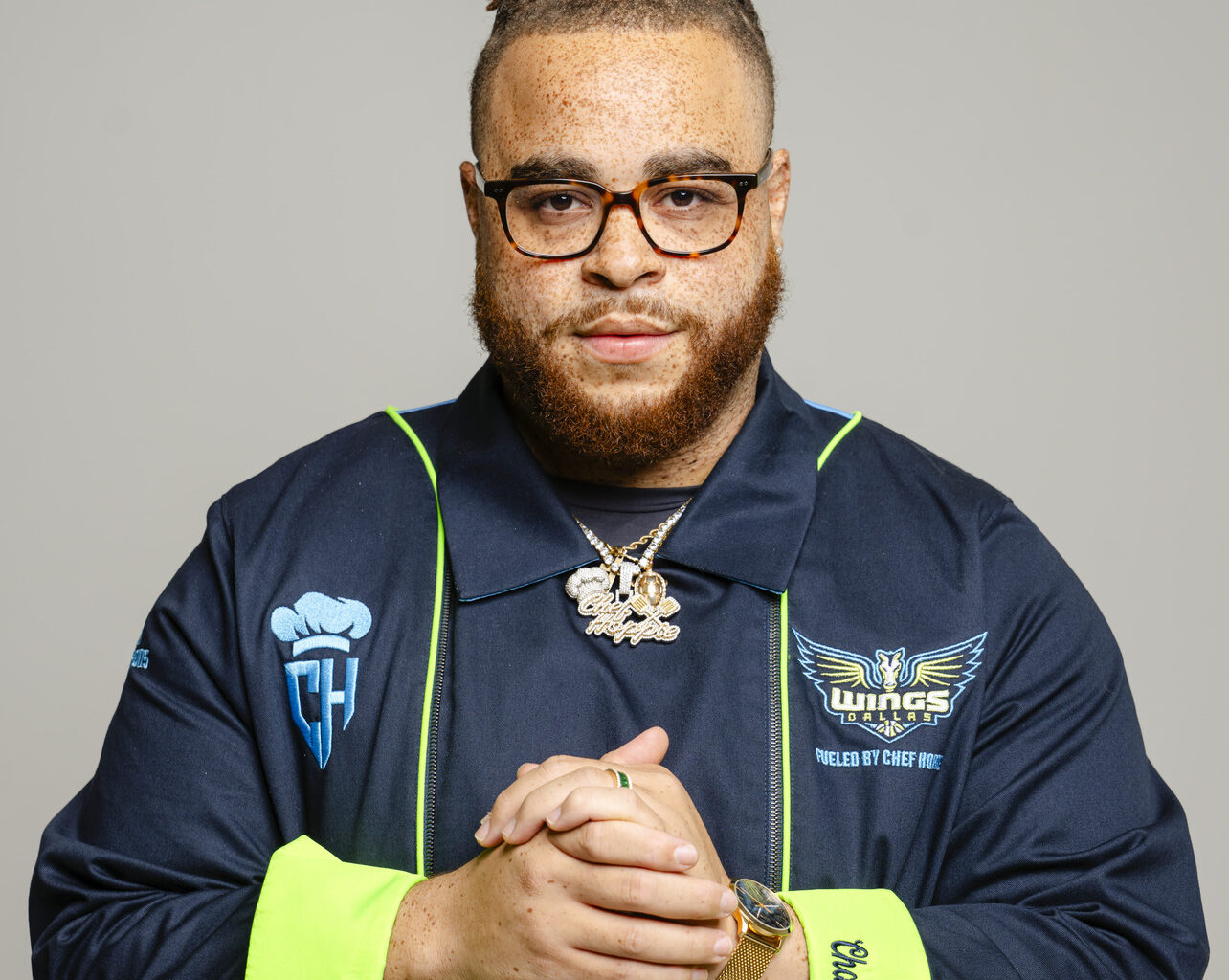
Most people never see the plate. They see the pick-six, the fadeaway, the fourth-quarter stop. They don’t see the breakfast that went down after morning shootaround, or lamb chops coming off the heat hours before tip-off, so they’re waiting when the team walks in after the final buzzer. Chef Hoppie lives in that unseen stretch of the day, and he has turned it into one of the most quietly influential jobs in professional sports.
His client list reads like a highlight reel: Deion Sanders, Shedeur Sanders, Travis Hunter, Dak Prescott, CeeDee Lamb, Amari Cooper, Ja’Marr Chase, Kyler Murray, JaVale McGee, Spencer Dinwiddie, Arike Ogunbowale, and Lil Baby, to name a few. He has cooked in the private kitchen of NFL Stars, appeared on HBO’s Original Series Hard Knocks and NFL Network, and built a name as the chef athletes trust when the stakes are their bodies. No, he is taking on a new role as the Sports Performance Chef for the Dallas Wings; he’s not treating it as a side gig. He’s treating it like a blueprint.


From Coach Prime To The Wings
Hoppie’s story started with a mentor. Before the celebrity clients and the television spots, there was Coach Deion Sanders, the man who gave him his first high-caliber opportunity and, just as importantly, his stamp of approval. Sanders’ endorsement opened the door to the next one, and the one after that.
The lesson Hoppie took from it has shaped everything else he has done since: in this business, relationship is the real currency. The talent gets in the kitchen, but the trust keeps you there.
The trust is built on something the lab reports don’t capture. Hoppie describes his approach as athlete-centered and food-driven. Science sets the targets, but the athlete sets the terms, from the dishes they grew up on to the textures they can’t stand to the stubborn belief that healthy has to mean bland. His job is to close the gap between what a body needs and what a person will actually eat, often by taking a childhood favorite and rebuilding it to serve a performance goal.
The Wings are asking him to do that on a different scale. With NFL clients, he has been in their homes and knew everything that crossed their plates. With a WNBA roster, the relationship runs the other way: a team, a shared kitchen, a demanding travel schedule, a group of professional women who already know their bodies and routines. He’s loving what the players’ love, fitting in the occasional “too healthy” meal, and laying groundworker for a bigger program once the organization’s new facility opens. His ambition isn’t modest. He wants to build a culinary operation that competes with any team in any sport, not just women’s basketball. The man doing the building has changed, too. The Chef Hoppie people first met through the Cowboys was young and riding high, with the high rise, the new car, and the new sneakers collection. The version that sat down with us is a husband and a father, ground in his faith, tightening up the business side of his brand and thinking about his legacy.
He’s calling this chapter a relaunch, and the ventures behind it, including Elevated Eats, Expensive Taste, and an upcoming premium beef partnership with JT2 Beef, are meant to outlast any one contract.
We talked with Chef Hoppie about game-day routines, what women athletes need from a performance kitchen, the biggest mistake young hoopers make with food, and why he thinks every WNBA team will eventually need someone like him.
Interview Questions: Chef Hoppie, Sports Performance Chef, Dallas Wings
You’ve cooked for everyone from Deion Sanders to Lil Baby. How did you land your first athlete client, and what made that relationship stick?
My first high-caliber client was my coach and mentor at the time, Coach Deion Sanders like you mentioned, but how I took the next step was learning that relationships meant everything. Through working with Coach Prime and having that on my resume, I was able to show my work and stamp of approval from Coach to land Allen Hurns when he came to Dallas.
The Dallas Wings and the WNBA
You’re now the Sports Performance Chef for the Dallas Wings. What does a typical game day look like for you, from breakfast through the postgame meal?
On game days, the team has shootaround in the morning, so I’ll have breakfast set up after that to get some carbs in them for the game. Then I head and get ready for post-game, grab and last minute items I need, and by 4 pm I’m at the kitchen getting those famous lamb chops ready for post-game.
How does fueling WNBA players differ from fueling NFL players like Dak Prescott and CeeDee Lamb, in portions, timing, and the kinds of recovery each sport demands?
I don’t think there is that much of a difference. You’d think portion sizes would be smaller, but in most cases they’re around the same depending on the time of year. I’m still adjusting and learning. For the guys you mentioned, it was on the personal side, so I’m in their homes and know what all they are eating. For my new role with the Wings, it’s the opposite. So finding foods that they enjoy on campus that are also impactful for their bodies is my focus. I will raise the levels next year with the new facility coming.
The WNBA schedule is packed with quick turnarounds and heavy travel. How do you build a nutrition plan that holds up on back-to-backs and road trips when you aren’t in your own kitchen?
The organization has built a great team and is always adding new pieces. Our Basketball Ops Manager, Kiara Madison, does a great job of keeping the team fueled and on track when the team is on the road. Also, these are Pros and Adults and know what their bodies need and what routine they like so we support with that understanding as well.
Are there nutritional needs specific to women athletes, such as iron, bone health, or energy availability, that shape how you cook for the Wings?
100%, my knowledge of the athlete body and the understanding of what women go through play a part. Sometimes I get the occasional eyeroll, jokingly for throwing in a “too healthy” meal to keep us on track, but for the most part I think I’ve found a good balance.
Basketball and Performance
You’ve worked with NBA players like JaVale McGee and Spencer Dinwiddie. What do basketball players get most wrong about how they eat during an 82-game season?
First thing, JaVale and Spence have some of the most strict eating regimens during the season, so I wouldn’t even use them lol, but no, I think the thing that people don’t realize is – it’s all about the timing and actually understanding your schedule throughout the season. Knowing when to fuel is an ultimate hack.
You describe your approach as “athlete-centered and food-driven” rather than purely clinical. How do you balance what the nutritionist wants with what the athlete will actually eat?
The science is the science, but what the science doesn’t show is how this athlete grew up eating and their culture. It doesn’t show the athlete not liking certain textures. It doesn’t show the misconception between healthy vs being bland. So really learning the athlete and trying different ways, flavors, cooking methods to get them to fuel better. Or how can we take those childhood favorites and make them beneficial to our fueling goals?
How do you measure whether your food is working? Do you track recovery, body composition, or performance data, or is it more about how players feel?
Depends on the player/team, etc but the best tracker is the athlete and how they feel. How fast are you recovering, what type of injuries – if any are we getting, do you have a lot of inflammation? Some have access for an in-body testing, which are all beneficial and a great use of science.
You’ve cooked for Deion Sanders as well as Shedeur Sanders and Travis Hunter. What has it been like fueling two generations of athletes, and how has the conversation around nutrition changed between them?
I’ve cooked for all of them in different stages of their career; just being a small piece to a very big puzzle has been a blessing. Those guys are PROs and understand what it takes to keep that well-oiled machine moving at peak performance.
The Business Off the Court
You’re calling this chapter a relaunch. What’s different about Chef Hoppie now compared with the version of the brand people first met through the Cowboys?
The Cowboys version was young, just getting in the spotlight. I was living on top of the world, had a new Mercedes, and was living in a high-rise, collecting sneakers, just buying the stuff you never got to have growing up. This version now is a husband and a dad that gets it! I’m starting to see what God has for me and wants me to do – which is bigger than me. This version now is getting buttoned up on the business side of things, working with Chavah Grant. I just want to be great and do God’s work
You’ve been doing premium beef collaborations and brand partnerships. How do you decide which partnerships fit your brand, and how does a chef turn athlete trust into a sustainable business?
If it makes money, it makes sense! Lol no, but just looking at the brand’s moral compass is the first, and then having a few meetings to see if we vibe with the company or brand and if they support my mission and vision is kind of how it goes, and then it moves to number after all of that. I can’t wait for everything we have going with JT2 Beef to be out in the public.
12. You’ve appeared on Hard Knocks, NFL Network, and national outlets. How has media exposure changed your business, and how do you protect client privacy while building a public brand?
You said it: the public only actually sees a small percentage of what I do, and everything because I do respect my clients’ privacy. Everything that is out to the public has been ushered by clients or on those larger platforms like Hardknocks. It’s tricky, but it’s about being genuine, respectful, and just talking about the vision I have for the culinary industry and my brand.
The Big Picture
13. With women’s basketball’s popularity surging, do you see an opportunity for performance chefs to become standard across the WNBA the way strength coaches are? What would you tell teams that haven’t invested yet?
It will have to become the standard as teams start to open these training facilities. Now the Dallas Wings have an edge because they have me; I’m not here to just cook, I’m here to build a culinary program that rivals all sports teams – not just the WNBA or Women’s Sports
14. If a young player, say a high school or college hooper with pro dreams, could only change one thing about how they eat starting tomorrow, what should it be?
Actually eat, don’t snack, don’t get on these social media trends. EAT! I’m talking steak and potatoes.