
Here’s what parents need to know before giving their child a daily vitamin.

Approximately one in three kids and young adults under the age of 19 regularly take a dietary supplement, according to the Centers for Disease Control and Prevention.
But do kids’ vitamins actually contain what they say on the label? Consumer Reports tested popular children’s vitamins for heavy metals and label accuracy. Here’s what parents need to know before giving their child a daily vitamin.
Cold and flu season is here, and some parents may reach for a children’s vitamin to help keep their kids’ immune systems strong. But a new Consumer Reports investigation found that the vitamin’s label may not always tell the full story.
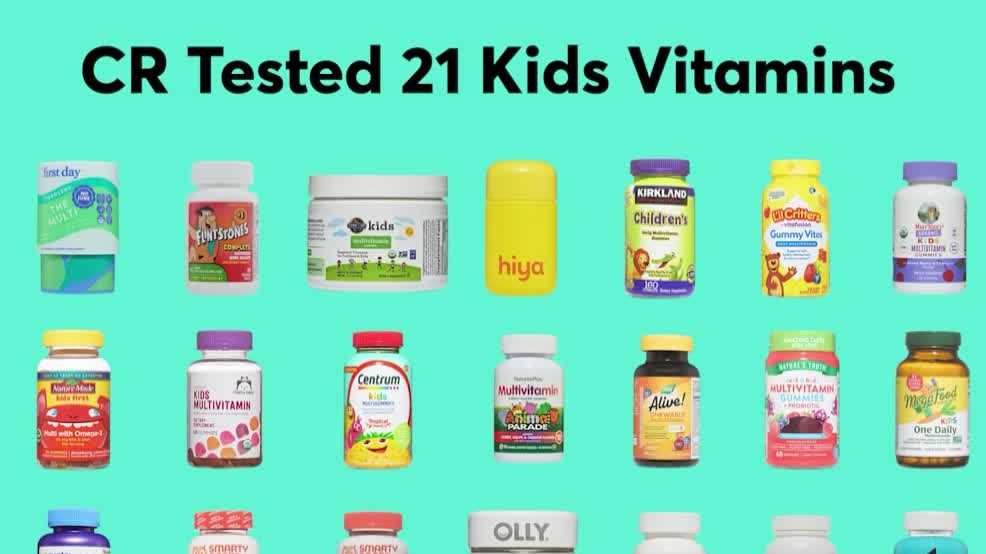
CR tested 21 kids’ vitamins, checking the amounts of 12 vitamins and minerals. It also tested each product for heavy metals, including arsenic, cadmium, lead, and mercury. The reassuring news is that every vitamin CR tested is safe to take or keep taking. Even though trace amounts of heavy metals were detected in all of them, they were all well below CR experts’ level of concern for heavy metals.
But when it comes to label accuracy, every product tested had at least one nutrient at a higher or lower level than the label claimed. In some cases, the amount was as much as 500% higher.
Vitamins sometimes look and taste like candy, but taking too many can be dangerous. Supplement overdose is among the five top causes of poisoning in children 5 and under. Make sure you choose a vitamin for your child’s age, follow the recommended dosage, and keep them out of reach of small children.
Consumer Reports contacted the companies for comment. Many told CR they take rigorous steps to ensure the safety and quality of children’s vitamins. Some companies said they use outside labs to verify product quality and safety. Some said they have invested in internal testing, while at least two companies said they use both internal and outside testing.
The American Academy of Pediatrics says most kids don’t need a daily vitamin. If you do choose to supplement, read vitamin labels carefully, and look for third-party certification seals showing that products have been independently tested for safety and quality.
Before starting a supplement, talk to your pediatrician first. Health experts say that vitamins can be helpful for some children with a diagnosed deficiency, a very limited diet, certain medical conditions, or food allergies.
See more coverage of top California stories here | Download our app | Subscribe to our morning newsletter | Find us on YouTube here and subscribe to our channel.