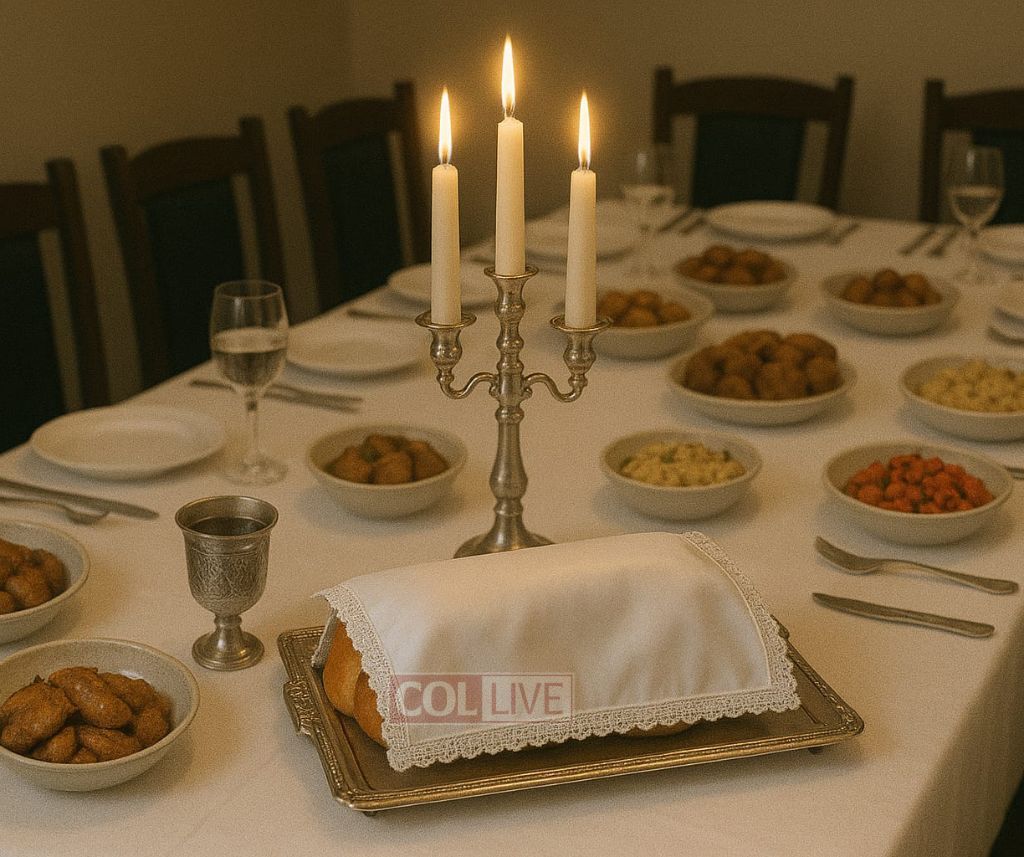
Question: Am I violating ‘lifnei iver’ when I host non-observant guests because they might say a bracha? Answer by Rabbi Mendel Prescott, Rosh Yeshiva of Machon Smicha. Full Story
Question: Often, we invite non-religious guests for our Shabbos meal in the hope that the experience will draw them closer to Yiddishkeit. My concern is about serving food to an individual who will not make a bracha or wash for netillas yadayim. Is this forbidden under lifnei iveir?
Answer by Rabbi Mendel Prescott, Rosh Yeshiva of Machon Smicha:
Causing someone else to stumble in an aveirah is indeed lifnei iveir, which is an issur de’oraysa, (even if the aveirah committed is only m’d’rabanan[1]), but may not be applicable here. Another concept, called mesayei’a l’yedei ovrei aveirah, though debated, is more relevant to your case.
For something to fall under lifnei iveir, it must be that the potential transgressor cannot access the aveirah without the help of the assistor. The Gemara’s example is when someone stands on one side of a river and cannot reach the davar ha’assur on the other side without assistance.[2] In your case, however, this does not apply since your guest would be committing the same aveirah at home.
The question then becomes whether there is an issur d’rabanan against assisting a transgressor in situations where lifnei iveir does not apply. The Rosh[3] (based on Tosafos) holds that Chazal forbade any assistance in a transgression, even something as simple as passing an item, even if the item was accessible regardless. But the Mordechai[4] argues that assistance is not forbidden when the aveirah is otherwise accessible.
The Rama[5] cites both opinions but seems to lean toward the stringent view of the Rosh. However, he does not clearly rule that way, leaving room for leniency in cases of need.[6] Your case is certainly a case of need, given the importance of drawing people toward Torah and Mitzvos.
However, the Mechaber in Hilchos Shabbos[7] brings the Rosh’s opinion l’halacha when he rules that it is forbidden for someone to accept an object that his friend has brought in from reshush harabim, even though the transgressor could simply drop the item on the floor to commit the aveirah.[8] The Alter Rebbe echoes this ruling in his Shulchan Aruch[9], which brings us back to the question: What is the basis for inviting non-religious guests to a meal?
Fortunately, we’re not alone on this issue; over the generations these cases have emerged in various contexts, and multiple approaches have been proposed.
The Shach[10] highlights a crucial difference between lifnei iveir and mesayei’a. In the case of lifnei iveir, it does not matter what the transgressor’s background or standing is; enabling someone to stumble is forbidden. However, regarding mesayei’a, if the transgressor is indifferent about committing an aveirah, it is not assur to assist him. The Shach’s examples are cases where the transgressor is either not Jewish or is a mumar, but the Dagul MeiRevavah[11] extends the idea to any case where the aveirah is being committed by the transgressor b’meizid.
This can be applied in your case, since your guest knows that he’s disregarding netillas yadayim and brachos and is thus a meizid. Rav Moshe Feinstein[12] applied this reasoning to permit similar cases brought to him. However, the Alter Rebbe disagrees with the Shach and rules that the issur of mesayei’a applies even when the transgressor is a mumar, bringing us back to our question.
Another idea is offered by the Toras Chesed of Lublin[13], who was asked about a similar situation by a frum innkeeper serving non-frum customers who eat without netillas yadayim and brachos. He distinguishes among types of issurim d’rabanan, arguing that mesayei’a pertains only when the object itself is inherently forbidden (e.g. bishul akum food). But here, the food itself is permissible; the only issue is that the guest hasn’t fulfilled his obligations regarding netillah and bracha. Chazal never prohibited mesayei’a in such a context.
Another justification is mentioned by Rav Shlomo Zalman Auerbach[14], who suggests that withholding food from one’s guest could the guest to resent religious Jews, which is a far worse aveirah than eating without netillah and bracha. So, by feeding him, you are not fostering aveirah, in fact you are likely preventing it. However, this reasoning only applies b’dieved – once he had already been invited, but it does not allow creating the situation l’chatchilah by inviting him over.
Rav Shmuel Wosner[15], building on this idea, goes a step further. He says that one can even invite the guest over, as staying home might lead him to eat maachalos assuros that are assur m’deoraysa. The invitation is essentially saving him from committing worse aveiros and thus not considered aid to aveirah.
An additional hetter mentioned is based on the Rama[16], who permits serving food to a poor guest who is not reliable about making brachos since it is an act of tzedakah. The Mishna Brurah[17] states that this hetter applies even if the host is certain that the guest will not make a bracha. Rav Moshe Feinstein[18] extends this leniency to other Mitzvos as well, like kiruv. Although Rav Moshe is personally hesitant about the Mishna Brurah’s view on this, he permits others to rely on it in the case of serving food to non-religious guests since the intent is to draw them closer to Yiddishkeit.
[1] כך דקדק בשו”ת פנ”י (חו”מ סימן ט) מדברי הרשב”א. וע”ע מנח”ח מצוה שכג (אות ב).
[2] מס’ עבודה זרה (ו, ב)
[3] מס’ שבת (פרק א סימן א)
[4] מס’ עבודה זרה (רמז תשצה) לענין מכירת בגדי הכומרים.
[5] יו”ד סימן קנא סעיף א
[6] כך דקדק בשו”ת חוות יאיר (סימן קפה) מלשון הרמ”א.
[7] סימן שמז סעיף א
[8] ועיין שם במג”א שמפרש שהוא מטעם מסייע.
[9] סימן שמז סעיף ג
[10] יו”ד סימן קנא (סק”ו)
[11] יו”ד שם
[12] אגרות משה יו”ד חלק א (סימן עב)
[13] חלק א (סימן ה). מיהו עיי”ש שלא סמך על התירו אלא כמקרה שלו שמוכר להם בכסף שאז לא נחשב כתרי עברי נהרא, שהיה הולך וקונה במקום אחר ואין שם אלא איסור דמסייע. אבל כשמגיש לאורחו בחנם, אפשר דהוי תרי עברי נהרא, אולי לא יאכל במקום אחר, והוי לפני עור דאורייתא. אמנם שאר הפוסקים לא חילקו בכך, ונקטו דאף המגיש בחנם לא הוי לפני עור.
[14] במנחת שלמה חלק א (סימן לה)
[15] שבט הלוי חלק ד (סימן יז)
[16] או”ח סימן קסט סעיף ב
[17] שם (ס”ק יא)
[18] אגרות משה או”ח חלק ה (סימן יג אות ט)
This Q&A is an excerpt from the Olam haHalachah weekly Halachah publication, produced by Machon Smicha. Each edition features pieces from Rabbonim and Maggidei Shiur in Hebrew and English. DOWNLOAD PDF
To subscribe and comment, email: [email protected]