
Key Takeaways
Krill oil contains omega-3s and the antioxidant astaxanthin, which may support heart and eye health.Despite its potential benefits for heart health and conditions like PMS, there’s not enough evidence to prove its impact on blood pressure or heart disease factors.Krill oil is typically more expensive than fish oil because it’s harder to harvest.
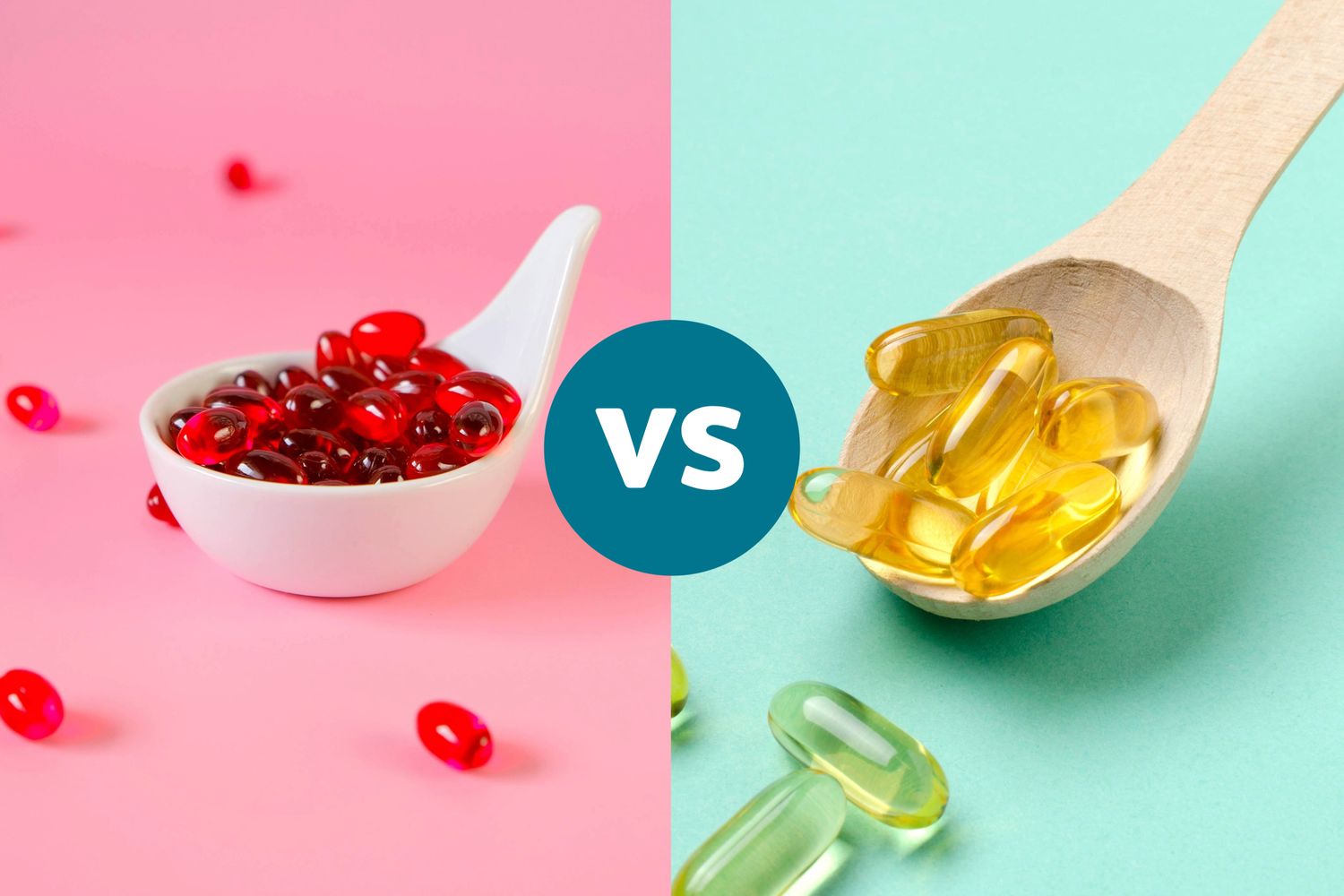
Krill oil is a popular alternative to fish oil, made from tiny shrimp-like creatures (crustaceans) that feed whales and other Antarctic wildlife. Like fish oil, it’s rich in omega-3 fatty acids—EPA and DHA—which support heart health and help reduce inflammation. Some research even suggests your body may absorb omega-3s from krill oil more easily.
What Are the Benefits of Krill Oil?
Although krill oil contains heart-healthy omega-3 fatty acids, it may not be a magic bullet for heart health.
A 2023 meta-analysis found that krill oil had no impact on blood pressure or risk factors for heart disease.
Besides enhanced omega-3 absorption, krill oil is touted for its antioxidant content. Unlike fish oil, krill oil gets its red color from the antioxidant called astaxanthin, which can support eye health and reduce inflammation. The antioxidant is also found in salmon, shrimp, and algae.
One study in 2017 suggested that krill oil can reduce dry eye symptoms better than fish oil because of astaxanthin.
An older study from 2003 found that krill oil may help individuals manage premenstrual syndrome (PMS) symptoms more effectively than fish oil, potentially due to its anti-inflammatory properties.
However, you can get similar relief from PMS symptoms or menstrual cramps by adjusting your overall diet, according to Sue-Ellen Anderson-Haynes, MS, RDN, CDCES, a registered dietitian nutritionist based in Boston.
Are Krill Oil Supplements Worth the Price?
Antarctic krill oil is typically three to four times more expensive than fish oil because of harvesting costs. Krill fishing requires massive vessels—described as “floating krill oil factories”—that can traverse the Drake Passage, one of the most dangerous ocean crossings in the world.
“The price is much higher, and I don’t think they’ve proven a cost-benefit for it,” Judy Simon, MS, RD, CD, a clinical dietitian nutritionist at the UW Medical Center who was not involved in the study, told Verywell.
Are Krill Oil Supplement Safe?
Omega-3s in krill oil and fish oil may increase the risk of bleeding, especially if taken alongside a blood-thinning medication.
Simon added that krill oil can sometimes cause gastrointestinal symptoms, such as bloating, nausea, diarrhea, gas, and heartburn.
While krill oil is generally well-tolerated and safe for most people, it may not be suitable for those with shellfish allergies.
Most nutrition experts and public health organizations recommend eating a varied diet that includes foods rich in omega-3s, rather than relying solely on supplements.
Krill is used in making fermented shrimp paste in Asia, and you can buy canned krill online. Anderson-Haynes noted that other types of seafood and fish, such as seaweed, walnuts, flaxseeds, or chia seeds, are also good dietary sources of omega-3s.
“You’re getting other nutrients and antioxidant activities from the foods,” Anderson-Haynes added. “A food-first approach is best.”
Verywell Health uses only high-quality sources, including peer-reviewed studies, to support the facts within our articles. Read our editorial process to learn more about how we fact-check and keep our content accurate, reliable, and trustworthy.
Harvard T. H. Chan School of Public Health. Omega-3 fatty acids: an essential contribution.
Köhler A, Sarkkinen E, Tapola N, Niskanen T, Bruheim I. Bioavailability of fatty acids from krill oil, krill meal and fish oil in healthy subjects—a randomized, single-dose, cross-over trial. Lipids Health Dis. 2015;14:19. doi:10.1186/s12944-015-0015-4
Huang H, Liao D, He B, Zhou G, Cui Y. Clinical effectiveness of krill oil supplementation on cardiovascular health in humans: an updated systematic review and meta-analysis of randomized controlled trials. Diabetes Metab Syndr. 2023;17(12):102909. doi:10.1016/j.dsx.2023.102909
Donoso A, González-Durán J, Muñoz AA, González PA, Agurto-Muñoz C. Therapeutic uses of natural astaxanthin: an evidence-based review focused on human clinical trials. Pharmacol Res. 2021;166:105479. doi:10.1016/j.phrs.2021.105479
Deinema LA, Vingrys AJ, Wong CY, Jackson DC, Chinnery HR, Downie LE. A randomized, double-masked, placebo-controlled clinical trial of two forms of omega-3 supplements for treating dry eye disease. Ophthalmology. 2017;124(1):43-52. doi:10.1016/j.ophtha.2016.09.023
Sampalis F, Bunea R, Pelland MF, Kowalski O, Duguet N, Dupuis S. Evaluation of the effects of Neptune Krill Oil on the management of premenstrual syndrome and dysmenorrhea. Altern Med Rev. 2003;8(2):171-179.
Environmental Reporting Collective. Krilling for oil.
National Institutes of Health Office of Dietary Supplements. Omega-3 fatty acids.
American Heart Association. Fish and omega-3 fatty acids.

Thanks for your feedback!
What is your feedback?
Helpful
Report an Error
Other