
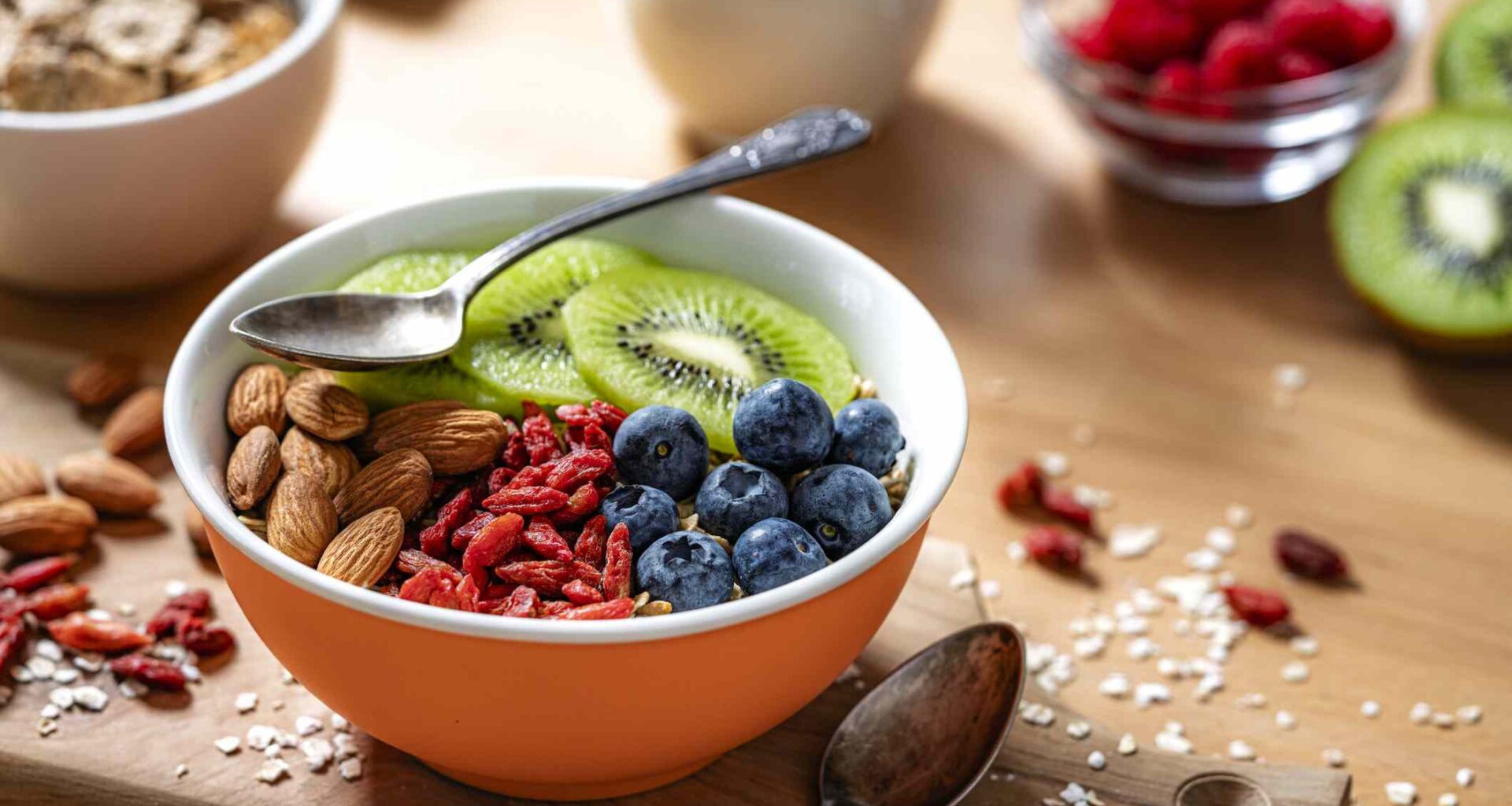
Green tea is full of antioxidants, which are compounds that help protect your cells from damage and can lower your risk for disease.
Green tea’s antioxidant capacity is about 570-2,620 micromoles per 100 milliliters. Many foods contain antioxidants, some with an even higher antioxidant capacity than green tea.
Berries get their blue and purple hues from antioxidant plant pigments called anthocyanins.
rez-art / Getty Images
Antioxidants include nutrients like vitamins A, C, and E, the mineral selenium, and compounds called polyphenols.
Berries are a great source of antioxidants. They can be rich in vitamin C, especially blackcurrants and sea buckthorn berries. Eating a cup of mixed berries provides 26 milligrams (mg) of vitamin C, or 29% of the Daily Value (DV).
Berries are also rich in anthocyanins, a type of polyphenol and plant pigment. These compounds give berries red, purple, and blue colors.
Most berries have an antioxidant capacity of about 2,100 to over 15,000 micromoles (μmol) per 100 grams (g). Berries with the highest antioxidant capacity include:
Aronia berriesBlackberriesBlackcurrantsBlack raspberryCranberriesBlueberriesStrawberriesRed raspberry
Kale is rich in vitamins with antioxidant properties, like vitamins A and C.
janecocoa / Getty Images
Vegetables are a great source of antioxidants. One study measured the antioxidant capacity of 303 vegetables and vegetable products. On average, vegetables had about 800 micromoles per 100 grams. However, a few vegetables had much more while some had less.
The study found that curly kale has an antioxidant capacity of about 2,800 micromoles per 100 grams. Kale is rich in vitamins A and C and contains polyphenols.
Other vegetables with high antioxidant capacity include artichokes, red chili peppers, and green chili peppers.
Cocoa is a good source of antioxidants that help lower inflammation and prevent disease.
HUIZENG HU / Getty Images
Cocoa powder has about 636 micromoles of antioxidant capacity per gram. So, chocolate made with more cocoa has higher antioxidant capacity.
Eating antioxidant-rich foods may help reduce inflammation and prevent disease. A 2023 study found that eating 10 grams of cocoa high in polyphenols helped reduce inflammation linked to heart health. Another 2024 study found that people who ate cocoa regularly had lower blood cholesterol.
Spices and herbs like clove, cinnamon, thyme, sage, and saffron have strong antioxidant properties.
Liudmila Chernetska / Getty Images
Spices come from the seeds, bark, roots, or leaves of plants. These parts of plants are naturally high in polyphenols.
A 2024 study looked at 425 spices and herbs. Clove had the highest antioxidant capacity, followed by peppermint, allspice, cinnamon, oregano, thyme, sage, rosemary, saffron, and tarragon. Their antioxidant capacity ranged from 440 to 2,770 micromoles per gram.
Seeds are an excellent source of antioxidants, including sunflower, sesame, and hemp seeds.
Tatiana Sidorova / Getty Images
Seeds can contain antioxidant nutrients like vitamins A and E. They are also packed with polyphenols.
A 2020 study looked at the antioxidant capacity of five different seeds. Sunflower seeds had the highest antioxidant capacity, followed by flaxseeds, sesame seeds, poppy seeds, and hemp seeds.
Here is the antioxidant content of those seeds:
Sunflower seed: 450 µmol/gFlaxseed: 210 µmol/gSesame seed: 80 µmol/gPoppy seed: 50 µmol/gHempseed: 30 µmol/g
A study showed that germinating seeds, like chia seeds, improved their antioxidant capacity. In chia seeds, their capacity increased by about 87-105% after four days of germination.
Nuts are rich in vitamins and compounds with powerful antioxidant effects.
FotografiaBasica / Getty Images
Nuts are rich in antioxidant nutrients and beneficial plant compounds. A 2025 study showed that eating 60 grams or more of almonds daily may reduce blood markers of oxidative stress (a state of cell damage that can lead to disease). It may also increase antioxidant enzyme activity, which helps protect cells.
Other studies show that regularly eating nuts may lower the risk of dying from any cause.
Here are the antioxidant capacities of some nuts:
Walnuts: 219 µmol/g
Pecans: 85 µmol/g
Chestnuts: 57 µmol/g
Some nuts, such as almonds, hazelnuts, pine nuts, and Brazil nuts, are especially rich in vitamin E. Brazil nuts are also particularly high in selenium.
HUIZENG HU / Getty Images
Coffee is one of the drinks with the most antioxidants. It has about 75 to 172 micromoles of antioxidant capacity per gram of ground coffee.
The amount of antioxidants in coffee can change depending on the type of coffee bean, how it is roasted, and how it is brewed.
A 2020 study found that Aeropress coffee had the highest antioxidant capacity. Drip coffee came next, followed by pour-over, espresso, and French press.
Here are some ways to add more antioxidants to your diet:
Eat a variety of foods: Different foods contain different types of polyphenols, each with unique health benefits. Include a variety of whole grains, fruits, vegetables, nuts, and seeds in your meals.
Use herbs and spices: Add different herbs and spices to your meals or drinks to increase antioxidant intake. You can make a golden latte with turmeric, sprinkle cinnamon on oatmeal, add cloves to tea, or use ginger in smoothies or stir-fries.
Drink antioxidant-rich beverages: Drinks like tea, coffee, and cocoa are great sources of antioxidants. Consume them in moderation, as too much caffeine can cause side effects.
Minimize ultra-processed foods: Whole, minimally processed foods usually contain more antioxidants than highly processed options.