
Building a home gym on a tight budget feels impossible in today’s market, especially when equipment prices have tripled over the past five years.
But fitness equipment expert Coop Mitchell from Garage Gym Reviews refuses to accept that narrative.
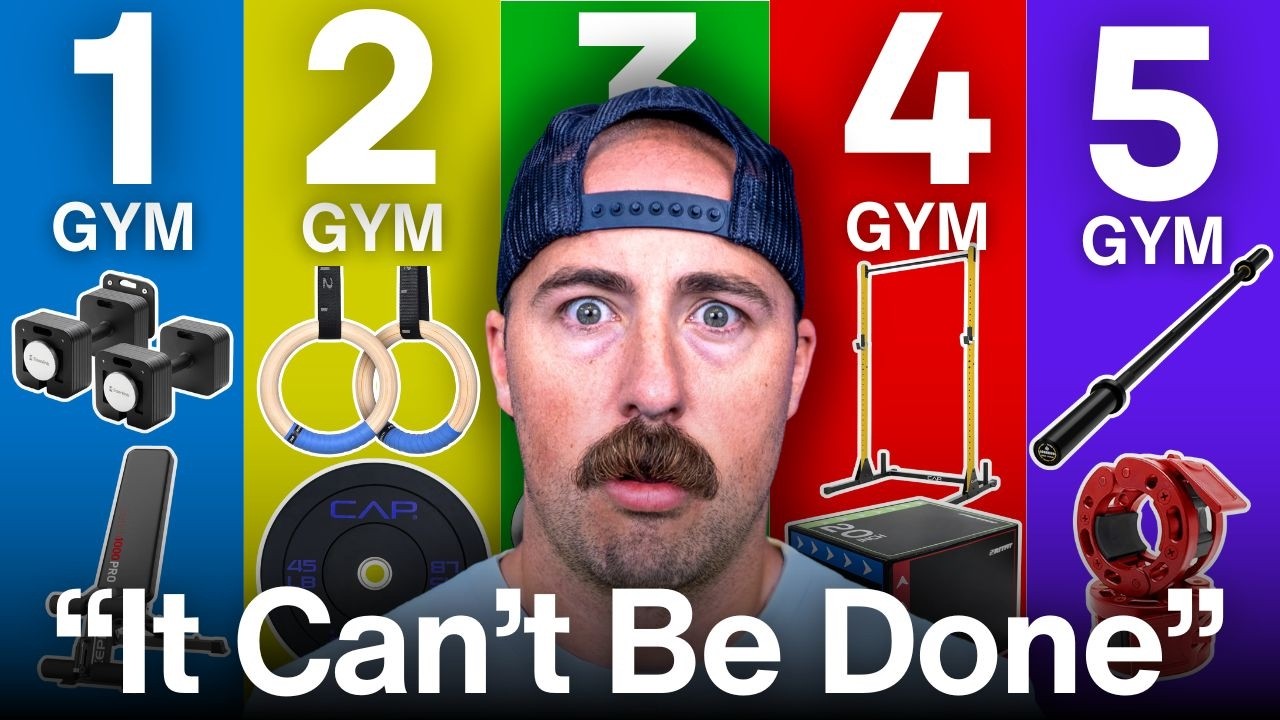
In a recent video breaking down budget home gym builds, Mitchell demonstrates exactly how to create five different fully functional $500 home gyms tailored to specific training styles.
Whether someone trains calisthenics, powerlifting, or hybrid athletics, there’s a budget-friendly solution that doesn’t sacrifice quality or results.
The Bodyweight Calisthenics Setup Under $350
For those just starting out or preferring minimalist training, Mitchell’s bodyweight gym delivers maximum versatility at minimum cost. The entire setup clocks in at just $341, leaving room for additions or savings.
The foundation starts with a wall-mounted pull-up bar from Titan Fitness at $90. Unlike cheap doorway alternatives, this adjustable bar mounts securely to wall studs or even ceiling joists, with width adjustments from narrow to 52 inches.
You can put it on the wall, which is what it’s designed for, but they don’t tell you this. You can also put it on the ceiling if you’d like.
Next comes what Mitchell calls the absolute requirement: gymnastics rings at $27. These wooden rings from GHB provide endless exercise variations including dips, pull-ups, ring rows, push-ups, and for advanced athletes, even iron crosses.
If I could have one piece of equipment, it would be gymnastics rings.
Additional Bodyweight Essentials
Rounding out this minimalist powerhouse:
Loop resistance bands ($30): Five bands with resistance up to 125 pounds for assisted movements and functional trainer alternatives
40-pound weight vest ($58): CAP vest adds resistance to bodyweight movements, though Mitchell notes a loaded backpack works equally well
Parallel bars ($65): Sports Royal bars provide stable dip and pressing options beyond rings
Nordic stick ($17): Affordable hamstring training device that fits under doors
Rogue cast iron sled ($85, optional): Durable 20-pound sled for pulling and conditioning work
Mitchell emphasizes hamstring training as critical yet often neglected in bodyweight programs.
The hamstrings feed the wolf. The hamstrings, you look at the best runners in the world, they’re going to have the strongest hamstrings.
The Dumbbell-Only Home Gym
For those who prefer free weight training without barbells, Mitchell allocates most of the budget to quality adjustable dumbbells. His top pick: Eisenlink adjustable dumbbells.
A pair of 50-pound Eisenlinks costs $360, but the genius lies in their versatility. Users can remove plates from one dumbbell and load them onto the other, creating a single 90-pound dumbbell for heavy unilateral work. Optional extension rods allow expansion to 160 pounds.
The remaining budget covers a CAP Barbell Deluxe adjustable bench at $77 (warehouse deal) and wooden gymnastics rings at $27 for additional upper body variations. An optional horse stall mat adds a dedicated training surface for around $50.
The Powerlifting Setup (Equipment Only)
Mitchell’s powerlifting build focuses on essential equipment, excluding weight plates since individual strength levels vary dramatically. He recommends sourcing used cast iron plates locally through Facebook Marketplace or Craigslist at the lowest possible price.
For new plates, FitVids 2-inch cast iron plates or CAP EasyGrip plates run about $90 for a pair of 45s—exactly one dollar per pound.
Core Powerlifting Equipment
The equipment foundation includes:
BalanceFrom PC1 power rack ($130): Four-post rack with 1,000-pound capacity, multi-grip pull-up bar, built-in dip horns, and crucial safety bars
Mako 7-foot barbell ($110): Budget option with 190K tensile strength and solid knurling, though lacking center knurling for squats
HandboBarbell ($70, alternative): 1,000-pound rated bar with 30mm shaft and center knurling at lower price point but questionable brand reliability
CAP Boss Bar (another option): Proven long-term durability with center knurling and 5-year warranty despite lower 132K tensile strength
For serious pressing, Mitchell recommends the BalanceFrom competition flat bench at $153. While Amazon basics benches start at $49, proper powerlifting demands a thick pad, 17-inch width, and tripod foot design for leg drive.
If you’re going heavy on bench, you want a nice thick pad. You want it to be 17 inches or so for an IPF standard and you want to be able to tuck your feet in with a tripod design.
Total equipment cost: approximately $500, with plates purchased separately based on individual needs.
The Hybrid Athlete Gym
CrossFit enthusiasts and multi-discipline athletes need equipment that supports both strength and conditioning. Mitchell’s hybrid setup emphasizes versatility and functional movement patterns.
The centerpiece: a 32kg (70-pound) adjustable kettlebell from Titan for $200. While this tool-adjusted design isn’t ideal, it provides kettlebell training at a fraction of the cost of multiple fixed weights.
Grunt Work Essentials
Strongman sandbags add serious conditioning work. Mitchell recommends two options:
Shogun strongman sandbags ($60-97): Range from 50 to 200 pounds for traditional strongman training
PolyFit handled sandbags ($65-80): Velcro closure system with handles for rows, squats, and carries up to 100 pounds
There is just nothing more grunt work like than using a sandbag.
Additional items include spin-lock adjustable dumbbells at $130 for over 100 pounds of pressing and carrying capacity, a $6 licorice-style jump rope for conditioning, and a basic CAP bench at $42 for pressing and box work.
Mitchell also suggests building a DIY plyo box using plans from garage gym websites. Total cost: $488.
Mitchell’s Personal $500 Dream Setup
If starting completely fresh with exactly $500, Mitchell would build what he calls a “do-it-all” gym focused on bodybuilding-style training with maximum versatility.
His foundation: the $75 CAP Barbell squat stand. Mitchell has personally tested this rack with heavy loads and confirms it handles serious weight despite the budget price.
You can’t get a cheaper rack. I’ve tested it. Load it up. So if you’re worried about weight, this can hold it.
Creative Equipment Choices
Mitchell’s complete build includes several clever budget hacks:
$19 landmine attachment: Slots into rack’s barbell holders for rows, presses, and rotational work
$35 BRT multi-grip handle: Converts landmine into pressing and rowing station with multiple grip positions
Folding flat bench ($65 warehouse deal): Genius move—fold down front leg for incline pressing, fold both for floor press or storage
Single Olympic dumbbell handle ($28): One handle for unilateral RDLs, presses, and rows, saving money for plates
Doorway pull-up bar ($28): Mitchell defends this often-dismissed option as perfectly functional
Handbo barbell ($72): 1,000-pound rated Olympic bar in green to match the white rack
Wooden gymnastics rings ($27)
Pulley system ($19): Attaches to rack for cable-style movements
PolyFit handled sandbag: For loaded carries and functional training
$50 band bar with handles: X3 Bar alternative for variable resistance training
Wasaku loop resistance bands: For functional trainer movements attached to rack
$6 jump rope: Essential conditioning tool
Mitchell jokes about having $11 remaining “to take my wife out on a beautiful date after I’m absolutely jacked and tan from using all my budget $500 gym equipment.”
The Weight Plate Strategy
Notably absent from this build: weight plates. Mitchell’s strategy prioritizes equipment diversity, then recommends aggressively hunting used plates.
I’ve seen weight plates for free because somebody doesn’t want to get them out of their house. So that’s what I would do.
This approach maximizes exercise variety immediately while gradually building plate inventory through local deals.
The Bottom Line on Budget Home Gyms
Mitchell’s five distinct $500 gym builds prove that price inflation hasn’t eliminated budget home gym possibilities—it just demands smarter shopping and strategic prioritization.
His key principles apply across all builds:
Buy used weight plates locally to maximize equipment budget
Choose multi-function pieces like gymnastics rings and resistance bands
Watch for color variations and warehouse deals on identical products
Invest slightly more in items used daily like barbells if budget allows
Build DIY alternatives for items like plyo boxes and lifting platforms
Start small and expand gradually rather than waiting for a perfect setup
Whether training for strength, aesthetics, or general fitness, Mitchell demonstrates that $500 remains sufficient to build a legitimate home gym in 2024. The equipment exists at accessible prices—it just requires research, flexibility, and willingness to hunt for deals.
So you wondering if you can build a $500 gym, don’t tell me again you can’t do it. These are five under $500 gyms that in my opinion are absolutely incredible.
For those claiming budget constraints prevent starting a home gym, Mitchell’s meticulously researched builds eliminate that excuse entirely. The barrier isn’t cost—it’s commitment to finding the right equipment at the right price.