
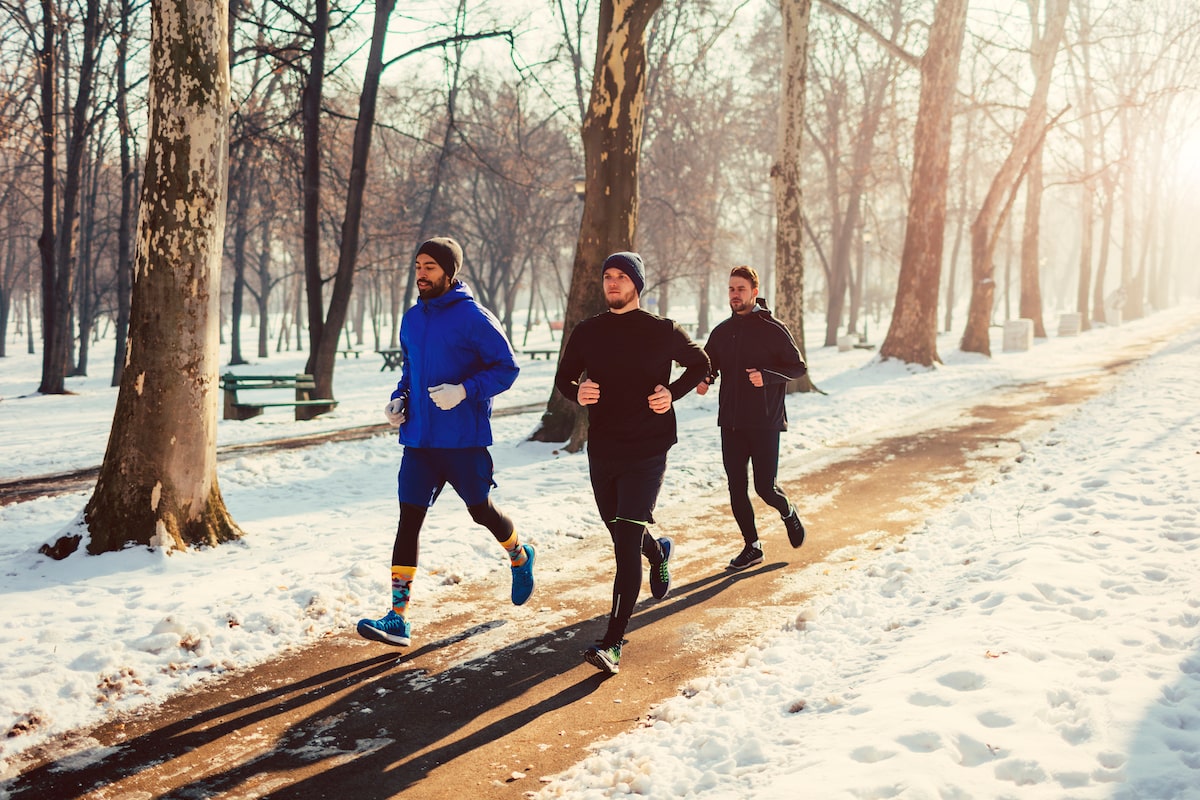
Mayo Clinic physiologist Michael Joyner, widely considered one of the world’s pre-eminent scientific experts on exercise, was once asked to summarize the state of knowledge about how runners should train. He responded with a haiku:
Run a lot of miles
Some faster than your race pace
Rest once in a while
This isn’t the kind of advice that changes every year, and the same is true for most fitness advice. Still, new concepts emerge, and trends rise and fall. Here are four ideas you’ll be hearing chatter about at the gym in 2026.
Shortcuts
In May, four British climbers summited Mount Everest during a trip that took less than a week door-to-door from London. The secret, they claimed, was inhaling xenon gas to protect them from altitude illness.
Their trip might serve as a convenient metaphor for the current zeitgeist in fitness. More than ever, we’re looking for hacks – pills, morning routines and apparently exotic gases – that can simplify or accelerate the journey to better health or greater fitness. We pursue these shortcuts even when there’s virtually no evidence they work, or with the possibility that they might actually cause harm. That’s the case with xenon gas, scientists say.
From 4 a.m. pushups to ice-water dunks: Have morning routines gone too far?
This trend isn’t new, but it has been supercharged by social media and will undoubtedly continue to grow in 2026. Resist it if you can, and try instead to enjoy the journey up the mountain.
Slowing down
The traditional assumption is that a harder workout is a better one: The more you stress your body, the more your fitness will improve. But a spate of recent studies has cast doubt on this claim.
Data from 120,000 runners, uploaded to the fitness social media site Strava, found that the best predictor of marathon time is how much easy jogging you do each week, not how hard you push. Scientists have found similar patterns in other sports, and lab data suggests that relatively easy exercise that doesn’t push you to exhaustion – what the fitness influencer Peter Attia calls “zone 2” exercise – has unique metabolic benefits.
What is the Zone 2 training fitness trend?
That doesn’t mean you should abandon hard exercise such as high-intensity intervals entirely. Elite athletes have long tended to mix easy and hard workouts in a roughly 80:20 ratio. The rest of us are finally catching on.
Calorie counting
The Spanish ultrarunner Kilian Jornet burned 16,104 calories while running the Western States 100-mile endurance race in June. We know this because he drank a special isotope-labelled drink that enabled him to precisely calculate his caloric burn. This isotope technique has been used in labs for decades, but it’s now available to the general public and its use is becoming more common among athletes.
Given how many athletes struggle with a potentially dangerous condition known as “relative energy deficiency in sport,” caused by inadequate fuelling, a new focus on counting calories might seem like a risky approach. But in the right hands, getting a more accurate picture of exactly how much energy you’re burning has the potential to help ensure you’re eating enough to stay healthy.
Running
The original running boom took off in the 1970s, sparked by books such as Kenneth Cooper’s Aerobics. The second running boom, in the 1990s and 2000s, featured Oprah Winfrey on the cover of Runner’s World magazine. We’ve now entered the third running boom.
Why running has become a global phenomenon
It started during the pandemic, when other opportunities for exercise were curtailed. But there’s more to it than that. A new breed of thick-soled shoes is making running easier on the body than ever before. And in an increasingly virtual world, Gen Z runners in particular are finding real-life connection and a sense of community in run clubs.
As a long-time runner, I see more people out on the roads and trails, and big races selling out in record time. Here’s hoping this trend is here to stay.
Alex Hutchinson is the author of The Explorer’s Gene: Why We Seek Big Challenges, New Flavors, and the Blank Spots on the Map.