
Did you jerk your shoulders back and suck your stomach in just reading this headline? ‘Good posture’ may bring to mind a ramrod-straight back and raised chin, like a soldier on military parade, but we should look instead to three-year-olds, owners of ‘the best posture in the whole world’.
This is according to Noël Kingsley (alexander-technique.com) , who teaches the Alexander Technique. Over a series of lessons, clients learn to regain the laid-back poise of a young child, focusing on tiny tweaks in alignment and relaxing – not tensing – the body. At the end, some clients ‘look ten years younger’, he says.
Bad posture is extremely ageing, but the hunchbacked, shuffling look is not inevitable. ‘It’s possible for people in their 70s or 80s to walk like three-year-olds because the body memory is still inside. Even if we don’t intellectually understand it, the subconscious does,’ says Kingsley.
The problem is, as we leave childhood behind, many people spend huge chunks of time at a desk, staring down at phones and generally not moving enough. We get ‘stuck’ says Eleanor Dalton, whose book Posture Power comes out in March.
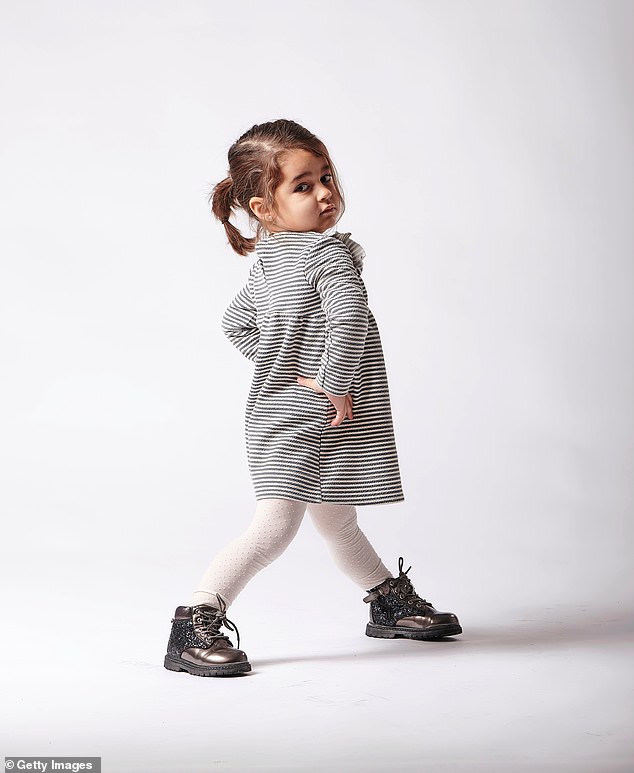
Want to drop ten years? Walk this way!
‘When you’re moving in a huge variety of ways, like our hunter gatherer ancestors, you have millions of options available,’ says Dalton. ‘If you’re not moving with much variety (for example, a desk-worker whose only form of exercise is cycling), your muscles seize up, joints become imbalanced and movement options lessen. Your posture becomes “stuck”, and pain, tension and injury creep in.’ The longer these problems spend embedding, the more stuck your posture becomes – hence the association between bad posture and ageing.
‘If you’re suffering pain and tension throughout your life, and the problems aren’t sorted, it’s likely you’ll reduce the amount you move year on year,’ says Dalton. ‘Increasingly, it becomes both painful and mentally taxing to move, so you stay still. This puts a great deal of pressure on the heart (the heart and musculoskeletal system work in tandem to flush blood and lymph around; if the musculoskeletal system isn’t pulling its weight, the heart must compensate). Plus, it means your bones aren’t strengthening through gravitational load, therefore increasing the risk of symptoms like osteoporosis and arthritis.’
Dysfunctional posture means you’re also ‘more likely to be imbalanced and fall’, says Dalton. ‘And if your muscles are not strong enough, you then won’t be able to get up afterwards.’
It even ages your face. ‘A drooped head, compromised breathing patterns and inactive facial muscles make the face and neck muscles saggier and more imbalanced, which might make us look older,’ says Dalton.
Clearly, looking after your posture is a key part of feeling and looking young – but what can you do to reset it?
A common mistake is clenching the muscles in your neck, which can contribute to the ‘hunchback’ often associated with old age. There is slightly more weight on the front of the face, points out Kingsley, which means most of us could do with ‘letting the head roll forward a millimetre or two’. Imagine an axis just behind your ears, let your nose drop slightly and relax the neck – you might be surprised to realise just how much tension you were holding there.
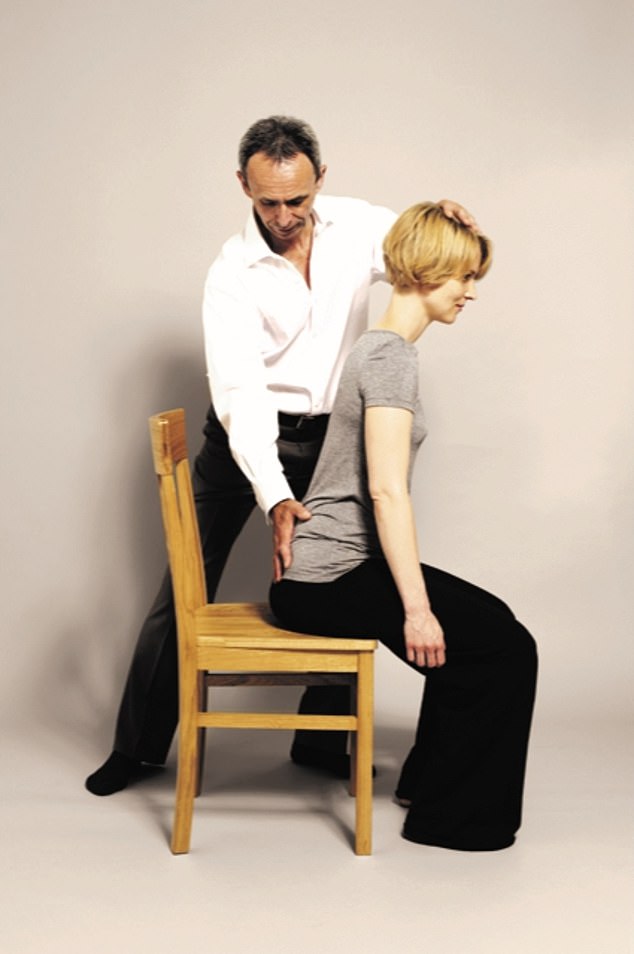
Kingsley demonstrates how to improve posture during simple movements like sitting and standing.
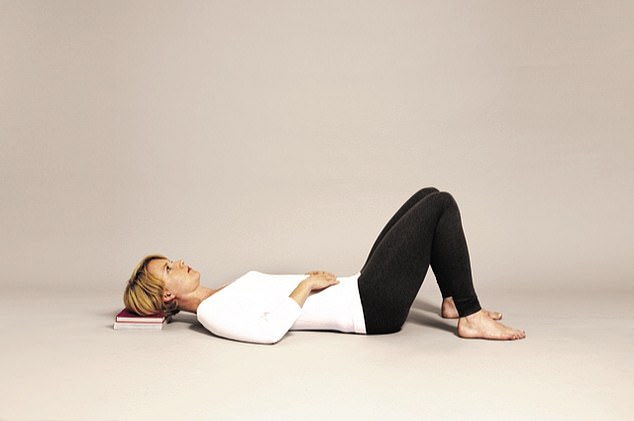
Kingsley recommends lying on the floor in this position (with books under the head to ensure good alignment) and letting the whole body relax.
Standing up and moving around frequently, not putting heavy bags on just one shoulder and avoiding peering down at a smartphone all the time (hold it higher up instead) will also help unstick a rigid posture. Search ‘Posture Ellie’ on YouTube to find Dalton’s free, easy-to-follow exercises, or schedule a session with an Alexander Technique practitioner (alexandertechnique.co.uk).

Relax your shoulders and the rest is child’s play
EXERCISES TO DE-AGE YOUR POSTUREStatic back
Lie on the floor with your knees bent and calves rested on a dining chair or the edge of a sofa. You may need to place a cushion under your lower legs to ensure they are at a right angle, with your knees directly above your hips and your ankles in line with your knees. Support your head and shoulders with as many cushions as you need to ensure the ribs are flat on the floor. Place your arms loosely outwards with the inner elbows pointing upwards. Then relax – this is a passive exercise; you shouldn’t be tensing any muscles. ‘Up to 30 minutes helps to balance the pelvis and ribcage, lengthen and relax the spine, open the shoulders and free up the hips,’ says Dalton.
Wall frog
Lie on the floor with your feet together up against a wall, your pelvis flat and your knees splayed outwards. Then push your feet together – focusing on the balls of the feet but also with the big toes and undersides of the heels touching. It’s a hip-opening exercise but first and foremost you need to concentrate on the feet. Once you are squeezing them together you should start to feel dysfunctional muscles throughout the legs start to wake up and work. Dalton says: ‘Up to 30 minutes here helps to wake up the feet and legs, open up the hips, balance the pelvis and relax the upper body.’
Standing at wall
Stand against a wall, making sure that your feet are pointing directly forward, and feet and legs are parallel. The back of your feet, calves and backside should touch the wall, but keep a softness in your knees and move weight to the balls of your feet. Keep your head and shoulders slightly forward and touch the bottom of your ribcage against the wall (this may feel unnatural, but it’s best for your posture). According to Dalton, ’Ten to 15 minutes helps to ground you through your feet, straighten out the legs, lengthen the hips and free up the upper body. You’ll be surprised at how much your shoulders go back.’