
Every five years, the federal government updates its dietary guidelines.
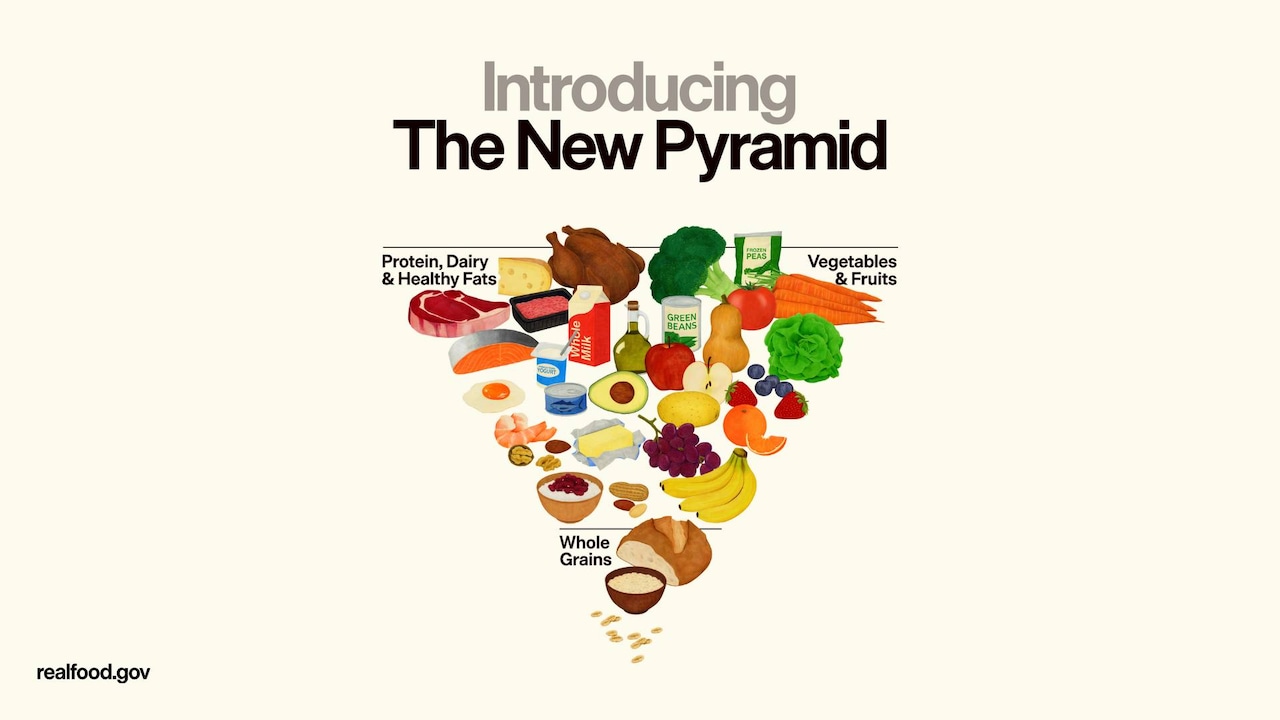
The guide — and its new food pyramid illustration — should be considered a flexible framework to guide better choices. It was released Jan. 7 and has been touted by federal officials as a means to rebuild the nation’s food culture and help combat chronic disease.
In general, the Dietary Guidelines for Americans (2025-2030) focus on eating nutrient-dense “real food” over highly processed foods and cutting down on added sugars. It also includes daily serving recommendations and limits.
Below are five takeaways from recent reporting by MLive on the new dietary guidelines.
1. Focus on “real food”
The core of the new guidelines is a pivot away from highly processed items toward “real food,” defined as whole or minimally processed foods without added sugars, industrial oils, or artificial additives.
Officials from the Department of Health and Human Services (DHHS) and the Department of Agriculture (USDA) stated the goal is to realign the food system to address staggering public health statistics, including that half of Americans have diabetes or prediabetes.
Health and Human Services Secretary Robert Kennedy Jr. emphasized the move as a return to basics designed to “make America healthy again” by tackling the root causes of widespread chronic conditions.
2. What you should eat daily
To make the guidelines more actionable, officials provided specific daily targets for consumption.
The daily recommendation for protein is 1.2 to 1.6 grams per kilogram of body weight.
The guidelines also call for three servings of vegetables, two servings of fruits and three servings of dairy per day. For whole grains, which are now a smaller part of the diet, the recommendation is two to four servings daily.
Additionally, the guidelines advise limiting saturated fats to 10% of total daily calories and keeping sodium intake below 2,300 milligrams for most people — goals that are easier to meet by avoiding highly processed foods.
3. Prioritize protein
The most dramatic visual change is the inversion of the food pyramid.
The new model places protein, dairy, healthy fats, vegetables, and fruits at the top, signifying their priority in a healthy diet. This top tier encourages a variety of nutrient-dense foods like eggs, seafood, meats, full-fat dairy, nuts and avocados.
Conversely, whole grains are now positioned at the bottom of the pyramid, with an emphasis on fiber-rich options like whole-wheat bread and brown rice, while refined carbohydrates such as white bread, crackers, and many breakfast items are discouraged.
4. Limit added sugar
The guidelines place a heavy emphasis on reducing added sugars, establishing a clear limit of no more than 10 grams per meal.
Officials urge consumers to read labels for hidden sugars, which can be listed as high-fructose corn syrup, agave, dextrose, maltose or other names ending in “-ose.”
The guidance recommends using salt, spices and herbs for flavor instead of sugar and unhealthy sweeteners.
5. Guidance for cooking methods and beverages
The recommendations go beyond what to eat, offering advice on how to prepare and consume food.
Instead of a universal daily calorie goal, the guidelines promote portion control tailored to an individual’s age, sex and activity level.
Preferred cooking methods include baking, broiling, roasting and stir-frying, with a recommendation to avoid deep-frying.
For beverages, water and unsweetened drinks are positioned as the ideal choices, while sugar-sweetened drinks should be avoided and 100% fruit juices should be limited or diluted.
For more detailed information, consumers are directed to visit realfood.gov.