
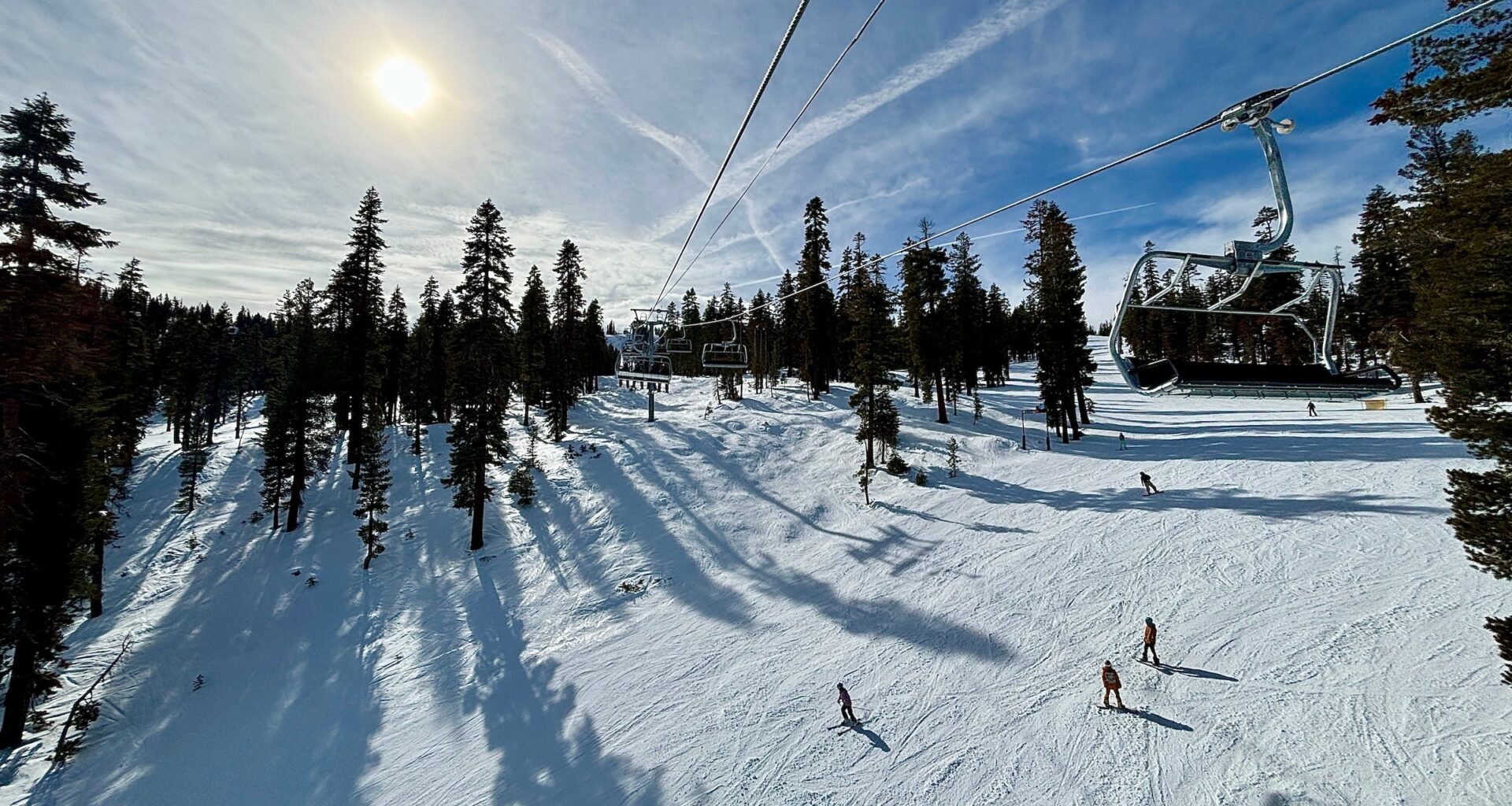
A new clip shows three bears—what look to be a sow and two cubs—running across a powdery groomer. Skiers strapped to boards and skis stopped uphill and across from the trio, taking in the unusual sight.
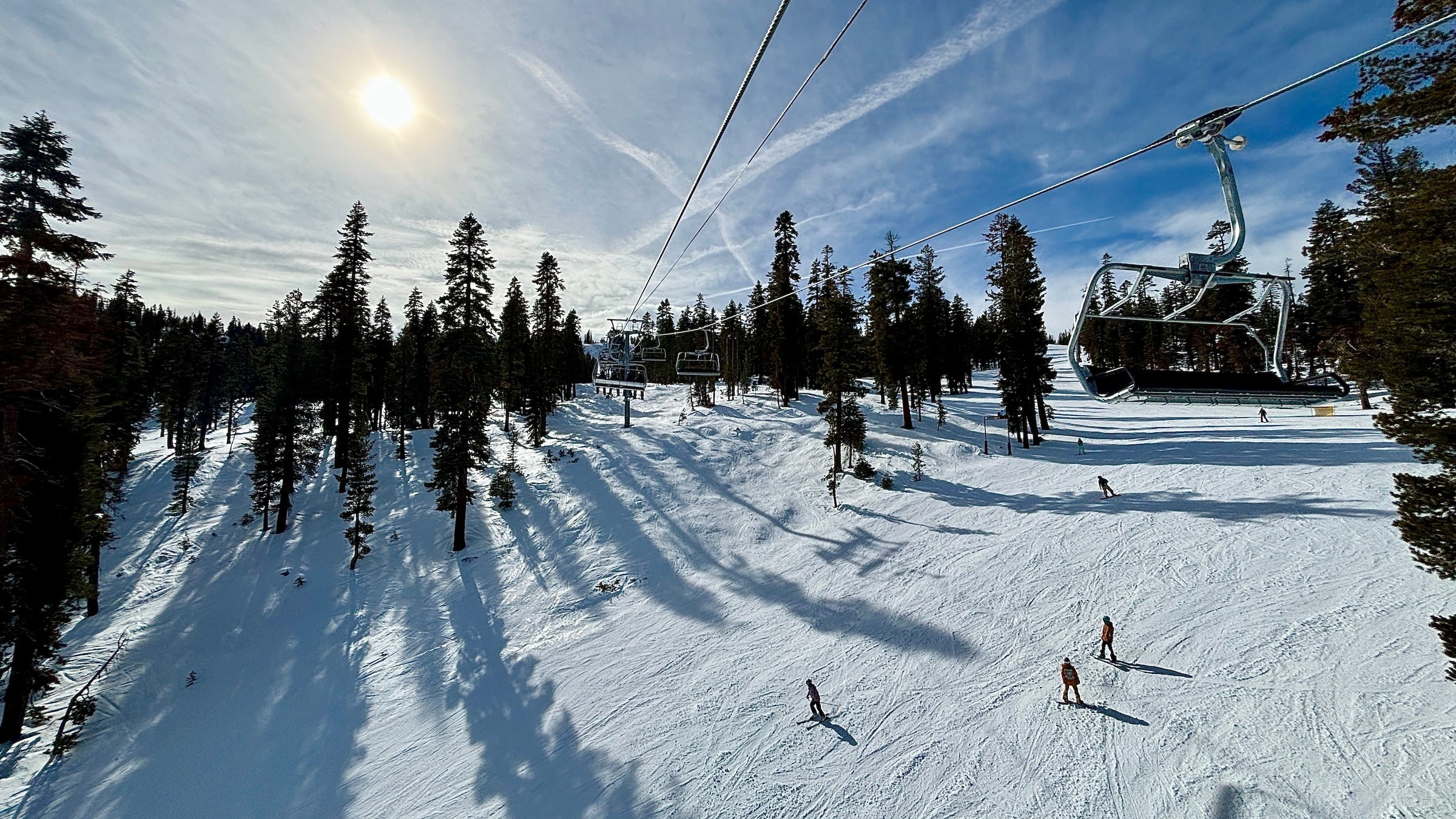
(Photo: Jared Alden/Getty Images)
Published February 19, 2026 01:25PM
Skiers and snowboarders in California witnessed a rare bear sighting at Northstar Resort, as the North Lake Tahoe mountain recorded several feet of snow during a winter storm.
A video shared to Instagram on February 18 showed three bears—what look to be a sow and two cubs—running across a powdery groomer. Skiers strapped to boards and skis stopped uphill and across from the trio, taking in the unusual sight.
“It is very rare to see bears out of the den in such snow in mid-winter,” Chris Servheen, the former national grizzly bear recovery coordinator for the U.S. Fish and Wildlife Service, told Outside.
Even more peculiar is seeing bears in busy ski areas in such deep snow, added Servheen.
“That’s what we call a California winter safari ride!” wrote original poster Barclay Weyhrauch in the video comments.
Northstar Resort, where the video was taken, is a ski mountain near Truckee, California. The mountain features 100 ski trails with more than 3,100 skiable acres served by 20 lifts. As of this writing, the resort has already received 68 inches of snow during a recent winter storm.
Lake Tahoe is home to a large population of American black bears, which are often cinnamon-colored and resemble their larger cousin, the grizzly bear. Servheen said that because there are no grizzlies in California, these three are likely black bears. Tahoe Basin is no stranger to run-ins between humans and bears. Tahoe black bears occasionally show up on the ski mountain. In January 2025, a trio of bears was spotted from the chair lift at Heavenly Mountain Resort in South Lake Tahoe.
But shouldn’t the bears be hibernating?
While some area black bears slow down and den up over the winter, some remain active year-round, searching for human food, writes the California Department of Fish and Wildlife in a blog post.
When, or if, a bear hibernates depends on their ability to find food. In the cooler fall and winter months, natural food sources decline, and snow covers mountainous regions like Tahoe. Bears generally go into hibernation to save energy and resources—but that’s not always the case.
“However, bears that continue to find and access unnatural food sources like garbage, bird feeders, pet food, and other human attractants may bypass hibernating altogether and stay active through the winter. This can create a reliance on human food that can be harmful for bears,” wrote the Tahoe Interagency Bear Team on its website.
If you happen to come across a bear while skiing, Servheen offered a key piece of advice.“The best thing to do is stay away from the bears and give them space so they can get away,” he said.