
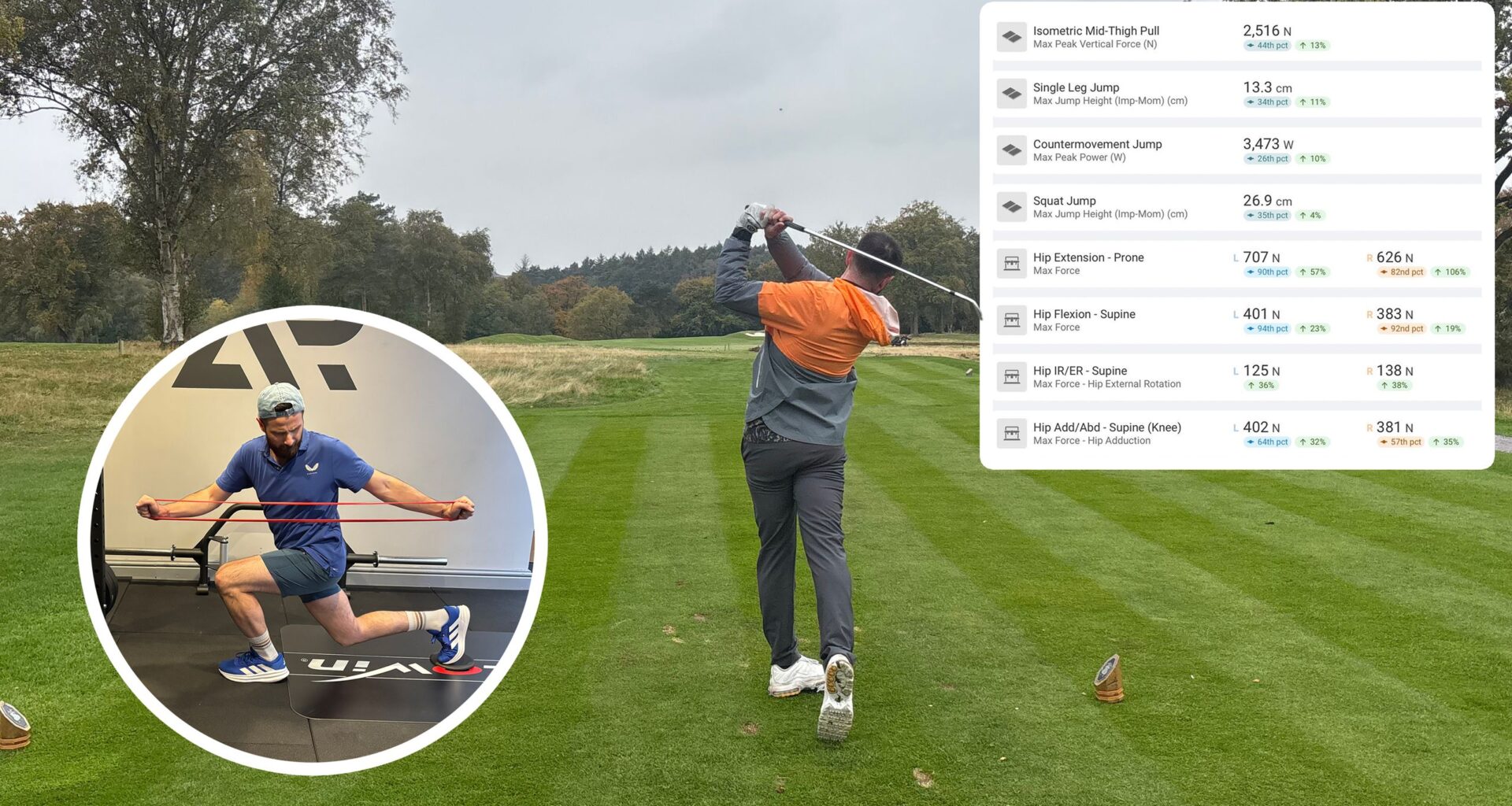
Those who have followed my golf rebuild journey will know that I have spent the last three months trying to improve my game, utilising the winter to find the progress that has been lacking from my game in seasons gone by… and the results have been incredible.
As well as feeling fitter and healthier, I have also developed the ability to hit driver over 240 yards (as a 22-handicapper) and learned a series of fitness exercises that made me a better golfer in the first 30 days.
You may like
This Golf Rebuild Gave Me A 106% Power Boost
On December 1st 2025, I visited golf fitness expert Mark Wilson to undertake a series of tests that would highlight the strengths and weaknesses of my ability to effectively swing the golf club, achieve full range mobility and generate maximum power.
The results were damning to say the least, with my TPI movement screening suggesting that there were multiple limitations that prevented me from playing my best golf.
The most significant of these was an inability to effectively load into my trail hip, restricting the potential for achieving the correct position at the top of the backswing.
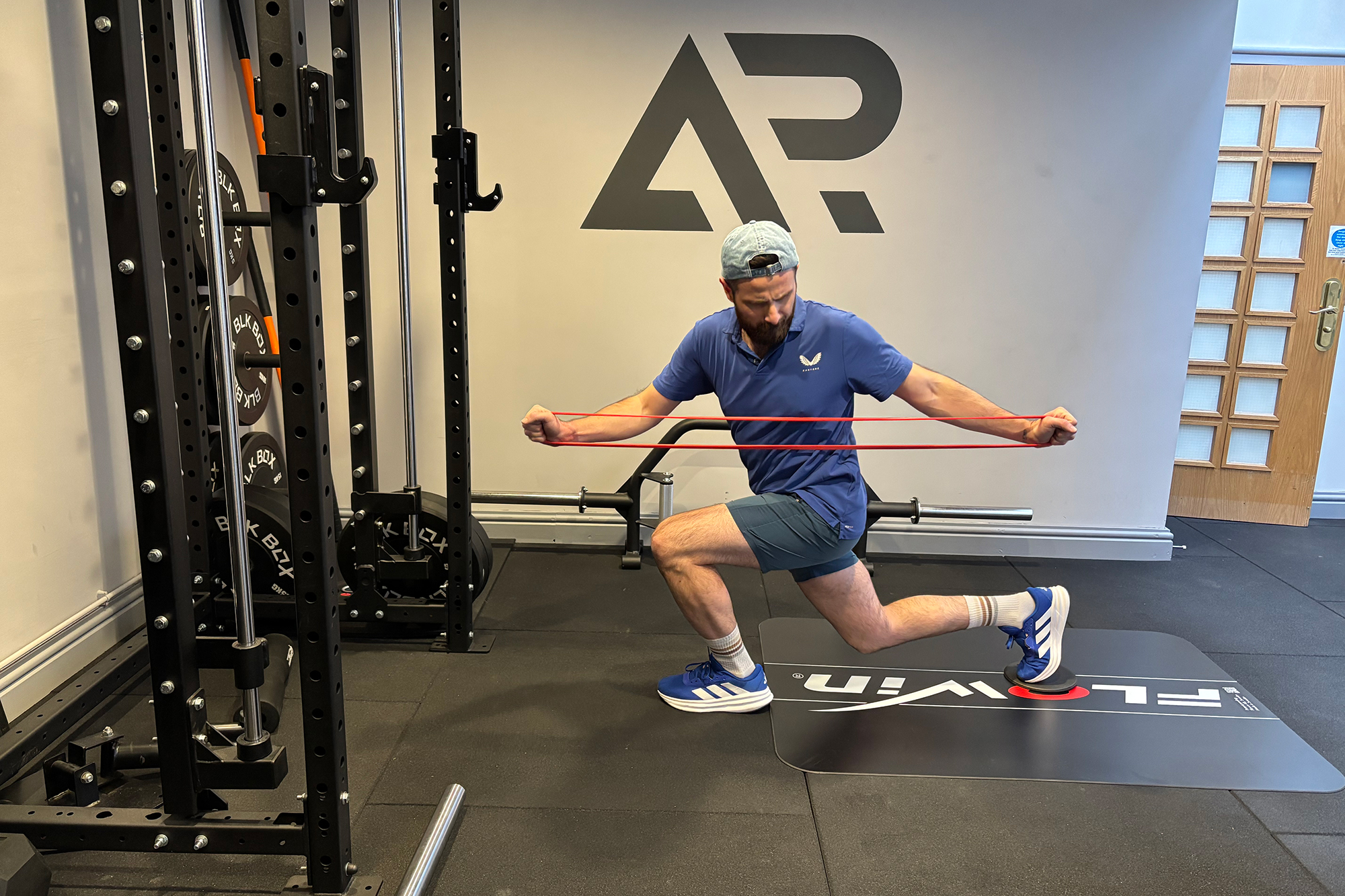
This lack of strength and mobility, mainly around my glutes and hamstrings, also limited the force I was able to apply in tests designed to measure power output. As shown in the video below, this became a focus of our gym sessions following testing.
In the test measuring hip extension (prone), a significant asymmetry existed between my left and right side, with my lead side (left) measuring far stronger than my trail (right) in testing.
Without these tests, I doubt I would ever have realised that there was actually a physical limitation, and while there was clearly plenty that could be improved around my technique it was important to address this as soon as possible in order to maximise progress.
What to read next
Through a series of gym exercises that were designed to return rapid improvements, which I have listed below, I started to see positive results quite quickly.
I felt more flexible and mobile, which in turn gave me greater confidence in achieving better positions throughout the golf swing – but there was still no hard proof that things were getting better.
Dumbbell Romanian Deadlift (RDL)Dumbbell Split SquatDouble Leg Seated Box JumpMed Ball SlamThree-Point Kneeling Bent Over Dumbbell Row
Other notable improvements were seen in my hip internal and external rotation (supine) and hip adduction and abduction (supine – knee) tests. In the hip IR/ER (supine), there was a 36% (left) and 38% (right) increase, and in the hip add/abd (supine) there was a 32% (left) and 35% (right) gain.
The internal and external rotation tests measure a person’s ability to effectively rotate, load and shift weight in the golf swing – with limitations leading to common swing faults like swaying or loss of posture, which were definitely visible in my golf swing prior to the rebuild.
The adduction and abduction tests measure a golfer’s ability to control stability and effectively transfer weight in the golf swing, with limitations again leading to similar faults outlined above.
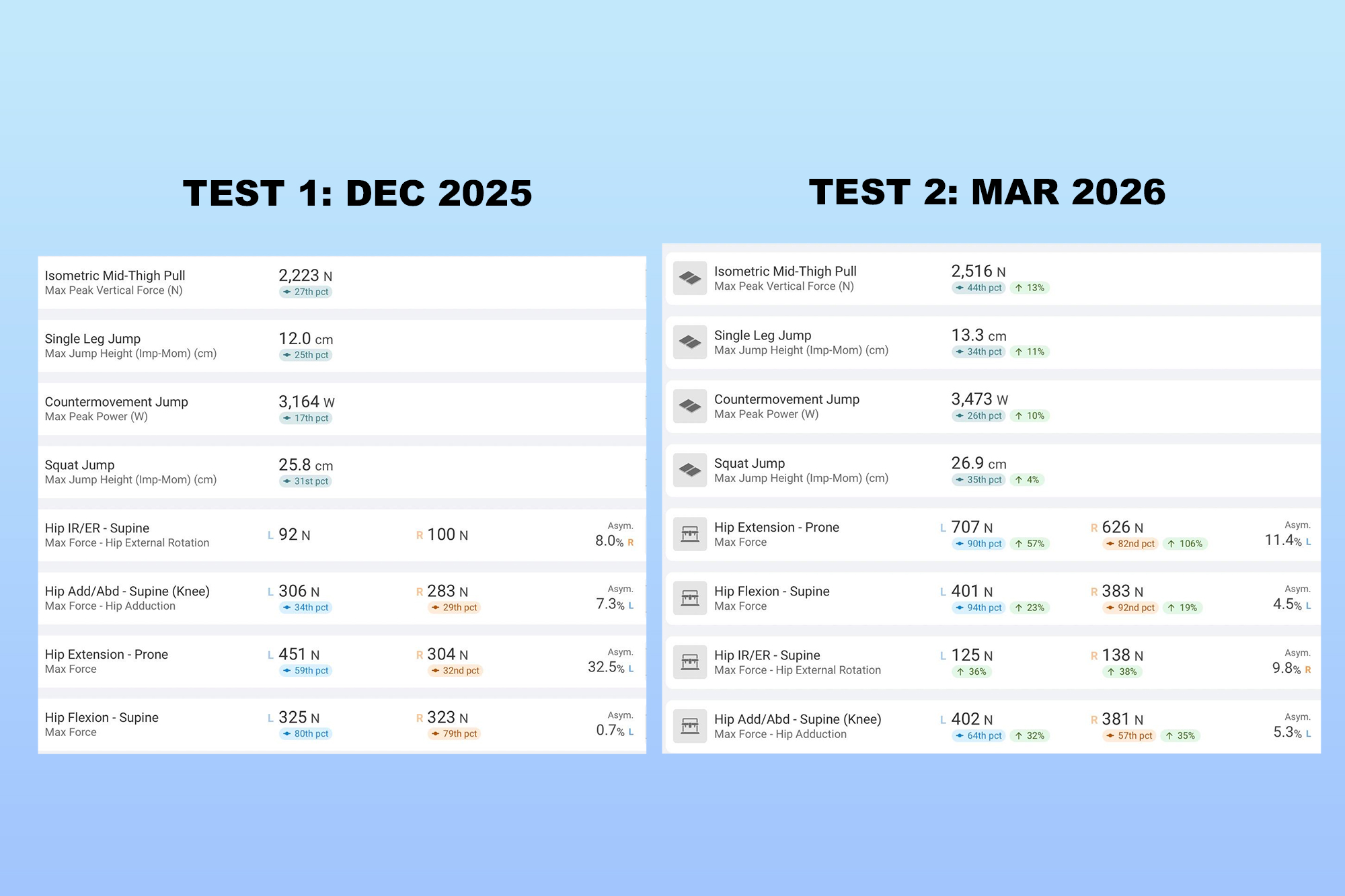
This winter golf rebuild data speaks volumes about how utilising the off-season effectively can radically improve your physical fitness and subsequently your golf game
(Image credit: Mark Wilson)
As well as seeing gains in each of these tests, I also feel a lot more in control throughout my golf swing and have noticed an increase in power and distance on the course.
In fact, in my most recent round measure on my Shot Scope data tracking device, I recorded an increase of 11 yards in driving distance average when compared to my 2025 data.
The most encouraging aspect of this recent round of testing is that I was successful in improving in every single one of the eight tests, and my TPI movement screening suggested that my golf fitness handicap, which was 24 in December 2025, had now dropped to a much more pleasing 11 (which is 11 shots lower than my actual handicap).
What that suggests is that my body is capable of playing to a handicap in the low teens, so with the swing changes and improvements made over the course of my three month rebuild I will be expecting to see a handicap cut once I have a card, a measured course and competition golf back on the agenda in the next few weeks.
Fitness work partnered with swing analysis (and subsequent changes) has been an effective solution to some of my long-standing issues on the golf course
(Image credit: Future)
Practical Next Steps That You Can Follow
In order to see serious long term improvements in your game, creating a plan that combines lessons with a PGA professional on your golf swing alongside golf-specific fitness work is a model I would certainly recommend.
Your plan will look different to mine, and different to the next person’s, but starting with a clear assessment is an important first step.
Whether that is a TPI screening, a consultation with a fitness expert or a series of baseline tests with a PGA pro, it’s crucial to understand what you specifically need to do rather than aimlessly trying everything in the hope that it will get better.
Going to your PGA professional with data and information about limitations in your game can help them to personalise and differentiate your practice.
Head Pro at Sand Moor Golf Club Alex James has been helping me to get into a better backswing position, as you can see in the video below, but his knowledge of my limitations help to inform the way that this is built over time.
Being disciplined in your practice is another non-negotiable, as seeing professionals for help and then not following through with the hard yards and reps is a complete waste of time and money.
Arriving without a plan is one of seven things you should never do at the driving range, but by following a structured approach like the one outlined above you will feel empowered to make changes and progress.
It’s simple. Do the work you are set in the gym, create time to undertake the best golf drills on the driving range and get out on the course whenever you can for mini-temperature checks.
But, crucially, you must also keep all parties up-to-date with how these sessions are going so that this fluid experience can be moulded over time as you progress and improve your game.