
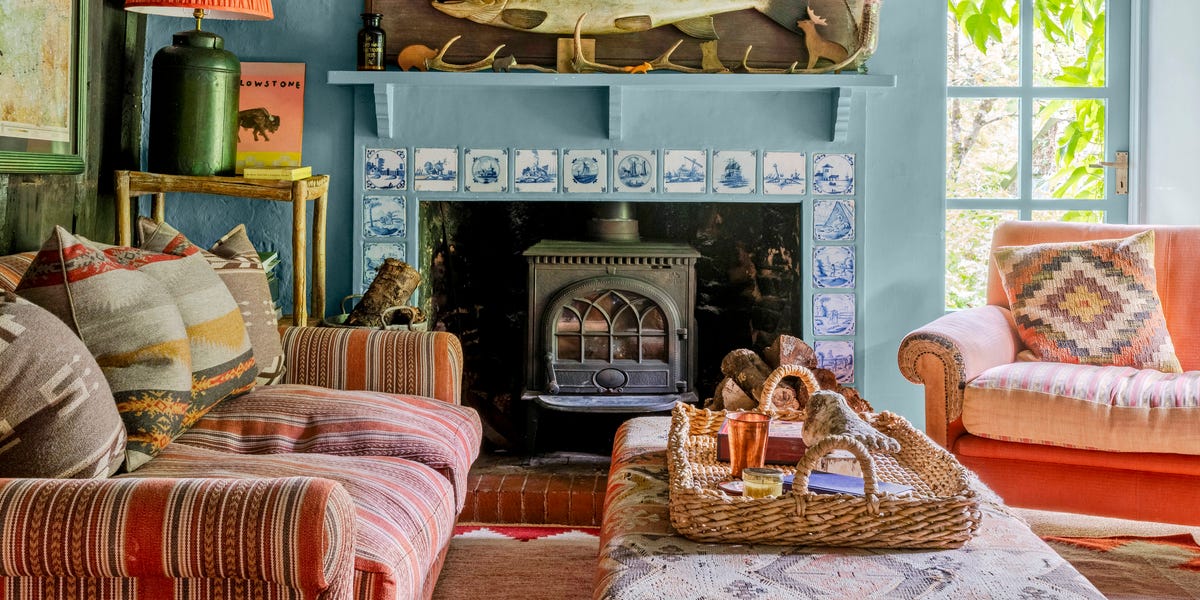
If 2025 was the year the English country house kitchen finally got some recognition on the global stage, then 2026 is officially the year our living rooms are reigning supreme.
The pinnacle of lived-in style, classic British living rooms are getting some love over in the US, where American interior design devotees are applauding their uniquely laissez-faire approach to decorating. It would seem our nation’s seemingly effortless jumble of character through colour and pattern has captured hearts and minds.
Certainly, Britain is fortunate to hold a rich design history, as well enjoying a breadth of antiques on offer, with some dating as far back as the Tudor (1485-1603) and Elizabethan (1558-1603) periods.
To get to the bottom of the look – and determine how designers actually perfect the living room formula – we tapped a few fellow design-obsessed Britons to spill their decorating secrets…
Start with a slouchy sofa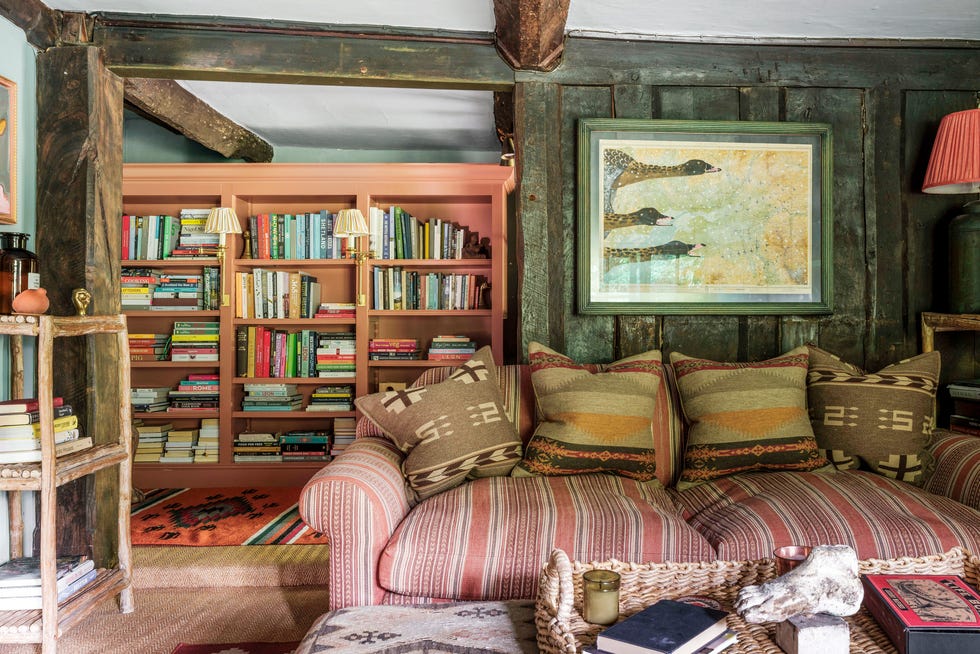 WILL SLATERA classic roll arm sofa brings comfort to this living room designed by designer Kate Cox’s brother and fellow co-founder of HÁM Interiors, Tom Cox.
A good sofa can make all the difference, say designer Rita Konig and Kate Cox, creative director of HÁM Interiors. “I am obsessed with comfortable upholstery, and that’s one thing that I think we English do very well,” says Rita. “Why would you have a sofa or a chair that you don’t actually want to sit in?” Kate is inclined to agree – her living room must-have is “a really comfortable sofa, preferably one that lets you sink in rather than perch on.”
Seek out silhouettes that fit with that sense of relaxation. An English sofa with scrolled arms is always a classic, while a slipcovered sofa works especially well in hardworking living rooms that may need to handle shedding pets or muddy wellies. Reserve leather upholstery for occasional chairs ensuring that whatever upholstery fabric you do choose is performance grade.
RELATED: Country Living designed the perfect country sofa with DFS
Use one good ‘estate’ antique as the focal point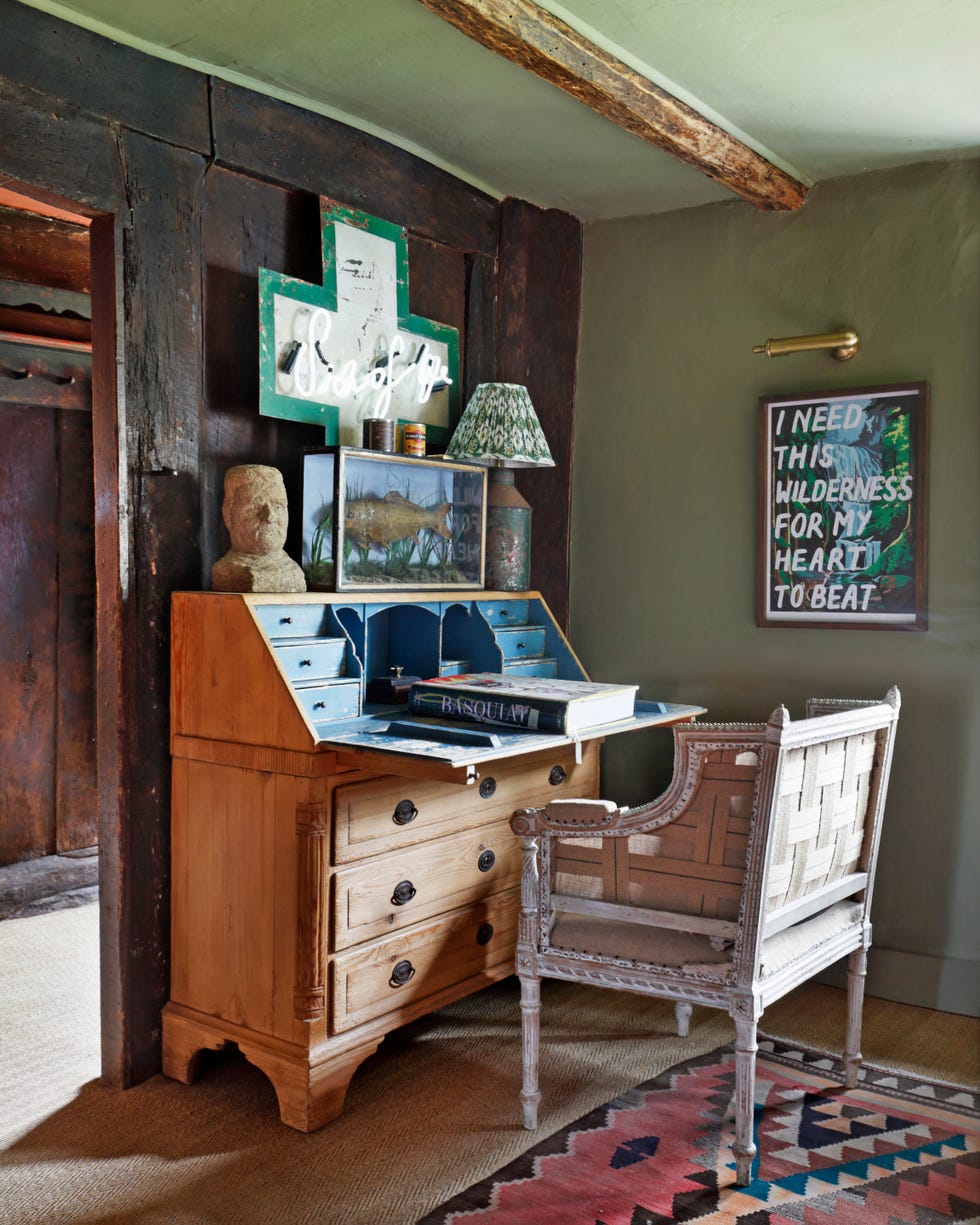 Alexander James
A secretary desk anchors this HÁM Interiors-designed living room.
Okay, so you may not have inherited a grand estate from a distant relative (us, neither), but you can certainly decorate like you did. When in doubt, anchor a living room with an antique: “something that feels like it had life before this room,” says Kate.
To qualify as ‘estate’, an antique needs to be a previously-owned item that’s at least 100 years old. This could be an old grandfather clock (it doesn’t have to work!), a beautiful mahogany bureau or even a vintage painting in an impressive frame. Whatever you choose, be sure to place it with pride. Bonus points if you make up a story about a mysterious relative who bequeathed it to you.
RELATED: How to find the best antiques: Lessons from 20 years of antiquing
Go for nearly neutral walls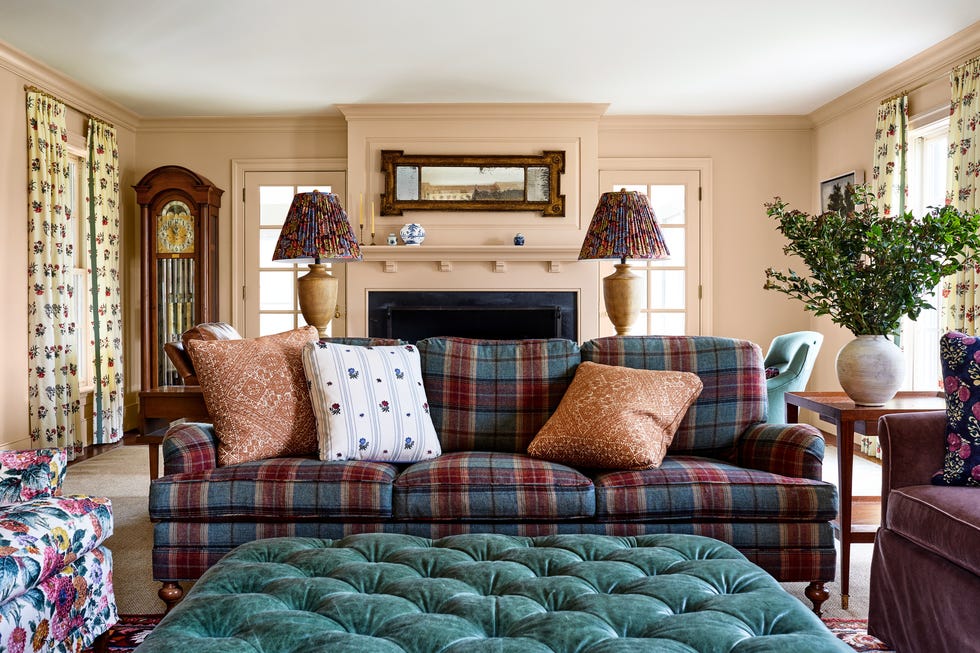 Stacy Zarin GoldbergDesigner Cameron Ruppert chose a soft, pink-tinged neutral for this rural home’s living room. A plaid sofa adds distinguished charm.
Skip drab white and grey paint if you want to channel the warmth and character of a truly British living room. Instead, go for a neutral that blends but still provides some personality. Keep your choices soft: think plaster pinks, warm creams and soft blues from beloved British paint brands like Farrow & Ball, Little Greene, Edward Bulmer and Graham & Brown.
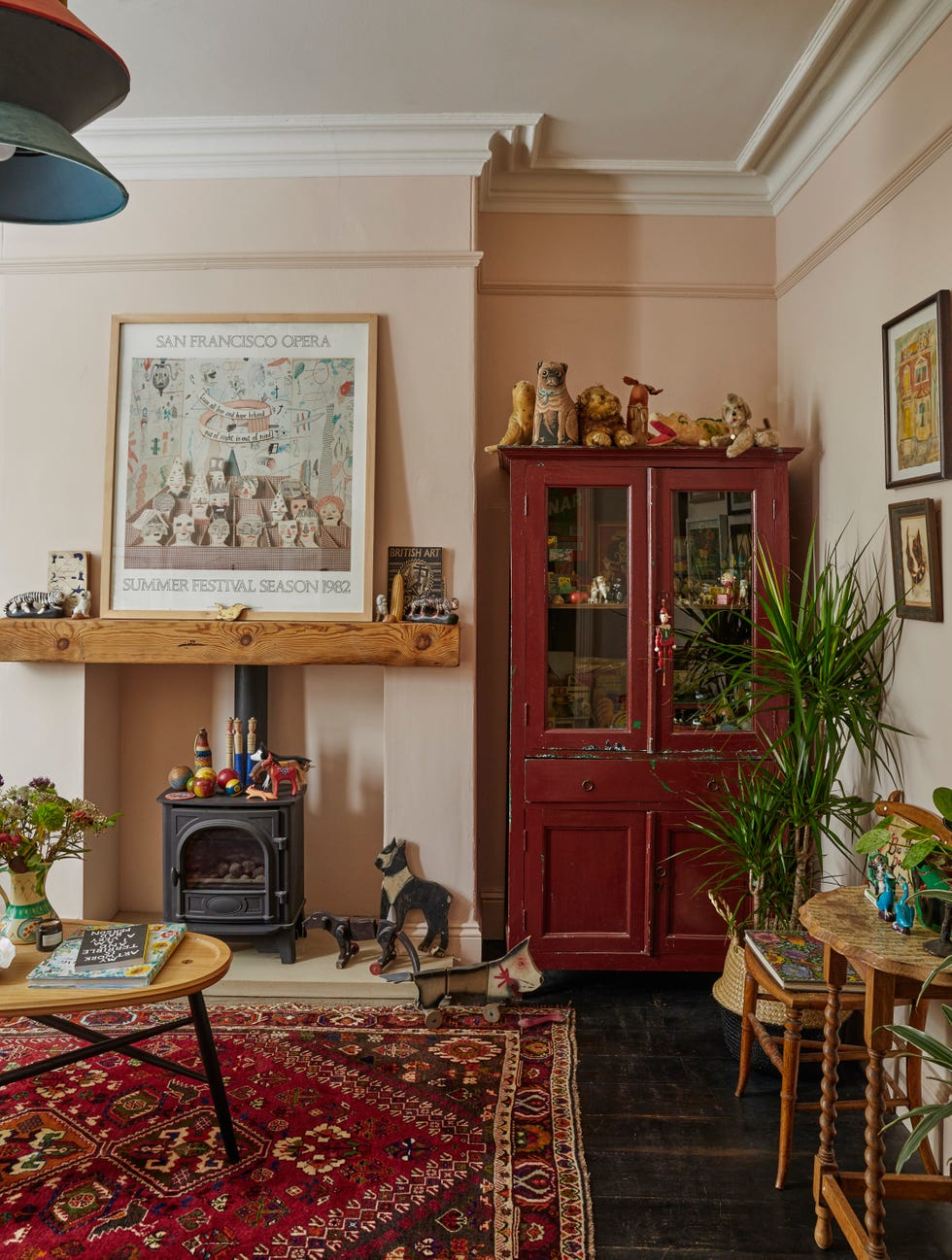

Country Living / Brent Darby
Pink Ground by Farrow & Ball is Kate’s favourite (pictured above in the home of artist Emily Sutton), while the interior design duo behind Salvesen Graham – Mary Graham and Nicole Salvesen – prefer Jonquil by Edward Bulmer (seen below in textile designer Annika Reed’s bathroom).
Looking for something a little less pink? Try Beauvais Lilac by Little Greene for an elegant, warm neutral (don’t be misled by its name), or Middle Ground by Farrow & Ball for a neutral grey heavily-tinged with heritage blue.
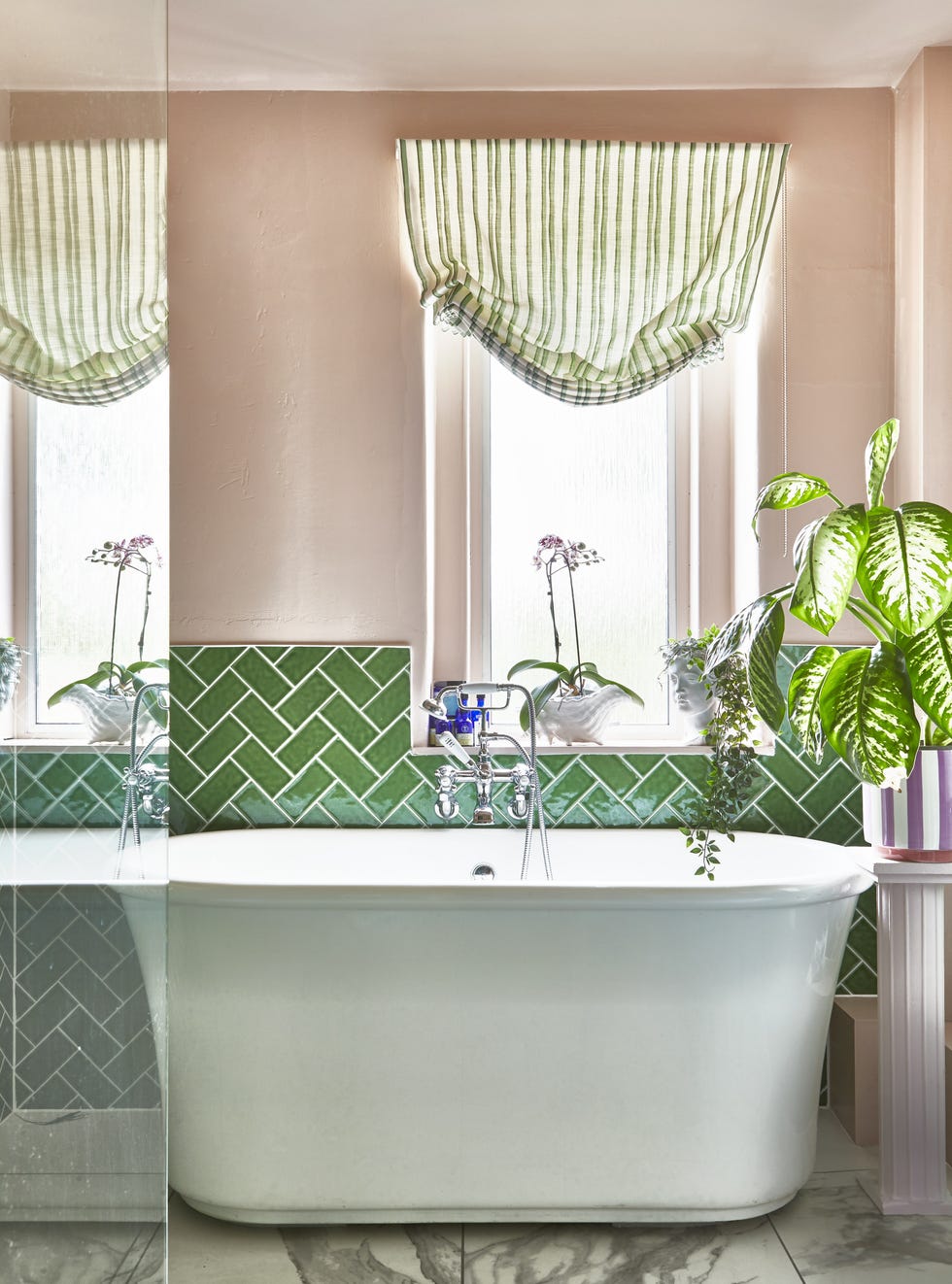

Brent Darby / Country Living
RELATED: 10 timeless paint shades used in real English country homes
Layer worn rugs over carpeting
If you’ve ever flicked through the real homes in Country Living magazine, you might’ve noticed that a lot of the older properties don’t have standard wood flooring. In fact, many of them don’t have wood flooring in most areas of the house. Instead, they have stone, or tightly woven – often natural, but sometimes manufactured for added durability – sisal carpeting.
This type of flooring creates a soft, natural feel underfoot, perfect for insulation in the cooler months. It also makes an ideal neutral base for decoration; large-scale natural carpets can be layered with smaller flatweaves in colourful designs, like those by Pelican House, for a whimsical flourish.
Add personality with heritage patterns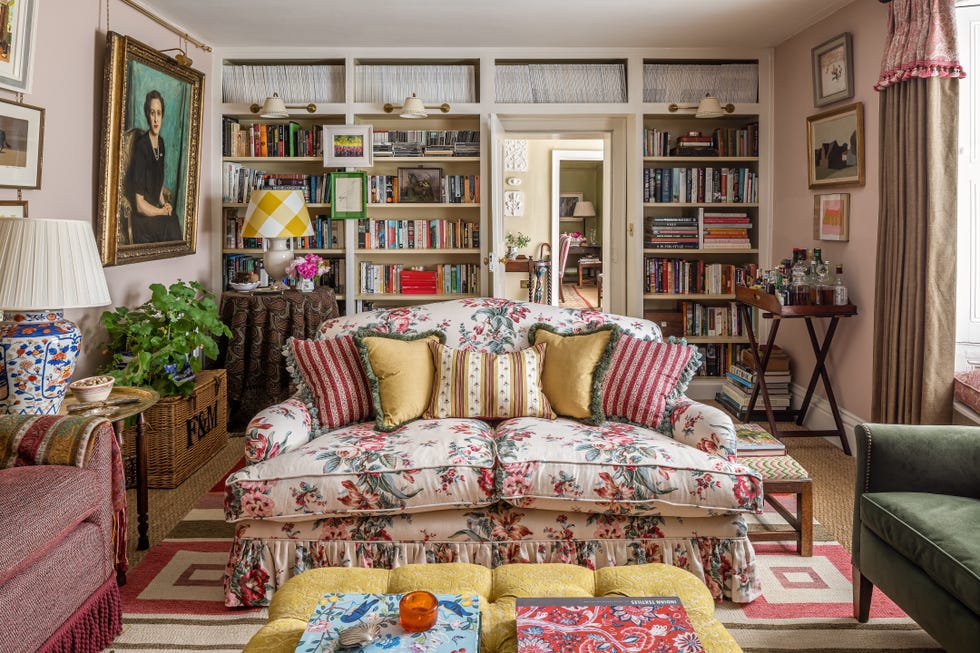 Jonathan Bond Photography
Classic chintz mixed with fun stripes add layers of interest to this living room designed by Salvesen Graham.
As a nation we are not – and have never been – pattern agnostic, and layers of pattern are essential to both the look and feel of a quintessential British living room.
Mary and Nicole advise decorators not to worry about the business of pattern. “Surrounding yourself in pattern can be very comforting,” says Mary. “It can add layers of interest and depth to a room but can also be surprisingly calming and restful,” adds Nicole.
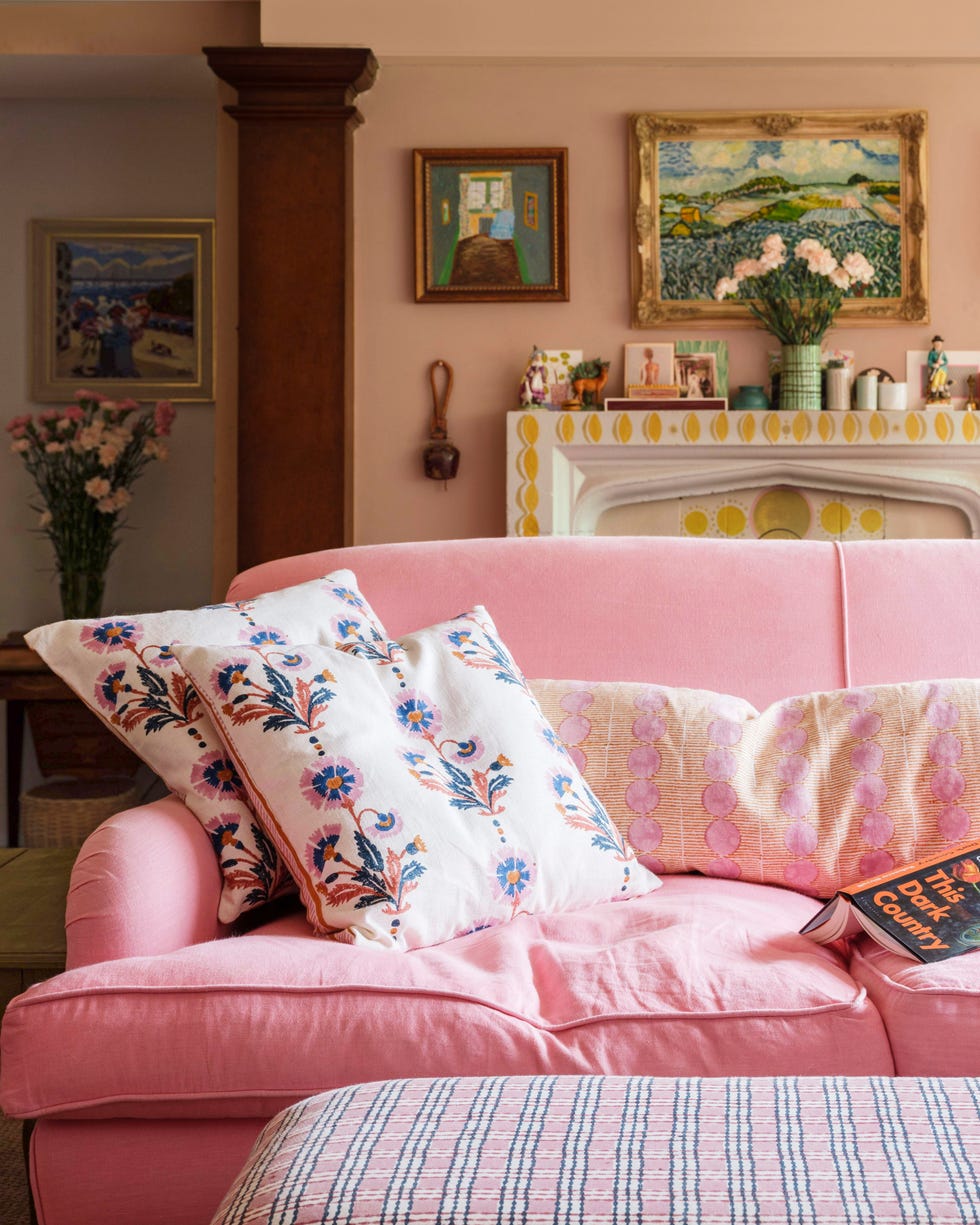 Emma LewisIn artist Molly Mahon’s living room, layers of pattern—including a Vanessa Bell-inspired paint treatment on the nearby fireplace—add cozy charm.
If you don’t know where to start with pattern, look to the British masters like William Morris and Vanessa Bell. Between the Arts and Crafts movement and the work of the Bloomsbury Group, there are tonnes of patterns that are just as popular today as they were 100 years ago. If in doubt, a classic chintz will always do in our books.
Embrace quirkiness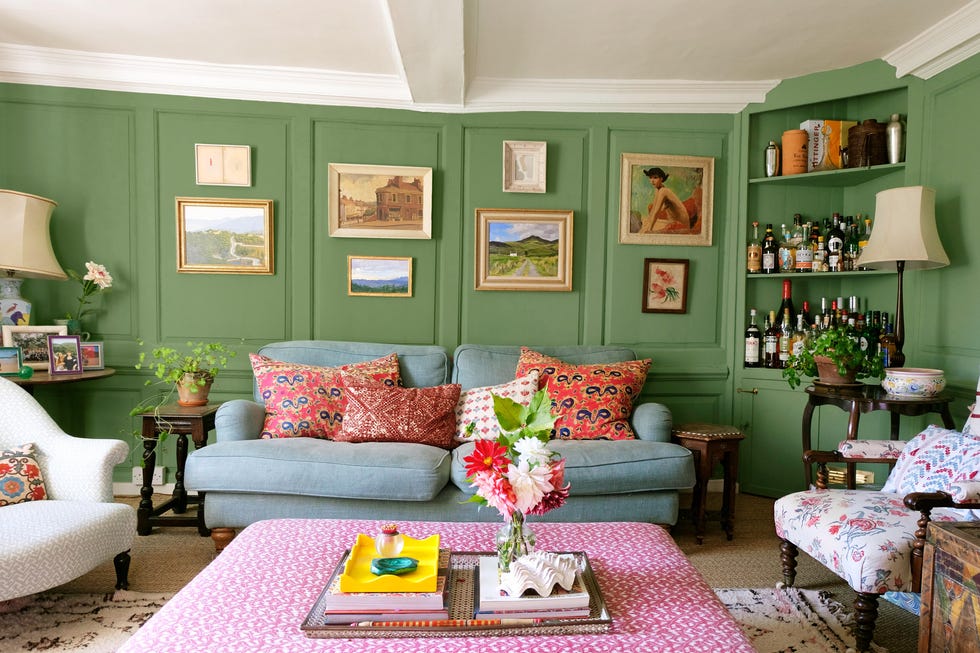 Francesca Gentilli
Uneven walls? No problem. Welcome imperfection as the fun jolt of personality it is.
“Don’t try to make everything look new,” warns Kate. “The best rooms gain their personality over time, filled with pieces you love – whether that’s something inherited, found at auction or had so long you’ve forgotten where it came from.” It’s this gathered-over-time look that makes classically British living rooms so inviting.
Unlike our pals across the pond, we Britons are lucky to have literal centuries of stuff available at our fingertips, so don’t take that antiquing access for granted. For starters, mix eras, don’t rely on a single style to bring your space together. “Think old with new, grand with humble, formal with completely relaxed,” advises Kate.
Secondly, know that imperfection is the key to a lived-in look. Proportions should be slightly off; the walls in period homes are hardly ever straight, so embrace imperfection. The more paintings that are hung slightly askew, the better.
Don’t forget the dog!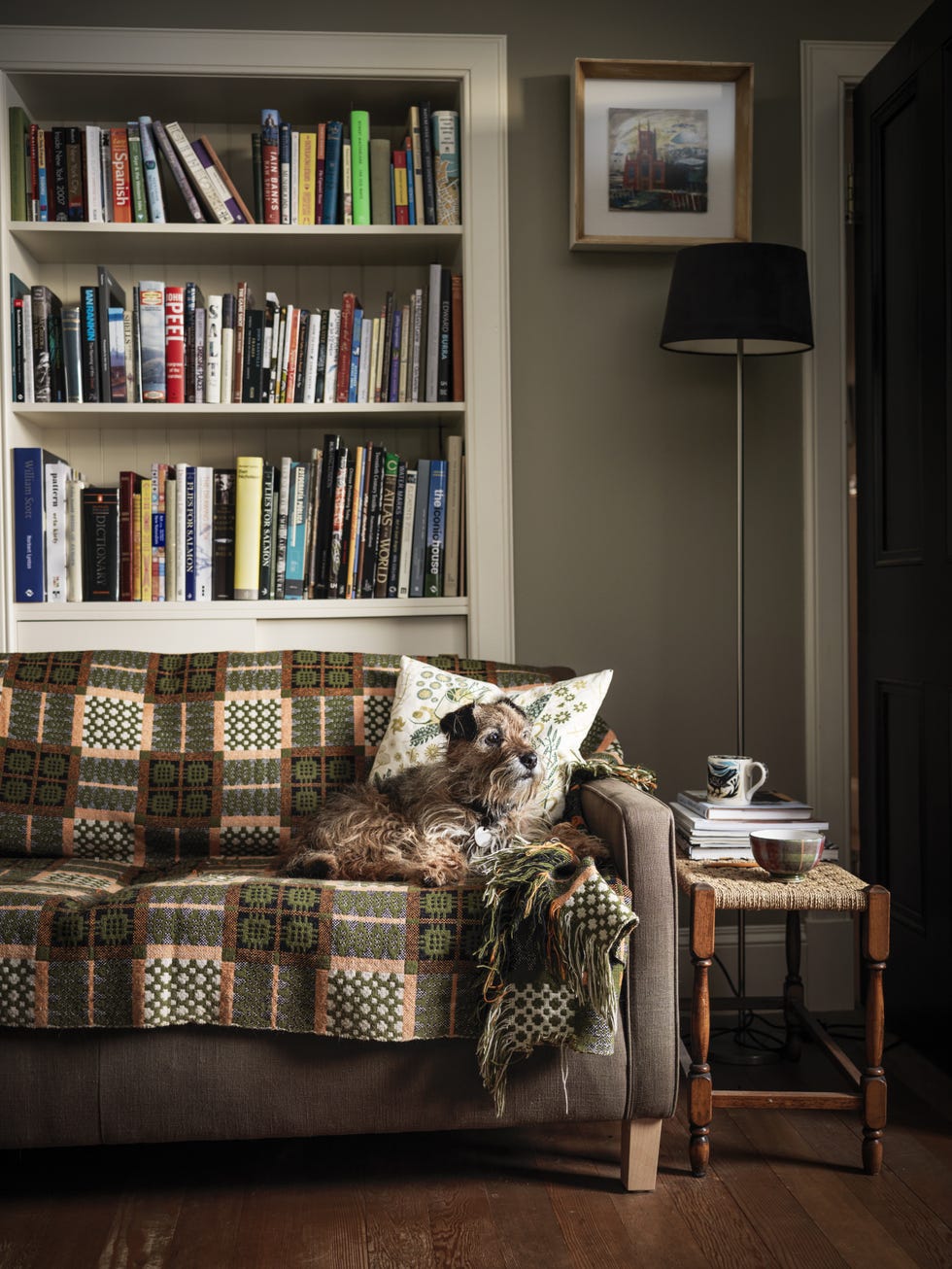

Cristian Barnett / Country Living
Man’s best friend gets a lot of love from us at Country Living, but that’s not without good reason. More than a mere accessory, dogs sit at the backbone of British rural life, throughout history as well as in the present.
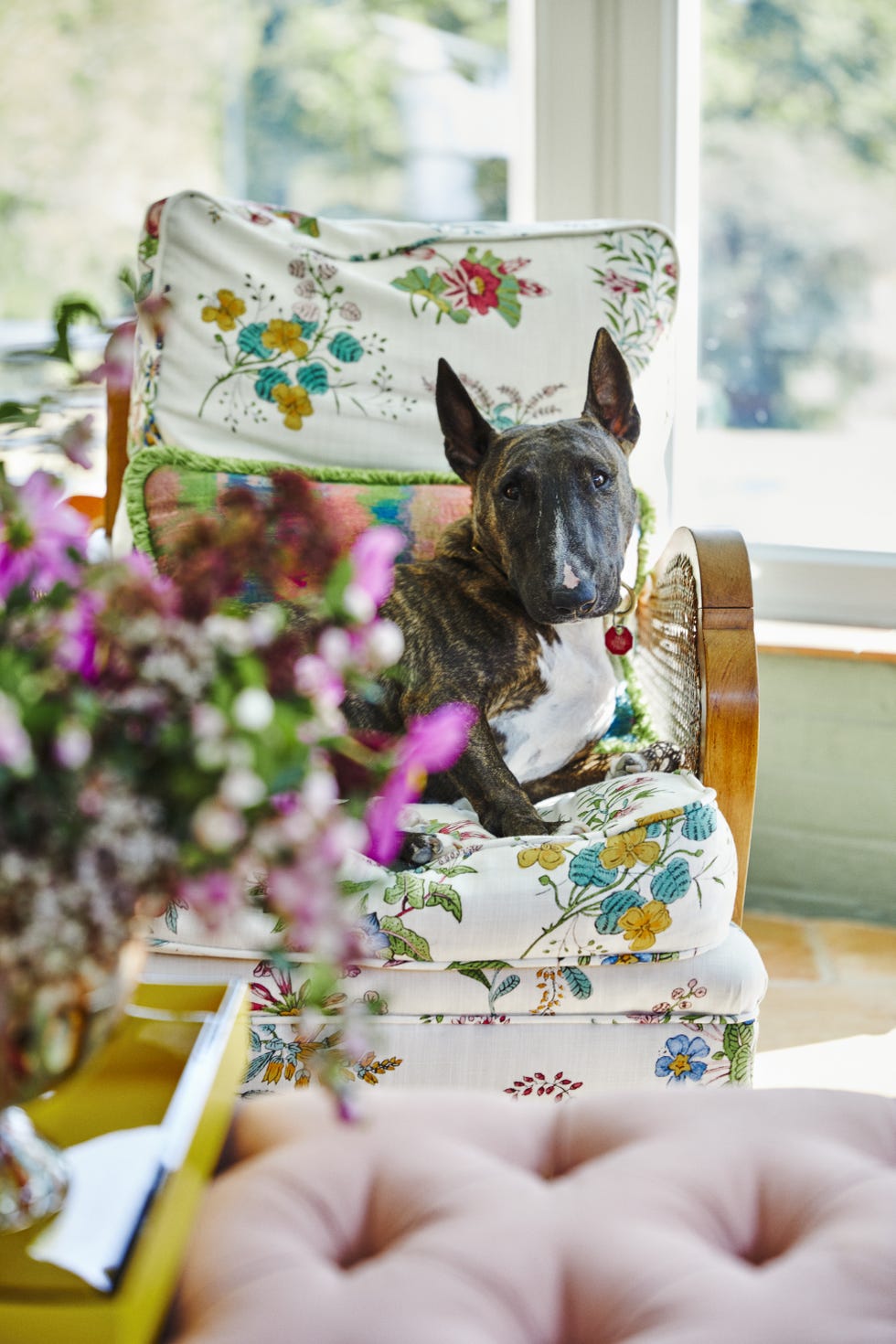
When asked what no British living room could be complete without, both Rita and Kate answered emphatically: a dog. Living with pets contributes to the layered look of the most-loved living rooms, as well as bringing that homely warmth only the unconditional affection of a pet can provide.
A quilt or throw over the cushions of a sofa is not only practical, it’s charming. But a sleepy pooch lounging by the fire or in a patch of warm sun is the only accessory a living room truly needs.

Brent Darby / Country Living

Homes Writer, House Beautiful and Country Living
Maddy is the Homes Writer at House Beautiful UK and Country Living UK, where she can be found writing about the latest interiors news and collating inspiring trend edits. She has previously worked for Good Housekeeping, Prima and Red, and has an MA in Classics and Ancient History from the University of Manchester and a BA in English Literature and Creative Writing from the University of East Anglia, where she was the editor-in-chief of the student newspaper.

Anna Logan is the Senior Homes & Style Editor at Country Living, where she has been covering all things home design, including sharing exclusive looks at beautifully designed country kitchens, producing home features, writing everything from timely trend reports on the latest viral aesthetic to expert-driven explainers on must-read topics, and rounding up pretty much everything you’ve ever wanted to know about paint, since 2021. Anna has spent the last seven years covering every aspect of the design industry, previously having written for Traditional Home, One Kings Lane, House Beautiful, and Frederic. She holds a degree in journalism from the University of Georgia. When she’s not working, Anna can either be found digging around her flower garden or through the dusty shelves of an antique shop. Follow her adventures, or, more importantly, those of her three-year-old Maltese and official Country Living Pet Lab tester, Teddy, on Instagram.