
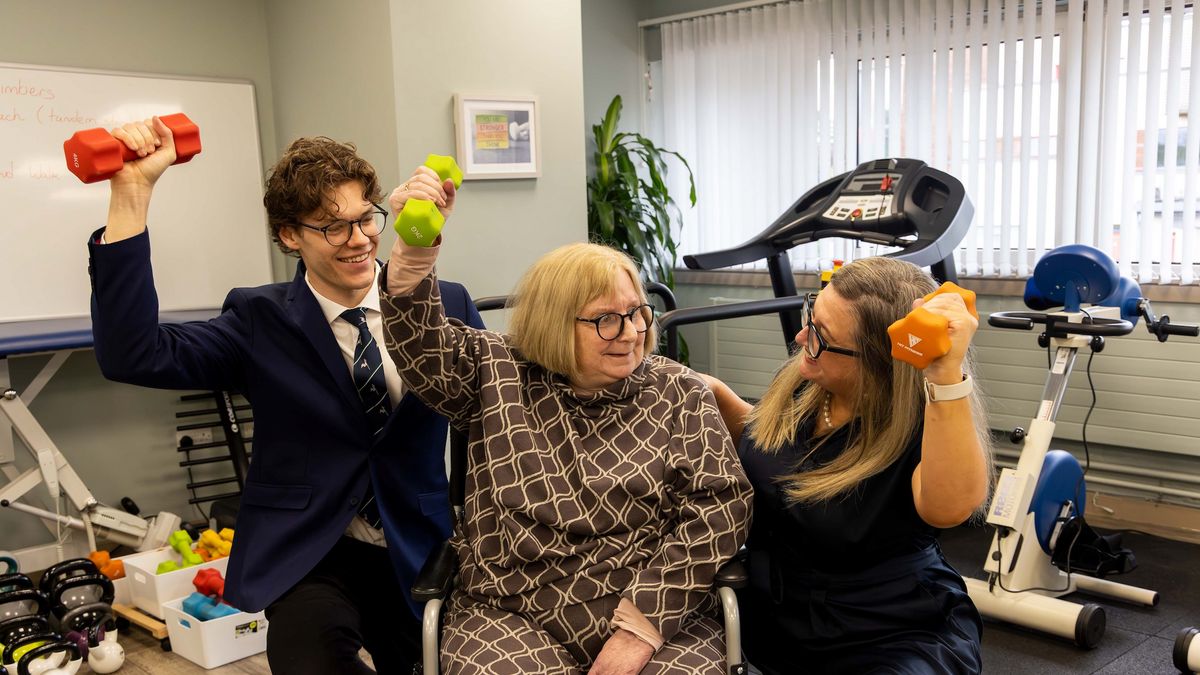
One user said his life has ‘changed dramatically’ since attending the gym at Cork Stroke Support
13:14, 11 May 2026Updated 14:00, 11 May 2026
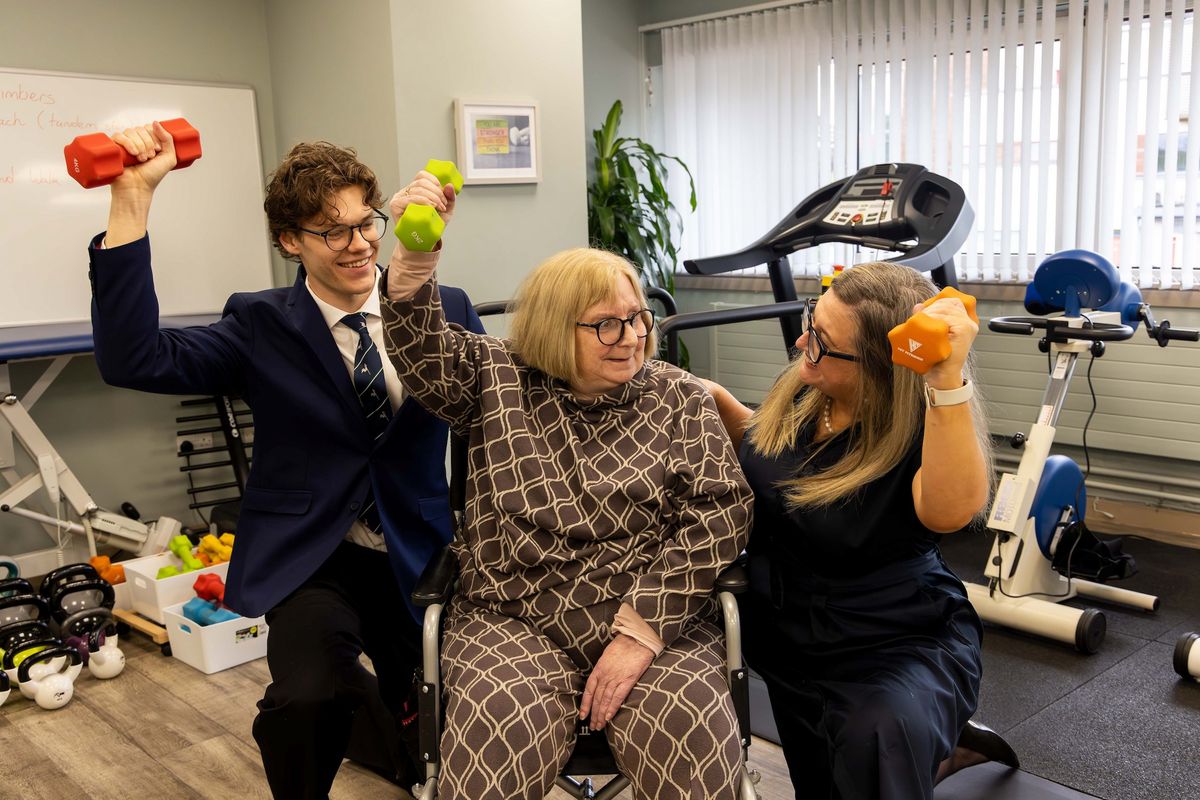
Phil Coleman, stroke survivor, pictured trying out the gym equipment, with support from Hadley James, Exercise facilitator, and Sarah Slattery, lead physiotherapist, Cork Stroke Support, at the Cork Stroke Support premises, as Cork Stroke Support and Rethink Ireland have launched a detailed report on the impact of exercise on stroke survivors.(Image: Michael O’Sullivan / OSM PHOTO)
Stroke is a leading cause of disability in Ireland, affecting tens of thousands of people across the country. These cases are expected to increase by more than 50% over the next two decades – and a new report has found that services are not up to par.
Exercise is absolutely “crucial for recovery,” research by Cork Stroke Support and Rethink Ireland has shown. But rehabilitation services for survivors are “inconsistent and often inaccessible” in Ireland.
There is just one dedicated gym for stroke survivors in Munster – the gym at the Cork Stroke Supports office in Blackrock. Physiotherapist Sarah Slattery said improving rehab services across Munster and Ireland will go a long way to help the thousands who suffer strokes every year.
The rehabilitation programme provides a safe, supportive environment where people can rebuild strength, confidence, independence, and hope. She said 96% of users feel stronger and that their confidence has improved greatly.
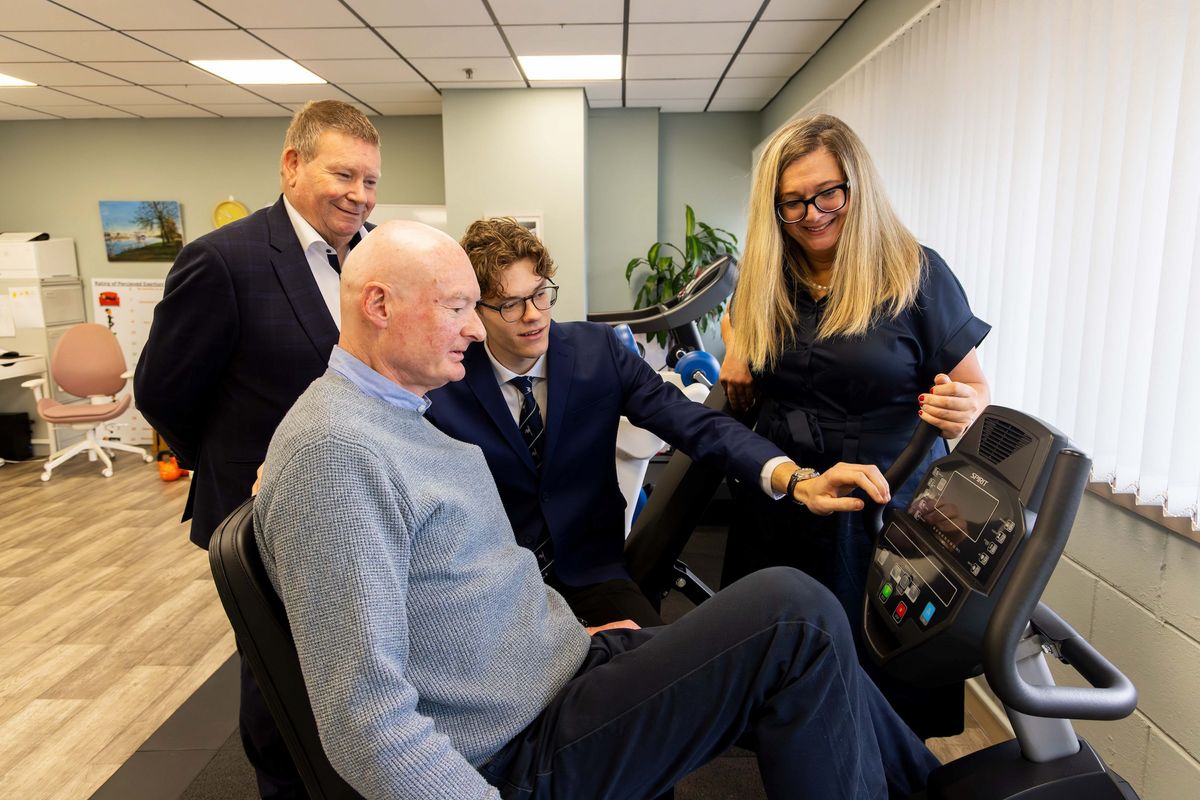
Mark Exshaw, stroke survivor, pictured trying out the gym equipment, with support from Dan Cronin, Chair Cork Stroke Support; Hadley James, Exercise facilitator, and Sarah Slattery, lead physiotherapist at Cork Stroke Support, at the Cork Stroke Support premises, as Cork Stroke Support and Rethink Ireland have launched a detailed report on the impact of exercise on stroke survivors.(Image: Michael O’Sullivan / OSM PHOTO)
She explained that, given the vital role of exercise in recovery, Ireland needs more rehab gyms. Sarah said: “The cost-benefit, to the state and HSE, of keeping stroke survivors off the floor, out of A&E and out-patient clinics, and in their homes living independently as long as possible, cannot be understated.”
Between 30,000 and 60,000 people are living with stroke-related disabilities in Ireland right now. Without crucial rehabilitation support for survivors, the country’s health system faces significant strain. Research also predicts that stroke cases could rise by up to 59% in the next two decades.
Cork Stroke Support’s moderate-intensity exercise programme comprises seven-week group classes. The classes focus on upper and lower-limb strengthening, balance exercises, and aerobic conditioning.
One participant, Mark Exshaw, said his life “changed dramatically” since he started. He added: “I am now confident about taking on everyday activities, and the exercise group gives me great social interaction and support every week.”
Research shows that when exercise is performed at the correct intensity, it prevents chronic diseases, strengthens bones, and promotes longer life and a longer health span. Yet, the report shows that there is very limited opportunity for those with moderate to severe impairment to exercise effectively and safely, which leads to loss of fitness, loss of strength and a consequent predisposition to falls.
Cork Stroke Support has said that greater investment to help develop community rehabilitation services, including increased availability of online exercise resources and community partnerships, is vital to support patients.