
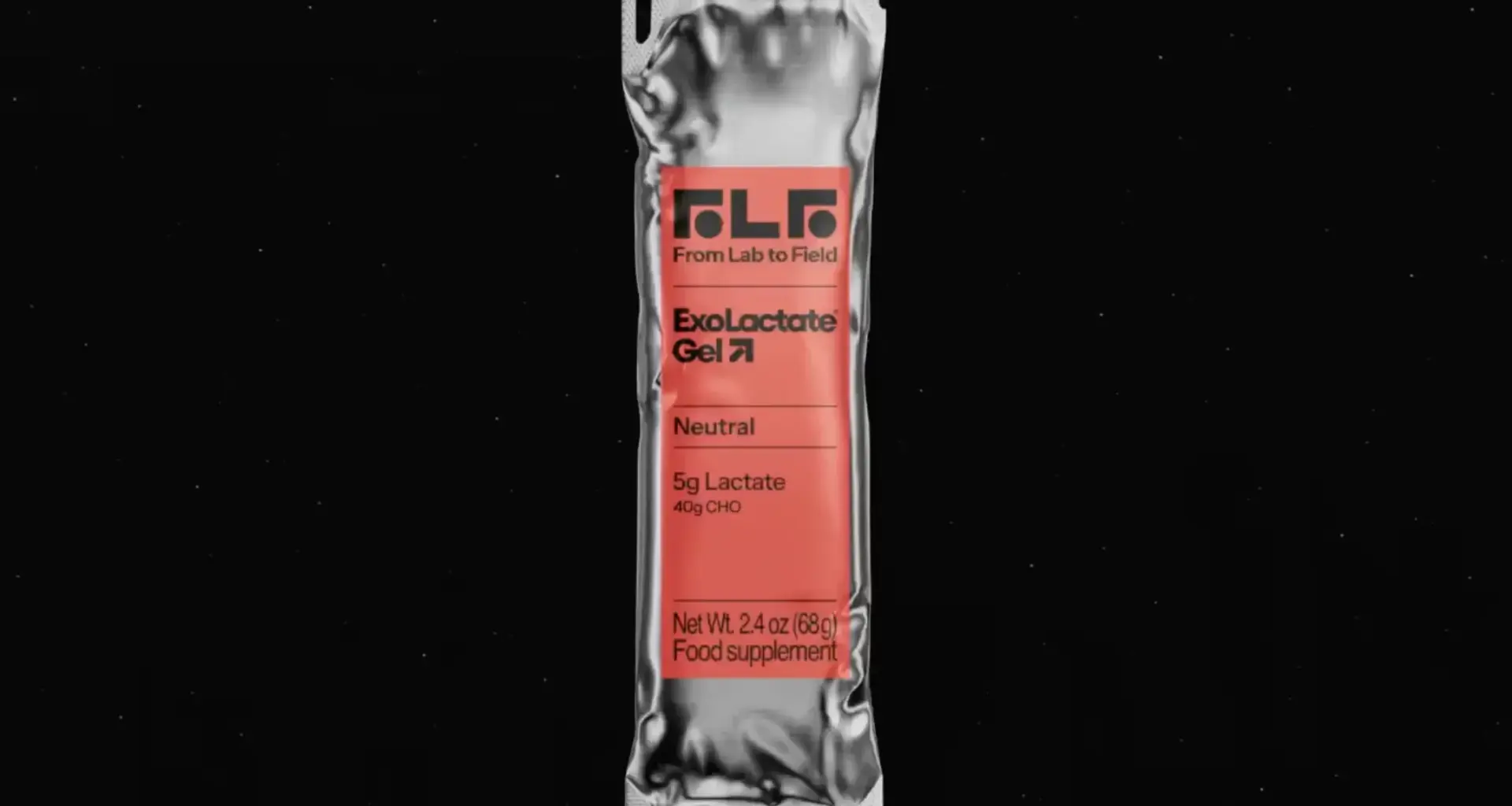
Note: Since publishing this article it has been confirmed that UAE Team Emirates-XRG have been using a brand new lactate-based product at the Tour de France, the Enervit C2:1Pro Lactate Gel Mix. Enervit says this drink mix has been produced alongside Professor George Brooks and the UAE team have been testing it for two seasons. Cyclist also has received word from sources in the know that it is Lidl-Trek who have been using ExoLactate at the Tour.
In 2020, the journal Nutrients published a study led by Basque researcher Aitor Viribay. The paper laid the foundations for the carbohydrate boom that has ignited the peloton, credited with accelerating riders and their recovery.
‘We were one of the first groups to focus on the benefits of athletes consuming 120g of carbohydrate per hour,’ says Viribay. ‘During our work, I started to understand lactate and how consuming more carbohydrates promoted higher lactate availability in the body. So, I thought, “Why don’t we just bypass that and go straight for the lactate?” What would the result be?’
After many years of research, development and refinement, the result is the ExoLactate Gel by From Lab to Field, claimed to be the ‘world’s first lactate gel’. That’s right, a gel swimming with a substance that for years was demonised for causing muscle burn and plummeting power output is now at the heart of cycling’s latest nutritional super-booster. It begs the question: what does the science actually say? But let’s start with the question on every (OK, a few) cyclists’ slightly dehydrated and cracked lips: who’s using them at the Tour de France?
WorldTour guessing game
‘They are being used at the Tour de France but commercial sensitivities mean I can’t say who with,’ Viribay says of lactate gels. ‘I can say that we’re working with many elite athletes and have already won races in trail running, road running and triathlon.’ Viribay combines his research with his role as performance director of Salomon, and Salomon-backed ultrarunner and former pro cyclist Christian Meier has certainly been involved – he co-hosts From Lab to Field’s podcast.
Secrecy fuels rumours, including that one Tour team has invested heavily for exclusive access to the ExoLactate Gel. It’s been mooted by some that the team in question are UAE Team Emirates-XRG, who reportedly tested it at the Tour de Suisse. There’s also grainy footage doing the rounds of Tadej Pogačar consuming a gel with similar packaging on the 2026 Tour’s Stage 6 descent of the Col du Tourmalet earlier this week, though that turned out to be an Enervit prototype.
UAE do have form in this area according to Spanish newspaper El Pais: ‘Tadej Pogačar’s UAE Team Emirates have tried using [Dr George] Brooks’ “Polylactate” mixed with 120g doses of carbohydrates and have the bottles stored away, gathering dust,’ wrote journalist Carlos Aribas. ‘They stopped using it because it’s awful, very unpleasant to drink and, above all, because they didn’t notice any positive effects on performance.’
We’ll come back to the importance of Brooks shortly, but adding further lactate fuel to the mitochondrial fire is that UAE Team Emirates’ former performance director and Viribay’s fellow Basque doctor Iñigo San Millán is also a world-leading expert on lactate, both in the realms of performance and health. So, the evidence is persuasive.
But are Lidl-Trek involved too? On British rider Tao Geoghegan Hart’s LinkedIn page, he’s down as a founding partner of From Lab to Field, which explains a recent post saying, ‘What will the next frontier of elite fuelling be? Perhaps my friend Aitor Viribay holds the answer?’ Cyclist contacted Lidl-Trek but, at time of writing, haven’t received a reply.
And what about Netcompany Ineos, where Geoghegan Hart and Viribay worked together when Viribay was head of science between 2021 and 2024?
There are more questions than answers at this point.
The Lactate Shuttle Theory
More importantly, what are the facts about the changing view on lactate?
‘I’m 32 years old and my generation are indebted to Brooks, who’s the Godfather of Lactate,’ says Viribay. ‘He brought so many insights and a new understanding of lactate.’
Brooks’ ‘Lactate Shuttle Theory’, first articulated in 1984, explains that lactate isn’t merely a waste product of exercise, but an important energy source. When you cycle hard, fast-twitch muscle fibres produce lactate through glycolysis – the breakdown of carbohydrate. Brooks discovered that lactate doesn’t just build up and fatigue, but it’s actually transported (or ‘shuttled’) to other tissues such as slow-twitch muscle fibres, the heart and the brain, where it’s converted back into a substance called pyruvate and used to generate energy through aerobic metabolism.
Lactate also moves to the liver, where it’s converted into glucose via the Cori cycle. This newly formed glucose can then be released into the bloodstream to help replenish energy supplies for working muscles or, when demand is lower, stored as glycogen.
For all athletes, lactate does build up when working hard and, at some point, the body can’t clear or reuse it, but it’s the associated rise of hydrogen ions that sees your power output plummet in that situation, not the lactate.
How lactate gels work: raising the energy ceiling
Ultimately, Brooks’s theory altered the traditional view of lactate from a harmful by-product to a valuable metabolic fuel and provides the physiological foundation for Viribay’s ExoLactate Gel, which contains 40g of carbohydrates with a 1:1 ratio of glucose to fructose as well as 5g of lactate.
Essentially, the gel is sidestepping several metabolic steps. In theory, that means users not only enjoy an extra energy boost, but at a quicker rate because it bypasses the glucose and fructose intestinal transporters that are at the heart of those original 120g studies – instead, lactate is absorbed through a different transporter called ‘monocarboxylate’, or MCT1.
‘That’s why if an athlete has reached their carbohydrate ceiling, there’s the potential of adding a complementary lactate energy boost without the two substrates fighting each other at the gut wall,’ Viribay says. In essence, that means raising riders’ energy ceiling, so a faster, stronger peloton.
That’s not all though, says Viribay. He suggests its exact role depends on the race situation: ‘At low intensities like below lactate threshold, it promotes higher fat oxidation and so spares precious glycogen stores for race-defining moments. At higher intensity and above lactate threshold, via pH regulation, it promotes higher carbohydrate oxidation. My analogy is the use of AdBlue to make your diesel car more efficient and last longer. It’s the same with exogenous lactate.’
There’s more still. One of lactate’s known roles is as a ‘lactormone’. This means it’s a signalling molecule, which kickstarts a variety of physiological processes to help the body adapts and grow back stronger. In this case, high lactate cranks up mitochondrial biogenesis (aka growth).
As we all remember from school science lessons, mitochondria are the cells’ energy powerhouses, so stimulating new mitochondria is the Holy Grail for cyclists. More mitochondria means improved stamina, reduced fatigue and improved performance. It also means better cardiovascular function, insulin sensitivity and overall metabolic efficiency. ‘Essentially, we have many working hypotheses,’ Viribay says, ‘but we’re validating this idea of “buying training hours” for free.’
Well, not quite for free, for the cost of the gels, which is still to be confirmed, but Viribay says it’ll be the same as other premium gels – eg, Maurten gels are priced around £3 per gel. That said, ExoLactate does have a rival in the form of Spanish brand Santa Madre’s Lactate 60, which costs €5 per gel and was used by Yomif Kejelcha in his sub-two hour marathon debut in London earlier this year. Lactate 60 has a similar formulation to ExoLactate, and Viribay voiced his own patent-related concerns over the product, Cyclist contacted Santa Madre to ask about the product but the brand is yet to respond.
Anyway, it’s a compelling sell and one that seems scientifically sound according to respected sports scientist and sports nutritionist Dan Healey, who used to work with Alberto Contador at Tinkoff Saxo: ‘The physiology certainly adds up,’ he says. ‘The Cori cycle is the back door for lactate to exit your cells but then return as fuel. It makes scientific sense because the bottom line is that lactate creates energy.’
The breakthrough
 Bill McConkey / Cyclist
Is there evidence behind ExoLactate’s performance-boosting potential? Viribay says the field remains in its infancy, but points out that an ongoing clinical trial and two further pilot studies are in progress. That’s on top of unpublished field work with athletes.
There’s little empirical evidence of the ergogenic effects of exogenous lactate elsewhere, though two studies from 2024 revealed a lower perceived effort at the same power output and a 4% increase in average watts.
But why the paucity of evidence that exogenous lactate works if its foundations were laid 40 years ago with Brooks’ shuttle theory? According to Viribay, it’s down to three walls.
‘The first wall is dose,’ he says. Studies suggest that to deliver a meaningful physiological benefit, you’re looking at 10-25g of lactate an hour. During an event over three hours, that means a total of 30-75g of lactate. Earlier studies dipped as low as 500mg/hr in terms of delivery. Hence, they saw no effect.
The reason for the low dose was arguably down to the second wall: delivery. ‘To deliver lactate orally we’ve traditionally used salts – sodium lactate, calcium lactate,’ explains Viribay. ‘But reaching 10-25g/hr of lactate using salts forces the athlete to swallow an excessive load of sodium or calcium, with a direct risk of gastrointestinal distress and electrolyte imbalance. Anyone who has worked in the field knows that the gut is often the true limiting organ in endurance performance. A fuel that destroys the gut is not a fuel.
The third wall is palatability. Lactate salts are unpleasant. They taste salty, metallic and are hard to drink hour after hour, especially when exercising hard. ‘There’s something almost poetic in this detail,’ Viribay says. ‘The same fermentation that humans have loved for millennia in cheese, in sourdough, in wine, gives us here a sour note that the athlete’s palate simply rejects in the middle of a race. We can design the most elegant metabolic strategy in the world, but if the athlete cannot tolerate it – physically and also sensorially – then it simply doesn’t exist as a practical tool.’
The taste of ExoLactate is neutral, but it’s the patent-pending delivery system that’s mooted as the gamechanger, knocking down all three walls.
‘Our patent-pending system delivers lactate exogenously in a safe, palatable way,’ says Viribay. The importance of a delivery breakthrough echoes the work of Swedish brand Maurten, which cracked the congested sports-nutrition market via its stomach-friendly hydrogel technology, which is at the heart of both its high-carbohydrate energy products and its sodium-bicarbonate formulation.
‘Brooks himself has many patents on the exogenous delivery of lactate as a metabolic fuel, but nothing has come to market yet,’ Viribay says. The delivery difficulty is highlighted by Brooks’s first patent stretching back over 30 years to 1995, which described ‘administering lactate salts and/or lactate polymers orally as an energy supplement during exercise and recovery’.
More recently, there’s a 2024 patent entitled ‘Molecules, formulations and methods for nutritional support of athletes, patients and others‘. It’s co-invented with Michael Horning and San Millán.
Who’s behind it?
As of the 2026 Tour de France, it seems that Viribay and his team – which had funding from the Basque government – won the lactate race, and Viribay is quick to highlight the importance of the team.
‘Three of us created From Lab to Field,’ he says. ‘It’s a small company in the Basque country. One of my co-founders has a PhD in physical chemistry from the University of East Anglia. The other is a culinary expert.’
The former is Juan-Carlos Arboleya. When Cyclist searched online to find clues about ExoLactate’s delivery system the only clue came from his LinkedIn profile: ‘The aim of this [previous] work was to study the fundamental mechanisms that control and determine the stability and microstructure of different whipping creams recipes.’ Lactate in a Mr Whippy? Probably not.
The latter expert is Daniel Lasa Echegoyen, who was head chef of R&D at one of the world’s most influential avant-garde restaurants, the two-Michelin-star Mugaritz, located in the hills outside of San Sebastián. For 20 years, Lasa Echegoyen worked in one of the primary laboratories of modern gastronomy. A keen amateur cyclist himself – his uncles were professional riders in the 70s – one of his career highlights saw five-time Tour winer Miguel Induráin eat at Mugaritz.
The trio have form, working together during Viribay’s time at Ineos to transform traditional rice cakes into ‘enzyme-treated, haute-cuisine sports fuel by breaking resistant starches into rapidly absorbable carbohydrates’. The result was reportedly a highly digestible, flavourful rice-based food with improved texture, faster energy availability and greater gastrointestinal comfort for elite cyclists during racing.
A notable lactate sceptic
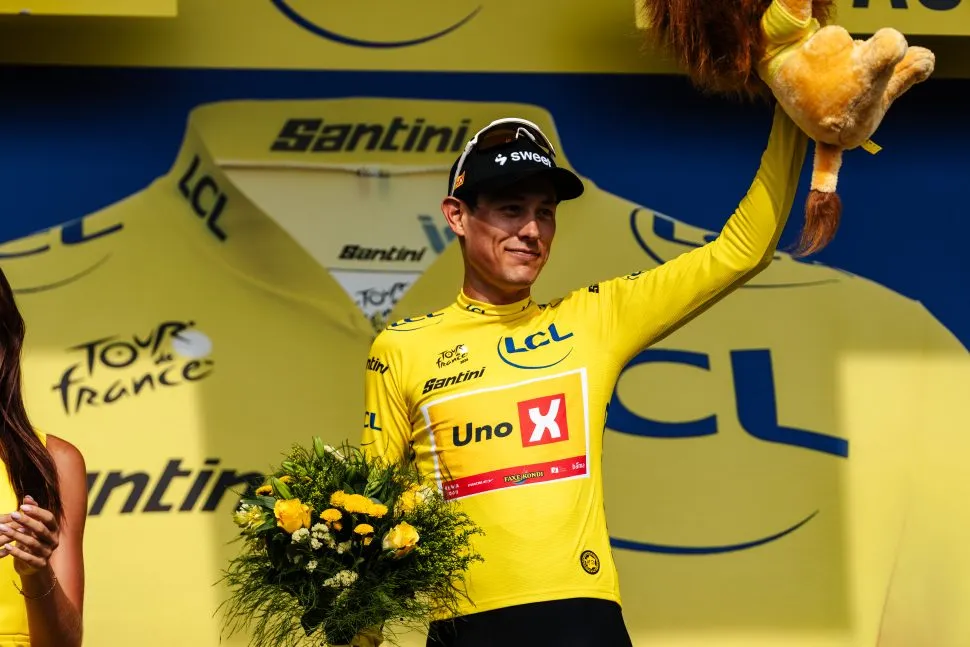 Olav Bu, head of performance at Uno-X Mobility, whose rider Torstein Træen pictured spent a couple of days in the yellow jersey at the current Tour de France, isn’t sold on the use of exogenous lactate just yet. Xavier Pereyron
Viribay says the gels will be available to buy soon after the Tour de France, which briefly brings us back to who’s using them at the Tour. After a mental deep-dive, Cyclist considered Uno-X Mobility, whose rider Torstein Træen wore yellow for two stages before crashing on the Tourmalet. Their head of performance is Olav Bu, pioneer of the ‘Norwegian method’, whose obsession with using lactate monitors and training by lactate helped Norwegian triathletes Kristian Blummenfelt and Gustav Iden to multiple Ironman titles.
It’s not them, however. Bu, it turns out, is sceptical.
‘We discussed exogenous lactate in our research group pre-Tokyo [2021 Olympics],’ Bu tells Cyclist. ‘However, when you approach it from first principles, we don’t feel it adds up.’
Bu says that lactate appears to be less ‘oxygen-efficient’ than glucose, which produces more energy for the same oxygen cost. In essence, if lactate replaces glucose oxidation, the body need to process slightly more fuel and oxygen to maintain the same power output, with more energy lost as heat. In theory, this could contribute to a higher body temperature during hard efforts.
He adds that glucose is a simpler fuel for the body to absorb. Lactate requires additional transport and charge-balancing mechanisms, which may increase the complexity of absorption in the gut. Rather than offering a clear physiological advantage, this could create an extra ‘absorption tax’ and make formulation more challenging.
‘That’s why the argument for exogenous lactate only works if it provides genuinely additional fuel oxidation beyond an optimised glucose-fructose strategy,’ Bu says. ‘In our applied work, we haven’t yet identified a practically relevant hard ceiling to exogenous carbohydrate oxidation. Turning to a more taxing fuel would only make sense once athletes had fully exploited their carbohydrate absorption and oxidation capacity and still required an alternative pathway to go faster.
‘Until that is demonstrated, lactate remains a less oxygen-efficient and potentially higher-risk fuel source. For us, it would need to pass our own internal validation before being considered for racing.’
To be fair, that echoes Viribay, who says that the gels will be more advantageous to elites and amateurs who’ve already reached their carbohydrate limits. How do you calculate that? Well, keeping topping up how much glucose-fructose you can tolerate until gastro-distress kicks in is one way, or you could go more high-tech and tap into relatively new bespoke carb testing from the likes of Fuelsync and ExoAnalytics.
Mimicking good health
For Viribay, his work reaches beyond performance. He says that the potential bigger wins are lactate’s potential to improve health.
‘The possibilities are huge. We started with the gel because that’s an environment I know, but there are many potential clinical benefits,’ he says. ‘An increasing amount of research links lactate to health status and diseases.’ In fact, lactate is already used in hospitals. One of the most well-known hydration solutions is called Ringer’s lactate. It’s electrolytes plus lactate.
‘For instance, there’s evidence that gut microbiota that’s more exposed to lactate – as it would be from exercise – are healthier. And that lactate has a massive role in not only accelerating the growth of cancer cells but also treating it. Creating a product that can mimic an exercise dose for someone who can’t move could have huge health potential.’
This is known as ‘exercise mimetics’. It’s when a drug mimics the biological effects of exercising without working out. The idea’s been around for years, for good and bad. Back in 2008, San Diego’s Salk Institute presented a drug called ‘GW501516’, which signalled key genes to burn fat instead of sugar.
In subsequent experiments, two rodents – dubbed ‘Couch Potato Mouse’ and ‘Lance Armstrong Mouse’ – were fed the same high-fat, high-sugar diet and engaged in identical levels of daily physical activity. However, ‘Lance’ received the compound, which dramatically boosted its endurance while allowing it to remain significantly leaner than its untreated counterpart. Subsequently though, GW501516 – known by many names including Cardarine and Endurobol – was pulled from clinical trials as it was found to cause cancer.
A modified version soon appeared on the black market as a performance-enhancing drug, despite its health risks and being banned by the World Anti-Doping Agency.
Mimetics isn’t all bad. Berberine, often described as mimicking some metabolic effects of endurance exercise, may improve glucose metabolism, insulin sensitivity and mitochondrial function. Resveratrol activates pathways linked to mitochondrial biogenesis, so may support cardiovascular function. And metformin, a prescription medicine, reduces liver glucose production and is used to treat type 2 diabetes.
Lactate and ketones team up
 Eliot Wyatt / Cyclist
There’s also LaKe, presented at the recent Science & Cycling conference by PhD researcher Simon Kjær from Aarhus University, Denmark. LaKe is a synthetic molecule combining both lactate and the nutritional zeitgeist of recent times, ketones.
Kjær referenced the initial study, published in the Journal of Agricultural and Food Chemistry in 2024, undertaken on rodents. The liquid supplement led to rapid increases in blood lactate followed by sustained elevations in ketones. This resulted in a swathe of metabolic changes comparable with running a 10km, like lowering levels of fatty acid in the blood and suppressing appetite.
Kjær then presented his more recent work, testing LaKe’s potential metabolic benefits on humans for safety purposes. ‘In an exercise pilot testing setting, the volunteers reported none or light-to-moderate gastrointestinal distress, which is promising, as there may be a tolerance effect,’ he says. ‘The more often you ingest it, the better your system handles it.’
So, LaKe has potential to control weight – vital for health, but also of interest to performance. As is Kjær’s revelation that due to ‘lactate naturally increasing at altitude, alongside erythropoietin (EPO) and in response to hypoxia, we’re investigating whether exogenous lactate has any effects on erythropoiesis. The analyses are still ongoing’. In other words, does lactate boost the blood-booster EPO? If it does and that transcends to delivering more red blood cells for sucking up oxygen and fuelling the furnace of fitness, WorldTour teams will certainly come a-knocking.
Whether LaKe or indeed ExoLactate gels become the next carbohydrate revolution or fade as another promising idea will depend on robust, independent evidence. The physiology is compelling, early results are encouraging and elite teams are clearly paying attention, but proof remains limited. And, of course, we’re yet to discover what’s behind that patent-pending sign. But if ongoing research confirms the performance and health benefits, lactate could reshape endurance nutrition. Until then, it’s one of the most intriguing – and closely watched – developments in modern sports science.