
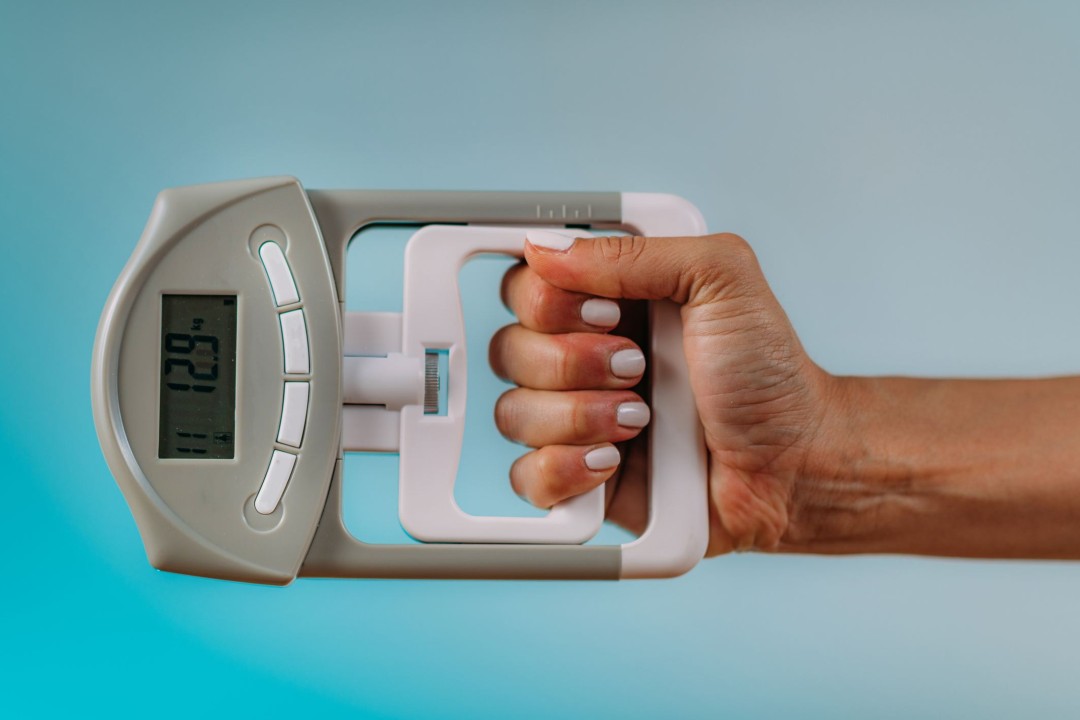
Your handshake may say more about your health than you realize. Doctors are increasingly eyeing grip strength as a quick, cheap way to flag broader problems. Indeed, University of Michigan Medical School professor Mark Peterson considers it better at predicting cardiovascular disease than blood pressure. Measured with a small device called a handgrip dynamometer that you squeeze for a few seconds, grip strength offers a snapshot of overall muscle power, he explains to the Wall Street Journal. For 50-year-old men, the median grip strength is about 100 pounds; for women, it’s 64 pounds.
“Why it’s useful isn’t because we care anything about muscles in the forearm,” says Peterson. “It’s highly associated with all muscle strength or weakness. If somebody is very weak in their grip, they are at very high risk for whole body frailty and weakness.” Low grip scores have also been linked to higher risks of heart disease, Type 2 diabetes, osteoporosis, stroke, and dementia. Experts stress that chasing a stronger squeeze alone won’t extend your life. Instead, they recommend full-body strength training—with grip strength as one more useful vital sign. Read the full article here.