
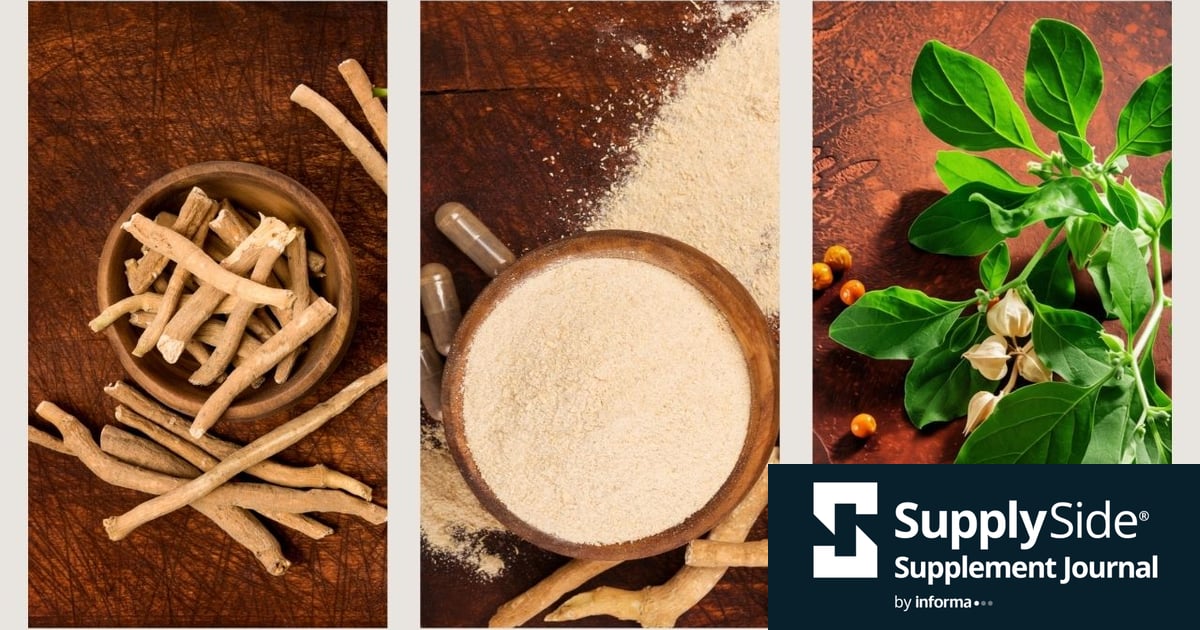
Ashwagandha (Withania somnifera) is one of the bestselling botanicals in the U.S. and has become a fixture in stress, sleep, sports and women’s health formulas, among other categories. But its meteoric rise hasn’t come without controversy or regulatory scrutiny. In the case of this ayurvedic staple with thousands of years of historical use, the points of contention often revolve around:
Which plant part is used.
Product quality and adulteration.
The rules of individual countries.
These frequently asked questions are meant to clarify where ashwagandha currently stands on all four issues and will be revised and updated as rules change.
Last updated: Oct. 1, 2026
Is ashwagandha banned?
Ashwagandha is not banned globally, nor in the U.S. or as a whole across the European Union. Only one country, Denmark, bans it outright in food supplements. Most others allow it, some with warnings or limits.
Food safety agencies in some countries, such as France and Germany, advise certain groups against taking ashwagandha but do not establish outright limitations.
How some countries regulate ashwagandha:
Netherlands: A full ban was proposed but has not been finalized.
Poland: Legal, with limits. A 2020 resolution capped daily intake at less than 3 grams of powdered root and no more than 10 mg of withanolides per daily portion; it also requires withanolide content on the label and a warning.
Hungary: Products are limited to 250 mg of dried root, according to reporting from Nutrition Business Journal.
United Kingdom: While it’s legal, the Food Standards Agency and its Committee on Toxicity began conducting a risk assessment in 2024. As of October 2026, it has not published an outcome.
Australia: Legal, with a mandatory pregnancy warning in place since 2020. In July 2026, the Therapeutic Goods Administration (TGA) issued a safety alert describing a very rare risk of liver injury. It has received 11 possible liver-injury reports in total, four of which required hospitalization.
India: Two root-only rules were issued in April 2026 and are currently under court challenge.
What did organizations in India decide about ashwagandha in April 2026?
Two government bodies in India acted on consecutive days to establish the primacy of root-only ashwagandha ingredients:
April 15, 2026: The Ministry of Ayush directed manufacturers, exporters and sellers of Ayush drugs and products to use only ashwagandha root, in crude or extract form. It prohibited the use of leaves in any form, and stated products must declare the plant part on the label. The Ministry of Ayush is the Indian governmental body responsible for regulating, promoting and ensuring quality standards across traditional medicine systems including ayurveda, yoga, unani, siddha and homeopathy.
April 16, 2026: The Food Safety and Standards Authority of India (FSSAI) issued an advisory stating that its 2016 regulations permit only ashwagandha roots and root extracts in health supplements, nutraceuticals and specialty foods, and that leaves are not permitted.
Neither action came out of nowhere. Ayush issued an advisory against leaf use in October 2021, then agreed to re-examine it after industry objections. A government expert committee’s 2024 safety dossier recommended root-only use. Why did India take these steps?
The government’s stated reasoning for the restrictions included:
Traditional use: Ayurvedic texts and the Ayurvedic Pharmacopoeia of India define ashwagandha as the root.
Chemistry: Studies cited by the ministry identify possible safety concerns with leaves because of higher concentrations of reactive withanolides, particularly withaferin A.
Compliance: Despite the 2021 advisory, some manufacturers continued using leaf material.
Supporters of the rule, including root-only suppliers and some brands, also see it as a tool against adulteration. They argue that adding cheaper leaf to extracts sold as root can raise their withanolide content. (See Vitafoods Insights: Ashwagandha leaf ban a ‘strong step’ toward minimizing adulteration.)
 Is ashwagandha leaf restriction in India in effect right now?
India’s ashwagandha leaf ban is partially in effect. On May 12, 2026, the Karnataka High Court issued an interim stay of both the Ayush directive and the FSSAI advisory, but only for the eight companies that filed the two petitions. Other companies selling in India remain bound by the directives.
As of September 2026, the court has not publicly issued a final ruling.
Why is the root-only rule being challenged?
The petitioners, a group of Indian and international ingredient suppliers, argue that:
The government can’t restrict a plant part through an advisory; it would need to formally amend the 2016 regulations.
The 2016 regulations don’t actually limit ashwagandha to root. This is a textual dispute: FSSAI and root-only suppliers read the rules as root-only; the petitioners read them otherwise. (See a root-only supplier’s view in SupplySide Supplement Journal: What every brand using ashwagandha needs to know right now)
The studies cited don’t establish that leaf is harmful, and leaf-containing products have been made for decades without objection.
Suppliers of root-and-leaf extracts also point to their own published safety data, including one recent 2026 toxicology study and a 90-day human safety study on a branded root-and-leaf ingredient.
Do India’s rules affect products sold in the U.S. or Europe?
India’s ashwagandha root-only rulings do not legally affect products sold in the U.S. and Europe. Indian rules don’t change the law in other countries. But India is the world’s dominant source of ashwagandha, and the Ayush directive is addressed to exporters as well as domestic manufacturers, so changes there can have widespread effects on global supply and prices.
Why root vs. leaf? What does the science say?
Both camps broadly agree on a few points; others are contested.
Most research is on root. But root-and-leaf extracts do have their own clinical and safety literature.
Leaves can be used to adulterate root products. A 2025 study from the University of Mississippi’s National Center for Natural Products Research, funded by the U.S. Food and Drug Administration (FDA) and U.S. Department of Agriculture (USDA), tested 25 ashwagandha supplements bought online. Of the 10 that met both British and U.S. pharmacopeia standards, only two were exclusively root-derived; the rest contained undeclared leaf or other above-ground plant parts. Overall, 44% failed both standards. The authors described “a wide spectrum of adulteration” in the products they tested, but cautioned that not all of the variability they found actually reflects adulteration; growing conditions, plant chemotype and extraction methods also play a role. They also concluded that existing testing methods, designed for root, are inadequate for the blends now on the market.
 What’s happening in the Netherlands?
In 2024, the Dutch public health institute RIVM advised against using ashwagandha, citing case reports of liver problems and possible effects on thyroid hormones. The Ministry of Health moved to add ashwagandha to its list of banned herbs, and a March 2025 public consultation drew more than 700 responses, most objecting, according to reporting published in Vitafoods Insights.
In September 2026, the Netherlands notified the European Commission of a draft decree that would prohibit ashwagandha in food supplements and herbal preparations, except for the root. It’s a broad decree covering many substances, not just ashwagandha. Others include DMAA and huperzine A (banned), synephrine (capped) and turmeric and St. John’s wort (warnings).
In the case of ashwagandha specifically, root preparations would remain permitted but would have to carry a warning advising against use during pregnancy or breastfeeding or by people with liver or thyroid problems, and noting that ashwagandha can cause liver problems in very rare cases.
This is narrower than the full ban proposed in 2025. The EU’s mandatory standstill period runs until Dec. 7, 2026, and no date for full implementation has been set. According to the Dutch supplement trade association NPN, the root exemption followed safety data submitted by suppliers and India’s Ministry of Ayush. The national public health institute, RIVM, is still reviewing that data, and the rules could change based on its conclusion
Could the EU ban ashwagandha?
Theoretically, the EU could ban ashwagandha through a process known as Article 8. Under Article 8 of Regulation (EC) No. 1925/2006, the European Commission can prohibit or restrict a substance in foods, or place it “under scrutiny,” following a scientific assessment by the European Food Safety Authority (EFSA). The EU has used this framework to ban ephedra outright in 2015 and, more recently, to place dosage limits on ingredients like green tea catechins.
In June 2024, a working group of the heads of European food safety agencies recommended prioritizing ashwagandha for an Article 8 procedure. As of September 2026, the procedure had not been formally opened, so in the meantime, individual member states set their own rules.
What are Australian and EU regulators worried about?
Liver injury: This is the most prominent concern, based on a relatively small number of case reports worldwide. Australia’s Therapeutic Goods Administration (TGA) describes the risk as very rare but potentially severe. Critics of the regulatory response note that many case reports don’t establish exactly what product was taken, its plant part or composition or other medications involved.
Thyroid and hormonal effects: European regulators cite studies and case reports suggesting ashwagandha may raise thyroid hormone levels and alter sex hormones, which they say could pose risks for people with thyroid conditions or on thyroid medication, and during pregnancy. A hormonal modulation meta-analysis published in February 2026 in Planta Medica found no effect on TSH or T3 and modest increases in T4, while it increased testosterone in men but not women.
Pregnancy: Several assessments cite a reported traditional use as an abortifacient. The American Herbal Pharmacopoeia, whose 2000 monograph was the original source, has said the claim was taken out of context. (See SupplySide Supplement Journal: Ashwagandha experts mobilizing to protect access to botanical.)
Drug interactions: Particularly with sedatives and thyroid medication.
What should natural product brands watch for next?
The outcome of the Indian court challenges.
The final Dutch ruling on whether to ban ashwagandha.
Whether the European Commission eventually opens an Article 8 procedure.
The UK Committee on Toxicity’s risk assessment.
Follow-up from Australia’s TGA on plant parts.