
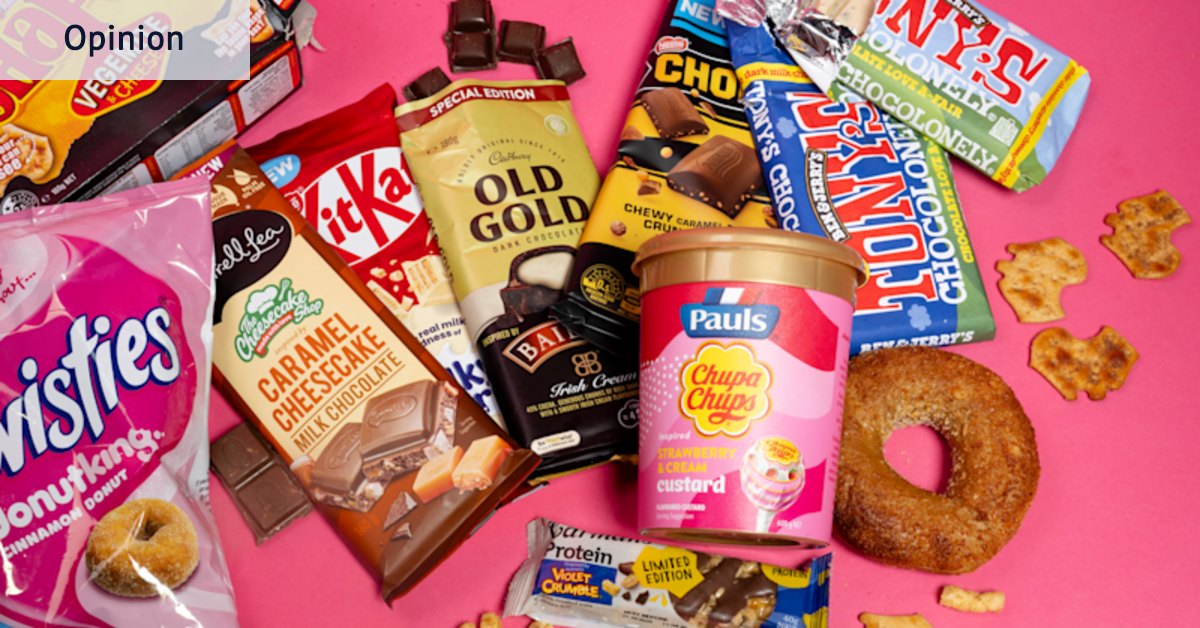
But it’s our fault, right? We keep buying these edible substances despite health nags telling us they are making us overweight and sick.
Half of our energy intake in Australia comes from UPFs, mostly in the form of ready meals, packaged bread, cereals and soft drinks. Less than five per cent of us eat enough fruit and vegetables.
If only we exercised a little more willpower and made better choices in our lives, two-thirds of our country wouldn’t be obese or overweight. And we wouldn’t be weighing down the hospital system with cases of type 2 diabetes, hypertension, cardiovascular disease, chronic kidney disease, Crohn’s disease and depression.
Except we’re a convenient scapegoat.
If consumers are the problem then corporations can go on their merry way, creating products that are, from an evolutionary perspective, entirely foreign to our bodies and causing them harm.
Deflecting blame is just one strategy food companies use.
Today, three of the biggest food corporations (Coca-Cola, PepsiCo and Mondelez) spend $13.5 billion on advertising every year, four times the entire operating budget of the World Health Organisation.
And a surprising amount of thought and effort goes into designing foods that keep our confused bodies craving more as they seek nourishment from non-existent nutrients.
All the flavour profiles that our bodies instinctively associate with various nutrients are there. Only it’s a sensory illusion.
That UPFs are also often soft, are hyper-palatable, and never satiate us makes overeating easy, adds Deakin University’s Dr Priscila Machado.
Loading
“We designed food to be irresistible. Now we’re taking medicine to resist it,” futurist and author Mike Lee writes.
As the industry has grown, and our waists have grown alongside it, industry leaders envision capturing more than just market share. They want to capture our diets, our stomach, and mouth share too.
To illustrate this idea, the authors of the new three-part Lancet series on Ultra-Processed Foods and Human Health, give this example:
“In 1986, Roberto Goizueta, then president and chief executive officer of Coca-Cola, outlined his vision to investors:
“‘Right now in the [USA], people consume more soft drinks than any other liquid, including ordinary tap water. If we take full advantage of our opportunities … we will see the same wave catching on in market after market until, eventually, the number one beverage on earth will be … soft drinks – our soft drinks.’”
The Lancet series highlights that interest groups funded by leading corporations also work relentlessly to block regulation and create conditions that allow them to expand.
In 2024, of the 326 lobbyists employed by the US food and beverage industry, 211 were former government employees; Australia’s Health Star Ratings system, developed in partnership with industry, gives many UPFs high ratings, suggesting that it has been co-opted as a marketing tool; while systematic reviews on soft drinks and obesity risk were five times more likely to show no association with obesity if industry-sponsored.
All this is to say, the problem is not you or us. It’s them.
“For a long time the problem has been framed as a matter of individual responsibility,” said Phillip Baker, an author in the Lancet series.
“We offer an alternative interpretation of the problem, describing the root causes as the rising power of the UPF industry to shape food systems in ways that generate ultra-processed diets.”
We can, of course, try our best to avoid UPFs in their shiny plastic packaging and with ingredients we wouldn’t use at home. But it misses the point that it is the food industry that has become bloated – obese, even – with greed.
The 43 global experts, including Australians, have ideas about how to fix the food environment we find ourselves in. They include marketing restrictions; sugar and UPF taxes; restricting the available foods in retail spaces; and improving school food policies.
In Brazil, for example, the limit of processed and ultra-processed foods on public school menus is 15 per cent. All other food has to come from small-to-medium enterprises.
Any change also involves recognising that most households struggle with time and resources to make healthy meals and that women, many of whom are working, tend to bear the burden of the care work in the home, including meal preparation.
Something has to be reformulated, though. And it is not the Doritos.
Make the most of your health, relationships, fitness and nutrition with our Live Well newsletter. Get it in your inbox every Monday.