
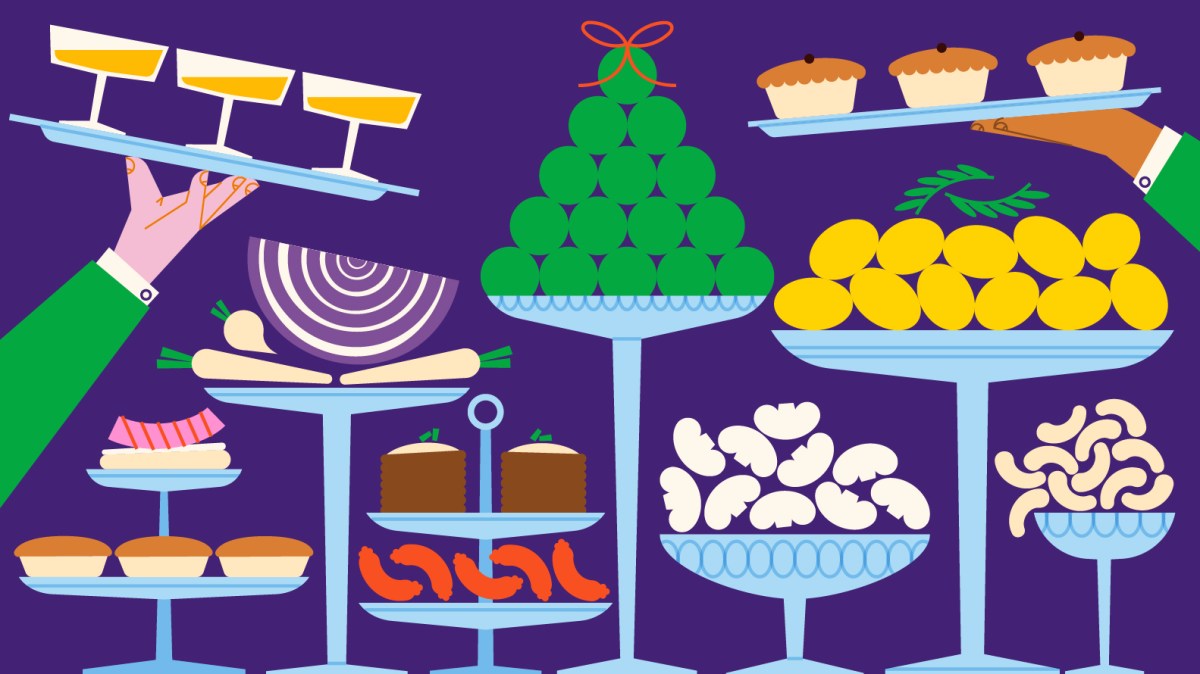
There’s nothing wrong with overindulging on food and wine over Christmas. But if you’d like to maintain some balance over the next couple of weeks, there are ways to mitigate the excess. From stomach-lining snacks to the party-food ingredients that can boost your immunity, here’s how six nutritionists navigate the festive period.
1. Look for sources of fibre
The nutritionist Emily English, author of Live to Eat: The Food You Crave, the Nutrition You Need, gets her fill of fibre-rich, colourful veggies. “Brussels sprouts and red cabbage are rich in antioxidants and glucosinolates, which support hormone and liver health,” she says. She suggests shredding sprouts to make a coleslaw.
In terms of the canapé tray, “popular dishes such as smoked salmon blinis and mackerel pâté contain omega 3, which can help to prevent heart disease”.
Bah humbug
“Don’t ‘save calories for drinking’ — you’ll just get a worse hangover.” And remember, “health is the accumulation of your habits over the whole year, not what happens in a single week”.
• The snacks I will (and won’t) feed my kids, by Britain’s top nutritionist
2. Pass the nut bowl
“Food is part of the celebration, and stressing about every mince pie misses the point,” says Rob Hobson, a nutritionist and author of The Low Appetite Cookbook. He recommends including a few proper meals among the grazing and making sure there’s always some greenery on your plate.
Hobson also makes a beeline for prawn or shrimp cocktail. “Shellfish are rich in selenium and iodine, which are important for immunity and energy metabolism. You can make it even healthier by reducing the dressing or using yoghurt instead of mayonnaise.” And don’t skip the nut bowl. “They not only fill you up for longer but they also support heart health due to their healthy fats and polyphenols.” Just don’t eat too many of the salty ones.
Bah humbug
“Pastry-based canapés such as vol-au-vents, mini pies and sausage rolls tend to be high in saturated fat and low in fibre, and are very easy to mindlessly eat before a meal.”
 3. Nourishing nibbles
“Instead of trying to be ‘good’, I focus on choosing which indulgences are worth it,” says Manisha Morgan, a nutritionist and personal trainer. “A few festive nibbles that have some real nutritional benefits include stuffed mushrooms — high in fibre and antioxidants — and cheese with grapes or figs, which gives you calcium and antioxidants. Roast potatoes are high in potassium and fibre.”
To drink, Morgan has spiced chai or hot water with cinnamon, turmeric (both are anti-inflammatory) and ginger (which can help to settle your stomach after rich food).
Bah humbug
“When it comes to mini sausages wrapped in bacon, enjoy one or two but not the whole tray as they are high in saturated fat and salt.”
• The 10 ultra-processed picnic foods nutritionists avoid
4. Steady on the cheese
It can be easy to overdo it with toppings and sauces. “If you are adding cheese to a dish, go for a stronger flavour so you can use less,” says the dietician Tai Ibitoye. “And consider lower-fat varieties such as goat’s cheese or edam.” Avoid cheese-heavy bites such as baked camembert or deep-fried halloumi, which are delicious, but high in fat.
Bah humbug
“Avoid crisps and salted nuts before drinking, as they can make you thirstier and may lead to drinking more alcohol than intended.”
 5. Get a healthy meal in early
“If I know that later on I’ll be having a large meal or several courses, I focus on balanced, nutrient-dense meals earlier in the day to stay energised,” says Dr Hazel Wallace, author of The Food Medic for Life. She recommends scrambled eggs on wholegrain toast with avocado, or a soup made with leftover turkey and root vegetables. And don’t forget the fruit bowl. “Seasonal fruits such as apples, pears, figs and cranberries add natural sweetness and antioxidants.”
Bah humbug
“Avoid skipping meals to ‘save calories’ for later in the day as this often backfires and can lead to overeating for many people.”
• Seven UPFs the nutritionists say are actually good for you
6. Just add garlic
Rhiannon Lambert, a nutritionist and author of The Fibre Formula, suggests adding garlic to dishes wherever possible. “Not only does it add flavour but it naturally contains compounds that can support our immune function,” she says. She also makes roasted parsnips with a sprinkle of parmesan, which provides fibre, vitamin C and calcium. As a treat Lambert suggests eating poached pears with dark chocolate and roasted nuts — “a delicious yet nourishing dessert”.
Her tip for drinking is to try alternating alcoholic and non-alcoholic drinks. “And start the evening hydrated after a meal that balances protein, fibre and healthy fats — it will slow down the rate of alcohol absorption and might prevent blood sugar spikes and crashes.”
Bah humbug
“Avoid white chocolate. It’s not only higher in sugar but unlike dark chocolate it doesn’t contain cocoa solids, which means it lacks the beneficial antioxidants and flavonoids linked to heart and brain health.”