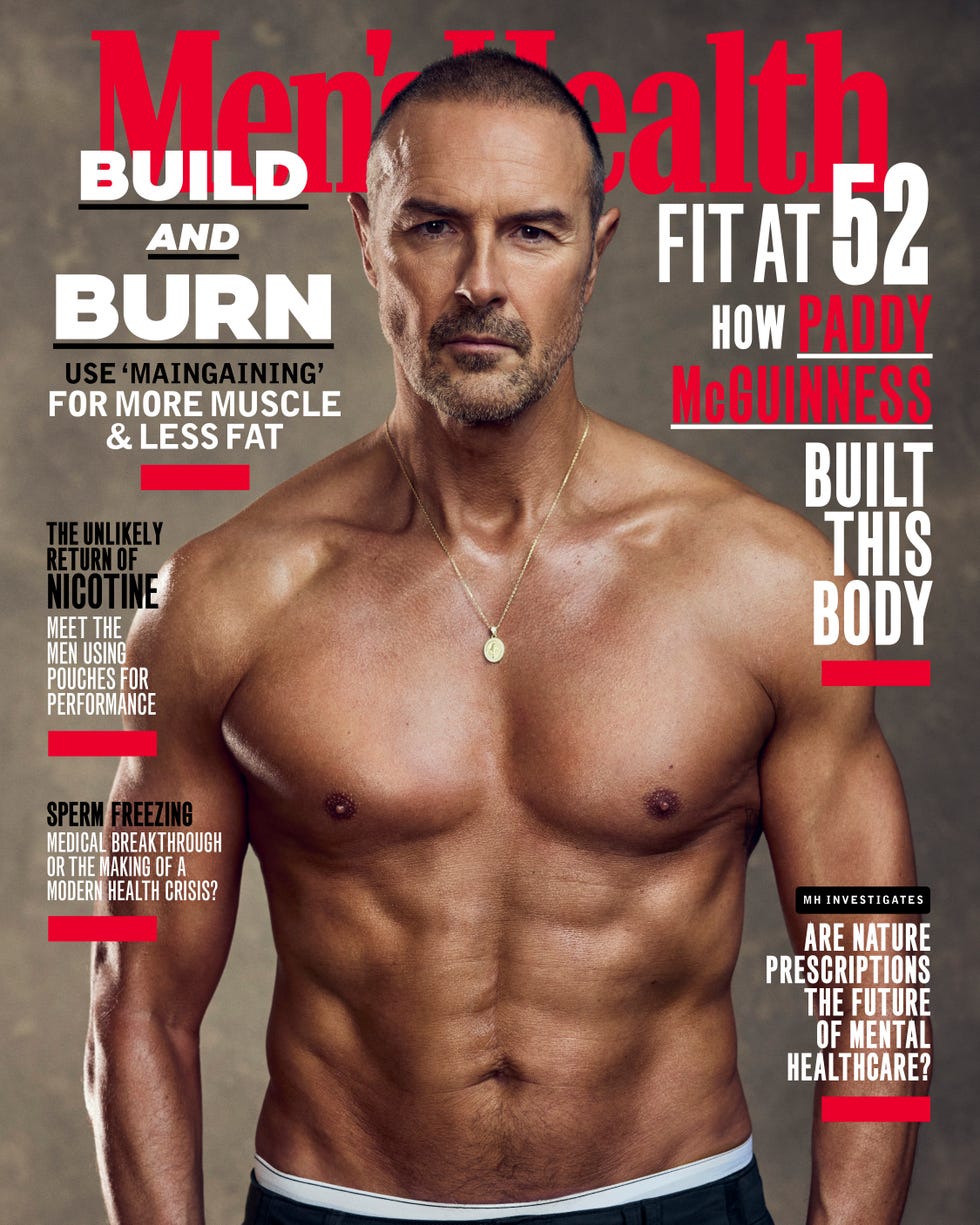
At 6am every day, Paddy McGuinness wakes up, puts on the training kit laid out at the side of his bed and heads to his kitchen to grab 500ml of water, laced with electrolytes. He takes the drink into his home gym, hits the curved treadmill and walks for 40 minutes. No headphones. No music. No TV. Just him, rawdogging a workout.
It’s one of the habits he picked up off the back of doing the 75 Hard challenge at the end of 2025. For those who don’t know, 75 Hard is a life-optimisation programme created in 2019 by podcaster, entrepreneur and self-help guru Andy Frisella. It requires inductees to train for 45 minutes twice a day, once outdoors; drink four litres of water; read 10 pages of non fiction; take a daily tops-off progress picture; and remove alcohol and cheat meals completely. He got the kit-at-the- side-of-the-bed idea from one of the self-help books he read during the challenge, Atomic Habits by James Clear. Since its release in 2018, the book has influenced millions of people to introduce daily, incremental changes into their lives that add up to massive improvements. The 52-year-old actor, presenter, podcaster, stand-up comic and author McGuinness is the latest convert.
He’s telling me this story in the same gym he completes his morning walks. Sitting on a bench wearing a blue quarter-zip, grey shorts and an Apple watch, he’s comfortable in this space. We sit and talk while he’s eating lunch – steak and rice with added spices for taste. He explains that, despite its daily occurrence, his morning steady-state cardio is the most taxing part of his new fitness regimen. Thankfully, he’s learned to take pleasure from the pain. ‘I fucking like the misery of the silence,’ he jokes.
Once he’s done with his daily walk, he heads back to the kitchen to prepare breakfast – scrambled eggs made from two whole eggs and one egg white, with a slice of unbuttered sourdough toast. The carefully controlled diet he’s on right now means, ‘it tastes like the best toast you’ve ever had in your life’. McGuinness is describing his morning ritual over a couple of coffees – mine white, his black – and I’m sitting on a bench that he carefully positioned at a 90-degree angle to his own. We’re a couple of days out from his Men’s Health cover shoot and I’ve travelled to his home to discuss training in his fifties and the 75 Hard challenge that first brought him to this magazine’s attention as a potential cover star. As he tucks into his lunch, he’s looking either lean and fit, or gaunt, depending on your point of view. ‘When I’m out and about and I’ve got my coat on, everyone goes, “Jesus Christ, how long have you got left?”’
Again, he says this jokingly, because whatever people think about his looks, he’s clearly reaping the rewards that come with regular training and a clean diet. He’s happy being holed up in this gym. And who wouldn’t be? The space is kitted out better than most commercial gyms. In addition to the treadmill, there are bikes – Air, Studio and turbo – a Concept2 rower, a sled push and a host of resistance machines. His dumbbells live in their own annexed room, together with barbells and a squat rack. There are also punch bags – heavy and aqua – and a swing. I’m not sure we’re ready for me to ask about that just yet.
This is a space where he comes for solitude, yes, but it’s also where he trains alongside friends who visit from his home town of Bolton, and a place to entertain his three children. It’s not uncommon to find them eating food while sat on the floor, half-watching Dad work out and half-watching the huge TV. The children train in here, too. His daughter, nine, is apparently a dab hand with the sled push and enjoys heaving it from one end of the room to the other. Right now, it weighs about 70kg, presumably set up for Dad. The swing, it turns out, is for his kids – when they just want to play.
As a young man, and before finding fame on TV’s Phoenix Nights, alongside his childhood friend Peter Kay, McGuinness worked in the gym at Horwich Leisure Centre in Bolton. As his career grew, it was always an ambition to have a fully stocked gym all to himself. He’s proud to have been able to tick off that achievement, so it’s no surprise he chose to discuss his recent fitness journey here.
 Hard Times
In late 2024, McGuinness completed a Children In Need challenge riding a classic, customised Raleigh Chopper bicycle nearly 300 miles from Wales to Scotland, and raised more than £10m for charity. Over the five-day ordeal, he developed a ‘Stockholm syndrome’-like appreciation for intense fitness challenges. A few months later, he saw a video on YouTube of something called 75 Hard. He watched 45 minutes of a man showing off his progress from day one to day 75.
Rather than just start the challenge, McGuinness decided to conduct a semi-serious, semi foolhardy experiment where he would first let himself go – eat lasagnes, pizzas, kebabs and drink beer. ‘I thought I’m going to have a real blowout, hit rock bottom,’ he says – before using 75 Hard to go from soft bodied to chiselled. ‘I don’t recommend it,’ he adds. ‘Just for me personally, I thought, “I’ll see if I can get myself out of it.”’
Unlike lots of celebrities who carve enviable physiques with the help of PTs and nutritionists, McGuinness did his transformation alone. No trainer meant there was no one to hold him accountable and he didn’t tell anyone he was doing the challenge, so, as he points out, he could have stopped on day 30 if he’d wanted and no one would have known. But he kept hitting two workouts a day, making sensible food choices – chicken pesto pasta became a favourite – reading books for the first time in years and drinking almost four litres of water a day, which he learned to finish before 4pm so he wasn’t ‘up all night having a slash’.
Want to know how Paddy McGuinness got into the best shape of his life at 52? We break down the 75 Hard challenge he followed – plus the exact workouts he used to build lean muscle for his Men’s Health cover shoot.Sign up for 14 days free access to the MH app and read our guide to how best to do 75 Hard now. 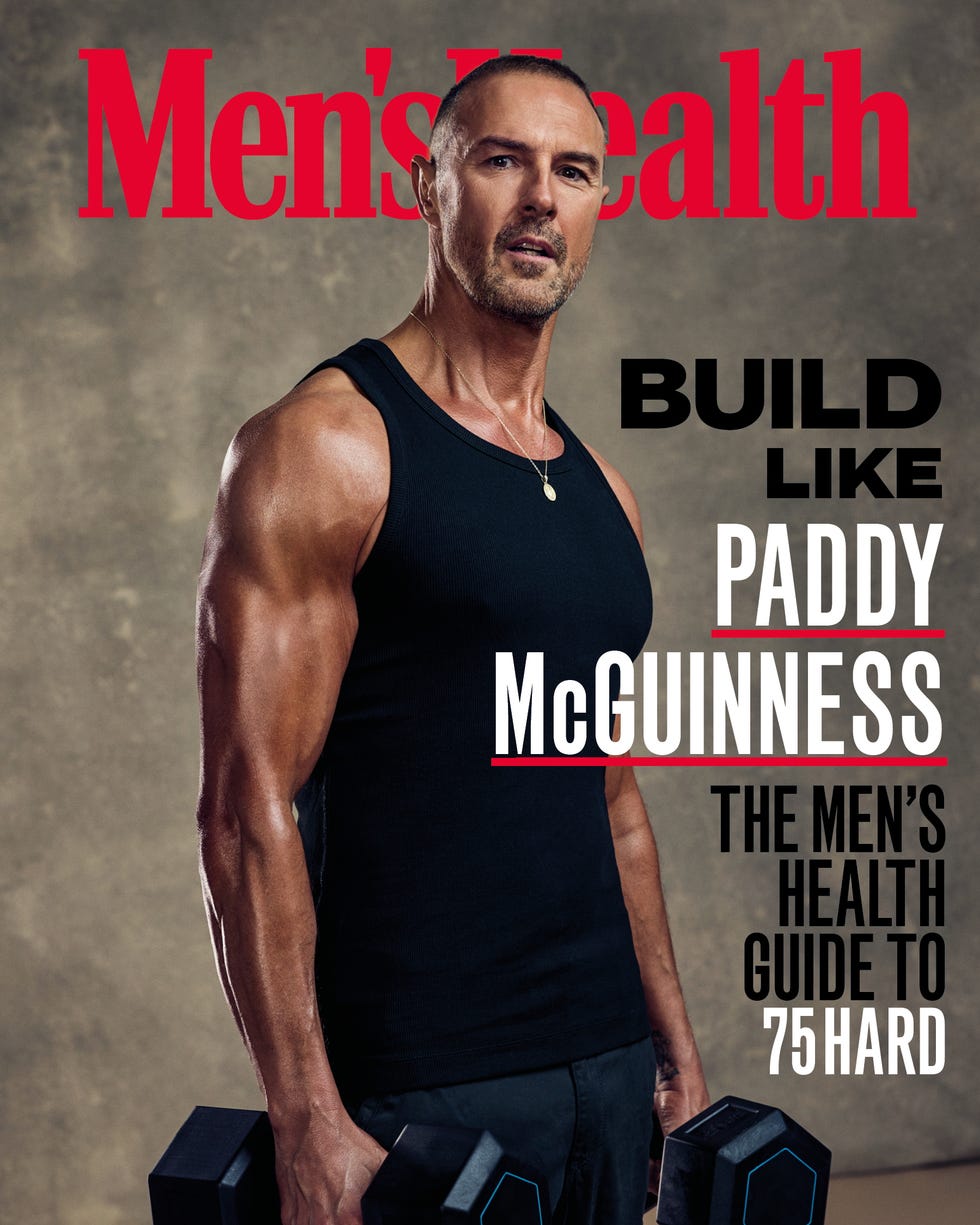
He takes out his phone and shows me two-and-a-half months’ worth of progress pictures. Flicking through, you can see as his belly disappears and muscles – a six-pack, harder chest and pronounced traps – start to appear, the same way characters in an old-school cartoon move subtly between frames.
He didn’t notice the changes as they were happening, but come day 75, the difference was striking. And not just physically. ‘I think one of the biggest things is the clarity you feel – you’re reading books every night, you’re in a routine, your diet’s good,’ he says.
After completion, McGuinness decided that he would show Instagram. The response was overwhelming. Everyone from comedian Tom Davis to strongman Luke Stoltman left messages of congratulations – ‘I’d leave my buzzer on for you mate,’ wrote Stoltman (confusing Take Me Out’s lights for buzzers). There were, of course, some naysayers. ‘A few people went, “Clearly you’ve AI’d the first picture.” Fucking hell, you’re supposed to AI the after picture, not the before! I thought, “Jesus, that’s how bad I looked!”’
The next step was to celebrate with a curry and a salted caramel milkshake. He was prepared to go back to living and eating as he had previously. But just like the Children In Need challenge, something had changed within him. ‘I ate it, but I didn’t get from it what I thought I was going to get. I just felt like shit,’ he says. ‘It actually changed something in my brain, habit-wise.’
 Bolton Born and Bred
A lot of how McGuinness thinks is a consequence of his childhood. He’s a child of a single-parent family and was raised by his mum, Patricia Leonard, who sadly passed away not long after her son’s breakout role as Patrick ‘Paddy’ O’Shea in Phoenix Nights and before he became a staple of British TV, fronting Take Me Out and Top Gear.
McGuinness was born in Bolton in 1973. The house he grew up in is about 40 minutes from where we’re sitting today. But the distance he’s travelled to get here is roughly from Earth to Saturn, he jokes. To give an example of what it was like growing up in Greater Manchester in the 1970s and 80s, he tells me a story about how when he was a kid, furniture would be passed between everyone on his street. If someone had a bed to give away, it would go to a neighbour who couldn’t afford to buy new. McGuinness was only too happy to get involved in the informal marketplace. He’d be out playing, see someone had put a wardrobe in the street, and bring it home for his mum. Eventually, Patricia had to stop his furniture hoarding when the four mattresses he had on top of his bed frame meant he was sleeping with his nose nearly touching the ceiling. McGuinness’ youthful escapades are told with a laugh and a smile, and as he says, ‘we were poor, but we were happy’. If anything, his latest ‘gaff’ caused him more stress, when he moved in and started to wonder what the neighbours would think about working-class Paddy from Bolton living next door.
‘I wouldn’t want to end up in that space where everyone thinks you’re alright and you’re not and then it’s too late’
Although he enjoyed his childhood, in recent years he’s sought therapy to understand the influence it has on his behaviour today. A few years ago, people around him started to notice he was becoming increasingly bad tempered – nothing major, just getting a little more irritable at work or more impatient than usual in the car. He reached out to the Priory and arranged a therapy session to talk. It didn’t go to plan. His first session was with a therapist who, it’s fair to say, he didn’t gel with. He saw him four or five times before quitting. Not one to be deterred, he tried again. This time the new therapist didn’t show up, and when they did eventually meet, the connection was even worse than with the first guy. He was done with therapy. Or so he thought. A senior doctor called him to apologise for the two failed attempts and asked him to give therapy another chance. ‘I was sat with him for five minutes and I knew straight away this bloke’s the one for me.’ For six months, McGuinness saw his new therapist fortnightly, with the frustrations he was feeling eventually being diagnosed as symptoms of clinical depression.
He hasn’t needed a session for a while now, but recently his experience of therapy has formed part of his stand-up comedy. He’s reluctant to share his routine because, to put it bluntly, it wouldn’t be that funny with just the two of us sat in his gym. I can see his point. What he does share is how that particular part of his set seems to really resonate with his audience, especially with women worried for their partners’ mental health.
What’s becomes clear when we discuss mental health is how thankful he is that his issues became so obvious to everyone around him that he was almost obliged to seek help. Others aren’t so lucky. When he was younger, he had a work colleague who took his own life. To McGuinness, this was a happy-go-lucky guy who exhibited no signs of mental ill health. More recently, McGuinness’ friend, former world champion boxer Ricky Hatton, also died by suicide, aged 46. From his vantage point, there were no clues about what was going to happen there either. ‘Knowing a few people who’ve done that,’ says McGuinness, ‘it makes me really think about my emotions more, because I wouldn’t want to end up in that space where everyone thinks you’re alright and you’re not and then it’s too late.’
Last week he had to drive to London. Prior to the work he’s done on himself this could, perhaps would, have been an opportunity for his depression to manifest, but this time McGuinness made the trip peacefully. ‘I remember getting out of the car thinking, “I’ve not called anyone a prick, not gone, where did you learn to drive?”, none of that. You forget what you used to be like, but it’s all because of that depression creeping in.’
Body Recomposition
His next trip to London is a few days after we speak in his gym. When McGuinness revealed his 75 Hard progress pictures to the world he wrote in the caption that he was on the lookout for his next challenge. What he didn’t know then, was that it would be in the form of a Men’s Health cover shoot.
McGuinness finished 75 Hard in December, with the intention that he’d be able to enjoy Christmas before easing into another challenge in the new year. Then this magazine called in early January and gave him 25 days to work off any Christmas excess and get himself into cover-star shape.
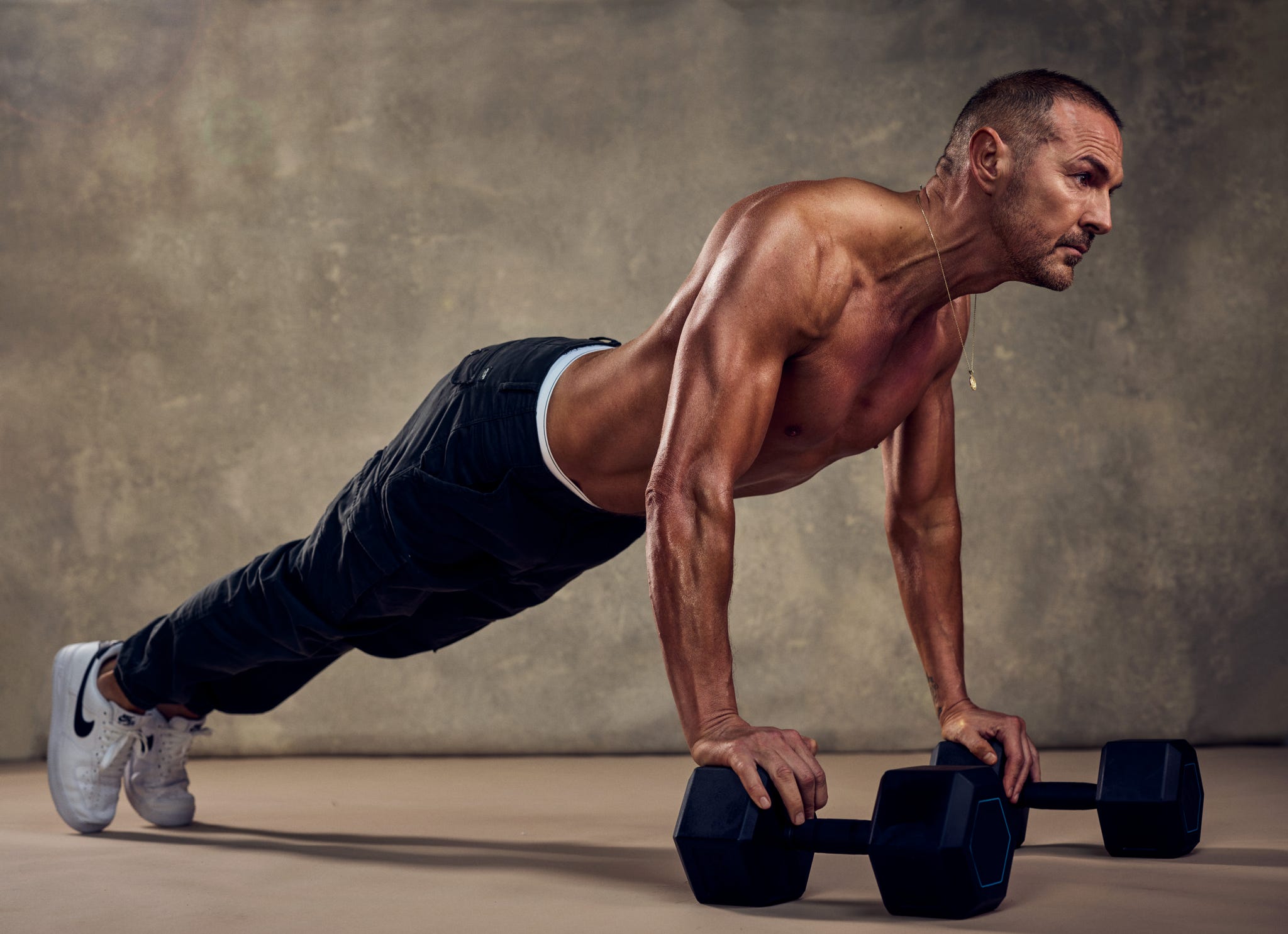
Because of the short time frame, he decided that this time around, he would need to call on the help of a personal trainer, so he spoke to his friend, former Men’s Health cover star Ben Shephard, who put him in touch with his PT, Steve Coleman. The pair connected over Zoom and got to work immediately. ‘The goal was all about body recomposition,’ says Coleman, ‘so reducing his body fat while maintaining and hopefully growing lean muscle in a short period of time.’ In practice, that meant training was focused on hypertrophy and muscle building, while his diet was more controlled than during 75 Hard. Full-body sessions were scheduled for six days a week, with his abs, chest, delts and lats hit at least three times a week indirectly, and once a week directly. The aforementioned steady-state walking was completed every morning to stimulate fat burning. He explains that the training felt easier than his 75 Hard, with weights scaled back and emphasis placed on spending time under tension, pairing low weights and high reps.
Where Coleman’s expertise really helped was in managing McGuinness’s diet. ‘I wouldn’t have known where to start and I think that’s where a lot of people fall down with training. No matter how willing you are and how many times you train, if you have the wrong food at the wrong time, it cocks you up,’ McGuinness says.
On training days, he typically ate around 2,250 calories, consuming about 200g of protein. On the day when no resistance training was scheduled, the amount of protein he consumed stayed roughly the same but calories decreased, with the drop achieved by limiting the amount of carbohydrates on his plate.
‘Just on a personal note, being 52 and a regular bloke, it’s nice to show other blokes it’s attainable’
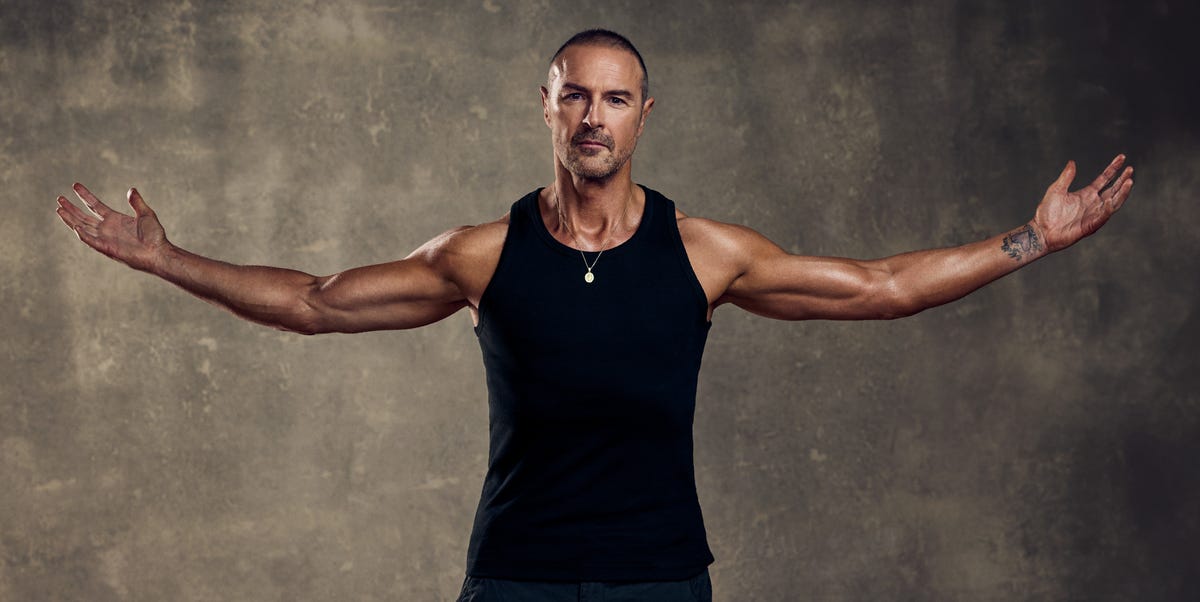
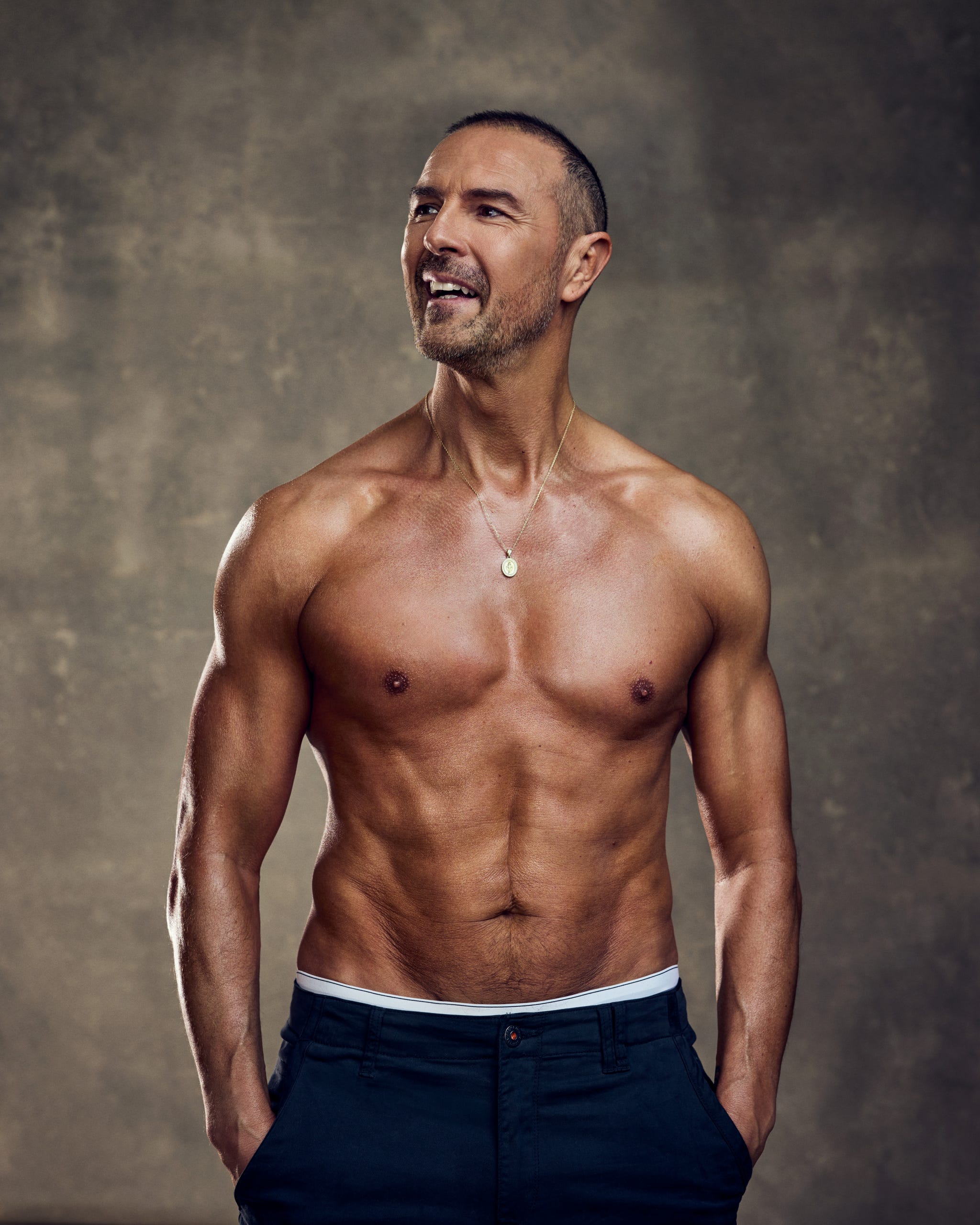
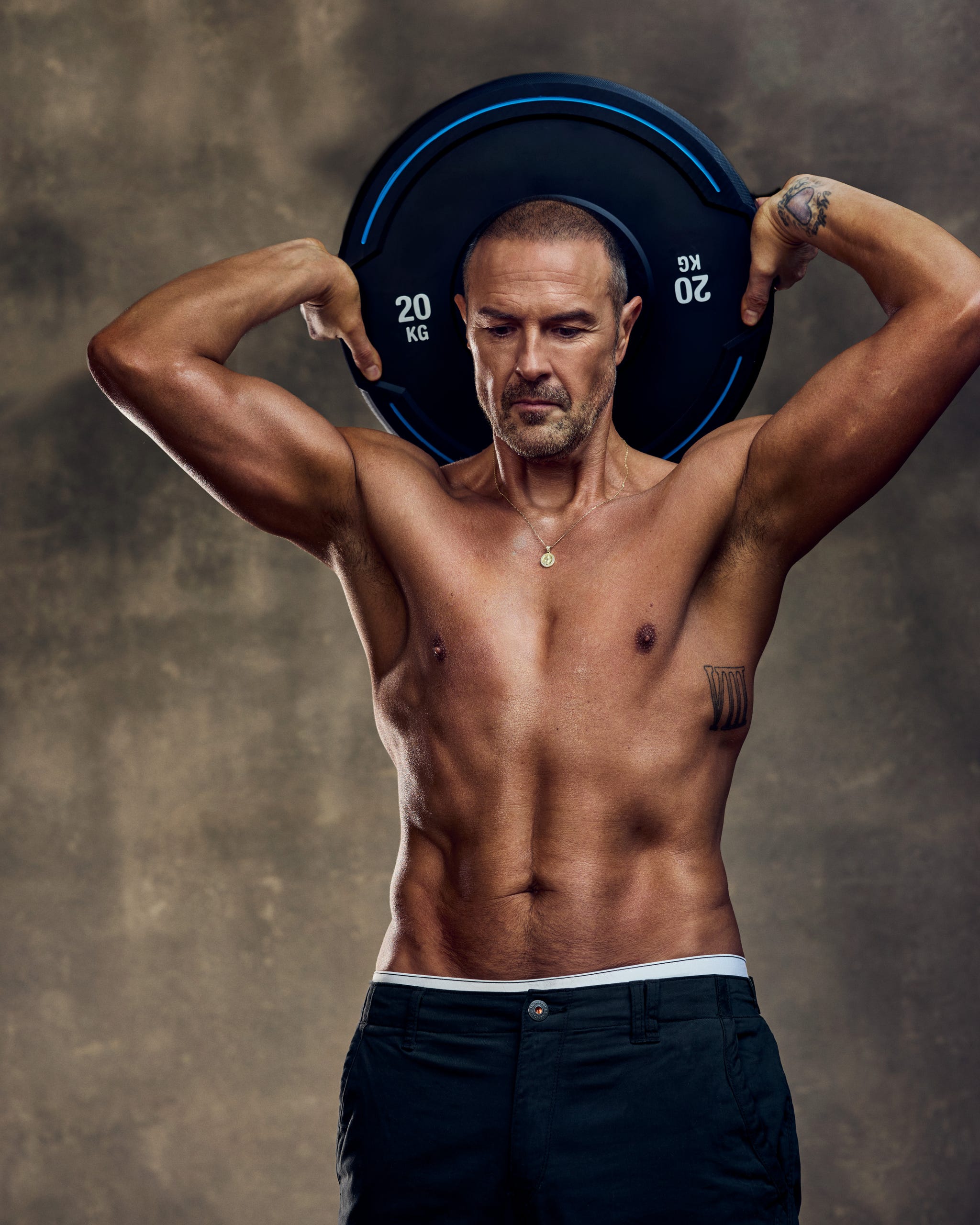
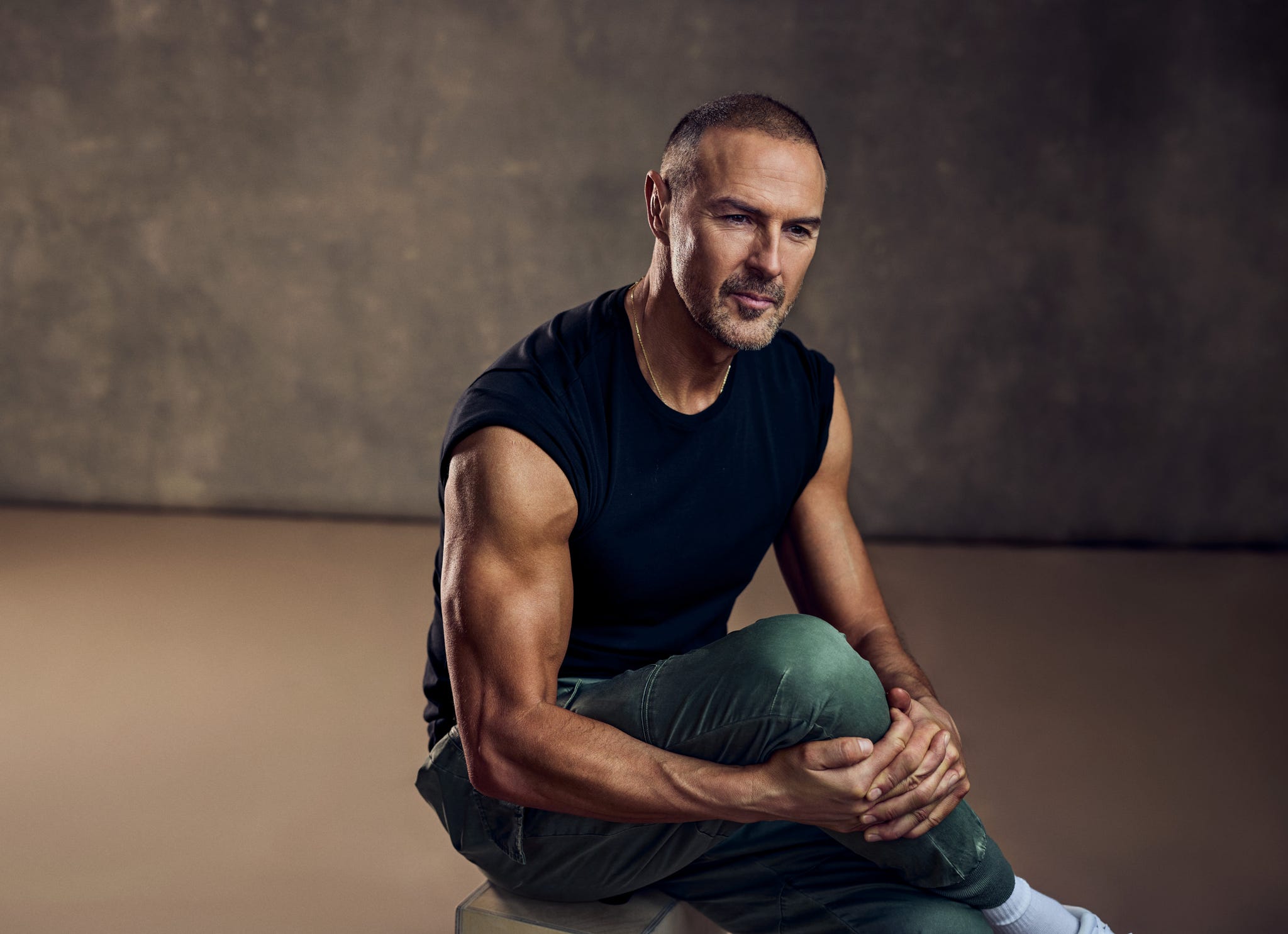
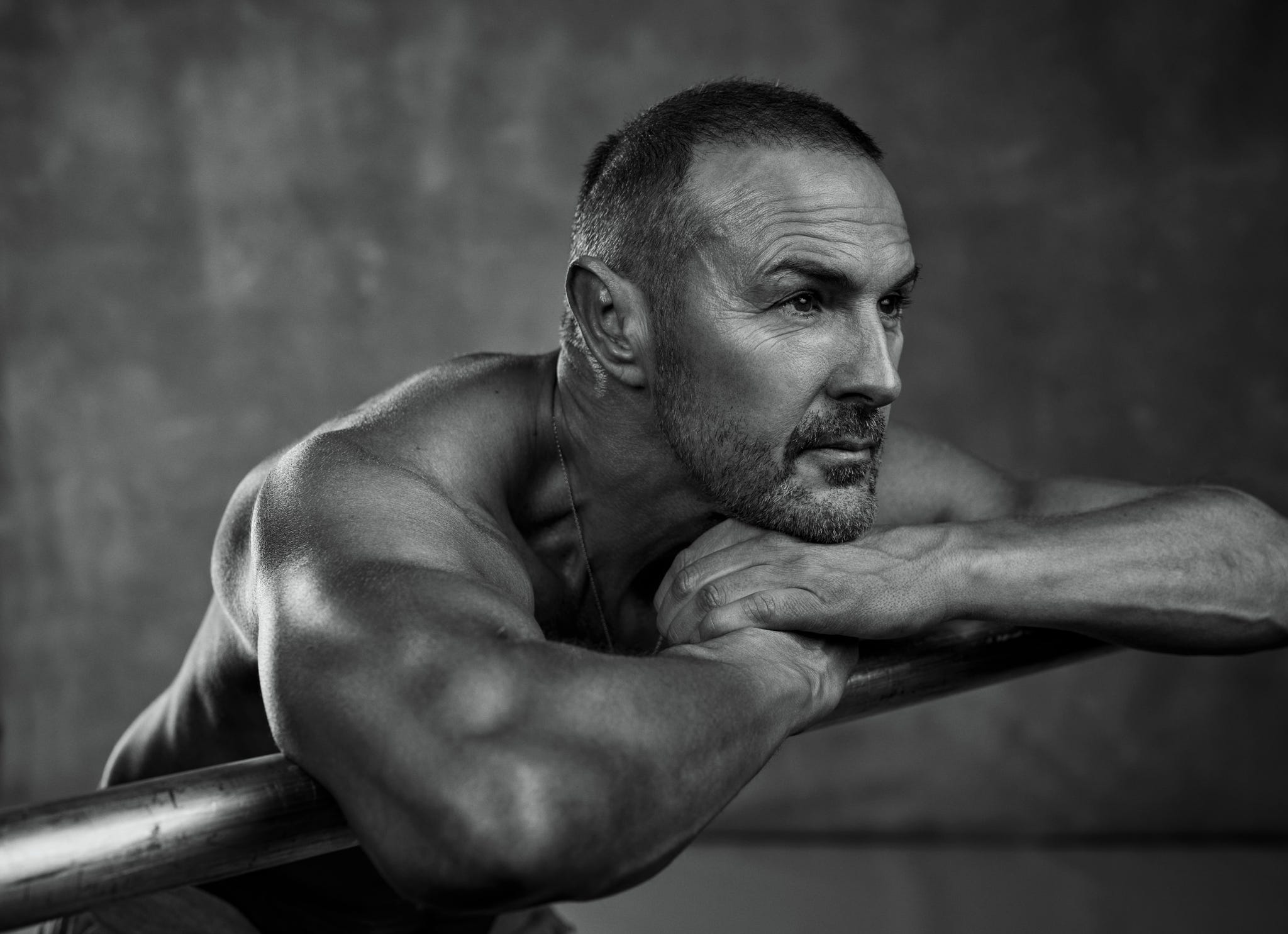
Just over three weeks after his prep began, McGuinness is in London for shoot day. Before long, his shirt comes off and he gets to show the room that, no, he isn’t suffering from a terminal illness, he’s just been working on carving six-pack abs, toned arms and traps that rise like the roof of a house. Eventually, the rest of the world and even his close friends will see it, too, explaining that, just as with 75 Hard, he’s kept his appearance on the cover a secret from them, too.
After the shoot, he admits that he was nervous about adding his name, and his physique, to the cover stars that have preceded him. ‘You look at Men’s Health over the years, and the people who’ve been on the front of it, and you go, “My God, they look like they’ve been carved out of stone.”’ But he’s proud, too. ‘Just on a personal note, being 52 and a regular bloke, it’s nice to show other blokes it’s attainable.’
The next challenge, he says, is to add more size. Coleman has already mapped out the path for doing it, adding compound moves, such as squats, into the training programme. If the way he approaches every other challenge is anything to go by, don’t be surprised if the next time you see him on your screen, he’s looking a lot bigger and stronger. Set goal, commit to goal, crush goal. It’s the way Paddy McGuinness works.
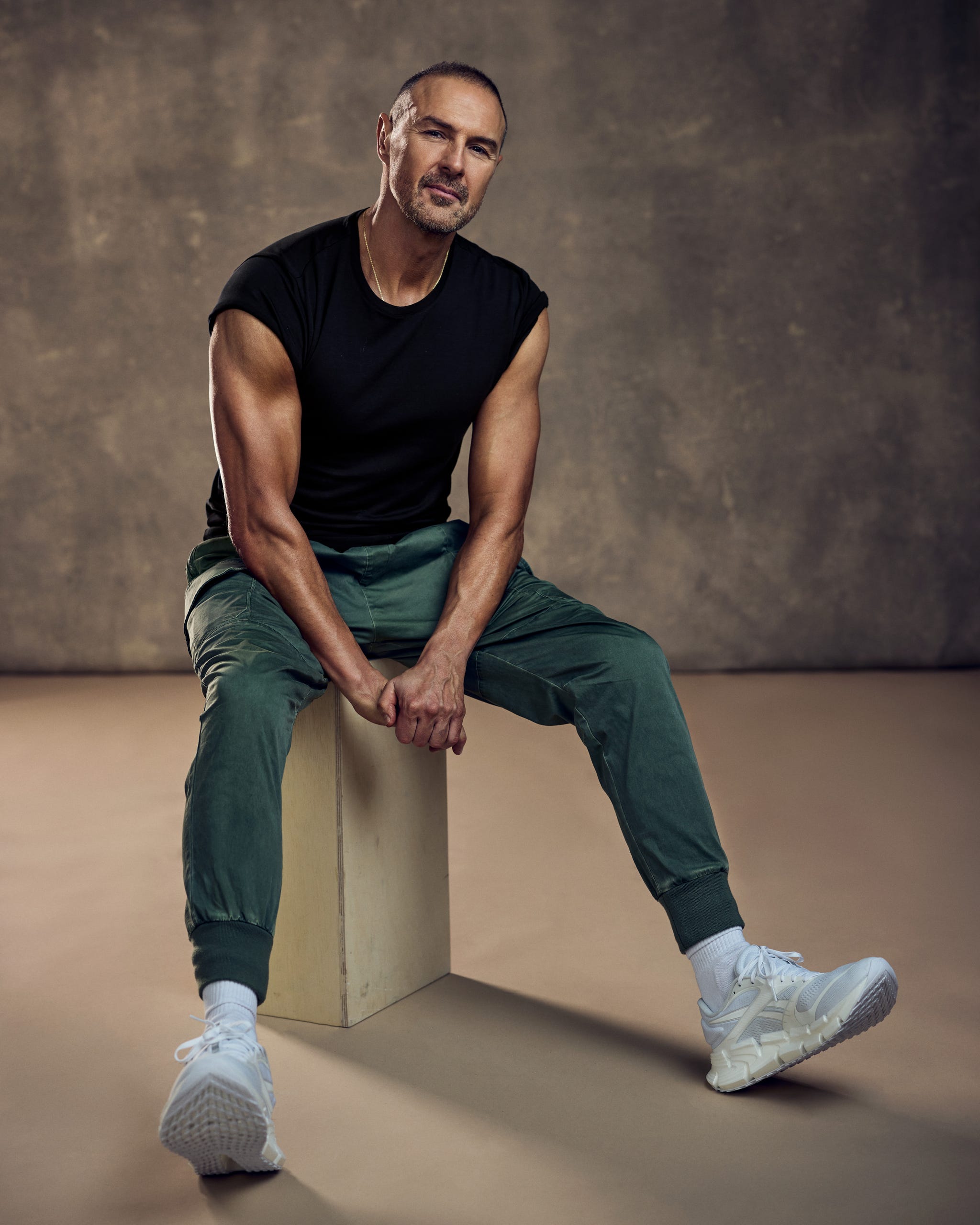
Photography: David Venni
Styling: Abena Ofei at Wizzo & Co
Grooming: Natasha de Cazaet at Creatives Agency using Tatcha
This interview features in the April 2026 issue of Men’s Health – out now. Subscribe to MH by hitting this link.