

Most nights used to start the same way. I would slide into bed and try to talk my legs into being quiet. They never listened. Restless legs have a mind of their own, and when you layer ADHD on top of that, bedtime can feel like a mental traffic jam.
I had already experimented with routines that helped me turn the volume down, such as sauna and cold plunge sessions, and avoiding looking at my phone for an hour before bed. They helped, but I still wanted to fall asleep faster.
Sleep hacking was everywhere in my social feeds.
anced ways. After another fidgety midnight, when I’d abandon the no-screen rule and grab my phone and go down a TikTok sleep cures rabbit hole, I decided to try a magnesium supplement and see if it could help my body settle.
Sleep culture has changed — and magnesium is still in the conversation
A few years ago, magnesium was pitched as a bedtime drink trend. Now it sits inside a broader conversation about nervous system balance, brain chatter, stress, and the difference between feeling tired and actually sleeping well.
There is also the practical piece. Magnesium is involved in hundreds of processes that run quietly in the background. If you are low, things can feel harder than they should.
Denise M. Millstine, M.D., an assistant professor of medicine and director of integrative medicine and health at Mayo Clinic in Arizona, explained in an article for Living Well, the Mayo Clinic’s digital magazine:
“Neurotransmitters can be excitatory or relaxing. Magnesium plays a role in helping maintain the right balance between the two types,” Millstine said in the article.
She also noted that magnesium plays a role in melatonin production. This hormone helps regulate the sleep-wake cycle.
For people with what she calls a “busy brain” (hello, ADHD!), magnesium may help shift the internal chemistry toward calm. That framing resonated with me. I do not need to be knocked out. I want the hum to be quiet enough so that sleep has a chance.
Why magnesium made sense to try
Another reason magnesium made sense to test is that many people are not getting enough from food alone.
Paul Kriegler, a Life Time Registered Dietitian, told me:
“Yes, many people stand to benefit from taking supplemental magnesium regularly. The best estimates suggest about 50% of people in the US fail to consume adequate magnesium from diet alone.”
He pointed to changes in the food supply over the past several decades, including soil depletion, processing, and a shift away from whole foods.
“Even when you do eat foods that contain magnesium, like nuts, seeds, legumes, and whole grains, compounds such as lectins, oxalates, and phytates can reduce absorption unless the foods are soaked, sprouted, or roasted,” Kriegler said.
On top of that are the daily habits many of us live with. Kriegler explained that caffeine overuse, poorly managed stress, excess sugar, frequent alcohol, and medications like indigestion drugs, antibiotics, oral contraceptives, and blood pressure meds can lower magnesium status. High-intensity exercise can also increase losses through sweat.
I was not looking for a magic fix. I wanted to see if I could lower the noise in my system with something simple.
What’s inside the formula I chose (and why it matters)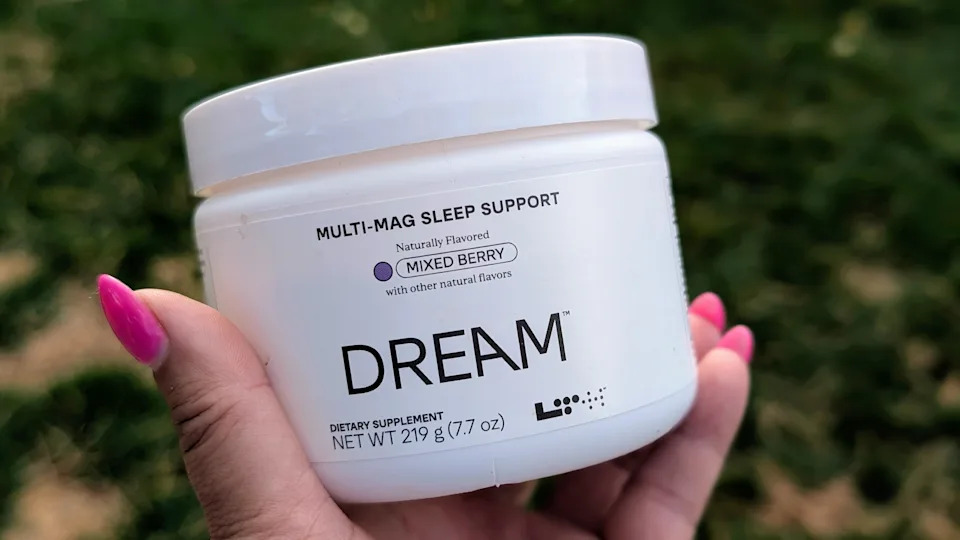
The powder I used, LTH Dream, is a blend that combines three forms of magnesium with a few other ingredients people reach for when they want a calmer evening.
The magnesium in my powder is a mix of bisglycinate, taurate, and Magtein magnesium L-threonate. Kriegler explained why that variety matters.
Magnesium taurate pairs magnesium with taurine to help calm the nervous system and support GABA activity. Magnesium L-threonate uniquely crosses the blood-brain barrier and has been shown in clinical studies to enhance deep and REM sleep while reducing nighttime awakenings. Magnesium bisglycinate is a gentle, chelated form paired with glycine to promote relaxation and reduce the time it takes to fall asleep.
The blend also includes several non-magnesium ingredients often used in evening routines. Ashwagandha appears here as Sensoril, a standardized, clinically researched adaptogen that can help lower cortisol.
L-theanine is a calming amino acid that encourages alpha brain wave activity and may help quiet mental chatter. Phosphatidylserine supports communication between brain cells and may help regulate the body’s stress response.
Two months in: the shifts I started noticing
I started with a small scoop of the LTH Dream powder, stirring it into a glass of water about an hour before bed — the same time I try to power down my phone for the night. It mixes easily and tastes more like a mild berry tea than a supplement, making it feel like part of a ritual rather than something clinical.
The first two weeks did not feel dramatic. Some nights, I felt it immediately and fell into a deep sleep. But the real benefits snuck in over time. I noticed that my legs were quieter. The sensation I think of as internal fizz was less insistent. I did not always drift off to sleep the second my head hit the pillow, but I settled more easily.
On the nights when work or worry would typically send me into a loop, I was able to let go more quickly. I still woke up some nights. The difference was that I drifted back instead of lying there negotiating with my thoughts for an hour.
By the end of the first month, the wins related to restless legs were the clearest part. They did not vanish, but they showed up less often and with less intensity. That alone made the routine worth keeping.
What happens if you take too much magnesium
Magnesium is powerful, and I learned quickly that more is not better.
I am sensitive to supplements, so I started with less than the label recommended. The one time I accidentally overshot, I felt queasy and oddly on edge, which is the opposite of restful. I went back to the smaller serving and paid closer attention.
If you are sensitive, starting low and building slowly may be a better approach. It also showed me I did not need to take it every single night. On calm nights, I sometimes skipped it. On restless ones, I leaned on it.
The science expanding beyond sleep
Magnesium conversations tend to focus on falling asleep. Still, there is growing interest in cognitive and mood effects, especially around magnesium L-threonate.
I am cautious about big claims, but I did notice cleaner mornings compared to melatonin—less fog and no synthetic crash.
There is also emerging research looking at the gut microbiome. A recent clinical trial discussed in science forums suggests supplementation may shift certain bacteria involved in vitamin D synthesis, potentially influencing mood or energy. The evidence is early, but it hints at why some people report benefits beyond sleep.
So, is magnesium worth keeping in a routine?
For me, yes — with realistic expectations.
It helped me fall asleep faster most nights. It took the edge off restless legs. It never made me feel groggy. It did not solve every problem. It made a real difference anyway.
There are people more at risk for magnesium deficiency, including women, older adults, people who drink alcohol regularly, and those who rely heavily on processed foods. Experts also say medications such as proton pump inhibitors and diuretics can impair magnesium absorption or increase magnesium loss. It is worth speaking with a clinician first if that applies to you.
I do not treat it like a nightly obligation. I treat it like a tool. On nights when I’m feeling particularly restless or need to fall asleep fast, I mix myself a glass. I think of it as an enhancement to other things that already work for me — sauna, cold plunge cycles, a low-inflammation diet, and no screens before bed.
Life Time provided me with samples of LTH Dream for this trial.
Follow my page for more travel and lifestyle stories — including wellness hacks, travel destination guides, and pet content.