
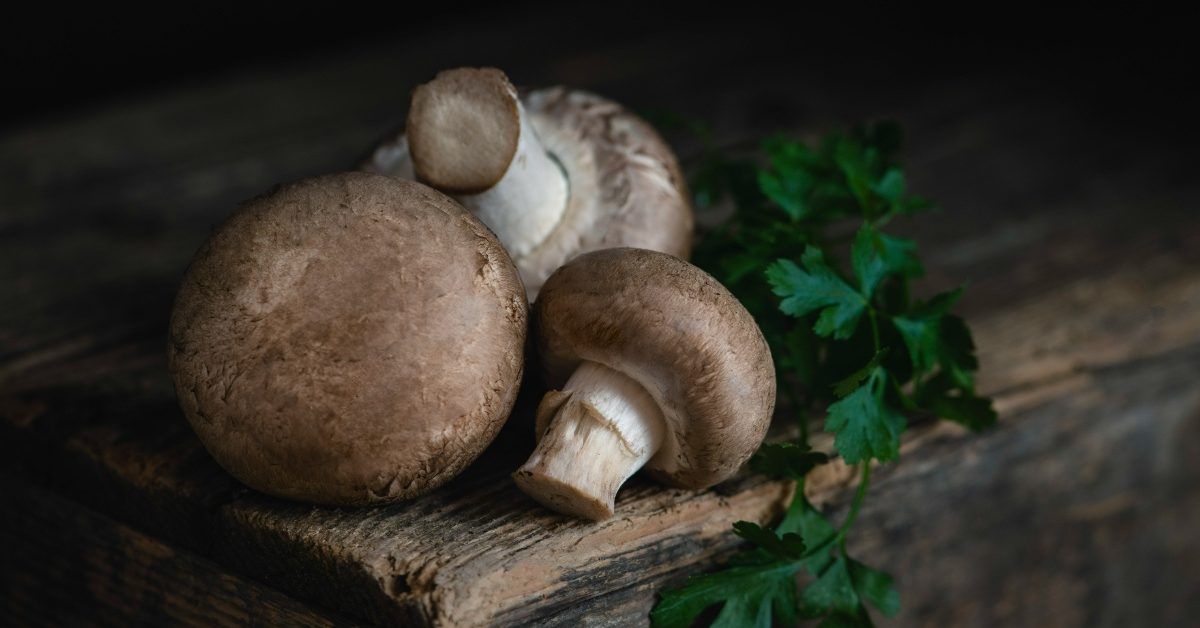
Portobello mushrooms are low in calories, fat-free, and a source of vitamins, minerals, and fiber. They also have potential antioxidant and anti-inflammatory effects.
The Agaricus bisporus mushroom is the most widely cultivated mushroom species worldwide. But did you know it’s sold as three different mushrooms?
The common white button mushroom, light brown cremini mushroom, and larger, darker brown portobello are all the same species, but they’re harvested at different stages of maturity.
Here’s what you need to know about portobello mushrooms, including their potential benefits and how to enjoy them.
Portobello (also called portabella) mushrooms are the mature form of Agaricus bisporus, so it’s not surprising that they’re quite a bit larger than button and cremini mushrooms, with flat brown caps averaging 4 to 6 inches across.
They’re mostly cultivated mushrooms, but may also be found in grasslands in North America and Europe. There are also poisonous lookalikes, so unless you’re highly trained in foraging, it’s best to stick to store-bought.
Like most mushrooms, portobellos are low in calories but rich in nutrients. One cup (121 grams) of sliced grilled portobello mushrooms provides:
Calories: 35Carbs: 5 grams (g)Fiber: 3 gProtein: 4 gFat: 0 gSelenium: 48% of the Daily Value (DV)Phosphorus: 23% of the DVPotassium: 16% of the DV for males, 20% for femalesCholine: 7% of the DVFolate: 6% of the DVMagnesium: 4% of the DVVitamin D: 2% of the DV
Nearly half of the recommended DV of selenium is in just 1 cup of sliced and grilled portobello mushrooms. Selenium is an important antioxidant mineral for supporting your metabolism, immune system, and thyroid function.
Portobellos also contain a good amount of phosphorus, which helps build bones and produce energy, and potassium, which may help reduce blood pressure, prevent osteoporosis, and protect against stroke.
They’re low in calories, make a satisfying meat alternative in terms of texture and satiety, and can be part of an anti-inflammatory diet. Studies have also found high antioxidant activity in portobellos compared to other mushrooms.
Vitamin D
Many mushrooms produced for commercial sales are grown in the dark and don’t have much vitamin D. If they’re grown under a UV lamp or in the sunlight, they’ll have much more vitamin D.
For example, 1 cup of sliced and grilled portobello mushrooms that have been exposed to UV light contains a whopping 79% of the DV of vitamin D, compared to just 2% for portobello mushrooms grown in the dark.
In stores, shop for portobellos with terms like “UV-treated” or “Rich in vitamin D” on their packaging.
Brain food?
A 2022 study in mice examined the protective effects against brain oxidative stress and found that diets supplemented with either white button or portobello mushrooms showed great potential in reducing oxidative stress markers in the brain.
Compared to button and cremini mushrooms, portobello mushrooms have a stronger, earthier, and umami flavor.
Because of their density, size, and savory flavor, they’re often used in vegetarian or vegan dishes such as burgers, lasagnas, and stews.
They’re great grilled, roasted, or stuffed, and can be used as burger buns if you’re on a keto diet.
Portobello flour (powder) can be used to thicken soups and gravies.
To store portobello mushrooms, place them in a paper bag with a clean, dry paper towel to absorb any moisture, then refrigerate.
Only clean them right before cooking and use fresh portobellos within 1 week. If they start to get slimy or smell off, toss them.
Portobello mushrooms are delicious, nutritious, and work well in meatless recipes. They’re the mature Agaricus bisporus mushrooms, of which the immature stages are the well-known white button mushrooms and cremini mushrooms.
They’re low in calories and high in minerals and nutrients, such as selenium, phosphorus, potassium, and vitamin D (provided they’re exposed to UV light during growth).
You can add them to almost any dish for a savory, woody, umami flavor.