
Opinion
 Sarah BerryLifestyle Health Editor
January 12, 2026 — 7:30pm
January 12, 2026 — 7:30pm
Save
You have reached your maximum number of saved items.
Remove items from your saved list to add more.
Save this article for later
Add articles to your saved list and come back to them anytime.
Got it
AAA
The message of the new American dietary guidelines is simple: eat real food.
Revolutionary, if you forget Michael Pollan’s famed line from 2007 to “Eat food. Not too much. Mostly plants”. Or Michelle Obama’s invocation in 2009 to swap oversweetened, oversalted foods for fresh, nutritious foods.
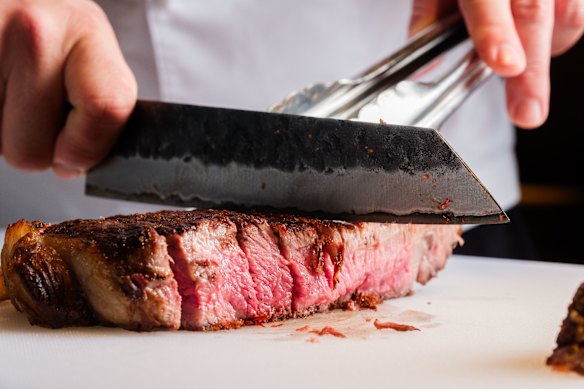 Steak is on the menu for RFK’s new Food Pyramid.Oscar Colman
What about the current Australian guidelines or the previous dietary guidelines for Americans?
“Dietary guidelines in Australia and internationally have always recommended that people consume whole foods – this is not new,” says Associate Professor Evangeline Mantzioris, who is on the working committee for the 2026 Australian guidelines to be released later this year.
So why, if the message is so simple (and unoriginal), have the guidelines caused such a stir?
Related Article
They contain a “strange mixture” of good and bad advice, says public health nutritionist Rosemary Stanton. We’ll get into that. But, not before mentioning the weird press release from Robert F. Kennedy’s (aka RFK’s) Health and Human Services announcing the guidelines.
It states that “too many Americans are sick and don’t know why. That is because their government has been unwilling to tell them the truth.”
Conspiratorial tone aside, it is true that too many people are sick and overweight from the foods they eat. Roughly 74 per cent of Americans and about 66 per cent of Australians are overweight or obese. In Australia alone the economic cost of this is estimated to reach about $62 billion by 2030.
But, to suggest these rates have anything to do with the dietary guidelines is odd.
Less than 10 per cent of Americans follow their guidelines and, in Australia, less than 7 per cent follow ours.
Then there’s this statement from RFK’s press release: “For decades, the Dietary Guidelines favoured corporate interests over common sense, science-driven advice to improve the health of Americans. That ends today.”
Except it doesn’t really end today. They have just swapped the influence of the processed foods industry for the influence of the meat and dairy industries.
Two-thirds of the reviewers had financial or other ties to the beef, dairy or pork industries. Surprise, surprise, the New Pyramid (as they’ve called it) prioritises meat, dairy and “healthy” fats such as beef tallow and butter.
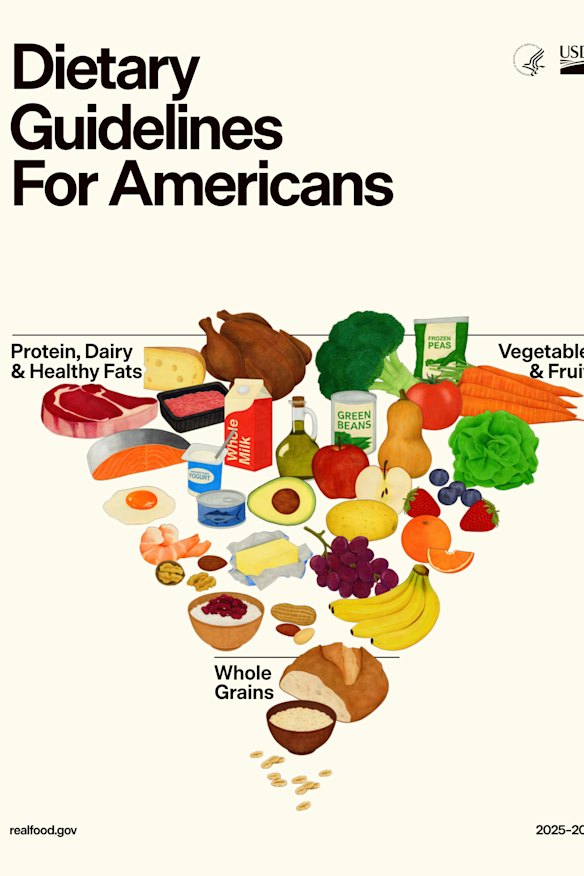 The New Pyramid.NYT
And in “a win for big alcohol”, the guidelines remove the limits on drinking alcohol and the warning that it increases the risk of cancer.
But credit where credit is due.
Encouraging whole foods is always positive, as is the advice to avoid “highly processed packaged, prepared, ready-to-eat, or other foods that are salty or sweet” and “avoid sugar-sweetened beverages, such as soda, fruit drinks, and energy drinks”.
Another positive is the “excellent” and easy to understand information on infants and early childhood, says Stanton.
That includes spelling out the need to cut added sugar – and explaining that doesn’t include the naturally occurring sugar in fruit and milk. It also emphasises the need to introduce allergens such as peanuts, wheat, eggs and shellfish early in children’s diets to reduce the risk of developing allergies.
Suggesting that children up to the age of 10 avoid all added sugar, however, is a bit of a reality stretch.
But the real controversy lies in the New Pyramid.
In a news briefing last week, RFK said the food pyramid (which hasn’t been used in the US since 2011 or in Australia since 2013) “was upside down before, and we just righted it”.
The New Pyramid puts protein, in the form of meat and full-fat dairy, at the top alongside fruit, vegetables and “healthy” fats including butter and beef tallow. At the bottom are fibre-rich whole grains, which are a critical component of a healthy microbiome.
Pollan pointed out in an interview with The San Francisco Standard: “One of the most important developments in nutrition science has been the recognition of the microbiome … and it needs fibre.”
Related Article
He added that the New Pyramid was a throwback to the way people ate in the ’50s and ’60s: “We ate lots of meat and full-fat milk and had lots of heart disease.”
This is without even considering the vast impacts on the environment of consuming more meat.
As for eating more protein, our body uses protein to repair itself from the micro tears caused during resistance training, but less than 30 per cent of Americans and Australians do the recommended resistance training twice a week. And most Australians and Americans already eat enough protein.
We don’t need more.
“The body can’t store protein, so once actual needs are met, any extra protein is used for energy or stored as fat,” Stanton said.
“The new food pyramid is simply bananas,” Michael Greger, a physician and founder of NutritionFacts.org, told The New York Times. “If nutrition guidelines were medicine, this would be malpractice.”
Malpractice, maybe. At the very least, all RFK’s back-patting over the new guidelines is all sizzle and no steak.
Sarah Berry is a lifestyle and health writer at The Sydney Morning Herald and The Age.
Make the most of your health, relationships, fitness and nutrition with our Live Well newsletter. Get it in your inbox every Monday.
Save
You have reached your maximum number of saved items.
Remove items from your saved list to add more.
 Sarah Berry is a lifestyle and health writer at The Sydney Morning Herald and The Age.Connect via Twitter or email.From our partners