
Ultra-processed foods have been linked to a range of poor health outcomes, from diabetes to obesity and heart disease – so how can we reduce these risks?
“I like to believe there’s always a healthier choice – it’s about knowing how to find the healthier choice,” Biddick says.
Planning ahead is key for this, she adds; at the start of the week, think about how busy you’re going to be, what you want to eat, and where you can double up on cooking to save time and energy.
Here’s how to reduce your processed food intake throughout the day, and what to reach for instead.
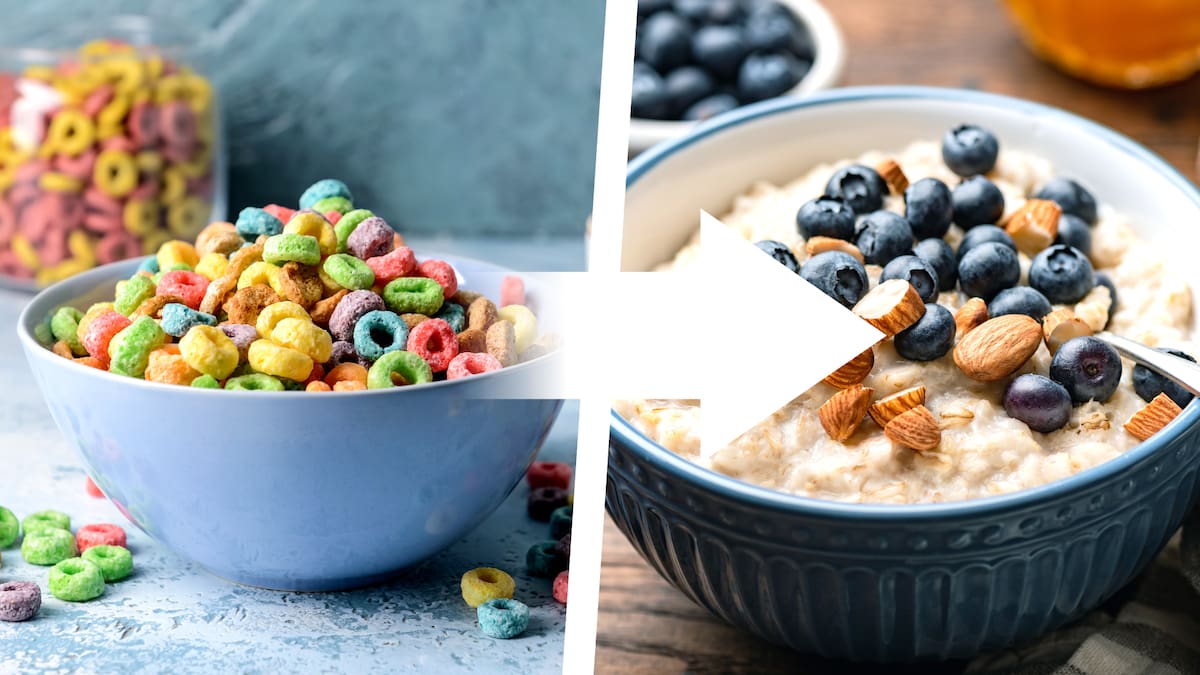
Swap sugary cereals for homemade porridge or overnight oats. Photos / 123rf
Breakfast
“[It’s] the most important meal of the day, but it often gets skipped,” Biddick says.
“Then by morning tea we’re hungry and we’re going to go grab a scone from the cafe. So if we can make time to eat something, it’s going to make a big difference and set us up for the day.”
Some supermarket cereals appear healthy, but contain a lot of fat and sugar, she points out.
“Swap to a nice hot bowl of porridge made with wholegrain oats … I have my oat mix with chia seeds and quinoa flakes.”
If you do eat sugary cereals, Biddick suggests adding yoghurt and fruit for balance.
“That’s going to slow down how the sugar hits your system and prevent you from having a spike.”
If you have toast for breakfast, choose a grainy bread and top it with something nourishing like a nut butter instead of jam, or a couple of eggs, to keep you full.
Swap processed meats like ham and salami for proteins like eggs, chicken or tuna. Photos / 123rf
Lunch
Processed meats like ham and salami are a popular choice at lunchtime.
However, as Biddick points out, “We know they’re not great for our health; they do have some carcinogenic properties if we eat heaps of them.
“Some good proteins we could look at swapping to would be lean chicken, canned tuna.”
Eggs or cold cooked red meat are better protein options as well.
If and when you do eat processed meat, make sure you pair it with wholegrain bread, vegetables or salad, and healthy fats such as hummus, she says.
“[That] can help us eliminate some of the salt, the sugar, the fats in there.”
If you’re having takeaways for dinner, opt for something with added vegetables. Photos / 123rf
Dinner
Many of us will find it easier to eat less processed foods at dinnertime – unless it’s takeaway night.
“In a dream world we’d all have our prep done and we’d have some extra food in the freezer – that’s a lifesaver – but sometimes we don’t,” Biddick says.
She suggests, if you do order a takeaway, choose an option that has a vegetable side.
“Can you go with a chow chicken chow mein with veggies versus sweet and sour pork, which doesn’t really have any veggies? Could you have a souvlaki over a hamburger, swap meat for falafel, salad, hummus, and Greek yoghurt sauce?”
Another option is to add a healthier side to your fast food, such as a salad alongside your Friday night fish and chips.
Instead of icecream, try yoghurt with fruit for a sweet treat. Photos / 123rf
Snacks, drinks and desserts
The afternoon or evening “snack attack” comes for us all, Biddick says – especially when we haven’t eaten properly earlier in the day.
Instead of a bag of chips, she suggests roast chickpeas or unsalted roasted nuts as a better alternative.
“Make some veggie sticks and have them with some hummus, or cheese and crackers – you’re getting some protein at the same time.”
Sweet treats aren’t out completely – you just need to think about your choices.
“If I was having ice cream, maybe I could have it with some fruit … or a healthy banana split – a half or a whole banana, Greek yoghurt, a sprinkle of dark chocolate chips and some different nuts and seeds.”
Another way to reduce your intake of ultra-processed foods is to swap out sugary drinks such as fizz and juice for water, herbal tea or reduced-sugar cordial.
It’s about “doing what you can”, Biddick adds.
“The key is not to beat yourself up about it. [UPFs] are in our food environment, we are going to eat them … it’s not about one food, it’s about where we can be making the best choice.
“It can feel overwhelming, but it’s those small changes in those foods we have every day that can make a massive impact on our overall health.”
Bethany Reitsma is a lifestyle writer who has been with the NZ Herald since 2019. She specialises in all things health and wellbeing and is passionate about telling Kiwis’ real-life stories.