

Daily Mail journalists select and curate the products that feature on our site. If you make a purchase via links on this page we will earn commission – learn more
Vibration plates feel like a relic of Nineties daytime TV. If you’re of a certain age, you might remember infomercials promising that standing on a gently shaking platform could tone your body while you did… well, nothing.
Fast-forward a few decades and they’re back – this time thanks to TikTok.
Scroll through the platform and you’ll find creators standing on humming platforms while claiming benefits ranging from improved circulation and lymphatic drainage to muscle activation and better digestion. Some even promise weight loss.
Naturally, I was sceptical. But I was also curious.
Not because I wanted to lose weight – that was never the goal – but because of something far less glamorous: water retention.
Like many women, I struggle with swelling in my lower legs and ankles, particularly during the summer months. Socks leave marks, straps dig into skin and by the end of a warm day my ankles can look noticeably puffier. So when I started seeing claims that vibration plates could help stimulate circulation and support lymphatic drainage, I wondered whether there might be something in it.
I’m already fairly active. I work out at least three times a week, usually mixing spin classes, reformer Pilates and strength training. I try to get my daily steps in too – although that can be difficult when most of my workday is spent sitting at a desk writing articles like this one.
My diet is varied (I’m currently mildly obsessed with hitting the recommended 30g of fibre a day), I drink about three litres of water daily and I rarely drink alcohol beyond the occasional glass of wine.
Yet despite all that, I still deal with bloating and digestion issues. So when vibration plates started popping up on my TikTok feed, I decided to test one myself.

Can standing on a vibration plate for 10 minutes a day really make a difference? asks Charlotte Vossen
The plate that took over my bedroom
After a bit of research, I landed on the Ultra Slim Vibration Plate from Bluefin Fitness, which looked compact enough to tuck under my bed. That assumption lasted until the box arrived.
At 15.2kg, the machine is heavier than expected and significantly larger than the word ‘slim’ suggests. After one failed attempt to store it under the bed, it now lives permanently in the corner of my bedroom.
The plate comes with resistance bands and cords intended to turn it into a workout platform – exercises like squats, lunges and upper-body work are all possible. Those went straight back into the box.
My experiment was simpler: stand on the plate for ten minutes every morning and see what happened.
The machine has 180 intensity levels and five pre-set programmes, all controlled by a small remote. Each programme lasts ten minutes but uses a different vibration pattern:
P1: Low intensity with gentle waves of vibrationP2: Low-to-moderate intensity alternating between very low and high speedsP3: Moderate intensity with frequent rapid burstsP4: High intensity with two pyramid-style peaksP5: Ultra-high intensity gradually ramping to full power
The idea is simple: the faster the plate vibrates, the more rapidly your muscles contract in response.
Month one: curiosity meets scepticism
For the first two weeks I used the gentlest programme (P1). Every morning, I stepped on to the plate for ten minutes while brushing my teeth, checking emails or scrolling through TikTok.
The vibration was mild – more of a subtle hum than a shake – and within a few minutes my legs would feel warm and slightly tingly. Then I moved up to programme two.
This one alternates between calm vibrations and sudden bursts of speed, which initially caught me off guard. But overall, it still felt relatively gentle.
By the end of the first month I had been standing on the plate every day and, if I’m honest, I was starting to doubt the whole thing. I wasn’t noticing dramatic changes. No visible muscle tone. No sudden transformation. But by this point I had committed to the experiment, so I kept going.
Month two: things start to shake up
Programme three was where things changed. Unlike the earlier settings, this one involves rapid jumps between moderate and very high speeds. For the first time I actually had to engage my core slightly to stay balanced. Scrolling on TikTok while standing on the plate suddenly became much harder.
Two weeks later I moved to programme four – the one that looks like two pyramids on the instruction chart. The vibration gradually builds to a peak, eases off and then climbs again. At the most intense moments, the shaking is surprisingly powerful. My glasses start sliding down my nose and I have to keep pushing them back up.
It’s also the first setting where I could feel the vibration travelling through my entire body – not just my legs but my core, arms and even my cheeks.
Finally, after nearly three months of daily use, I reached programme five. It starts strong and ramps up continuously until it hits maximum intensity. Standing on it feels a little like summiting a mountain – not exactly exhausting, but undeniably dramatic.
I’m now nearly two weeks into that final setting and already considering my next move: adding a ten-minute evening session or increasing the duration to 15 minutes. Though I suspect 20 minutes would be my limit.
So what is actually happening?
The premise behind vibration plates is straightforward. The platform vibrates roughly six to 12 times per second, creating small but rapid movements that cause your muscles to contract automatically in order to stabilise your body.
Personal trainer Michael Baah (@michaelbaah_) explains that this reaction is essentially your nervous system responding to instability. ‘When you stand on a vibration plate, your muscles contract automatically – you’re not even thinking about it,’ he says. ‘Your body is just responding to the vibration.’
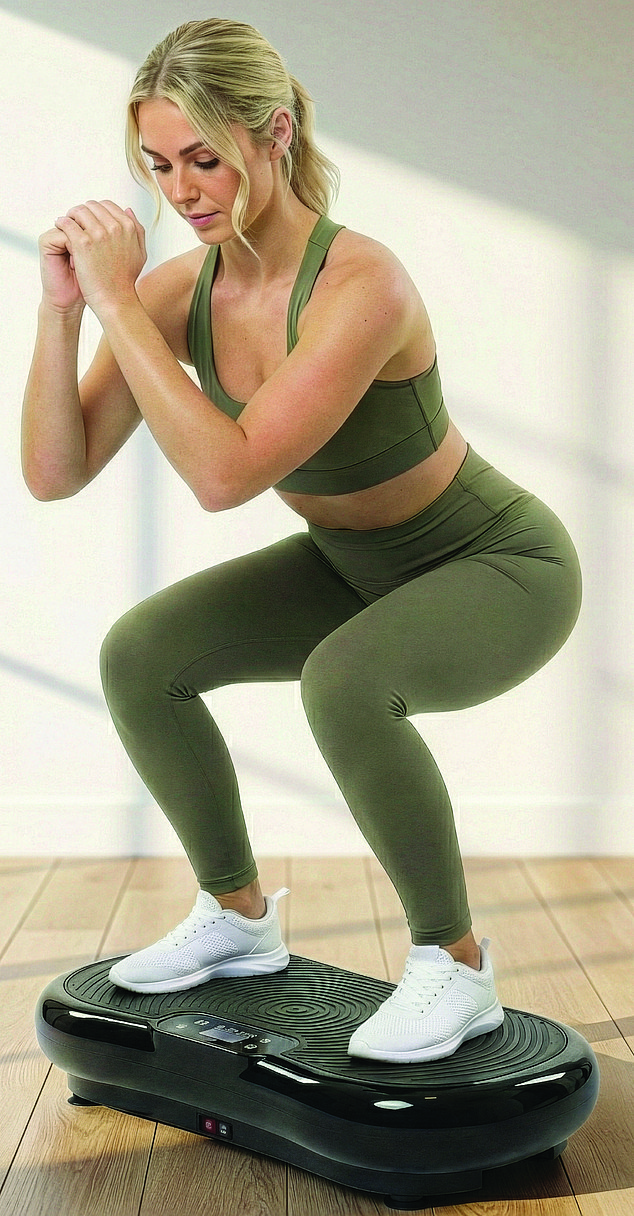
‘You’ll often feel your legs heating up or tingling,’ explains personal trainer Michael Baah
That constant contraction can increase circulation temporarily and create the warming sensation many users notice. ‘You’ll often feel your legs heating up or tingling,’ Baah explains. ‘That’s because blood flow is increasing.’
However, he’s quick to point out that the mechanism isn’t magical. ‘Walking, squatting or even light strength work also increases circulation – and often more effectively.’
What the science (and trainers) say
Despite the hype online, vibration plates are not a shortcut to weight loss. ‘There’s no secret detox,’ says Baah. ‘Your liver and kidneys already do that job.’
And while the plates can stimulate blood flow and muscle activation, the effects are typically short-term. ‘The feelings are real – increased blood flow, muscles waking up, the nervous system calming down – but they’re temporary,’ he says.
Think of it more like a recovery tool rather than a workout replacement. Baah compares the sensation to using a massage gun – except the vibration plate affects a much larger area of the body. ‘With a massage gun you’re targeting one muscle. On a vibration plate your whole body is being stimulated at once.’
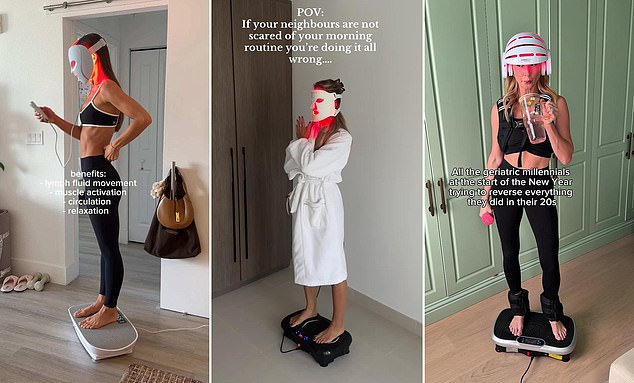
Think of a vibration plate more like a recovery tool rather than a workout replacement
That’s why many trainers use them before or after workouts to help loosen muscles and boost circulation. They can also provide mild balance training because the body has to constantly stabilise itself. But again, the effects vary depending on the person.
‘Older adults, people who are less active or those coming back from injury will usually notice the biggest benefits,’ Baah says. For active people, the difference may be subtler.
‘It’s best to think of movement and training as your main meal – and the vibration plate as a side dish,’ he adds.
The benefits I actually noticed
So after nearly three months of daily use, what changed? First, as expected, I didn’t lose any weight. But that wasn’t the aim.
What I did notice was a clear stimulation of circulation in my legs. Whenever I step off the plate, they feel warm and lightly buzzing.
Whether that translates to improved lymphatic drainage is harder to prove, but the sensation certainly feels like fluid and blood are moving. I’m particularly curious to see how this plays out in summer when my ankles typically swell more.
Another noticeable effect is core engagement and balance. At the higher settings you have to stabilise your body – especially if you’re trying to stay upright without holding on to anything.
However, the most surprising benefit has been digestion. More often than not, using the vibration plate in the morning sends me straight to the bathroom afterwards.
It seems the vibration gently massages the digestive system – similar to why a short walk after meals can stimulate bowel movements. Not exactly glamorous, but undeniably effective.
The verdict
Vibration plates are not a miracle machine. They won’t replace workouts, they won’t magically melt fat and they won’t detox your body. But that doesn’t mean they’re pointless.
Used as a small daily ritual – ten minutes in the morning while the kettle boils – they can provide a noticeable boost in circulation, muscle stimulation and post-workout recovery.
For people who are already active, they’re best viewed as a supplement rather than a solution. As Baah puts it: ‘Training and movement are your main plate. A vibration plate is just something on the side that can assist.’
For me, the biggest benefit has been consistency. It’s easy, quick and oddly satisfying. And if nothing else, my morning routine now comes with a built-in shake.