
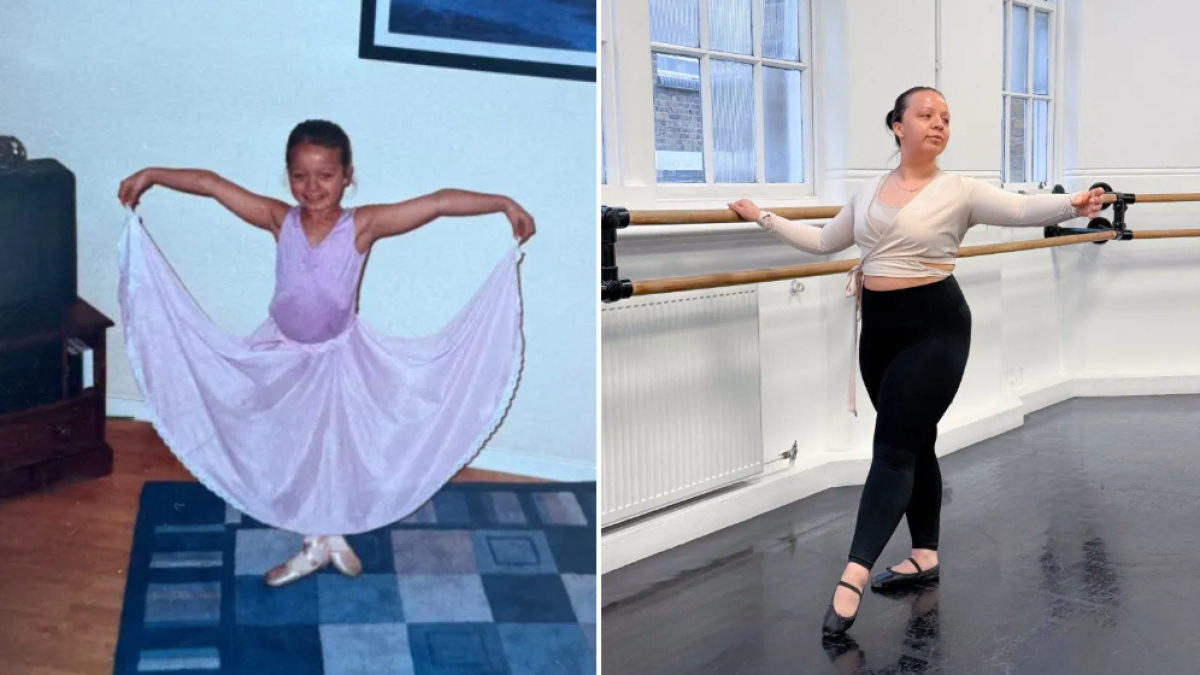
On a Wednesday evening in early spring, my work bag was filled with the usual staples: my paper diary, as I still refuse to make my plans digital, a book (Madeleine Gray’s debut novel Green Dot), a packet of tissues for hay fever season. But between my lip gloss and anti-bac, something unusual lurked – an item that had not seen the world outside of a storage box for longer than a few hours in around 16 years: my ballet shoes. Because I was heading back to dance school at 32.
From the ages of three to 16, I spent every Saturday morning in a leotard with my feet in turnout, being guided through ballet exercises by a harsh but fair taskmaster. It forms some of the happiest chapters of my childhood, and the times I felt most beautiful and carefree. I may have had acne and braces and struggled to get a first kiss, but when I was pirouetting, I didn’t care.
Then, as I studied for A levels, moved away for university and joined the world of employment, it moved lower down my list of priorities, and I stopped completely.
In the decade that followed, something in my brain had forbidden me from throwing away the ballet shoes, despite the many home moves and clear-outs, because I harboured a dream of taking it back up again.
It has featured in many New Year vision boards, but perhaps subconsciously, I never fulfilled the goal because I didn’t see obvious benefits. I’m never going to earn money from it. A HIIT class will likely burn more calories in the same amount of time. I won’t be nurturing my relationships with family, friends or a romantic partner while in class.
However, psychologist Dr Candice O’Neil points out that there is plenty to be gained. “It can help you reconnect with a childlike version of yourself,” she begins. “It can remind you who you are outside of goals like doing well at work or saving for a house, while still giving a sense of achievement.
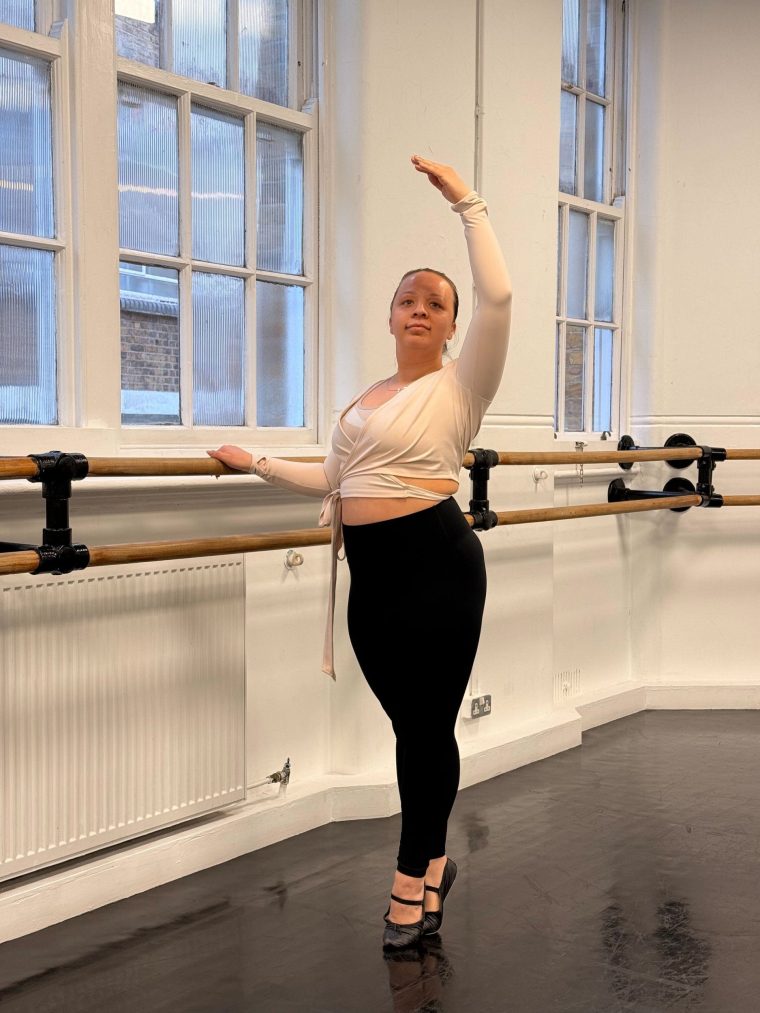 Josie is rediscovering something she loves (Photo: Provided)
“Having that greater sense of selfhood has massive benefits for mood states, boosting endorphin and serotonin levels,” she adds. “And also, life is meant to be fun – it doesn’t have to be serious all the time – and that’s enough reason on its own to do something.
“Although it is a nice challenge to try something new, choosing something you know also means you are more likely to be able to immerse yourself, as you can rely on previous knowledge.”
With that in mind, I put the vintage slippers on my feet and stood at the bar in the studio at the City Academy dance school, located in London, ready to start my first Improvers class.
Would I be running to keep up with everyone as they gracefully gallop? Kind of, yes. I remember every step, spin and jump, and all their French names. I know how they should look from my historic training – but I’m not a teenager any more, and I’m doing the moves in a different body.
My ankles are weaker, my balance is terrible, everything is creakier – never is this clearer than when the class of adults is asked to plié, and there is an audible cracking of knees, and most annoyingly, the voice of self-doubt is so much louder.
I text my mum afterwards: “It’s frustrating because I know I was a good dancer, but I will never prove it.” I should keep going, says my mum, who probably wants to see the thousands she spent on dance classes through my childhood being put to use.
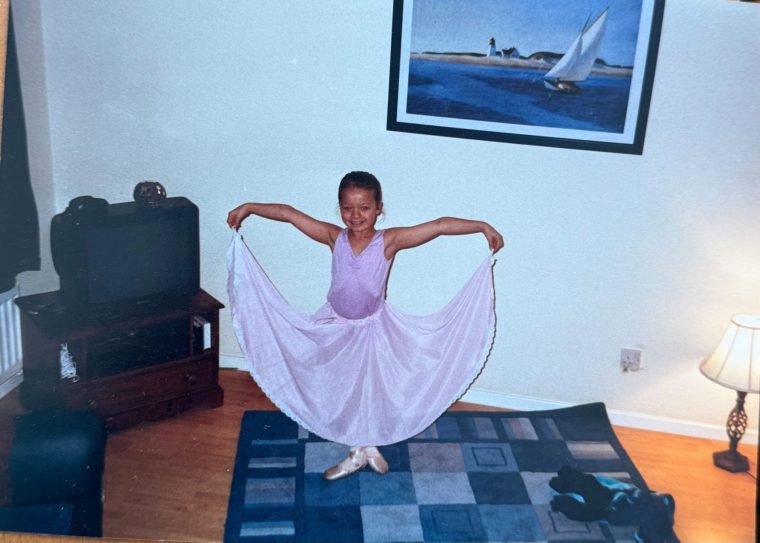 Josie as a budding ballerina (Photo: Provided)
And Dr O’Neil says I can use this irritation to my advantage. “If there is a desire to get back to a previous level, it will encourage you to nurture your physical and emotional health, giving yourself time and space to get there, and that will benefit your overall wellbeing,” she encourages.
Luckily, I don’t have to do that alone – guiding me through the weekly classes is ballet teacher Sophie Ford. She has seen many adults walk through her studio doors, so she knows some of the motivators.
“They stop going as children because there’s so much vying for their attention, but then when they get older, they remember how it made them feel, they miss moving their bodies and expressing themselves without words. Ballet is a beautiful, elegant, graceful sport, and I believe you can escape from reality through it,” she explains.
Nuria Garcia, artistic director at City Academy, echoes the sentiment: “People say coming back makes them feel alive again, like something was missing before they did. When we are young, we can take for granted what hobbies give us; it is only when we leave them and return that it becomes apparent.
“Over time, I see people feel comfortable letting themselves go and not being embarrassed about their bodies any more. It makes you feel better within yourself, lighter and brighter, and gives you a chance to make new friends as an adult, which can be hard.”
I am far from the only one in this class of around 10 women in their twenties, thirties and forties who have danced before. One woman left her childhood classes abruptly because of other children, and now feels power in partaking again. Another never reached the pointe shoe stage as she quit during teenage angst, so she wants to rectify (same!). Others just came to the conclusion that they missed it.
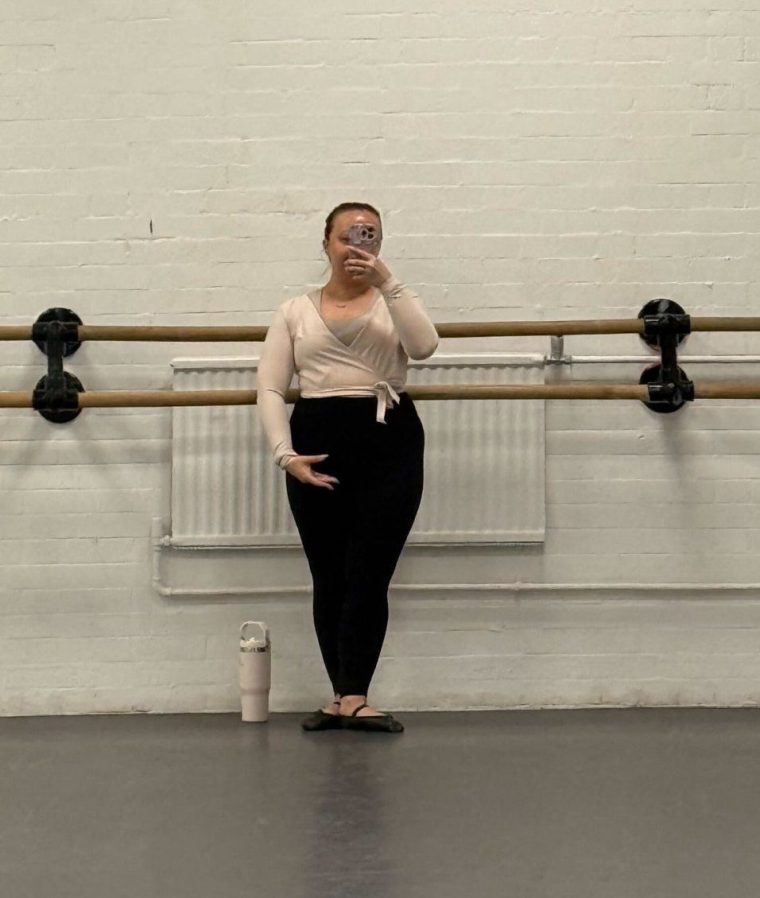
Josie gave a childhood passion another try (Photo: Provided)
When teaching adults, Sophie makes adjustments to keep her students interested. “I make my class a physical challenge, because many have been sitting at a desk all day, and it’s their time to be free.
“Also, adult bodies may not have the same range of movement, and it can be difficult when the body lags and doesn’t keep up with what the brain wants to do, but you just have to keep going because there is always a way around.”
As my eight-week course progresses, I start to appreciate what I can do, more than what I cannot. I may wobble whenever I have to stand on my tiptoes, but I am an excellent spotter (focusing on a fixed point while spinning to maintain balance). I may not do it most gracefully, but I can raise my leg pretty high. I don’t need to be the dancer I was, because there’s no impending exam as there were in the 2000s; this is just for me.
I begin to feel more connected to my childlike self; this feels most evident when walking back to the train station after one class. A sudden memory from when I was around five pops into my head. I am about to go into tap class when I open my bag and see no tap shoes. My mum rushes home to retrieve them, but despite her best efforts, she is too late, and I have to do the entire 30 minutes in my ballet shoes. I then assume I will get to wear my tap shoes to do ballet, but I am told this isn’t going to happen, so I cry, because I won’t get to wear my tap shoes at all. Today, it makes me laugh.
“Memories can be brought back up by cognitive associations,” Dr O’Neil explains. “It might just be being in a fitness studio, a smell, being in a group setting or what you’re wearing.”
I also find myself becoming more confident to ask questions, and chat more with my classmates, rather than just focusing on not being mortified by my skillset. This is a pipeline Sophie sees often.
“For the first couple of lessons, people are quiet and reserved, as it can be daunting to take a ballet class for the first time in a while,” she tells me. “It is scary to throw yourself around the room, and we feel more embarrassed when we do something wrong or fall over as an adult. But everyone makes mistakes, and once they get past that, it’s beautiful to see.”
As my course draws to a close, I decide to enroll again because, as I watch myself in the wall-to-wall mirrors in the final class, I realise I look genuinely happy. I don’t have the ankles of my younger self, but I do have her smile.
For more about the classes available: city-academy.com