
Just as we thought we’d escaped ‘SkinnyTok’, it feels like it’s creeping back onto our social media feeds. The narrative is circling buzzy trends like ‘Pilates arms’, growing your glutes without gaining leg mass (impossible, by the way) and, more recently, the ‘anti-inflammatory’ diet.
You might have seen influencers on your feed spreading the word that you, too, can shed puffiness and achieve a ‘cinched waist’ and ‘defined abs’ by following a clean-eating, anti-inflammatory, gut-friendly diet.
Is TikTok’s ‘anti-inflammatory diet’ just a Gen Z spin on the Mediterranean diet? Getty
Many of these videos tell viewers adding an egg white to a one-egg breakfast is a game-changing way to add ‘volume’ and ‘protein’, or push a ‘de-bloat’ drink – a concoction of four supplements that promises to fix bloating within days.
We know eating a diet of highly-processed foods and refined sugars and living a sedentary lifestyle can contribute to a range of stress, inflammation and chronic illnesses. That’s why the Mediterranean diet became, and is still, so popular.
But are these ‘anti-inflammatory’ diets pushed online simply a Gen Z spin on the Mediterranean diet, with the potential to help with de-bloating, fat loss and glowing skin? Or is following the unregulated advice of ill-qualified people online and eliminating food groups like carbohydrates, dairy and gluten an entryway to confusion and even disordered eating?
Here’s the verdict from Zoe Brain, accredited practising dietitian and co-founder of Brain of a Dietitian.
What is the anti-inflammatory diet?
Brain says at its core, the anti-inflammatory diet follows many of the same patterns as the Mediterranean diet.
It’s packed full of vegetables, fruits, wholegrains, nuts, extra virgin olive oil, and oily fish, avoiding ultra-processed foods, alcohol, refined carbohydrates and saturated fats – all of which have been associated with low inflammation and improved long-term health, particularly for those who suffer from chronic health conditions.
What we see on TikTok is often a glamourised version of the Mediterranean diet, she says.
“It is prettier bowls, wellness language and a Gen-Z filter placed over dietary principles that dietitians have been recommending for years,” says Brain.
While making a healthy diet look appealing online is a positive thing, Brain stresses the evidence-based approach of following a dietary pattern consistently over time. Quick fixes of shots, juices or cutting out food groups should be avoided.
“I recently saw an ‘anti-inflammatory bowl’ on TikTok that was mostly mince, avocado and a few pieces of broccoli,” Brain flags.
“Where was the fibre? The variety? The legumes, wholegrains, colourful vegetables, antioxidants and polyphenols the Mediterranean diet supports?”
Are bloating and anti-inflammation directly linked?
Brain says bloating is often a digestive issue rather than inflammation, often linked to an array of factors like stress, high salt, hormonal changes or gut sensitivity.
Too often, people demonise carbohydrates, associating them with bloating. One particularly prevalent trend on TikTok is people removing carbohydrates from their meals to feel ‘de-bloated’ quickly.
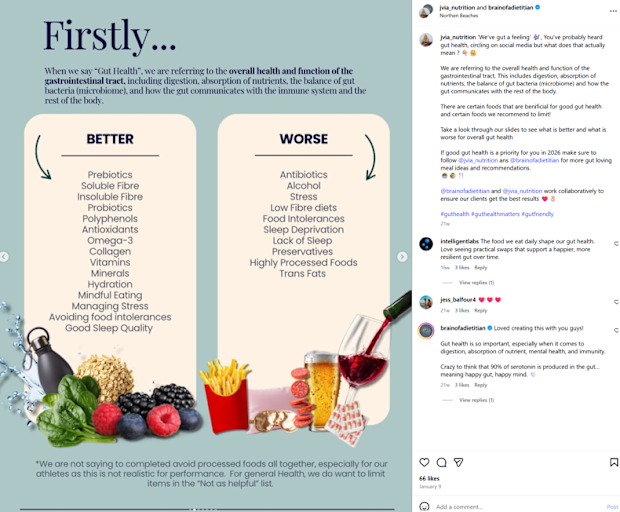
Zoe provides expert-led insight into what affects your gut health. Instagram / @brainofadietitian
“This can happen because carbohydrates are stored in the body as glycogen, and glycogen holds onto water. So when carbohydrate intake drops suddenly, the body can lose water weight, which may make someone feel less puffy,” says Brain.
She reiterates this is not the same as reducing inflammation or losing body fat. Many carbohydrate-rich foods, such as oats, wholegrains, fruit, and vegetables, provide fibre, prebiotics and nutrients that support gut health.
So, rather than following online advice and cutting out whole food groups, Brain encourages identifying individual food triggers and keeping the diet as varied and nourishing as possible.
Does this diet guarantee ‘glowing skin’?
There have also been claims that with an anti-inflammatory diet, you can eat your way to glowing skin, with videos like the viral ‘retinol carrot salad’ racking up millions of views on TikTok. These claims are dubious at best.
“Any claim that a diet ‘guarantees’ glowing skin is a major red flag – watch out for this,” Brain says.
While there is definitely a link between nutrition, gut health, inflammation and skin health, she assures “it is not as simple as ‘eat salmon and berries, and your skin will glow’.”
Skin health is influenced by many factors, including hormones, genetics, stress, skincare routines, and underlying medical conditions.
Brain suggests that a balanced diet rich in omega-3 fats, zinc, vitamin C, vitamin E, fibre and polyphenols may support skin health and help reduce inflammatory load, with promising evidence suggesting Mediterranean-style dietary patterns may play a supportive role in managing inflammatory skin conditions such as acne and psoriasis.
So, what parts of the TikTok anti-inflammatory diet are good or bad?
To help cut through the noise, we asked Brain what parts of the TikTok anti-inflammatory trend are actually good, science-backed advice, and what parts are total rubbish.
She is aligned with eating a more colourful diet packed full of plant foods, wholegrains, good-quality fats – such as extra virgin olive oil, avocado, nuts and oily fish – protein and fibre-rich carbohydrates, explaining, “These principles align closely with general healthy eating advice and are much more in line with a Mediterranean-style dietary pattern.”
What she does not condone is fear-based food rules, saying statements like ‘Never eat gluten,’ ‘Dairy is inflammatory for everyone,’ ‘Seed oils are the root cause of inflammation,’ or ‘Fruit has too much sugar’ are common red flags.
Brain suggests caution about who you are taking nutrition advice from online. The term “nutritionist” is not always regulated or protected, so if you are struggling with bloating, fatigue, or discomfort, it is always best to seek advice from a qualified dietitian.