
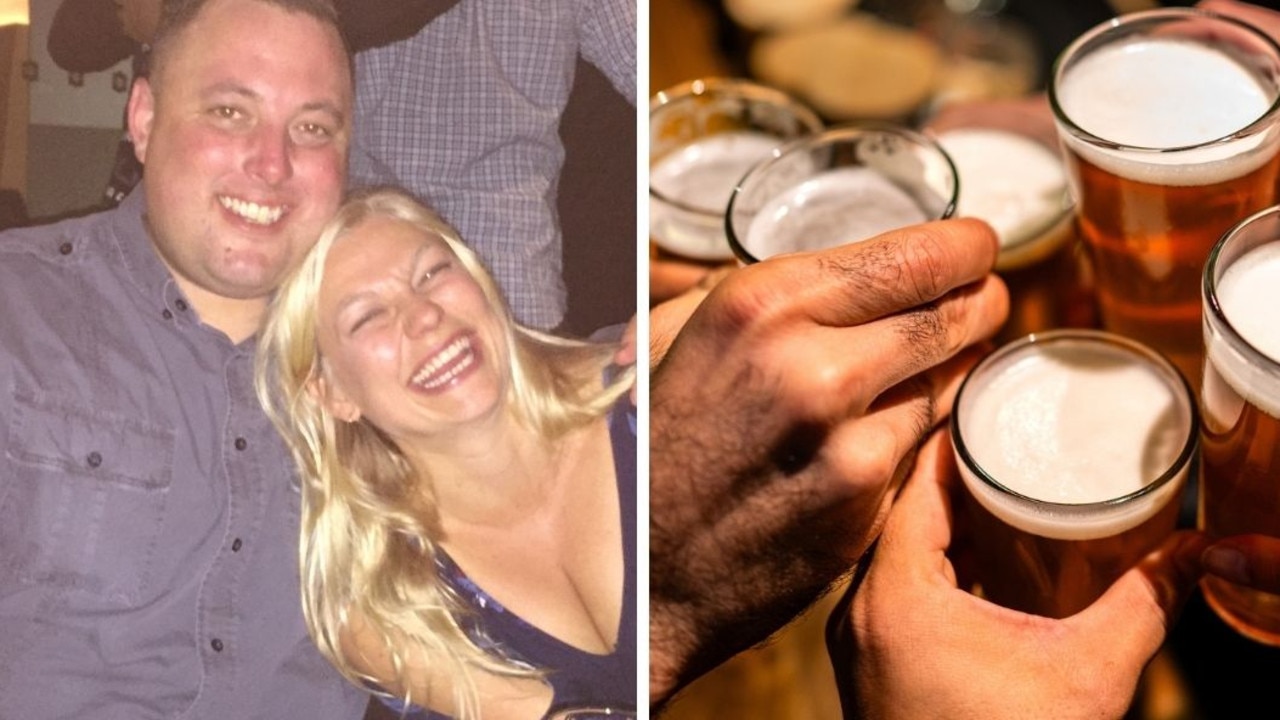
Pouring a quiet beer after a long day of work is an ordinary Aussie scene, but new research suggests there’s a forgotten audience watching on.
For James Hunt, 45, the routine of pouring a cold one was a fixture of his evening for many years.
On the outside, the father appeared composed. Privately, his children, now 17, 17 and 11, were clocking far more than he ever realised.
“You think that you’re hiding it and you think that you’ve got it all covered, but I tell you what, they know everything that’s going on and they see it,” Mr Hunt told news.com.au.
“They might not say it… I can say this purely based on hindsight that they knew the whole time.”
It’s a revelation that hit home when he finally sat his family down to share that he was going to get help for his drinking.
He realised his confession wasn’t met with shock, but relief.
“They sort of sat there speechless, just absorbing the fact that Dad’s stepping up,” Mr Hunt recalled.
“As young as they are, they understood that I was making a stance and doing something for the benefit of them. It’s nice to share that vulnerability is okay.”
For years prior, the impact of their fathers’ drinking hadn’t come in the ways stereotypes would suggest.
There was no shouting. No wild outbursts. Just subtle everyday moments that somehow slipped away.
“It wasn’t that I was passed out on the couch or anything like that. It’s the fact that they just got used to that. ‘Don’t ask Dad. There’s no point in asking him,’” he said.
He recalls finding excuses to not pick them up after sports or school, simply because he’d already been drinking.
“One of the biggest awakening moments was realising how many times I didn’t attend something or I was unable to because I couldn’t drive,” he explained.
“You start to detract from your family and everyday life. You miss out on all this stuff and key years. Whether it was missing soccer on a Saturday or lying about having an online meeting when they knew I didn’t. When you’re drinking, you don’t realise… you are the last to admit it.”
By choosing to make the change so openly, the father ended up giving his sons far more than he initially realised.
New research from the University of New South Wales suggests that adult drinking habits can leave lasting imprints on their children, particularly in the teenage years.
The study follows thousands of Australian families for over 23 years, discovering the age at which the impact is felt the most.
“The ages of 15 to 17 are when adolescents are most likely to be influenced. That’s the age when we become aware of alcohol in society and when we’re often exploring it for the first time, so that’s when we become heightened to how our parents are using alcohol,” addiction expert, Doctor Chris Davis, told news.com.au
“When we hit our late 20s, or when we become parents ourselves, that’s when we often revert back to how our parents drank when we were growing up.”
The research says that ripples don’t just stop at your children.
“Your drinking doesn’t just influence your children; it has a high chance of affecting your grandchildren’s drinking as well,” Dr Davis said.
For parents reading this and questioning their next glass of rosé, there’s a key thing he warns against: self-blame.
“We’ve got to drop the guilt. We’re not doing anything wrong by drinking alcohol, and guilt doesn’t help us. If we feel guilty about our drinking and then become secretive about it and start hiding it, that in itself becomes a harmful cycle,” he explained.
He stressed the importance of self-reflection and establishing healthier ways to wind down through exercise, self-care, and social connections.
“It’s about asking: are we modelling other healthier coping mechanisms to de-stress?” Dr Davis said.
Mr Hunt is now two years sober, and the change for him wasn’t led by grand gestures. He just showed up where he once pulled away.
“To repay that guilt is to just repay those moments… When you’re sober, you have zero excuses,” he said.
After returning from his detox, he became the family’s unofficial Uber driver.
I tell you what, I did more kilometres in the first six months than I’ve ever done in 20 years,” he joked.
“My phone rang hot. Pick me up here. Drop me here. Drop me there.. they deserve that.”
Now the father has a proven example of how breaking the cycle can actually work.
His 11-year-old walked into the room where his father had been drinking a non-alcoholic beer.
The youngster did a double take, proclaiming, “Oh my god.”
“He was really worried. I told him it was a non-alcoholic beer. He goes, ‘Oh, thought you started drinking again,’” the father explained.
“If that’s not proof that they haven’t listened and taken in what’s happened around them in their environment, then I don’t know what is.”