
Bacon, ham, lard, oysters, mussels, shrimp, crab. The list of non-kosher ingredients that are staples of French cuisine is lengthy.
Not to mention kosher’s prohibition on the mixing of meat and dairy in the same dish, a key facet of French gastronomy, where steaks are basted in butter and sauces consist of heavy cream bases.
“French cuisine is famous for rich sauces, cheese platters, wine reductions — and yes, escargot (snails),” according to Kashrut.org, which offers kosher guidance from an Orthodox Jewish perspective. “For those keeping kosher, it’s a minefield.”
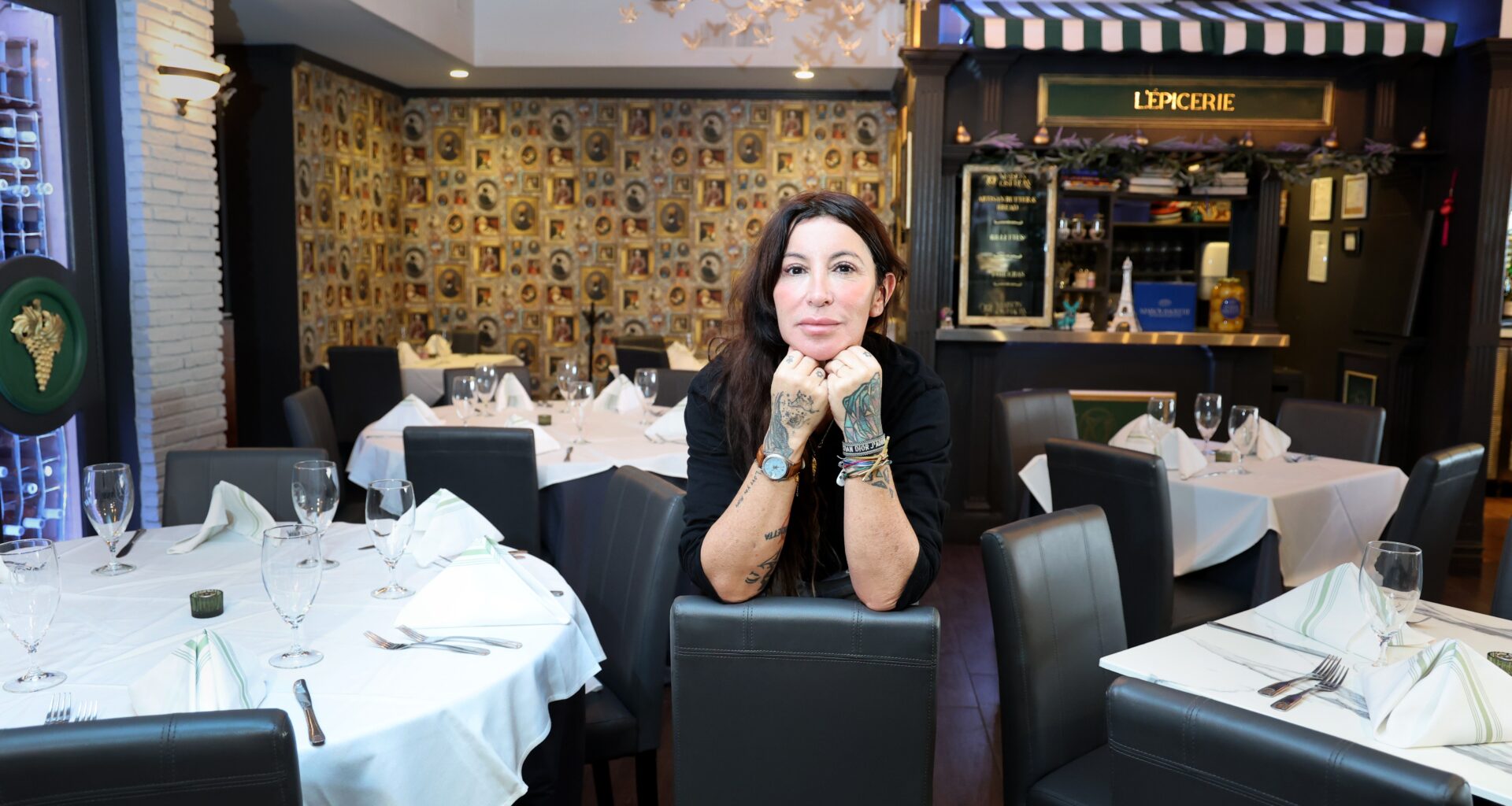
Olivia Ostrow is taking on the challenge. The Paris-born chef and her French-trained staff brainstorm kosher approaches to this cuisine full time at her North Bay Village restaurant, Maison Ostrow, which opened last year. Its menu is filled with classic dishes such as Beef Bourguignon, Chicken Cordon Bleu, French onion soup and Canard à l’Orange (duck with zesty oranges).
“If it’s not exactly how it would taste at a French restaurant in Paris that’s not kosher, I don’t want it on the table,” Ostrow said.
Kosher restaurants adhere to strict Jewish dietary regulations, not only separating meat and milk but forbidding animals such as pork and shellfish and closing on Jewish holidays and the Jewish Sabbath.
Nothing at Maison Ostrow contains dairy or any non-kosher ingredients. The restaurant is certified kosher by the Orthodox Rabbinical Board of Broward and Palm Beach Counties, one of the major kosher supervising agencies in South Florida.
Elan Kornblum, publisher of Great Kosher Restaurants Magazine and moderator of the Facebook group “Great Kosher Restaurants Foodies,” said he has been intrigued by several Maison Ostrow dishes, including Veal Chop Provençale and Chicken Cordon Bleu, which in traditional French cuisine are made with dairy products.
“By making their own veal ham, they are able to serve even a French ‘ham and butter’ sandwich,” Kornblum said. “And [their] non-dairy butter, with six flavors, it’s already legendary. You just don’t get this in other restaurants … I always think, ‘What is the chef going to come up with next?’ ”
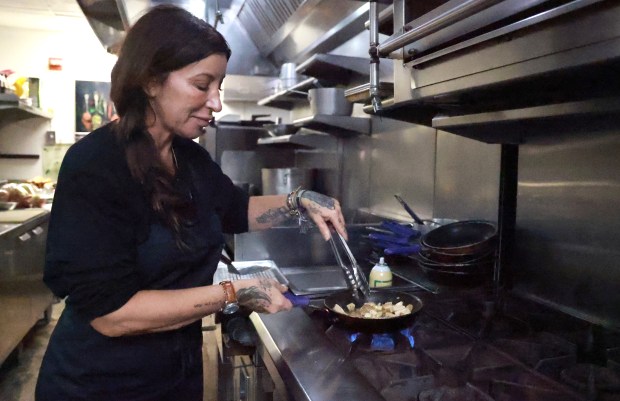 Owner Olivia Ostrow said the key to her authentic French flavors is her dairy-less butters and cheeses. (Carline Jean/South Florida Sun Sentinel)
Maison Ostrow is not the first Miami-Dade County restaurant to start gaining attention recently for its gourmet kosher offerings. In May, Mutra in North Miami became the first kosher restaurant in the world to earn a Michelin star. Like Ostrow, Mutra chef Raz Shabtai said he works to show that kosher cuisine is not restrictive but rather a source of creativity and deliciousness.
Ostrow, 51, has lived and cooked in the United States, France and Israel. Her father, Daniel Binn, was a restaurateur who opened a French eatery in Greensboro, North Carolina, called Le Rendez-Vous. She worked closely with her father at the restaurant, not only cooking but learning about the food business.
She settled in Miami more than 20 years ago with her husband, Steve Ostrow, an attorney who grew up in Miami-Dade. They have two children. She made her Miami debut in 2023 with the kosher Ostrow Brasserie in the city’s Buena Vista neighborhood, far from the concentrated Jewish communities typically associated with Miami-Dade, such as Surfside and Aventura. She said she closed it because she wanted to open a more refined, ambitious establishment.
“I like to create my own path,” she said. “I’ve never been a follower.”
When she heard about a restaurant space in North Bay Village that was for sale and already had a liquor license, she jumped to her next opportunity. She opened Maison Ostrow three months later.
Ostrow said the key to her authentic French flavors is her dairy-less butters and cheeses, although she declined to share the ingredients. She also depends on duck fat to fry, brown and sear.
“I use it in preparations such as confit, roasted potatoes and other dishes where richness, flavor and texture are essential,” she said. “In French cuisine, duck fat isn’t simply a substitute for lard. It’s a beautiful ingredient in its own right, with centuries of culinary history.”
Desserts have proven a challenge, as eclairs, mousses, profiteroles and tarts are usually made with butter or cream, or both. A recent Maison Ostrow dessert menu offered a Signature Chocolate Mousse ($22.10) and a Financier (almond “butter” cake with a strawberry coulis, $24.70).
“Try telling a French chef she can’t use butter or cream!” Ostrow said. “Butter provides flavor, structure and texture. Cream provides richness and stability. You can’t simply swap them for margarine or a non-dairy alternative and expect the same result. It requires technique, creativity, and a lot of testing.”
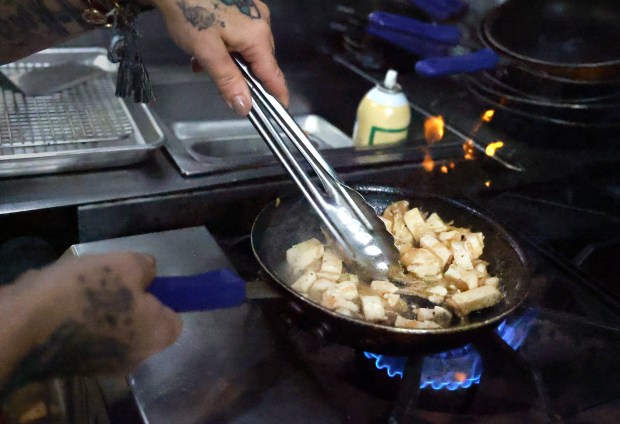 Owner Olivia Ostrow at work in the kitchen of Maison Ostrow in North Bay Village, sauteing kosher chicken on Thursday, Oct. 15, 2026. (Carline Jean/South Florida Sun Sentinel)
Her menus show the extensive research she has undertaken to make her elevated kosher feasts, including Chicken and Lamb Paupiette (chicken stuffed with lamb, prunes, eggplant, imitation bacon and pureed apples, $65) and Table Side Reserve Cut Special Filet au Poivre (steak seared with cognac and ignited at the table, $150).
Besides her multiple collaborations that birth new kosher dishes à la française, Ostrow is also working to expand her brands. Ostrow Privé, which supplies kosher food for yachts, jets and private events, is one venture; and Maison Baguette, which will offer foods from around the world on Ostrow’s homemade breads, is expected to open in Aventura in November.
She believes she has found her life’s work.
“Working in a kosher kitchen doesn’t mean abandoning French traditions,” she said. “It means understanding the techniques well enough to adapt them without sacrificing authenticity.”
Maison Ostrow is at 1666 79th St. Causeway, Suite 102, North Bay Village. Go to maisonostrow.com.