
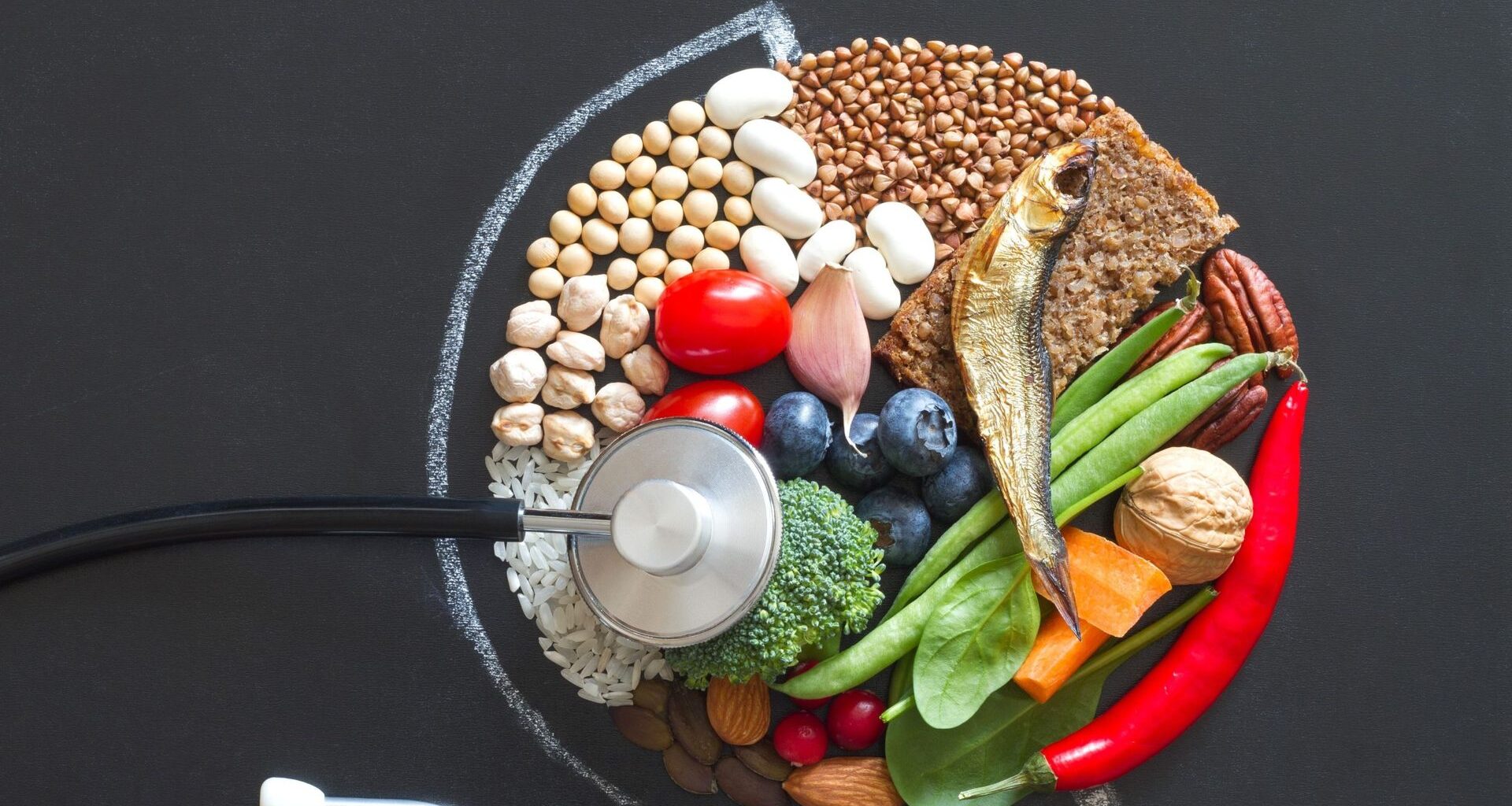
Scientists have developed a new international food pyramid that brings together nutrition advice from around the world, with some surprising differences.
Nutrition advice has a way of making dinner complicated. Between arguments over protein, warnings about sugar and questions about carbs, it’s easy to lose sight of what a healthy meal is supposed to look like.
The official food guides from several parts of the world are much less divided.
An international team has pulled their shared advice into a new International Food Guide Pyramid, with plenty of vegetables, fruit and whole grains, and less room for red meat, sugary drinks, and white bread.
Karen Della Corte, a nutrition scientist at Brigham Young University, led the work.
“Despite what people often hear, there’s actually substantial agreement in nutrition science about the foundations of healthy eating,” said Della Corte.
She worked with 22 colleagues from North America, Europe and Australia.
The team reviewed existing research and guidelines to build a guide for generally healthy people aged two and older; they didn’t run a new diet experiment.
What the countries share
The researchers compared official advice from Canada, Germany, the Netherlands, China, Australia and the Nordic countries.
They also read the scientific advisers’ report for the newest US guidelines, looking for agreement across countries rather than giving one country’s advice the final say.
All the guides put vegetables and fruit first, with whole grains, beans, nuts and soy also favored.
They preferred unsaturated fats to saturated ones and recommended limiting red and processed meat, added sugar and salt.
The team sized the layers using food intake ranges from the EAT-Lancet Commission, which considers human and planetary health.
Its ranges assume an average adult eating about 2,400 calories daily, so the pyramid shows proportions rather than fixed servings.
The paper draws on nearly 300 published sources. Readers can choose between an upright pyramid and an upside-down version, both carrying the same advice.
What’s inside the new food pyramid
Vegetables and fruit fill the biggest layer, together with whole grains and traditional grain staples.
Beans, lentils, nuts, seeds and soy make up the main protein foods in the next layer. Potatoes go there too, as do plant oils such as olive and canola.
The guide includes up to about two daily servings of animal foods: one of dairy, preferably yogurt or another fermented option. The other is fish, poultry, eggs or lean red meat.
Red meat gets about half an ounce (15 grams) a day, or roughly one weekly serving.
The recommendation is supported by long-term research involving three large groups of US adults. Over more than 30 years, researchers recorded over 22,000 new diabetes cases.
Diabetes risk was lowest among people who ate little or no red meat. The more they ate, the higher their risk tended to be.
The environmental cost of meat
Beef, lamb, and pork sit together in the guide’s health categories.
On land use and greenhouse gases, though, pork generally has a smaller footprint than beef or lamb.
David Jenkins is a co-author and nutrition researcher at the University of Toronto.
“Our diet has to be not only for our own health but also for the health of our planet,” Jenkins said.
Why pasta fits in
The pyramid looks beyond the usual whole-grain versus refined-grain distinction.
It also uses the glycemic index, first developed by Jenkins’s team, to measure how much carbohydrate-containing foods raise blood sugar compared with a reference food.
Durum wheat pasta can lose its bran and still score low on the index because its coarse grain cells stay largely intact.
Grind grain down to fine flour, though, and those cells break open, which helps explain why white and whole-wheat bread both raise blood sugar more than intact grains do.
At least half the grains should be whole, the guide says, while traditional staples with a low glycemic index can make up the rest.
White bread goes at the top with sweets and chips, a separation most national guides don’t make because they show grains as one group.
“A healthy diet won’t look exactly the same for everyone around the world,” Della Corte said.
“Durum pasta, basmati rice, tortillas, rice noodles, bulgur and many other staples with a low to moderate glycemic index can all fit into a healthy diet.”
What comes with sugar
Much of the research behind the familiar sugar limit concerns sugary drinks, the authors argue.
That limit, used in many guidelines, asks people to get less than 10% of their daily calories from sugar, but the team questions treating every source alike.
Della Corte previously led an analysis combining long-term studies: each additional serving of a sugary drink was linked to a 25% higher risk of type 2 diabetes.
For fruit juice, each serving was linked to a 5% higher risk, yet total sugar intake was linked to lower risk.
That last result doesn’t mean sugar prevents diabetes. The authors point to what comes with it: whole fruit and yogurt offer fiber, protein or other nutrients, while soda contains sugar and little else.
The authors also warn that diet surveys don’t always capture how much sugar people eat, because people tend to report too little.
That may have skewed the results, but the pyramid still gives sugary drinks their own spot at the top.
A disagreement over protein
The authors say the newest US guidelines call for about 30% to 50% more protein, or up to twice the standard requirement, while emphasizing meat and dairy.
In their view, the standard amount of 0.36 grams per pound of body weight (0.8 grams per kilogram) is enough for most adults.
One large combined analysis linked eating more protein to lower death rates, but plant protein accounted for that link. A modest increase in protein may still help older adults and people losing weight keep muscle, the authors say.
The US advisers’ calculations also favored a swap: less meat, poultry and eggs, and more beans, lentils, nuts and soy.
That added fiber, folate, magnesium and vitamin E without new nutrient shortfalls, although more iron came in a form the body absorbs less easily.
Butter gets different treatment, too. The authors disagree with the US pyramid’s grouping of butter and other foods high in saturated fat with plant oils.
Feeding trials show that replacing saturated fat with unsaturated fat lowers LDL cholesterol, which is linked to heart disease.
The new food pyramid has its limits
This pyramid is a proposal, and its authors reached agreement by revising drafts, without a formal vote.
The guidelines they selected weren’t meant to represent the whole world, and they haven’t tested whether seeing the pyramid changes anyone’s eating habits.
Several authors reported financial ties to foods it favors: two received research support from pasta maker Barilla, others from groups promoting nuts, soybeans and pulses.
One runs a university glycemic index testing service, and the authors reported no funding for the paper itself.
Study co-author Anette Buyken is a professor at Paderborn University in Germany.
“Knowing what is healthy and being motivated to eat healthily is not enough when these choices are difficult or expensive,” Buyken said.
“Nutrition policies need to support this through measures on food marketing, access and prices.”
The authors want to develop local versions using each region’s staple foods.
The study is published in the journal Advances in Nutrition.
—–
Like what you read? Subscribe to our newsletter for engaging articles, exclusive content, and the latest updates.
Check us out on EarthSnap, a free app brought to you by Eric Ralls and Earth.com.
—–