
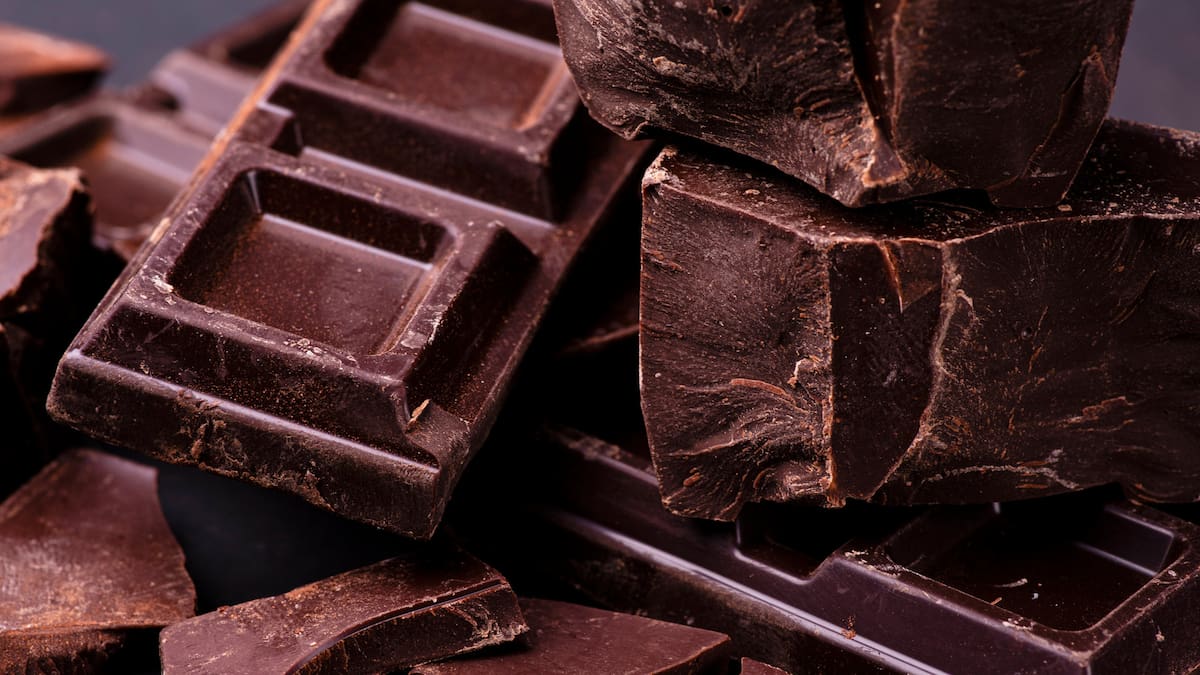
Doerfler tells her patients to eat dessert every day. Food can provide joy and pleasure in your life, she said.
She encourages people who like dark chocolate to eat up to 28g daily and to look for at least 55% cocoa on the package. A serving of dark chocolate provides flavonoids and magnesium, an important nutrient that most Americans don’t get enough of. “What makes dark chocolate a unique and rewarding dessert is that there really are some health benefits to it,” she added.
That being said, if you don’t like dark chocolate, don’t feel obligated to eat it, said Lisa Young, a dietitian and adjunct professor of nutrition at New York University. You can get plenty of polyphenols from berries, beans and other plant foods. But for people who love dark chocolate, its potential health benefits can provide another reason to enjoy it.
So, what can dark chocolate actually do for your health? We pored over the research and interviewed numerous nutrition experts. Here’s what we found.
A potential boost for heart health
Flavonoid-rich chocolate and cocoa products could lower blood pressure. Photo / 123rf
The flavonoids in chocolate and other plant foods may have beneficial effects on the heart and blood vessels.
In a meta-analysis published in 2020, researchers analysed data from more than a dozen randomised trials involving 615 people that looked at the cardiovascular effects of consuming dark chocolate. They found that regularly consuming small amounts of dark chocolate protects and relaxes blood vessels, which is good for your heart.
Another meta-analysis published in the Cochrane Database of Systematic Reviews analysed dozens of randomised trials and concluded that flavonoid-rich chocolate and cocoa products could lower blood pressure by about 2 points in the short term. The researchers pointed out that flavonols can increase the production of nitric oxide in the blood vessels. This allows more blood to flow through them and can lower blood pressure.
One large clinical trial found that older adults who took a cocoa extract supplement every day for about three and a half years were 27% less likely to die of heart disease than those given a placebo. (That was a secondary finding – the trial found no significant reduction in its main measure of cardiovascular events, including heart attacks and strokes.)
A lower risk of diabetes
Many studies have indicated that the flavonoids in cocoa can improve how our bodies respond to insulin and regulate blood sugar. Lab studies suggest they may also help protect the beta cells that produce and release insulin from the pancreas. This may explain why researchers have found that people who consume dark chocolate have lower rates of type 2 diabetes.
In one large study published in 2024 in the journal BMJ, scientists analysed data on more than 110,000 men and women in the United States who were followed for up to 15 years to see how their diet and lifestyle behaviours affected their health. The researchers found that people who ate at least five servings of dark chocolate weekly had a 21% lower risk of developing type 2 diabetes, compared with people who rarely or never ate dark chocolate.
The scientists found a dose-response relationship: for every additional serving of dark chocolate that people consumed per week, their risk of developing diabetes was 3% lower. Interestingly, no such link was found for milk chocolate.
The researchers pointed out that dark chocolate contains more cocoa than milk chocolate, which means it typically has several times the concentration of flavonoids and other polyphenols. It also tends to have less added sugar.
A better mood
Dark chocolate may make you feel better. Photo / 123rf
Chocolate’s benefits go beyond its effects on metabolic health. If you’ve ever bitten into a square and felt your spirits lift, there’s a reason for that. Scientists have found that dark chocolate may indeed make you feel better.
In a study published in 2024, researchers recruited 60 menopausal women with mild to moderate depression and assigned them to eat a small amount of chocolate every day for eight weeks to see if it could improve their mood and sleep quality. Half the group consumed 12g of 78% dark chocolate daily – equivalent to a little under half an ounce – while the other half ate 12g of milk chocolate every day.
After eight weeks, there was no significant difference in sleep quality between the groups. But the women who consumed dark chocolate had significant reductions in their depression symptoms compared with women who were given milk chocolate. The researchers suggested that the polyphenols in dark chocolate could improve cerebral blood flow, and they pointed out that cocoa might enhance mood because it contains the amino acid tryptophan, a precursor to the “feel good” neurotransmitter serotonin.
In another study, researchers at Seoul National University in South Korea recruited 48 adults and followed them for three weeks to see how eating different varieties of dark chocolate would affect their mood. The participants were split into three groups: one consumed about an ounce of 85% dark chocolate daily, and a second group was instructed to eat an ounce of 70% dark chocolate each day. The third group, which was not given any chocolate, served as the control.
The researchers found that the participants who consumed the 85% dark chocolate showed significant reductions in negative feelings and emotions, such as distress, irritability, fear and nervousness.
Changes in gut microbiome
When the South Korean researchers dug a little deeper, they found that dark chocolate might improve mood in part because it influences the “gut-brain axis,” the communication network between our central nervous system and our gut microbes.
In their study, the researchers found that people who consumed 85% dark chocolate had significantly higher levels of microbial diversity in their guts, as well as higher levels of a potentially beneficial bacterium. Other research has linked lower gut microbial diversity to anxiety and depression, though the findings have been mixed.
The composition of our gut microbiomes, it turns out, may be intimately tied to our mental health. That’s because our gut microbes aren’t just involved in digestion: they also help produce neurotransmitters involved in gut-brain communication, such as serotonin, dopamine and GABA.
Dark chocolate has the ability to “restructure the diversity and abundance of intestinal bacteria,” the researchers in South Korea concluded. “Thus, it may improve negative emotional states via the gut-brain axis.”