
Kuzmin, E., Taylor, J. S. & Boone, C. Retention of duplicated genes in evolution. Trends Genet. 38, 59–72 (2022).
Reams, A. B. & Roth, J. R. Mechanisms of gene duplication and amplification. Cold Spring Harb. Perspect. Biol. 7, a016592 (2015).
Soltis, P. S. & Soltis, D. E. The role of hybridization in plant speciation. Annu. Rev. Plant Biol. 60, 561–588 (2009).
Dehal, P. & Boore, J. L. Two rounds of whole genome duplication in the ancestral vertebrate. PLoS Biol. 3, e314 (2005).
Li, Z. et al. Multiple large-scale gene and genome duplications during the evolution of hexapods. Proc. Natl Acad. Sci. USA 115, 4713–4718 (2018).
Fernández, R. & Gabaldón, T. Gene gain and loss across the metazoan tree of life. Nat. Ecol. Evol. 4, 524–533 (2020).
Ohno, S. Evolution by Gene Duplication (Springer, 1970).
Force, A. et al. Preservation of duplicate genes by complementary, degenerative mutations. Genetics 151, 1531–1545 (1999).
Gibson, T. A. & Goldberg, D. S. Questioning the ubiquity of neofunctionalization. PLoS Comput. Biol. 5, e1000252 (2009).
Gout, J.-F. & Lynch, M. Maintenance and loss of duplicated genes by dosage subfunctionalization. Mol. Biol. Evol. 32, 2141–2148 (2015). This study finds that specific genes can be lost if their expression levels become too low and their paralogues assume most of the contribution to fitness, leading the study’s authors to propose the model of ADS, which postulates that the expression levels of paralogues diverge while their total expression remains constant.
Lynch, M. & Force, A. The probability of duplicate gene preservation by subfunctionalization. Genetics 154, 459–473 (2000).
McKeown, A. N. et al. Evolution of DNA specificity in a transcription factor family produced a new gene regulatory module. Cell 159, 58–68 (2014).
Harms, M. J. & Thornton, J. W. Historical contingency and its biophysical basis in glucocorticoid receptor evolution. Nature 512, 203–207 (2014).
Cortez-Romero, C. R., Lyu, J., Pillai, A. S., Langanowsky, A. & Thornton, J. W. Symmetry facilitated the evolution of heterospecificity and high-order stoichiometry in vertebrate hemoglobin. Proc. Natl Acad. Sci. USA 122, e2414756122 (2025). Using ancestral sequence reconstruction, the authors identify the mutations that promoted the transition of haemoglobin from a homodimer to a homotetramer, and later to a selective heterotetramer of paralogues.
Pillai, A. S. et al. Origin of complexity in haemoglobin evolution. Nature 581, 480–485 (2020).
Katju, V. & Lynch, M. The structure and early evolution of recently arisen gene duplicates in the Caenorhabditis elegans genome. Genetics 165, 1793–1803 (2003).
Dennis, M. Y. et al. Evolution of human-specific neural SRGAP2 genes by incomplete segmental duplication. Cell 149, 912–922 (2012).
Kimura, M. The Neutral Theory of Molecular Evolution (Cambridge Univ. Press, 1983).
Papp, B., Pál, C. & Hurst, L. D. Dosage sensitivity and the evolution of gene families in yeast. Nature 424, 194–197 (2003).
Veitia, R. A. Gene dosage balance: deletions, duplications and dominance. Trends Genet. 21, 33–35 (2005).
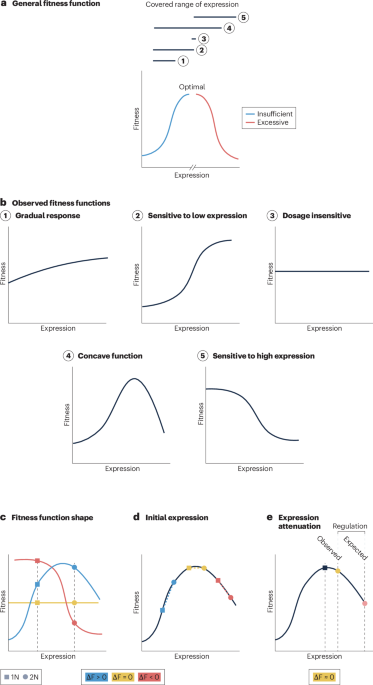
Ascencio, D. et al. Expression attenuation as a mechanism of robustness against gene duplication. Proc. Natl Acad. Sci. USA 118, e2014345118 (2021). By introducing a second copy of around 800 essential genes in yeast, the authors show the immediate fitness effects of duplications and observe attenuation mechanisms by which the expression of the second copy is reduced.
Stoebel, D. M., Dean, A. & Dykhuizen, D. The cost of expression of Escherichia coli lac operon proteins is in the process, not in the products. Genetics 178, 1653–1660 (2008).
Kafri, M., Metzl-Raz, E., Jona, G. & Barkai, N. The cost of protein production. Cell Rep. 14, 22–31 (2016).
Fujita, Y., Namba, S., Kamada, Y. & Moriya, H. Impact of maximal overexpression of a non-toxic protein on yeast cell physiology. eLife 13, RP99572 (2025).
Vavouri, T., Semple, J. I., Garcia-Verdugo, R. & Lehner, B. Intrinsic protein disorder and interaction promiscuity are widely associated with dosage sensitivity. Cell 138, 198–208 (2009).
Bhattacharyya, S. et al. Transient protein-protein interactions perturb E. coli metabolome and cause gene dosage toxicity. eLife 5, e20309 (2016).
Prelich, G. Gene overexpression: uses, mechanisms, and interpretation. Genetics 190, 841–854 (2012).
Youn, J.-Y. et al. Functional analysis of kinases and transcription factors in Saccharomyces cerevisiae using an integrated overexpression library. G3 Genes Genomes Genet. 7, 911–921 (2017).
Shen, W. et al. The regulatory mechanism of the yeast osmoresponse under different glucose concentrations. iScience 26, 105809 (2023).
Kondrashov, F. A. & Kondrashov, A. S. Role of selection in fixation of gene duplications. J. Theor. Biol. 239, 141–151 (2006).
Perry, G. H. et al. Diet and the evolution of human amylase gene copy number variation. Nat. Genet. 39, 1256–1260 (2007).
Hardwick, R. J. et al. Haptoglobin (HP) and Haptoglobin-related protein (HPR) copy number variation, natural selection, and trypanosomiasis. Hum. Genet. 133, 69–83 (2014).
Robinson, D. et al. Gene-by-environment interactions influence the fitness cost of gene copy-number variation in yeast. G3 Genes Genomes Genet. 13, jkad159 (2023).
Sionov, E., Lee, H., Chang, Y. C. & Kwon-Chung, K. J. Cryptococcus neoformans overcomes stress of azole drugs by formation of disomy in specific multiple chromosomes. PLoS Pathog. 6, e1000848 (2010).
Selmecki, A., Gerami-Nejad, M., Paulson, C., Forche, A. & Berman, J. An isochromosome confers drug resistance in vivo by amplification of two genes, ERG11 and TAC1. Mol. Microbiol. 68, 624–641 (2008).
Bergin, S. et al. Analysis of clinical Candida parapsilosis isolates reveals copy number variation in key fluconazole resistance genes. Antimicrob. Agents Chemother. 68, e0161923 (2024).
Iantorno, S. A. et al. Gene expression in Leishmania is regulated predominantly by gene dosage. mBio 8, e01393-17 (2017).
Dekel, E. & Alon, U. Optimality and evolutionary tuning of the expression level of a protein. Nature 436, 588–592 (2005).
Robinson, D., Place, M., Hose, J., Jochem, A. & Gasch, A. P. Natural variation in the consequences of gene overexpression and its implications for evolutionary trajectories. eLife 10, e70564 (2021).
Naseeb, S., Ames, R. M., Delneri, D. & Lovell, S. C. Rapid functional and evolutionary changes follow gene duplication in yeast. Proc. R. Soc. B 284, 20171393 (2017).
Bautista, C. et al. Hybrid adaptation is hampered by Haldane’s sieve. Nat. Commun. 15, 10319 (2024).
Todd, R. T. & Selmecki, A. Expandable and reversible copy number amplification drives rapid adaptation to antifungal drugs. eLife 9, e58349 (2020).
Zhang, Z. & Ren, Q. Why are essential genes essential? — The essentiality of Saccharomyces genes. Microb. Cell 2, 280–287 (2015).
Hausser, J., Mayo, A., Keren, L. & Alon, U. Central dogma rates and the trade-off between precision and economy in gene expression. Nat. Commun. 10, 68 (2019).
Keren, L. et al. Massively parallel interrogation of the effects of gene expression levels on fitness. Cell 166, 1282–1294.e18 (2016).
Gelperin, D. M. et al. Biochemical and genetic analysis of the yeast proteome with a movable ORF collection. Genes Dev. 19, 2816–2826 (2005).
Sopko, R. et al. Mapping pathways and phenotypes by systematic gene overexpression. Mol. Cell 21, 319–330 (2006).
Arita, Y. et al. A genome-scale yeast library with inducible expression of individual genes. Mol. Syst. Biol. 17, e10207 (2021).
Hawkins, J. S. et al. Mismatch-CRISPRi reveals the co-varying expression-fitness relationships of essential genes in Escherichia coli and Bacillus subtilis. Cell Syst. 11, 523–535.e9 (2020).
Otto, R. M., Turska-Nowak, A., Brown, P. M. & Reynolds, K. A. A continuous epistasis model for predicting growth rate given combinatorial variation in gene expression and environment. Cell Syst. 15, 134–148.e7 (2024). The authors use CRISPR interference to modulate the expression of pairs of genes participating in metabolic pathways and show how epistasis can result from changes in expression of the two genes.
Clark, T. et al. CRISPR activation screens: navigating technologies and applications. Trends Biotechnol. 42, 1017–1034 (2024).
Siddiq, M. A., Duveau, F. & Wittkopp, P. J. Plasticity and environment-specific relationships between gene expression and fitness in Saccharomyces cerevisiae. Nat. Ecol. Evol. 8, 2184–2194 (2024).
Moreno, P. et al. Expression Atlas update: gene and protein expression in multiple species. Nucleic Acids Res. 50, D129–D140 (2022).
Huang, Q., Szklarczyk, D., Wang, M., Simonovic, M. & von Mering, C. PaxDb 5.0: curated protein quantification data suggests adaptive proteome changes in yeasts. Mol. Cell. Proteom. 22, 100640 (2023).
Rice, A. M., Li, Y., Donnelly, P. & McLysaght, A. Evolution of dosage-sensitive genes by tissue-restricted expression changes. Genome Biol. Evol. 17, evaf132 (2025).
Qian, W., Ma, D., Xiao, C., Wang, Z. & Zhang, J. The genomic landscape and evolutionary resolution of antagonistic pleiotropy in yeast. Cell Rep. 2, 1399–1410 (2012).
Rogers, R. L., Shao, L. & Thornton, K. R. Tandem duplications lead to novel expression patterns through exon shuffling in Drosophila yakuba. PLoS Genet. 13, e1006795 (2017).
Loehlin, D. W. & Carroll, S. B. Expression of tandem gene duplicates is often greater than twofold. Proc. Natl Acad. Sci. USA 113, 5988–5992 (2016).
Song, M. J., Potter, B. I., Doyle, J. J. & Coate, J. E. Gene balance predicts transcriptional responses immediately following ploidy change in Arabidopsis thaliana. Plant Cell 32, 1434–1448 (2020).
Semple, J. I., Vavouri, T. & Lehner, B. A simple principle concerning the robustness of protein complex activity to changes in gene expression. BMC Syst. Biol. 2, 1 (2008).
Dephoure, N. et al. Quantitative proteomic analysis reveals posttranslational responses to aneuploidy in yeast. eLife 3, e03023 (2014).
Chen, Y. et al. Overdosage of balanced protein complexes reduces proliferation rate in aneuploid cells. Cell Syst. 9, 129–142.e5 (2019).
Ishikawa, K., Makanae, K., Iwasaki, S., Ingolia, N. T. & Moriya, H. Post-translational dosage compensation buffers genetic perturbations to stoichiometry of protein complexes. PLoS Genet. 13, e1006554 (2017).
Spealman, P., de Santana, C., De, T. & Gresham, D. Multilevel gene expression changes in lineages containing adaptive copy number variants. Mol. Biol. Evol. 42, msaf005 (2025). This study shows how adaptive duplications during experimental evolution can become subject to post-transcriptional and post-translational regulatory mechanisms that further tune total gene expression.
Qian, W., Liao, B.-Y., Chang, A. Y.-F. & Zhang, J. Maintenance of duplicate genes and their functional redundancy by reduced expression. Trends Genet. 26, 425–430 (2010).
Edger, P. P. et al. Subgenome dominance in an interspecific hybrid, synthetic allopolyploid, and a 140-year-old naturally established neo-allopolyploid monkeyflower. Plant Cell 29, 2150–2167 (2017).
Liang, Z. & Schnable, J. C. Functional divergence between subgenomes and gene pairs after whole genome duplications. Mol. Plant 11, 388–397 (2018).
Bird, K. A. et al. Replaying the evolutionary tape to investigate subgenome dominance in allopolyploid Brassica napus. New Phytol. 230, 354–371 (2021).
Schnable, J. C., Wang, X., Pires, J. C. & Freeling, M. Escape from preferential retention following repeated whole genome duplications in plants. Front. Plant Sci. 3, 94 (2012).
Gillard, G. B. et al. Comparative regulomics supports pervasive selection on gene dosage following whole genome duplication. Genome Biol. 22, 103 (2021).
Thompson, A., Vo, D., Comfort, C. & Zakon, H. H. Expression evolution facilitated the convergent neofunctionalization of a sodium channel gene. Mol. Biol. Evol. 31, 1941–1955 (2014).
Thompson, A., Zakon, H. H. & Kirkpatrick, M. Compensatory drift and the evolutionary dynamics of dosage-sensitive duplicate genes. Genetics 202, 765–774 (2016).
Gout, J.-F. et al. Dynamics of gene loss following ancient whole-genome duplication in the cryptic Paramecium complex. Mol. Biol. Evol. 40, msad107 (2023).
Peñalba, J. V. et al. The role of hybridization in species formation and persistence. Cold Spring Harb. Perspect. Biol. 16, a041445 (2024).
Chang, A. Y.-F. & Liao, B.-Y. Reduced translational efficiency of eukaryotic genes after duplication events. Mol. Biol. Evol. 37, 1452–1461 (2020).
Nguyen Ba, A. N. et al. Detecting functional divergence after gene duplication through evolutionary changes in posttranslational regulatory sequences. PLoS Comput. Biol. 10, e1003977 (2014).
Johri, P., Gout, J.-F., Doak, T. G. & Lynch, M. A population-genetic lens into the process of gene loss following whole-genome duplication. Mol. Biol. Evol. 39, msac118 (2022). The authors find that expression reduction and the accumulation of coding mutations in one of two paralogues both predate its loss, leading them to extend the ADS model showing that the cumulative activity of paralogous proteins is also under selection; results also highlight that evolutionary fates are determined early on.
Ganko, E. W., Meyers, B. C. & Vision, T. J. Divergence in expression between duplicated genes in Arabidopsis. Mol. Biol. Evol. 24, 2298–2309 (2007).
Evans-Yamamoto, D. et al. Parallel nonfunctionalization of CK1δ/ε kinase ohnologs following a whole-genome duplication event. Mol. Biol. Evol. 40, msad246 (2023).
Shi, T., Gao, Z., Chen, J. & Van de Peer, Y. Dosage sensitivity shapes balanced expression and gene longevity of homoeologs after whole-genome duplications in angiosperms. Plant Cell 36, 4323–4337 (2024).
Drummond, D. A., Bloom, J. D., Adami, C., Wilke, C. O. & Arnold, F. H. Why highly expressed proteins evolve slowly. Proc. Natl Acad. Sci. USA 102, 14338–14343 (2005).
Serohijos, A. W. R., Rimas, Z. & Shakhnovich, E. I. Protein biophysics explains why highly abundant proteins evolve slowly. Cell Rep. 2, 249–256 (2012).
DeLuna, A. et al. Exposing the fitness contribution of duplicated genes. Nat. Genet. 40, 676–681 (2008).
VanderSluis, B. et al. Genetic interactions reveal the evolutionary trajectories of duplicate genes. Mol. Syst. Biol. 6, 429 (2010).
Kuzmin, E. et al. Exploring whole-genome duplicate gene retention with complex genetic interaction analysis. Science 368, eaaz5667 (2020).
Kolodrubetz, D., Kruppa, M. & Burgum, A. Gene dosage affects the expression of the duplicated NHP6 genes of Saccharomyces cerevisiae. Gene 272, 93–101 (2001).
DeLuna, A., Springer, M., Kirschner, M. W. & Kishony, R. Need-based up-regulation of protein levels in response to deletion of their duplicate genes. PLoS Biol. 8, e1000347 (2010).
Iohannes, S. D. & Jackson, D. Tackling redundancy: genetic mechanisms underlying paralog compensation in plants. New Phytol. 240, 1381–1389 (2023).
Diss, G., Ascencio, D., DeLuna, A. & Landry, C. R. Molecular mechanisms of paralogous compensation and the robustness of cellular networks. J. Exp. Zool. B Mol. Dev. Evol. 322, 488–499 (2014).
Kafri, R., Bar-Even, A. & Pilpel, Y. Transcription control reprogramming in genetic backup circuits. Nat. Genet. 37, 295–299 (2005).
Kafri, R., Levy, M. & Pilpel, Y. The regulatory utilization of genetic redundancy through responsive backup circuits. Proc. Natl Acad. Sci. USA 103, 11653–11658 (2006).
Loker, R. & Mann, R. S. Divergent expression of paralogous genes by modification of shared enhancer activity through a promoter-proximal silencer. Curr. Biol. 32, 3545–3555.e4 (2022).
Vande Zande, P., Siddiq, M. A., Hodgins-Davis, A., Kim, L. & Wittkopp, P. J. Active compensation for changes in TDH3 expression mediated by direct regulators of TDH3 in Saccharomyces cerevisiae. PLoS Genet. 19, e1011078 (2023). This study presents the regulatory mechanisms that mediate the upregulation of TDH2 in response to the deletion of its paralogue TDH3 in yeast, providing a clear demonstration that active compensation between paralogues can arise from shared regulation.
Springer, M., Weissman, J. S. & Kirschner, M. W. A general lack of compensation for gene dosage in yeast. Mol. Syst. Biol. 6, 368 (2010).
Dandage, R. et al. Single-cell imaging of protein dynamics of paralogs reveals sources of gene retention. iScience 28, 112771 (2025).
Teufel, A. I., Liu, L. & Liberles, D. A. Models for gene duplication when dosage balance works as a transition state to subsequent neo- or sub-functionalization. BMC Evol. Biol. 16, 45 (2016).
Wilson, A. E. & Liberles, D. A. Dosage balance acts as a time-dependent selective barrier to subfunctionalization. BMC Ecol. Evol. 23, 14 (2023).
Mihajlovic, L. et al. A direct experimental test of Ohno’s hypothesis. eLife 13, RP97216 (2025). By evolving Escherichia coli cells with one or two copies of a fluorescent protein, the authors experimentally validate the fact that although gene duplication leads to relaxed selection, the rate of phenotypic evolution remains unchanged if one of the two copies is inactivated.
Conant, G. C. & Wagner, A. Asymmetric sequence divergence of duplicate genes. Genome Res. 13, 2052–2058 (2003).
Zhang, P., Gu, Z. & Li, W.-H. Different evolutionary patterns between young duplicate genes in the human genome. Genome Biol. 4, R56 (2003).
Qiu, Y., Liu, S.-L. & Adams, K. L. Concerted divergence after gene duplication in polycomb repressive complexes. Plant Physiol. 174, 1192–1204 (2017).
Ascencio, D., Ochoa, S., Delaye, L. & DeLuna, A. Increased rates of protein evolution and asymmetric deceleration after the whole-genome duplication in yeasts. BMC Evol. Biol. 17, 40 (2017).
Gagnon-Arsenault, I. et al. Transcriptional divergence plays a role in the rewiring of protein interaction networks after gene duplication. J. Proteom. 81, 112–125 (2013).
Mattenberger, F., Sabater-Muñoz, B., Toft, C. & Fares, M. A. The phenotypic plasticity of duplicated genes in Saccharomyces cerevisiae and the origin of adaptations. G3 Genes Genomes Genet. 7, 63–75 (2017).
Li, J.-T. et al. The fate of recent duplicated genes following a fourth-round whole genome duplication in a tetraploid fish, common carp (Cyprinus carpio). Sci. Rep. 5, 8199 (2015).
Lien, S. et al. The Atlantic salmon genome provides insights into rediploidization. Nature 533, 200–205 (2016).
Kryuchkova-Mostacci, N. & Robinson-Rechavi, M. Tissue-specificity of gene expression diverges slowly between orthologs, and rapidly between paralogs. PLoS Comput. Biol. 12, e1005274 (2016).
Hoffmeier, A. et al. A dead gene walking: convergent degeneration of a clade of MADS-box genes in crucifers. Mol. Biol. Evol. 35, 2618–2638 (2018).
Dibyachintan, S. et al. Cryptic genetic variation shapes the fate of gene duplicates in a protein interaction network. Nat. Commun. 16, 1530 (2025). This study shows how the effects of new mutations on protein–protein interactions of two paralogous proteins are contingent on the cryptic genetic variation accumulated following duplication, and dictate which mutations can subfunctionalize the paralogues.
Sane, M., Diwan, G. D., Bhat, B. A., Wahl, L. M. & Agashe, D. Shifts in mutation spectra enhance access to beneficial mutations. Proc. Natl Acad. Sci. USA 120, e2207355120 (2023).
Sane, M., Parveen, S. & Agashe, D. Mutation bias alters the distribution of fitness effects of mutations. PLoS Biol. 23, e3003282 (2025).
Cope, A. L., Schraiber, J. G. & Pennell, M. Macroevolutionary divergence of gene expression driven by selection on protein abundance. Science 387, 1063–1068 (2025).
Aubé, S., Nielly-Thibault, L. & Landry, C. R. Evolutionary trade-off and mutational bias could favor transcriptional over translational divergence within paralog pairs. PLoS Genet. 19, e1010756 (2023).
Wang, S. & Chen, Y. Fine-tuning the expression of duplicate genes by translational regulation in Arabidopsis and maize. Front. Plant Sci. 10, 534 (2019).
Blake, W. J., Kaern, M., Cantor, C. R. & Collins, J. J. Noise in eukaryotic gene expression. Nature 422, 633–637 (2003).
Chapal, M., Mintzer, S., Brodsky, S., Carmi, M. & Barkai, N. Resolving noise–control conflict by gene duplication. PLoS Biol. 17, e3000289 (2019).
David, K. T. et al. Convergent expansions of keystone gene families drive metabolic innovation in Saccharomycotina yeasts. Proc. Natl Acad. Sci. USA 122, e2500165122 (2025).
Nocedal, I. & Laub, M. T. Ancestral reconstruction of duplicated signaling proteins reveals the evolution of signaling specificity. eLife 11, e77346 (2022).
Ukken, F. P., Dowell, N. L., Hajra, M. & Carroll, S. B. A novel broad spectrum venom metalloproteinase autoinhibitor in the rattlesnake Crotalus atrox evolved via a shift in paralog function. Proc. Natl Acad. Sci. USA 119, e2214880119 (2022).
Harms, M. J. et al. Biophysical mechanisms for large-effect mutations in the evolution of steroid hormone receptors. Proc. Natl Acad. Sci. USA 110, 11475–11480 (2013).
Grassi, L. et al. Identity and divergence of protein domain architectures after the yeast whole-genome duplication event. Mol. BioSyst. 6, 2305–2315 (2010).
Mallik, S., Tawfik, D. S. & Levy, E. D. How gene duplication diversifies the landscape of protein oligomeric state and function. Curr. Opin. Genet. Dev. 76, 101966 (2022).
Yang, X. et al. Widespread expansion of protein interaction capabilities by alternative splicing. Cell 164, 805–817 (2016).
Baker, M. E. Steroid receptors and vertebrate evolution. Mol. Cell. Endocrinol. 496, 110526 (2019).
Thornton, J. W. Evolution of vertebrate steroid receptors from an ancestral estrogen receptor by ligand exploitation and serial genome expansions. Proc. Natl Acad. Sci. USA 98, 5671–5676 (2001).
Ortlund, E. A., Bridgham, J. T., Redinbo, M. R. & Thornton, J. W. Crystal structure of an ancient protein: evolution by conformational epistasis. Science 317, 1544–1548 (2007).
Bridgham, J. T., Brown, J. E., Rodríguez-Marí, A., Catchen, J. M. & Thornton, J. W. Evolution of a new function by degenerative mutation in cephalochordate steroid receptors. PLoS Genet. 4, e1000191 (2008).
Anderson, D. W., McKeown, A. N. & Thornton, J. W. Intermolecular epistasis shaped the function and evolution of an ancient transcription factor and its DNA binding sites. eLife 4, e07864 (2015).
Starr, T. N., Picton, L. K. & Thornton, J. W. Alternative evolutionary histories in the sequence space of an ancient protein. Nature 549, 409–413 (2017).
Muiño, J. M. et al. Evolution of DNA-binding sites of a floral master regulatory transcription factor. Mol. Biol. Evol. 33, 185–200 (2016).
Pougach, K. et al. Duplication of a promiscuous transcription factor drives the emergence of a new regulatory network. Nat. Commun. 5, 4868 (2014).
Gera, T., Jonas, F., More, R. & Barkai, N. Evolution of binding preferences among whole-genome duplicated transcription factors. eLife 11, e73225 (2022).
Siggers, T., Reddy, J., Barron, B. & Bulyk, M. L. Diversification of transcription factor paralogs via noncanonical modularity in C2H2 zinc finger DNA binding. Mol. Cell 55, 640–648 (2014).
Hudson, W. H. et al. Distal substitutions drive divergent DNA specificity among paralogous transcription factors through subdivision of conformational space. Proc. Natl Acad. Sci. USA 113, 326–331 (2016).
Shen, N. et al. Divergence in DNA specificity among paralogous transcription factors contributes to their differential in vivo binding. Cell Syst. 6, 470–483.e8 (2018).
Casewell, N. R., Wagstaff, S. C., Harrison, R. A., Renjifo, C. & Wüster, W. Domain loss facilitates accelerated evolution and neofunctionalization of duplicate snake venom metalloproteinase toxin genes. Mol. Biol. Evol. 28, 2637–2649 (2011).
Li, Z. et al. A tale of two copies: evolutionary trajectories of moth pheromone receptors. Proc. Natl Acad. Sci. USA 120, e2221166120 (2023).
Lavy, T., Yanagida, H. & Tawfik, D. S. Gal3 binds Gal80 tighter than Gal1 indicating adaptive protein changes following duplication. Mol. Biol. Evol. 33, 472–477 (2016).
Park, Y., Metzger, B. P. H. & Thornton, J. W. Epistatic drift causes gradual decay of predictability in protein evolution. Science 376, 823–830 (2022).
Capra, E. J. & Laub, M. T. Evolution of two-component signal transduction systems. Annu. Rev. Microbiol. 66, 325–347 (2012).
Capra, E. J., Perchuk, B. S., Skerker, J. M. & Laub, M. T. Adaptive mutations that prevent crosstalk enable the expansion of paralogous signaling protein families. Cell 150, 222–232 (2012).
Ghose, D. A., Przydzial, K. E., Mahoney, E. M., Keating, A. E. & Laub, M. T. Marginal specificity in protein interactions constrains evolution of a paralogous family. Proc. Natl Acad. Sci. USA 120, e2221163120 (2023). Using deep mutational scanning, the authors show that single mutations can lead to the loss of specificity within paralogues that have diversified to mediate different signalling pathways.
Smith, J. M. Natural selection and the concept of a protein space. Nature 225, 563–564(1970).
DePristo, M. A., Weinreich, D. M. & Hartl, D. L. Missense meanderings in sequence space: a biophysical view of protein evolution. Nat. Rev. Genet. 6, 678–687 (2005).
Xie, V. C., Pu, J., Metzger, B. P., Thornton, J. W. & Dickinson, B. C. Contingency and chance erase necessity in the experimental evolution of ancestral proteins. eLife 10, e67336 (2021). Using phage-assisted continuous evolution, the authors show that, although the starting genotype constrains the group of accessible outcomes (contingency), the observed outcome in different replicates derived from the same starting genotype might vary (chance).
Bloom, J. D., Labthavikul, S. T., Otey, C. R. & Arnold, F. H. Protein stability promotes evolvability. Proc. Natl Acad. Sci. USA 103, 5869–5874 (2006).
Bershtein, S., Segal, M., Bekerman, R., Tokuriki, N. & Tawfik, D. S. Robustness–epistasis link shapes the fitness landscape of a randomly drifting protein. Nature 444, 929–932 (2006).
Tokuriki, N. & Tawfik, D. S. Stability effects of mutations and protein evolvability. Curr. Opin. Struct. Biol. 19, 596–604 (2009).
Tokuriki, N., Stricher, F., Serrano, L. & Tawfik, D. S. How protein stability and new functions trade off. PLoS Comput. Biol. 4, e1000002 (2008).
Zheng, J., Guo, N. & Wagner, A. Selection enhances protein evolvability by increasing mutational robustness and foldability. Science 370, eabb5962 (2020).
Metzger, B. P. H., Park, Y., Starr, T. N. & Thornton, J. W. Epistasis facilitates functional evolution in an ancient transcription factor. eLife 12, RP88737 (2024).
Herrera-Álvarez, S., Patton, J. E. J. & Thornton, J. W. The structure of an ancient genotype–phenotype map shaped the functional evolution of a protein family. Nat. Ecol. Evol. 9, 1656–1669 (2025). Using combinatorial mutagenesis on the reconstructed ancestors of paralogous steroid receptor and high-throughput binding assays with DNA motifs, the authors find that some DNA motifs are bound by more genotypes, which can influence which DNA motif specificity is likely to fix during evolution.
Tuckey, A. J. et al. Structural and functional characterisation of a reconstructed ancestral strigolactone receptor. Preprint at bioRxiv https://doi.org/10.1101/2025.08.03.668049 (2025).
Ikezaki, Y. et al. Molecular evolution of terpene synthase underlying the diversification of isoprene emission in Fagaceae. Preprint at bioRxiv https://doi.org/10.1101/2025.07.31.667835 (2025).
Bridgham, J. T., Carroll, S. M. & Thornton, J. W. Evolution of hormone-receptor complexity by molecular exploitation. Science 312, 97–101 (2006).
Horowitz, N. H. On the evolution of biochemical syntheses. Proc. Natl Acad. Sci. USA 31, 153–157 (1945).
Light, S. & Kraulis, P. Network analysis of metabolic enzyme evolution in Escherichia coli. BMC Bioinform. 5, 15 (2004).
Carroll, S., Bridgham, J. & Thornton, J. W. Evolution of hormone signaling in elasmobranchs by exploitation of promiscuous receptors. Mol. Biol. Evol. 25, 2643–2652 (2008).
Steube, N. et al. Fortuitously compatible protein surfaces primed allosteric control in cyanobacterial photoprotection. Nat. Ecol. Evol. 7, 756–767 (2023).
Copley, S. D., Newton, M. S. & Widney, K. A. How to recruit a promiscuous enzyme to serve a new function. Biochemistry 62, 300–308 (2023).
Lemieux, P., Bradley, D., Dubé, A. K., Dionne, U. & Landry, C. R. Dissection of the role of a Src homology 3 domain in the evolution of binding preference of paralogous proteins. Genetics 226, iyad175 (2023).
Lynch, M. The evolution of multimeric protein assemblages. Mol. Biol. Evol. 29, 1353–1366 (2012).
Levy, E. D. & Teichmann, S. in Progress in Molecular Biology and Translational Science Vol. 117 (eds Giraldo, J. & Ciruela, F.) 25–51 (Academic Press, 2013).
Schweke, H. et al. An atlas of protein homo-oligomerization across domains of life. Cell 187, 999–1010 (2024).
Pereira-Leal, J. B., Levy, E. D., Kamp, C. & Teichmann, S. A. Evolution of protein complexes by duplication of homomeric interactions. Genome Biol. 8, R51 (2007).
Kaltenegger, E. & Ober, D. Paralogue interference affects the dynamics after gene duplication. Trends Plant Sci. 20, 814–821 (2015).
Dandage, R. et al. Frequent assembly of chimeric complexes in the protein interaction network of an interspecies yeast hybrid. Mol. Biol. Evol. 38, 1384–1401 (2021).
Leducq, J.-B. et al. Evidence for the robustness of protein complexes to inter-species hybridization. PLoS Genet. 8, e1003161 (2012).
Ng, D. W.-K., Chen, H. H. Y. & Chen, Z. J. Heterologous protein-DNA interactions lead to biased allelic expression of circadian clock genes in interspecific hybrids. Sci. Rep. 7, 45087 (2017).
Bergendahl, L. T. et al. The role of protein complexes in human genetic disease. Protein Sci. 28, 1400–1411 (2019).
Hochberg, G. K. A. et al. Structural principles that enable oligomeric small heat-shock protein paralogs to evolve distinct functions. Science 359, 930–935 (2018).
Cisneros, A. F., Nielly-Thibault, L., Mallik, S., Levy, E. D. & Landry, C. R. Mutational biases favor complexity increases in protein interaction networks after gene duplication. Mol. Syst. Biol. 20, 549–572 (2024).
Cisneros, A. F. et al. Paralog interference preserves genetic redundancy. Preprint at bioRxiv https://doi.org/10.1101/2025.06.13.659495 (2025).
Herskowitz, I. Functional inactivation of genes by dominant negative mutations. Nature 329, 219–222 (1987).
Gerasimavicius, L., Livesey, B. J. & Marsh, J. A. Loss-of-function, gain-of-function and dominant-negative mutations have profoundly different effects on protein structure. Nat. Commun. 13, 3895 (2022).
Badonyi, M. & Marsh, J. A. Prevalence of loss-of-function, gain-of-function and dominant-negative mechanisms across genetic disease phenotypes. Nat. Commun. 16, 8392 (2025).
Pal, T., Dibyachintan, S., Cisneros, A. F. & Landry, C. R. Phenotypic dominance emerges from activity fitness functions and molecular interactions. Genetics https://doi.org/10.1093/genetics/iyaf254 (2025).
Wente, S. R. & Schachman, H. K. Shared active sites in oligomeric enzymes: model studies with defective mutants of aspartate transcarbamoylase produced by site-directed mutagenesis. Proc. Natl Acad. Sci. USA 84, 31–35 (1987).
Ringel, A. E. et al. Yeast Tdh3 (glyceraldehyde 3-phosphate dehydrogenase) is a Sir2-interacting factor that regulates transcriptional silencing and rDNA recombination. PLoS Genet. 9, e1003871 (2013).
Pérez-Bercoff, A., Makino, T. & McLysaght, A. Duplicability of self-interacting human genes. BMC Evol. Biol. 10, 160 (2010).
Diss, G. et al. Gene duplication can impart fragility, not robustness, in the yeast protein interaction network. Science 355, 630–634 (2017).
Marchant, A. et al. The role of structural pleiotropy and regulatory evolution in the retention of heteromers of paralogs. eLife 8, e46754 (2019).
Singh, P. P. et al. On the expansion of ‘dangerous’ gene repertoires by whole-genome duplications in early vertebrates. Cell Rep. 2, 1387–1398 (2012).
Malaguti, G., Singh, P. P. & Isambert, H. On the retention of gene duplicates prone to dominant deleterious mutations. Theor. Popul. Biol. 93, 38–51 (2014).
Baker, C. R., Hanson-Smith, V. & Johnson, A. D. Following gene duplication, paralog interference constrains transcriptional circuit evolution. Science 342, 104–108 (2013).
Charrier, C. et al. Inhibition of SRGAP2 function by its human-specific paralogs induces neoteny during spine maturation. Cell 149, 923–935 (2012).
Fossati, M. et al. SRGAP2 and its human-specific paralog co-regulate the development of excitatory and inhibitory synapses. Neuron 91, 356–369 (2016).
Marques, A. C., Vinckenbosch, N., Brawand, D. & Kaessmann, H. Functional diversification of duplicate genes through subcellular adaptation of encoded proteins. Genome Biol. 9, R54 (2008).
Bruno, L. et al. Selective deployment of transcription factor paralogs with submaximal strength facilitates gene regulation in the immune system. Nat. Immunol. 20, 1372–1380 (2019).
Yeh, C.-W. et al. Altered assembly paths mitigate interference among paralogous complexes. Nat. Commun. 15, 7169 (2024).
Mallik, S. & Tawfik, D. S. Determining the interaction status and evolutionary fate of duplicated homomeric proteins. PLoS Comput. Biol. 16, e1008145 (2020).
Mallik, S., Cisneros, A. F., Landry, C. R. & Levy, E. D. Co-translational assembly promotes functional diversification of paralogous proteins. Preprint at bioRxiv https://doi.org/10.1101/2025.01.22.634331 (2025). This preprint shows that homomeric paralogues typically emerge due to barriers against heteromerization and have a higher functional divergence than heteromeric ones, with co-translational assembly acting as a strong barrier against heteromerization.
Hsiao, T.-L. & Vitkup, D. Role of duplicate genes in robustness against deleterious human mutations. PLoS Genet. 4, e1000014 (2008).
Dean, E. J., Davis, J. C., Davis, R. W. & Petrov, D. A. Pervasive and persistent redundancy among duplicated genes in yeast. PLoS Genet. 4, e1000113 (2008).
Dandage, R. & Landry, C. R. Paralog dependency indirectly affects the robustness of human cells. Mol. Syst. Biol. 15, e8871 (2019).
Greco, B. M. et al. PARPAL: PARalog Protein Redistribution using Abundance and Localization in yeast database. G3 Genes Genomes Genet. https://doi.org/10.1093/g3journal/jkaf148 (2025).
Després, P. C. et al. Compensatory mutations potentiate constructive neutral evolution by gene duplication. Science 385, 770–775 (2024). Using deep mutational scanning libraries, this study identifies more than 200 pairs of loss-of-function alleles that complement each other when forming heteromers, representing direct examples of subfunctionalization and dependency between duplicates.
Boncoeur, E. et al. PatA and PatB form a functional heterodimeric ABC multidrug efflux transporter responsible for the resistance of Streptococcus pneumoniae to fluoroquinolones. Biochemistry 51, 7755–7765 (2012).
Emlaw, J. R. et al. A single historical substitution drives an increase in acetylcholine receptor complexity. Proc. Natl Acad. Sci. USA 118, e2018731118 (2021).
Ashenberg, O., Rozen-Gagnon, K., Laub, M. T. & Keating, A. E. Determinants of homodimerization specificity in histidine kinases. J. Mol. Biol. 413, 222–235 (2011).
Finnigan, G. C., Hanson-Smith, V., Stevens, T. H. & Thornton, J. W. Evolution of increased complexity in a molecular machine. Nature 481, 360–364 (2012).
Hochberg, G. K. A. et al. A hydrophobic ratchet entrenches molecular complexes. Nature 588, 503–508 (2020).
Kim, T.-Y., Ha, C. W. & Huh, W.-K. Differential subcellular localization of ribosomal protein L7 paralogs in Saccharomyces cerevisiae. Mol. Cell 27, 539–546 (2009).
Natan, E., Wells, J. N., Teichmann, S. A. & Marsh, J. A. Regulation, evolution and consequences of cotranslational protein complex assembly. Curr. Opin. Struct. Biol. 42, 90–97 (2017).
Natan, E. et al. Cotranslational protein assembly imposes evolutionary constraints on homomeric proteins. Nat. Struct. Mol. Biol. 25, 279–288 (2018).
Shiber, A. et al. Cotranslational assembly of protein complexes in eukaryotes revealed by ribosome profiling. Nature 561, 268–272 (2018).
Mallik, S. et al. Structural determinants of co-translational protein complex assembly. Cell 188, 764–777.e22 (2025).
Bertolini, M. et al. Interactions between nascent proteins translated by adjacent ribosomes drive homomer assembly. Science 371, 57–64 (2021).
Eyre-Walker, A. & Keightley, P. D. The distribution of fitness effects of new mutations. Nat. Rev. Genet. 8, 610–618 (2007).
Keeling, D. M., Garza, P., Nartey, C. M. & Carvunis, A.-R. The meanings of ‘function’ in biology and the problematic case of de novo gene emergence. eLife 8, e47014 (2019).
Stoltzfus, A. On the possibility of constructive neutral evolution. J. Mol. Evol. 49, 169–181 (1999).
Assis, R. et al. Models for the retention of duplicate genes and their biological underpinnings. F1000Research 12, 1400 (2024).
Presser, A., Elowitz, M. B., Kellis, M. & Kishony, R. The evolutionary dynamics of the Saccharomyces cerevisiae protein interaction network after duplication. Proc. Natl Acad. Sci. USA 105, 950–954 (2008).
Sandve, S. R., Rohlfs, R. V. & Hvidsten, T. R. Subfunctionalization versus neofunctionalization after whole-genome duplication. Nat. Genet. 50, 908–909 (2018).
Assis, R. & Bachtrog, D. Neofunctionalization of young duplicate genes in Drosophila. Proc. Natl Acad. Sci. USA 110, 17409–17414 (2013).
Braasch, I. et al. The spotted gar genome illuminates vertebrate evolution and facilitates human-teleost comparisons. Nat. Genet. 48, 427–437 (2016).
Fitch, W. M. Toward defining the course of evolution: minimum change for a specific tree topology. Syst. Biol. 20, 406–416 (1971).
Pauling, L. & Zuckerkandl, E. Chemical paleogenetics: molecular “restoration studies” of extinct forms of life. Acta Chem. Scand. 17, S9–S16 (1963).
Vialle, R. A., Tamuri, A. U. & Goldman, N. Alignment modulates ancestral sequence reconstruction accuracy. Mol. Biol. Evol. 35, 1783–1797 (2018).
Hochberg, G. K. A. & Thornton, J. W. Reconstructing ancient proteins to understand the causes of structure and function. Annu. Rev. Biophys. 46, 247–269 (2017).
Schulz, L. et al. Evolution of increased complexity and specificity at the dawn of form I Rubiscos. Science 378, 155–160 (2022).
Ng, J. Z. Y. et al. Origin of chaperone dependence and assembly complexity in Rubisco’s biogenesis. Preprint at bioRxiv https://doi.org/10.1101/2025.09.22.677769 (2025).
Merkl, R. & Sterner, R. Ancestral protein reconstruction: techniques and applications. Biol. Chem. 397, 1–21 (2016).
Cano, A. et al. Misrepresenting biases in arrival: a comment on Svensson. Preprint at EcoEvoRxiv https://doi.org/10.32942/X2SG6V (2022).
Stoltzfus, A. & Norris, R. W. On the causes of evolutionary transition:transversion bias. Mol. Biol. Evol. 33, 595–602 (2016).
Lee, H., Popodi, E., Tang, H. & Foster, P. L. Rate and molecular spectrum of spontaneous mutations in the bacterium Escherichia coli as determined by whole-genome sequencing. Proc. Natl Acad. Sci. USA 109, E2774–E2783 (2012).
Zhu, Y. O., Siegal, M. L., Hall, D. W. & Petrov, D. A. Precise estimates of mutation rate and spectrum in yeast. Proc. Natl Acad. Sci. USA 111, E2310–E2318 (2014).
Ossowski, S. et al. The rate and molecular spectrum of spontaneous mutations in Arabidopsis thaliana. Science 327, 92–94 (2010).
Petrov, D. A. & Hartl, D. L. Patterns of nucleotide substitution in Drosophila and mammalian genomes. Proc. Natl Acad. Sci. USA 96, 1475–1479 (1999).
Hershberg, R. & Petrov, D. A. Evidence that mutation is universally biased towards AT in bacteria. PLoS Genet. 6, e1001115 (2010).
Lynch, M. R. Rate, molecular spectrum, and consequences of human mutation. Proc. Natl Acad. Sci. USA 107, 961–968 (2010).
Matsushita, T. & Kano-Sueoka, T. Non-random codon usage of synonymous and non-synonymous mutations in the human HLA-A gene. J. Mol. Evol. 91, 169–191 (2023).
Fryxell, K. J. & Moon, W.-J. CpG mutation rates in the human genome are highly dependent on local GC content. Mol. Biol. Evol. 22, 650–658 (2005).
Wojciechowski, M., Czapinska, H. & Bochtler, M. CpG underrepresentation and the bacterial CpG-specific DNA methyltransferase M.MpeI. Proc. Natl Acad. Sci. USA 110, 105–110 (2013).
Cano, A. V., Rozhoňová, H., Stoltzfus, A., McCandlish, D. M. & Payne, J. L. Mutation bias shapes the spectrum of adaptive substitutions. Proc. Natl Acad. Sci. USA 119, e2119720119 (2022).
Horton, J. S. & Taylor, T. B. Mutation bias and adaptation in bacteria. Microbiology 169, 001404 (2023).
Mendez, R., Fritsche, M., Porto, M. & Bastolla, U. Mutation bias favors protein folding stability in the evolution of small populations. PLoS Comput. Biol. 6, e1000767 (2010).
Levy, E. D. A simple definition of structural regions in proteins and its use in analyzing interface evolution. J. Mol. Biol. 403, 660–670 (2010).
Garcia-Seisdedos, H., Empereur-Mot, C., Elad, N. & Levy, E. D. Proteins evolve on the edge of supramolecular self-assembly. Nature 548, 244–247 (2017).
Yampolsky, L. Y. & Stoltzfus, A. Bias in the introduction of variation as an orienting factor in evolution. Evol. Dev. 3, 73–83 (2001).
Cano, A. V. & Payne, J. L. Mutation bias interacts with composition bias to influence adaptive evolution. PLoS Comput. Biol. 16, e1008296 (2020).
Gitschlag, B. L., Stoltzfus, A. & McCandlish, D. M. Molecular adaptation reflects taxon-specific mutational biases. Preprint at bioRxiv https://doi.org/10.1101/2025.09.03.674101 (2025).
McShea, H. et al. The effectiveness of selection in a species affects the direction of amino acid frequency evolution. Preprint at bioRxiv https://doi.org/10.1101/2023.02.01.526552 (2025).
Schaper, S. & Louis, A. A. The arrival of the frequent: how bias in genotype-phenotype maps can steer populations to local optima. PLoS One 9, e86635 (2014).
Sung, W., Ackerman, M. S., Miller, S. F., Doak, T. G. & Lynch, M. Drift-barrier hypothesis and mutation-rate evolution. Proc. Natl Acad. Sci. USA 109, 18488–18492 (2012).